





By Jeremy Adelman
October 26, 2026
Main Facts
The sweeping victory of Luiz Inácio Lula da Silva in Brazil’s presidential election has dealt a terminal blow to Donald Trump’s Latin America strategy. For years, Washington under the Trump administration sought to decouple the United States from traditional multilateral commitments, pivot inward, and construct a controllable, ideologically aligned hemispheric stronghold. This grand design relied heavily on cultivating a bloc of client states across Latin America led by populist, far-right figures who mirrored the U.S. president’s aggressive mano dura (iron fist) posturing, business-first nationalism, and disdain for institutional checks and balances.
While other facets of Trump’s broader foreign policy faced stiff international resistance, his regional strategy in the Americas had initially appeared resilient. By leveraging bilateral trade pressures, ideological affinity, and security cooperation with regional strongmen, Washington managed to isolate traditional liberal partners and forge a compliant southern flank.
However, Lula’s definitive electoral triumph in Latin America’s largest nation has fundamentally altered the geopolitical landscape. Brazil, historically a diplomatic heavy-hitter and economic titan on the continent, has decisively rejected the far-right alignment. With Brasilia now led by a seasoned leftist committed to multilateralism, environmental stewardship, and regional autonomy, Washington’s blueprint for a unified, subservient Western Hemisphere lies in tatters. The defeat of the Brazilian far right not only shatters the myth of an inevitable conservative renaissance in South America, but it also leaves the White House’s regional architecture isolated, outdated, and fundamentally broken.
Chronology: The Rise and Fall of the Hemispheric Pivot
To understand the magnitude of the recent political shift in Rio de Janeiro and Brasília, it is essential to trace the arc of U.S.–Latin American relations under the current geopolitical cycle.
- January 2025: The second Trump administration assumes office with an explicitly insular mandate. Its primary geopolitical objective regarding the Western Hemisphere is formulated: a strategic retreat from entanglements outside the Americas, paired with the consolidation of a closed, loyal economic and security bloc in the Western Hemisphere.
- Mid-2025: Washington actively works to marginalize multilateral institutions such as the Organization of American States (OAS) when they fail to bend to unilateral U.S. edicts, favoring transactional, bilateral pacts with sympathetic regional leaders.
- Late 2025 – Early 2026: A wave of populist, conservative political movements gains momentum across several key Latin American states. U.S. diplomats and special envoys lean heavily into these campaigns, offering tacit and overt political backing to far-right candidates who promise to suppress civil unrest, crack down on migration, and adopt aggressive, free-market shock therapies.
- Mid-2026: Brazil enters a high-stakes electoral cycle. The incumbent far-right administration, banking on security fears and economic nationalism, positions itself as Washington’s premier regional anchor. Analysts in both North and South America view the election as a referendum on the entire U.S. hemispheric strategy.
- October 26, 2026: Luiz Inácio Lula da Silva secures a decisive victory at the ballot box in Rio de Janeiro and Brasília. The outcome immediately reverberates across global capitals, signaling the sudden exhaustion of the far-right wave in South America and closing the door on Washington’s aspirations for a compliant hemispheric bloc.
Supporting Data and Geopolitical Metrics
The geopolitical fallout of the Brazilian election can be properly understood through the lens of economic and demographic metrics that define South America’s weight in global affairs:
- Economic Dominance: Brazil accounts for roughly 40% of South America’s total Gross Domestic Product (GDP), making its policy orientation the single most important variable for regional integration. Under Lula, Brazil is projected to pivot away from bilateral subordination to Washington and toward diversified trade, notably strengthening ties within BRICS and with the European Union.
- Regional Alignment Shift: Prior to the October vote, conservative or far-right governments held power in several pivotal South American nations, creating a fragile illusion of ideological uniformity. With Brazil—the region’s undisputed demographic and economic giant—flipping back to the center-left, the continental balance of power has definitively swung. Center-left and independent administrations now anchor the Southern Cone and Andean regions, effectively boxing out Washington’s unilateral agenda.
- Multilateral Trade Volumes: Trade between South America and China surpassed U.S.–South American trade years prior, but Washington had hoped to claw back economic leverage through security partnerships and preferential trade frameworks. Lula’s return to power signals an acceleration of independent trade policies, minimizing the efficacy of U.S. economic coercion.
Official Responses and Diplomatic Fallout
The immediate aftermath of the Brazilian election triggered a flurry of diplomatic maneuvers across the Americas and beyond:
Washington, D.C.
Official reactions from the White House and the State Department have been notably muted, reflecting a sense of strategic disorientation. Behind closed doors, National Security Council officials are scrambling to reassess Latin America policy. Hardline advisors who championed the mano dura approach are facing severe internal criticism for misreading the deep-seated democratic and institutional resilience within Brazilian society. Whispers in diplomatic corridors suggest a reluctant pivot toward pragmatism, though ideological friction is guaranteed.
Brasília and Rio de Janeiro
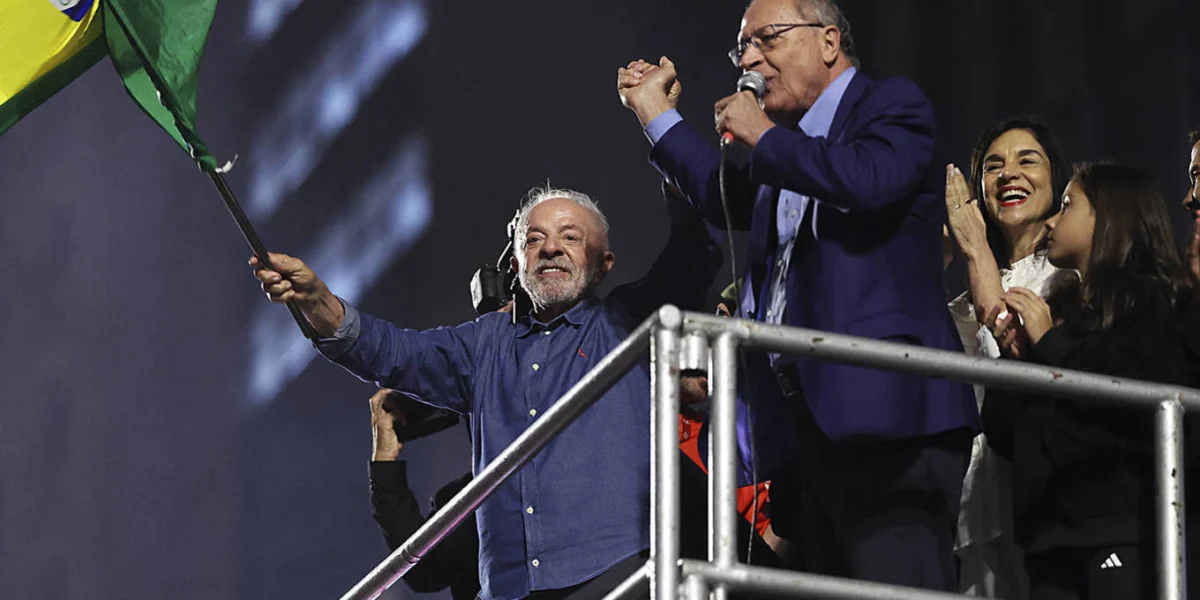
In his victory speech, President-elect Lula da Silva struck a tone of national renewal and international independence. Emphasizing that Brazil "is back on the global stage," Lula made it clear that his administration will pursue an autonomous foreign policy. He underscored that while Brazil seeks cordial, respectful relations with the United States, it will not act as a client state or subordinate partner to any foreign power. Environmental ministers and economic advisors simultaneously signaled a renewed commitment to global climate accords and multilateral trade agreements, sharply breaking with the isolationist posture favored by Washington.
Regional Capitals (Buenos Aires, Bogotá, Santiago)
Neighboring governments have responded with a mixture of relief and strategic re-alignment. Progressive and moderate leaders across South America hailed Lula’s victory as a stabilizing force for regional democracy. Governments that had felt increasingly squeezed by Washington’s heavy-handed bilateral demands now see an opening to revitalize regional bodies like UNASUR and MERCOSUR, creating a united diplomatic front to buffer against external pressures.
Implications: What Lula’s Victory Means for the Future
The failure of the Trump administration’s Latin America strategy carries profound, long-term implications for global politics, international trade, and hemispheric security.
1. The End of the "Sphere of Influence" Illusion
For decades, U.S. foreign policy has periodically sought to treat Latin America as an exclusive geopolitical backyard. The second Trump administration attempted to modernize this doctrine by curating ideological twins in the region. Lula’s victory proves that Latin America is too politically pluralistic, economically diverse, and fiercely nationalistic to be neatly packaged into a Washington-controlled bloc. The era of easy client-state compliance in South America is officially over.
2. A Multipolar South America
With Brazil reasserting its traditional role as an independent global actor, South America will increasingly look outward rather than upward. Expect Brasília to champion a multipolar international order, leveraging its position within the expanded BRICS bloc and deepening strategic partnerships with the European Union and Asian economies. This diversification diminishes the economic and political leverage that the United States can deploy in the region.
3. Democracy and Institutional Resilience
The Brazilian election serves as a vital stress test for democratic institutions in the Western Hemisphere. Despite intense polarization, misinformation campaigns, and external ideological pressures, Brazil’s electoral machinery and civil society successfully adjudicated a high-stakes transition of power. This resilience acts as a powerful counterweight to democratic backsliding elsewhere in the Americas, offering a blueprint for how populist, heavy-handed governance models can be peacefully unseated through the ballot box.
4. A Strategic Vacuum for Washington
As the grand design of a hemispheric stronghold collapses, the United States faces a strategic vacuum in its own neighborhood. Without compliant ideological allies in key southern capitals, Washington will find it exceedingly difficult to dictate terms on critical issues such as migration, security cooperation, and resource extraction—particularly regarding rare earth minerals and agricultural supply chains. To remain relevant in the Americas, U.S. foreign policy will ultimately be forced to abandon transactional bullying in favor of respectful, peer-to-peer diplomacy—a transition that promises to be exceptionally painful for an administration built on the myth of absolute, unyielding dominance.