Introduction: A New Era of Environmental Stewardship
Saudi Arabia is undergoing a historic and profound transformation. While traditionally recognized as a global energy powerhouse driven by fossil fuels, the Kingdom is actively redefining its economic and environmental identity. At the heart of this paradigm shift is Vision 2030, a visionary socioeconomic blueprint that places sustainability, climate action, and ecological preservation on equal footing with industrial growth and economic diversification.
Central to this green revolution are two monumental frameworks: the Saudi Green Initiative (SGI) and the Middle East Green Initiative (MGI). Together, these programs represent a comprehensive, multi-decade strategy designed to combat climate change, reduce carbon emissions, reverse land degradation, and foster a sustainable ecosystem across the Kingdom and the wider region.
Recent milestones and data releases highlight remarkable progress across several key environmental vectors. With strategic investments surging and ambitious targets moving from policy blueprints to tangible realities, Saudi Arabia is rapidly emerging as a regional and global leader in sustainable development.
Main Facts: Key Metrics and Milestones of the SGI
The Saudi Green Initiative has established clear, measurable targets designed to fundamentally alter the Kingdom’s environmental footprint. Key performance indicators and programmatic updates underscore the scale of this national endeavor:
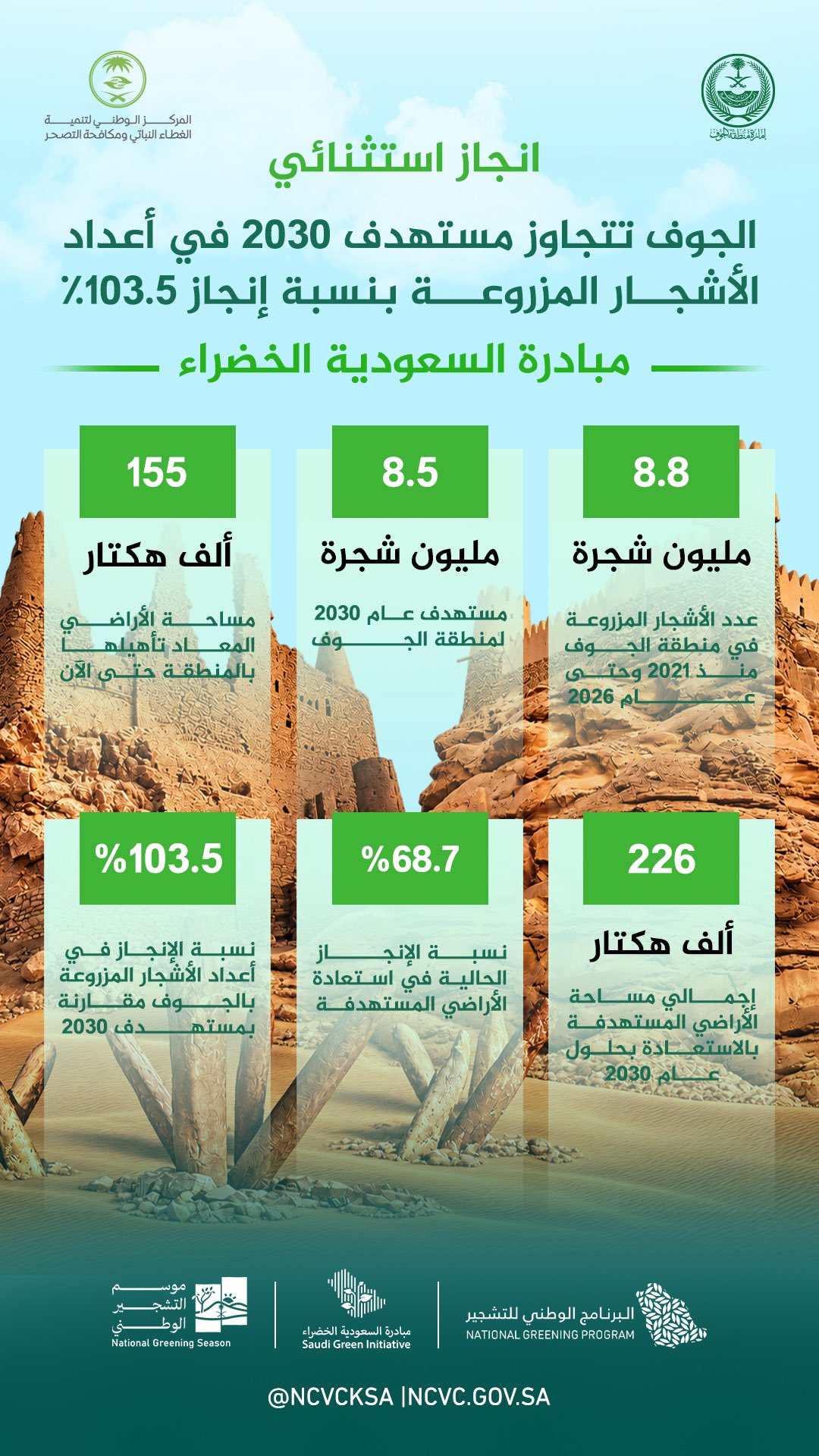
- Surging Investments: Financial commitments toward green initiatives have grown exponentially, with total investments increasing by over 103.5% across various environmental sectors.
- Emissions Reduction Trajectory: Between 2021 and 2026, the Kingdom’s proactive climate policies are projected to achieve a cumulative reduction of 8.8 million tons of carbon emissions annually. This lays a robust foundation for the overarching Vision 2030 target of reducing annual emissions by 8.5 million tons.
- Economic Scale and Portfolio Growth: Financial allocations for sustainability initiatives have scaled significantly. The total value of national green projects stood at 155 billion Saudi Riyals during the early phases of Vision 2030 and has since expanded to an estimated 226 billion Riyals—representing an impressive growth rate of approximately 68.7% in active sustainability funding.
- Technological Integration: The Kingdom is heavily integrating clean technology, renewable energy generation, and carbon capture utilization and storage (CCUS) frameworks into its core industrial sectors to decouple economic growth from greenhouse gas emissions.
Chronology: The Evolution of Saudi Arabia’s Climate Strategy
To fully understand the current momentum of Saudi Arabia’s green transformation, it is essential to trace the chronological milestones that have shaped its environmental policy over the past decade.

Phase 1: Foundation and Policy Formulation (Pre-2016)
Before the launch of Vision 2030, Saudi Arabia’s environmental policies were largely reactionary, focusing on localized conservation and compliance rather than systemic economic transformation. While regulatory bodies existed, their scope was limited by the dominance of traditional hydrocarbon-centric economic models.
Phase 2: The Vision 2030 Paradigm Shift (2016–2020)
In 2016, the Saudi government launched Vision 2030 under the leadership of Crown Prince Mohammed bin Salman. This introduced a renewed emphasis on sustainability. Policymakers recognized that long-term economic resilience required diversifying energy sources, improving energy efficiency, and addressing vulnerabilities related to water scarcity and desertification.
Phase 3: The Launch of the Saudi and Middle East Green Initiatives (2021)
The year 2021 marked a watershed moment. The Kingdom officially unveiled the Saudi Green Initiative (SGI) and the Middle East Green Initiative (MGI). These frameworks established actionable targets, binding the government, private sector, and civil society to concrete climate goals, including massive afforestation projects, renewable energy integration, and net-zero aspirations.
Phase 4: Acceleration and Measurable Impact (2022–2026)
By 2026, the initiatives transitioned from planning to execution. Billions of riyals were funneled into large-scale renewable energy grids, green urban planning, and desert rehabilitation. Monitoring systems confirmed that the Kingdom was not only meeting its interim targets but, in several sectors, outperforming initial projections, positioning Saudi Arabia as a credible participant in international climate dialogues.
Supporting Data: Quantitative Analysis of SGI and MGI
The success of the Saudi Green Initiative is anchored in rigorous data collection, quantitative milestones, and transparent reporting mechanisms.
The Carbon Reduction Curve
The transition from fossil-fuel dominance to a diversified energy matrix has yielded immediate statistical dividends. By optimizing energy efficiency in industrial complexes, upgrading national infrastructure, and expanding solar and wind generation capacity, the Kingdom successfully curtailed millions of tons of greenhouse gases. The targeted reduction of 8.8 million tons annually between 2021 and 2026 demonstrates that aggressive environmental policies can coexist with robust economic expansion.
Investment Scaling and Project Valuations
Financial commitments have expanded in tandem with ecological goals. The increase in active project values from 155 billion Riyals to 226 billion Riyals reflects the deepening involvement of both public sector funds and foreign direct investment (FDI). International financial institutions have increasingly viewed Saudi green bonds and sustainable infrastructure projects as secure, high-yield opportunities, driven by strict regulatory backing and state guarantees.
Afforestation and Ecosystem Restoration
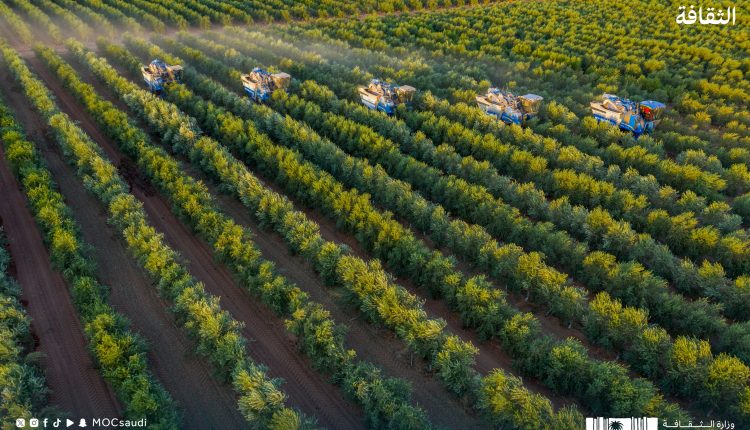
Under the broader umbrella of the Middle East Green Initiative, Saudi Arabia has committed to planting billions of trees and rehabilitating millions of hectares of degraded land. These efforts directly counter the threats of desertification, dust storms, and biodiversity loss. By leveraging native flora adapted to arid climates, the afforestation programs require minimal irrigation while significantly enhancing carbon sequestration capacities.
Official Responses and Institutional Perspectives
Leadership across Saudi governmental and corporate sectors has consistently emphasized that sustainability is no longer an optional luxury, but an absolute necessity for future prosperity.
Government Commitment at the Highest Levels
In various official statements, leadership has reiterated that Vision 2030 views environmental protection as a core pillar of national security and economic viability. Ministry officials emphasize that the Kingdom is pursuing a "Circular Carbon Economy" (CCE) model—an innovative framework focused on reducing, reusing, recycling, and removing carbon emissions. This approach allows Saudi Arabia to utilize its existing energy infrastructure while aggressively innovating toward a net-zero future.
Private Sector Alignment
The private sector has responded enthusiastically to the national green agenda. Major corporations, ranging from national energy giants to real estate developers, have restructured their operational models to comply with stringent environmental standards. Corporate sustainability reporting has become standard practice, driven by consumer demand, investor expectations, and government incentives designed to reward eco-friendly business practices.
International Collaboration
Saudi Arabia has actively sought partnerships with global leaders in green technology, agricultural science, and renewable energy. By hosting international climate forums and participating in global pacts, the Kingdom has positioned itself as a constructive bridge between developing nations and industrialized economies in the global transition toward sustainable energy.
Implications: Economic, Social, and Geopolitical Impacts
The sweeping transformation driven by the Saudi Green Initiative and Vision 2030 carries profound implications for the Kingdom and the broader international community.
Economic Diversification and Job Creation
Far from stifling economic growth, the green transition is acting as a major catalyst for job creation. The expansion of the renewable energy sector, green construction, environmental engineering, and eco-tourism has generated thousands of high-skilled jobs for Saudi nationals. This aligns directly with Vision 2030’s mandate to reduce unemployment and build a knowledge-based economy.
Enhanced Quality of Life and Urban Living
Environmental reforms directly impact the daily lives of residents. Large-scale urban greening projects—such as Riyadh Green—are drastically lowering urban temperatures, improving air quality, and expanding recreational spaces. These improvements contribute directly to public health outcomes, reducing the incidence of respiratory conditions linked to dust and industrial pollution.

Geopolitical Leadership in the MENA Region
Through the Middle East Green Initiative, Saudi Arabia is exercising soft power and environmental leadership across the Middle East and North Africa. By coordinating regional responses to climate change, water scarcity, and pollution, the Kingdom is fostering regional cooperation and stability, demonstrating that shared ecological challenges can serve as a foundation for diplomatic engagement.
Conclusion
Saudi Arabia’s green journey, anchored by the Saudi Green Initiative and propelled by Vision 2030, represents one of the most ambitious national transformations of the 21st century. By coupling massive financial investments with rigorous, data-driven milestones, the Kingdom has proven its capacity to pivot toward a sustainable future. As projects expand and carbon reduction targets are continually met and exceeded, Saudi Arabia stands as a compelling model of how an oil-reliant economy can successfully reinvent itself as a champion of environmental stewardship and global climate action.