





Published: October 8, 2026
Author: Max Garland (Adapted and Enriched)
Main Facts
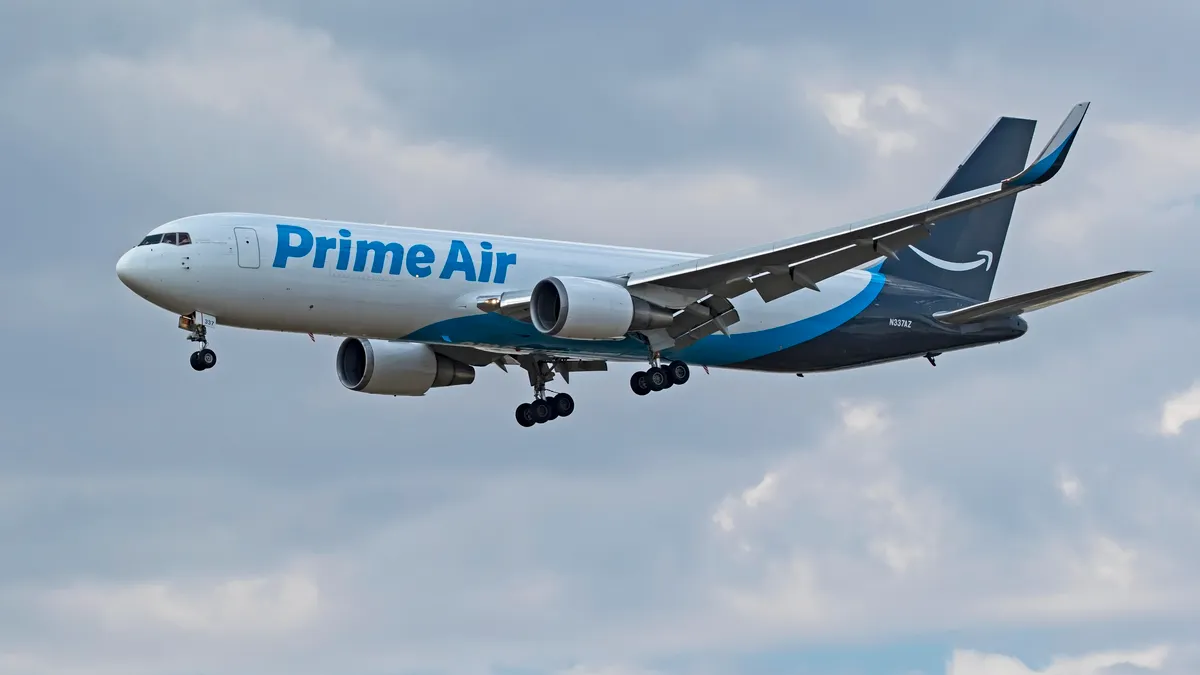
In a strategic move to tighten its grip on global supply chain logistics and empower third-party merchants, Amazon has announced the launch of two new air freight shipping services: Air SMP (Air Seller Managed Placement) and Economy Air. Integrated directly into the Amazon Global Logistics (AGL) ecosystem, these offerings are engineered to provide e-commerce sellers with enhanced inventory placement control, accelerated replenishment cycles, and diversified transit options.
The introduction of these air services comes at a critical juncture for retailers preparing for high-volume shopping periods. According to Amazon, the newly introduced freight lanes are tailored specifically to address common supply chain bottlenecks—such as unexpected stockouts, time-sensitive product rollouts, and peak season inventory crunches—where traditional ocean freight transit times prove too sluggish.
While Amazon has kept specific pricing sheets under wraps, the company emphasizes that the solutions strike a balance between speed and budgetary efficiency. Air SMP builds upon Amazon’s existing Seller Managed Placement capabilities by allowing merchants to split shipments at their points of origin before directing them straight to regional fulfillment centers. Conversely, Economy Air sacrifices some velocity in exchange for lower shipping overhead, bridging the massive temporal gap between standard air cargo and traditional ocean shipping.
These rollouts represent the latest evolution in Amazon’s broader strategy to position itself not just as an e-commerce marketplace, but as an end-to-end global logistics provider capable of competing with legacy freight forwarders and third-party logistics (3PL) giants.
Chronology: The Evolution of Amazon Global Logistics
To fully understand the weight of the Air SMP and Economy Air rollouts, it is necessary to examine how Amazon systematically built out its proprietary international freight forwarding network over the past several years:
- Laying the Foundation (Pre-2023): Amazon initially established its logistics network to handle first-party retail inventory, gradually opening up capabilities like Fulfillment by Amazon (FBA) and AGL to third-party sellers. The primary goal was to secure capacity and drive down the cost of moving goods from global manufacturing hubs—predominantly in Asia—directly into domestic fulfillment centers.
- The Launch of Amazon Supply Chain Services (Early 2025): Amazon streamlined its vast array of merchant-facing logistics solutions into a unified suite known as Amazon Supply Chain Services. This comprehensive framework integrated ocean freight, cross-border trucking, warehousing, and inventory management into a single, cohesive dashboard for sellers.
- Expansion of Global Lanes and Multimodal Transport (2025–Early 2026): AGL cemented its status as a premier cross-border forwarder, managing cargo flows from China to the United States, United Kingdom, European Union, and Japan, alongside critical ocean lanes like Vietnam-to-U.S. shipping. Furthermore, Amazon diversified its domestic backbone by launching a direct rail freight service designed to move West Coast-based inventory swiftly across the country to East Coast fulfillment centers.
- The October 2026 Air Freight Expansion: Filling the operational gap between standard ocean freight and expedited air delivery, Amazon officially unveils Air SMP and Economy Air within the AGL program portal, equipping merchants with precision tools to navigate volatile inventory demands.
Supporting Data & Operational Mechanics
To evaluate the practical impact of Amazon’s new air freight options, supply chain analysts look closely at transit times, routing mechanics, and cost-benefit structures.
1. Speed vs. Economy: The Numbers
- Standard Air Freight: Historically, AGL’s standard air freight service from primary manufacturing hubs such as Hong Kong or Shanghai to the United States averages a swift 7 days. While highly effective for emergency replenishment, it often commands a premium price tag that can erode product margins.
- Economy Air: Designed as a cost-effective compromise, Economy Air extends transit windows to 11 to 15 days for the same trans-Pacific routes. While four to eight days slower than standard air, it still outpaces traditional ocean freight by multiple weeks, offering a reliable middle ground for inventory managers.
- Ocean Freight: Traditional maritime shipping remains the most economical choice for massive volume, yet it exposes merchants to port congestion, customs delays, and transit times that frequently span 30 to 45 days or more.
2. The Mechanics of Air SMP
Air SMP scales up Amazon’s existing ocean-based Seller Managed Placement framework. Under traditional models, merchants often ship bulk inventory to a single port of entry, leaving distribution logistics and multi-warehouse allocations largely in the hands of inbound processing facilities.
With Air SMP, businesses can split up their inventory at the point of origin before it departs overseas. By pre-allocating stock directly to designated regional locations, merchants optimize their product distribution across Amazon’s nationwide fulfillment network. This strategic maneuver minimizes the likelihood of localized stockouts, reduces internal transfer fees later in the cycle, and ensures that fast-moving goods land precisely where consumer demand is highest.
Official Responses and Industry Context
Amazon’s leadership and logistics division have framed these new services as direct answers to seller feedback demanding greater flexibility and autonomy over inventory placement.

"Both services are ideal for peak season preparation, stockout recovery, or time-sensitive product launches when ocean transit is too slow," Amazon stated in its official release.
Furthermore, logistics experts note that faster and more effective inventory positioning has remained a top corporate priority for Amazon. In recent quarters, the e-commerce giant has continuously refined its fulfillment network architecture—transitioning from a national fulfillment model to a heavily regionalized structure—to squeeze days out of delivery windows for end consumers. By pushing inventory deeper into regional hubs via air freight before peak shopping spikes hit, Amazon protects its delivery speed promises while safeguarding merchant sales.
Industry analysts emphasize that while Amazon does not publicly disclose exact freight rates within its announcements, the integration of these services into the AGL portal allows merchants to run real-time cost-benefit analyses. Sellers can instantly compare the price of Air SMP against Economy Air and ocean transport, tailoring their supply chain strategies based on product seasonality, profit margins, and current inventory thresholds.
Implications for E-Commerce and Global Freight Forwarding
The debut of Air SMP and Economy Air carries profound implications across multiple sectors of the global supply chain:
1. Increased Competitive Pressure on Traditional Freight Forwarders
For decades, traditional third-party freight forwarders and non-vessel operating common carriers (NVOCCs) managed the complex web of cross-border logistics for mid-sized and enterprise merchants. By embedding air freight, ocean transit, rail options, and localized distribution into a single, closed-loop digital ecosystem (AGL), Amazon continues to disintermediate legacy forwarders. Merchants no longer need to juggle multiple disparate vendors for trucking, customs brokerage, air cargo, and final-mile warehouse placement.

2. Empowering Third-Party Sellers During Peak Seasons
Supply chain disruptions, fluctuating consumer demand, and unpredictable maritime shipping rates have historically made peak season preparation a high-stakes gamble for e-commerce entrepreneurs. Over-ordering ties up critical working capital in excess inventory, while under-ordering leads to devastating stockouts and lost algorithmic ranking on the Amazon marketplace. Air SMP and Economy Air provide granular tactical levers, allowing sellers to execute smaller, more frequent air shipments of high-demand items without blowing past operational budgets.
3. Sustainability and Network Optimization
While air freight inherently carries a higher carbon footprint than ocean shipping, Amazon’s ability to use precise origin-splitting (Air SMP) and optimized regional routing helps curb redundant internal cross-country freight movements. By placing goods closer to end-users from the moment they enter the domestic airspace, Amazon reduces the subsequent miles traveled by diesel-powered trucks during final-mile and mid-mile legs, contributing to a more balanced internal carbon efficiency metric.
Looking Ahead
As global supply chains continue to face intermittent geopolitical and meteorological headwinds, the agility provided by multimodal logistics portfolios will separate thriving e-commerce businesses from struggling competitors. With the rollout of Air SMP and Economy Air, Amazon has once again raised the bar for speed, visibility, and control in the international freight arena, ensuring its vast network of merchants remains well-stocked and competitive throughout the modern retail calendar.