




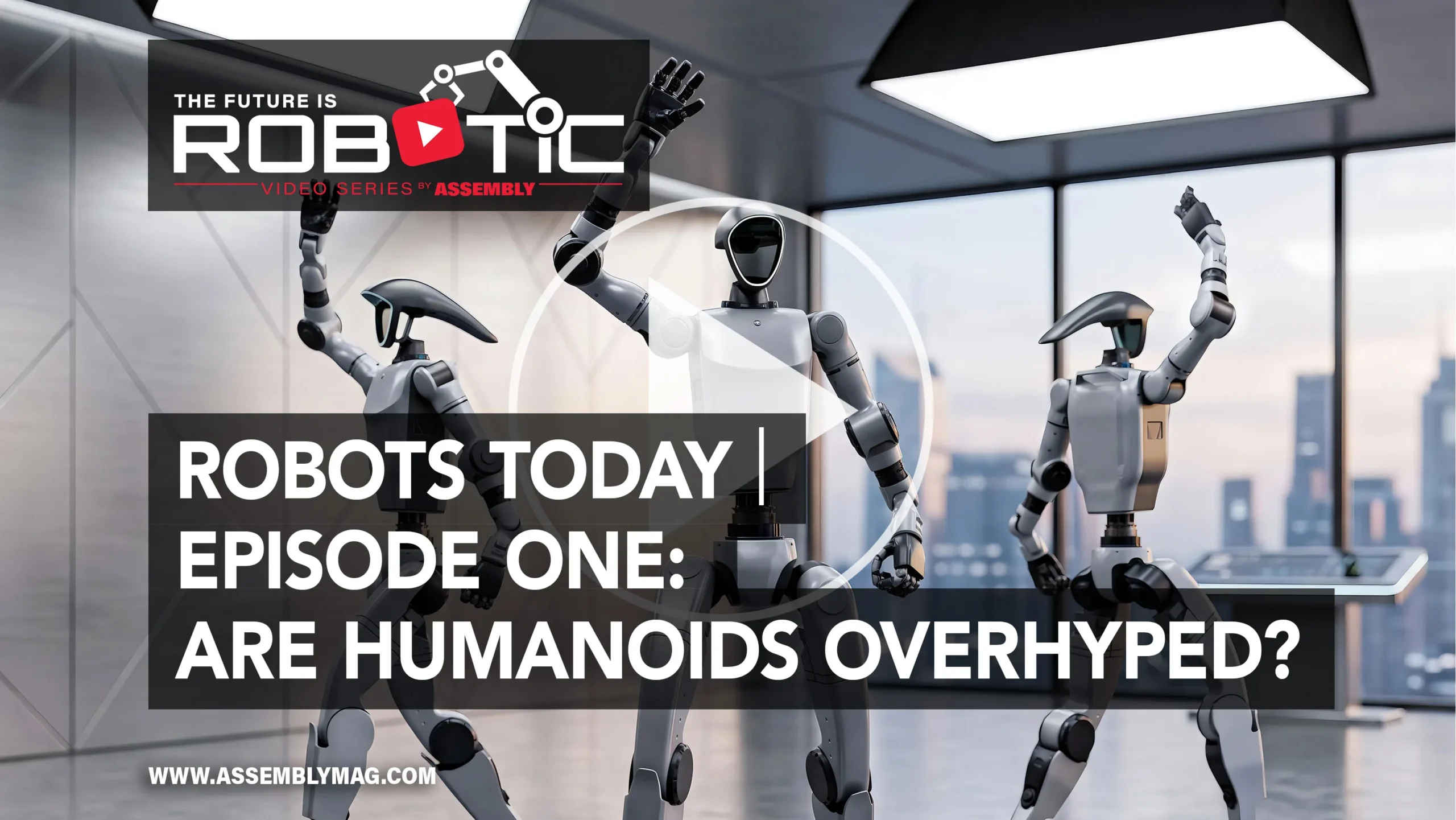
BIRMINGHAM, Mich. — Humanoid robots frequently dominate the public imagination and media headlines, capturing the attention of tech enthusiasts and investors alike with their uncanny resemblance to human workers. Yet, as the industrial sector looks toward a heavily automated future, experts are issuing a reality check.
The ultimate role of humanoid robots on factory floors may depend far less on how closely they mimic human anatomy and far more on whether that form is actually appropriate for the work at hand.
This critical nuance in industrial automation is the focal point of the debut episode of Robots Today, a new companion series to ASSEMBLY magazine’s ongoing production, The Future Is Robotic. In the premier episode, International Federation of Robotics (IFR) President Jane Heffner unpacks the hype surrounding bipedal machines, offering a pragmatic analysis of where humanoids genuinely fit into factory workflows—and where manufacturers will undoubtedly be better served by alternative forms of automation.
Main Facts: The Industrial Reality of Humanoid Robotics
While humanoid robots represent a massive leap forward in artificial intelligence, computer vision, and mechanical dexterity, their integration into mainstream manufacturing faces a steep uphill battle against physics, economics, and common sense.
Heffner points out that while the race to build humanoid robots is undeniably driving technological progress across the board, a human-shaped frame is rarely the most optimal tool for industrial manufacturing.
- The Innovation Driver: Research and development into humanoids are accelerating breakthroughs in machine vision, advanced grasping, multi-fingered manipulation, and mobile autonomy. These robots are successfully proving that machines can actively move to different work zones and juggle multiple tasks rather than remaining bolted to a single, fixed location.
- The Form-versus-Function Dilemma: Despite these advancements, industry veterans emphasize that industrial efficiency relies on purpose-built engineering. For the vast majority of factory tasks, specialized machines are significantly faster, safer, and far more reliable than a generalized human form.
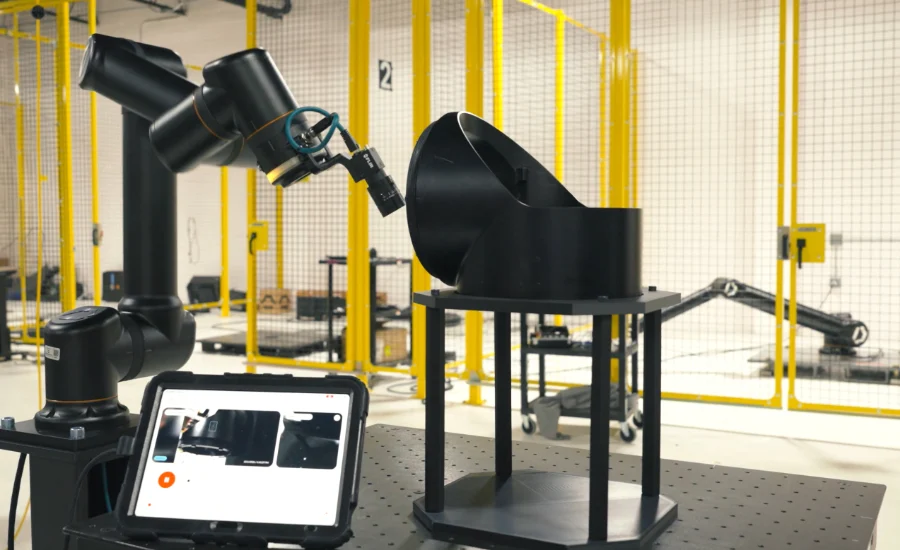
- Alternative Solutions Exist Now: Manufacturers do not need to wait for humanoid technology to mature to achieve mobility on the shop floor. Existing technologies—specifically, proven robotic arms mounted on Automated Guided Vehicles (AGVs) or Autonomous Mobile Robots (AMRs)—can already bring flexible manipulation to various locations across a facility.
- Safety Hurdles: Dynamically stable bipedal robots operating in close proximity to human workers present unique safety challenges. A high center of gravity and complex balancing acts complicate safety profiles, particularly because robust international safety standards specifically tailored for humanoids are still in their infancy.
Chronology: From Sci-Fi Concept to Shop Floor Reality
The journey of the humanoid robot from science fiction trope to heavy industry prototype has accelerated rapidly over the past decade, though practical factory adoption remains in its infancy.
Phase 1: Research and Conceptualization (2010s–Early 2020s)
For years, humanoid robotics was primarily confined to academic laboratories, government-funded research initiatives, and speculative corporate demonstrations. Early iterations were tethered, painfully slow, and consumed excessive amounts of energy. However, exponential leaps in machine learning, sensor miniaturization, and electric actuator design transformed humanoids from laboratory curiosities into functional hardware prototypes.
Phase 2: The Venture Capital Surge and Prototype Era (2022–Present)
The post-pandemic labor shortage ignited a massive surge of venture capital into humanoid robotics startups. Companies began showing off advanced prototypes capable of walking, sorting boxes, and mimicking human dexterity. Yet, as Heffner notes, the vast majority of these systems remain strictly in the prototype and concept phase.
Phase 3: The Upcoming Transition to Production-Scale Deployment (The Horizon)
Moving away from tightly controlled demonstration videos toward 24/7, production-scale manufacturing deployment represents the next major hurdle for the industry. According to industry leaders, bridging this gap will require substantial time, rigorous reliability testing, and massive validation cycles before humanoids become common sights on commercial assembly lines.
Supporting Data and Technical Considerations
Evaluating the feasibility of humanoids requires an objective look at manufacturing engineering principles. Industrial environments are heavily optimized for throughput, repeatability, and uptime.
+-------------------------------------------------------------------+
|               COMPARATIVE INDUSTRIAL AUTOMATION METRICS           |
+--------------------------+-------------------+--------------------+
| Feature / Metric         | Humanoid Robots   | Purpose-Built Arms |
+--------------------------+-------------------+--------------------+
| Speed & Throughput       | Moderate / Low    | High / Optimized   |
| Mechanical Reliability   | Low-to-Moderate   | Extremely High     |
| Energy Efficiency        | Low (Bipedal)     | High (Fixed/Wheeled|
| Safety Certification     | Under Development | Mature Standards   |
| Facility Retrofit Cost   | Minimal           | High (Often)       |
+--------------------------+-------------------+--------------------+
The Physics of Bipedalism
From an engineering perspective, bipedal locomotion is inherently inefficient. Maintaining dynamic balance on two legs requires immense computational power, continuous micro-adjustments, and high-torque actuators that consume significant amounts of battery power. In contrast, wheeled or tracked mobile bases offer high stability, greater payload capacities, and vastly superior energy efficiency.
Facility Integration and Retrofitting
One area where humanoids possess a theoretical advantage lies in legacy infrastructure. Many existing manufacturing plants, assembly lines, and warehouses were intentionally designed around human dimensions—featuring stairs, narrow corridors, and human-height workstations.
A humanoid robot capable of navigating these pre-existing spaces can theoretically automate low-volume or sporadic tasks without forcing plant managers to completely redesign or re-architect their physical facilities.
Official Responses and Expert Perspectives
Weighing in on the trajectory of industrial automation, Jane Heffner’s insights as head of the International Federation of Robotics provide a balanced perspective on the hype cycle.

"For most factory work, I think a purpose-built machine is faster, safer, and much more reliable than a human form," Heffner stated during the premiere of Robots Today.
Rather than viewing humanoids as an existential replacement for traditional automation, Heffner frames them as a specialized tool in a much larger toolkit.
"I think humanoids are a part of [the future], but I don’t think [the future is] only humanoids. I think we’re going to see robots in many, many different forms," she explained.
Heffner emphasized that the future of manufacturing will be defined by form-following-function matching. As robotics technology matures, different form factors will be carefully selected and deployed based on the exact physical and economic demands of the task at hand, with humanoids serving to complement—rather than usurp—traditional industrial robots.
Furthermore, addressing the timeline for adoption, Heffner offered a cautionary note to eager investors and manufacturers:
"A lot of the humanoid development right now is in prototype work. It’s in concept work. But actually going to production, I think, is going to be a big step. And I think that’s going to take a little bit of time."
Implications for the Future of Manufacturing
The sobering assessment of humanoid robots carries profound strategic implications for manufacturing executives, plant managers, and automation engineers.
1. Avoiding the "Cool Factor" Trap
Plant managers must resist the temptation to purchase technology based purely on novelty or marketing appeal. Investing millions of dollars in bipedal humanoids for tasks that could be handled more reliably by a standard articulated arm or an automated guided cart represents poor capital allocation. Strategic automation requires prioritizing return on investment (ROI), uptime, and cycle speed over aesthetics.
2. Accelerated Evolution of Component Technologies
Even if humanoid robots themselves take years to achieve widespread factory adoption, the technological trickle-down effect is undeniable. The components being developed specifically for humanoids—such as lightweight, high-torque actuators, advanced tactile sensors, and edge-computing AI vision systems—will significantly upgrade the capabilities of traditional industrial automation.
3. A Multi-Form Factor Ecosystem
The factories of tomorrow will not look like science fiction movies populated entirely by mechanical people. Instead, they will feature a diverse, harmonious ecosystem of automation: fixed gantry robots for high-speed pick-and-place operations, collaborative arms (cobots) working safely alongside human assemblers, autonomous mobile robots ferrying materials across facilities, and, selectively, humanoid or specialized mobile manipulators handling irregular, human-centric tasks in legacy spaces.
About the Series
Robots Today is an exclusive new companion series to ASSEMBLY magazine’s acclaimed video feature, The Future Is Robotic. While Robots Today dives deep into the micro-developments and immediate applications shaping the robotics industry today, The Future Is Robotic provides a macro-level perspective on long-term technological horizons.
New episodes of The Future Is Robotic are released on a monthly basis, offering industry professionals ongoing insights into assembly automation, smart manufacturing, and emerging technological trends.
For quick answers regarding assembly, fastening, and modern manufacturing topics, professionals can also explore Ask ASM, the newly launched smart AI search tool available via AssemblyMag.com.