





By Global Supply Chain News Desk
Published October 26, 2026
Main Facts
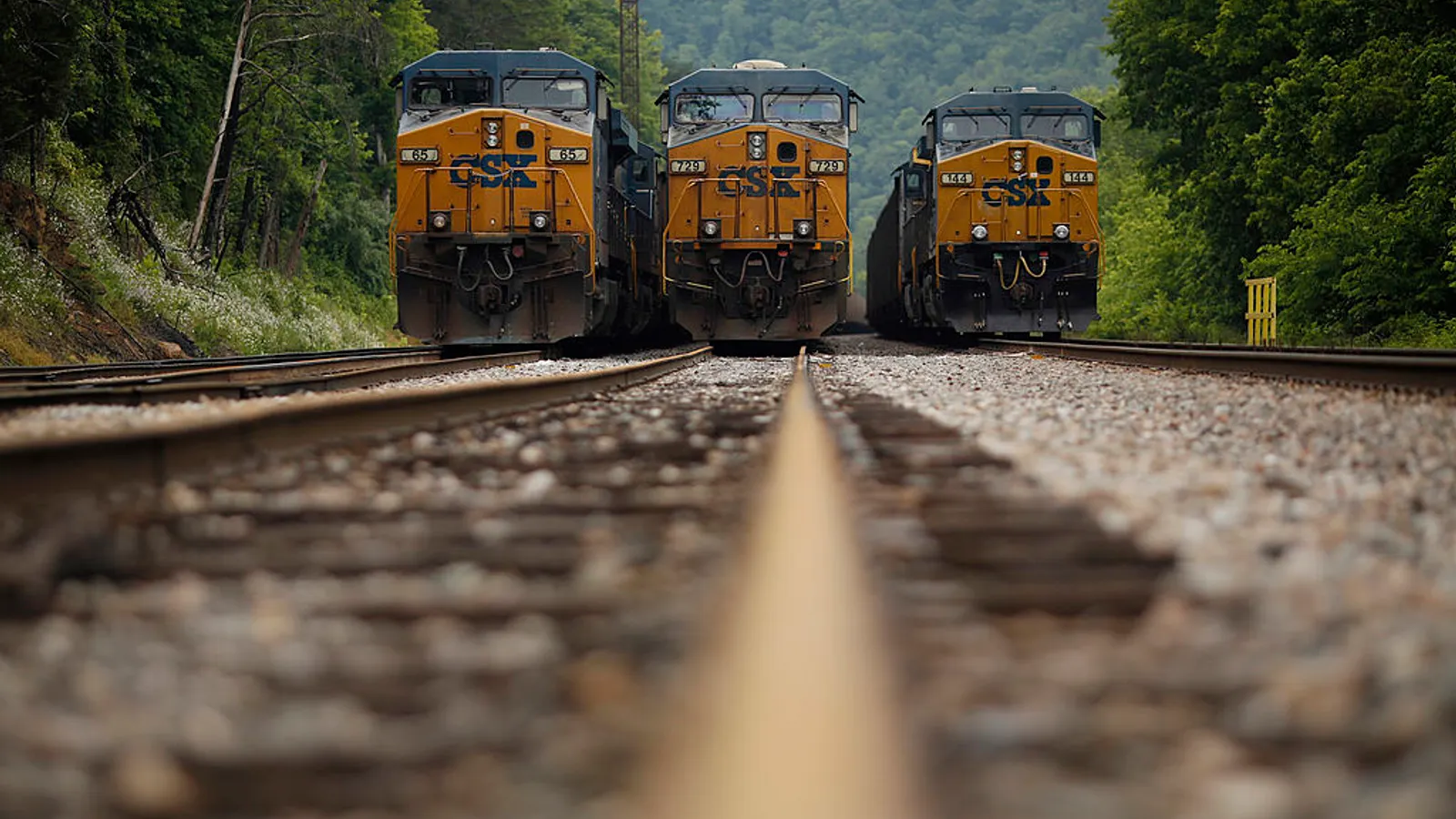
Major Class I freight railroads, spearheaded by CSX Transportation, are aggressively courting highway shippers by analyzing proprietary truckload data to demonstrate the immediate financial and operational advantages of intermodal transport. As the American logistics sector navigates persistent macroeconomic turbulence, sky-high fuel prices, and restrictive regulatory changes, railroads are seizing a generational opportunity to capture long-haul freight historically dominated by over-the-road (OTR) trucking.
At the center of this modal shift is CSX, which is actively reviewing shipper-provided truckload data to deliver tailored, route-by-route service and cost comparisons. By highlighting the economic and environmental benefits of rail, CSX and its industry peers—including Norfolk Southern and Union Pacific—are reporting measurable surges in volume across sectors like chemicals, waste, petroleum, and forest products.
The primary catalysts driving this mass migration from asphalt to steel include:
- Skyrocketing Fuel Costs: Persistent volatility and high prices in the diesel market have upended trucking economics.
- Shrinking Highway Capacity: A confluence of stricter federal compliance requirements for commercial drivers and a chronic shortage of drayage and long-haul operators has constrained truck availability.
- Proactive Railroad Analytics: Class I carriers are deploying advanced data-sharing initiatives, directly auditing shipper shipping logs to map out seamless intermodal conversions.
Chronology of the Modal Shift
The current wave of truck-to-rail conversions is not an overnight anomaly, but rather the culmination of years of supply chain disruptions, labor constraints, and infrastructure investments.
- Late 2024 – Early 2025: Following years of pandemic-era supply chain volatility, the freight market experienced a stabilization period where trucking rates softened. However, underlying structural pressures—such as rising insurance premiums, equipment replacement costs, and tightening environmental mandates—began to compress trucking margins.
- April 2026: CSX signaled a major strategic pivot during its Q1 earnings disclosures, publicly announcing that it was actively hunting for ways to capitalize on conversion trends. Railroad executives noted an emerging willingness among shippers to rethink their distribution networks as highway reliability wavered.
- Summer 2026: Regulatory tightening reached a tipping point. The implementation of stringent federal rules regarding non-domiciled commercial driver’s licenses (CDLs) by the Federal Motor Carrier Safety Administration (FMCSA) severely impacted driver availability. Simultaneously, spot market trucking rates began to climb in key freight corridors.
- October 2026: During third-quarter earnings calls, major freight rail executives confirmed that modal conversions had transitioned from a localized trend to a nationwide industry movement. CSX revealed its latest initiative: directly reviewing shipper truckload files to provide granular, data-backed service and cost comparisons designed to ease the transition from highway to intermodal rail.
Supporting Data and Market Dynamics
The economic imperative driving shippers toward intermodal rail is underscored by stark shifts in fuel pricing and regulatory enforcement. According to data from the U.S. Energy Information Administration (EIA) as of October 19, 2026, retail diesel fuel averaged $6.28 per gallon. This represents a staggering increase compared to the $2.66 per gallon recorded during the same period in previous years, cementing fuel price volatility as the single greatest concern for trucking fleets in 2026, as corroborated by studies from the American Transportation Research Institute (ATRI).
For long-haul motor carriers, fuel can account for up to 30% of total operating expenses. When diesel climbs above $6.00 per gallon, the financial math for dedicated truckload shipping collapses, particularly for heavy commodities and long transit lanes. Intermodal rail, which boasts significantly higher fuel efficiency—moving a ton of freight roughly 450 miles on a single gallon of fuel—offers an immediate buffer against these energy shocks.
Beyond fuel, structural capacity constraints on the highway continue to worsen:
- Compliance and Licensing: Recent FMCSA rulemakings regarding non-domiciled CDLs have trimmed the active pool of available cross-border and domestic drivers.
- Drayage Bottlenecks: Carriers have increasingly limited outsourcing due to persistent shortages of drayage drivers needed to move containers between marine/rail terminals and distribution centers.
- Commodity-Specific Gains: CSX reported a 7% year-over-year increase in chemical volumes during the third quarter alone, directly attributable to successful truck-to-rail conversions. While sectors like forest products have historically exhibited high truck utilization due to specialized handling requirements, CSX is aggressively targeting this market as tight trucking capacity forces shippers to reevaluate their modal mix. Waste and petroleum products have similarly emerged as high-potential targets for modal diversion.
Official Responses and Industry Perspectives
Railroad leadership across North America has adopted an aggressive, consultative posture to lock in these new shipping volumes.
During a recent financial performance update, CSX representatives emphasized that the railroad’s geographic footprint and newly optimized hubs are bearing fruit. "Conversions from the highway remain strong, and the new service offering through Birmingham, Myrtlewood, Baltimore and other areas are performing well and attracting new business," leadership noted during the call.

By offering to ingest and analyze raw shipper truckload files, CSX is removing the administrative and analytical friction that often deters logistics managers from altering their supply chain networks. Instead of asking shippers to guess at the potential savings, the railroad is providing side-by-side transit time, reliability, and cost comparisons that clearly illustrate the advantages of intermodal integration.
Competitors are echoing this sentiment. Norfolk Southern President and CEO Mark George highlighted a notable uptick in demand across both the domestic intermodal segment and industrial chemical shipments during a recent earnings call with analysts, pointing to structural changes in how manufacturers view supply chain resilience.
Similarly, Union Pacific Executive Vice President and Chief Financial Officer Jennifer Hamann noted during the railroad’s Q3 earnings presentation that the sheer magnitude of fuel savings enabled by rail transport is acting as a primary magnet, allowing Union Pacific to capture new business from cost-conscious enterprises seeking relief from soaring highway overhead.
Implications for the Future of Freight Logistics
The accelerated pivot from truck to rail carries profound implications for shippers, motor carriers, and the broader logistics landscape:
1. For Shippers: A Mandatory Rethink of Network Design
Logistics directors and supply chain executives can no longer afford to operate with a "truck-first" default mindset. With highway capacity vulnerable to sudden regulatory shocks and fuel spikes, incorporating a flexible intermodal strategy is becoming essential for business continuity. By partnering directly with railroads like CSX to audit truckload files, shippers can uncover hidden cost-saving lanes that insulate their organizations from freight market volatility.

2. For the Trucking Industry: Evolution, Not Obsession with Long-Haul
The mass migration of long-haul freight to rail does not spell the end of trucking, but it does necessitate a strategic realignment. Motor carriers are increasingly pivoting toward regional hauling, localized drayage, and specialized services that rail cannot easily touch. However, the ongoing shortage of drayage drivers remains a critical chokepoint that could inadvertently cap the velocity of rail conversions if terminal operations and local trucking capacity fail to keep pace.
3. For Environmental and Infrastructure Goals
As corporate entities face mounting pressure to decarbonize their Scope 3 emissions, shifting freight from heavy-duty diesel trucks to electrified or high-efficiency diesel-electric locomotives provides an immediate, verifiable reduction in greenhouse gas emissions. Regulators and ESG-focused investors are likely to view this modal shift favorably, potentially unlocking further capital investments into North America’s intermodal infrastructure.
Ultimately, CSX’s data-driven outreach marks a turning point in the freight sector. By transforming raw shipping data into compelling economic arguments for rail, Class I railroads are not merely capitalizing on temporary trucking pain points—they are fundamentally reshaping the future corridors of American commerce.