By Global Supply Chain & Logistics Desk
Published: November 2026
Main Facts
Global logistics giant DHL is aggressively scaling up its pharmaceutical and healthcare shipping capabilities through strategic expansions within its Health Logistics Cold Chain Network. Driven by an escalating global demand for secure, reliable, and compliant connectivity between major pharmaceutical manufacturing hubs, the company is bolstering its infrastructure across key international corridors.
The initiative is primarily designed to handle sensitive, high-value, and life-saving medical cargo, including biologics, vaccines, clinical trial materials, and advanced pharmaceutical products. Central to this expansion is the heavy weighting of air freight capacity toward inbound Asia Pacific trade flows, responding directly to surging manufacturing outputs in North America and Europe directed toward Asian markets.
To maintain strict compliance and absolute temperature integrity, DHL relies heavily on its modern Boeing 777 freighter fleet—which features specialized multi-compartment temperature settings—and is implementing substantial ground-level investments at critical North American gateways, notably the Cincinnati/Northern Kentucky International Airport (CVG).
These developments arrive amid a broader, highly competitive race within the global logistics sector. Industry rivals, including FedEx, are simultaneously launching dedicated life sciences suites and specialized transatlantic flight corridors to capture market share in the rapidly expanding healthcare supply chain sector.
Chronology of Network Expansion and Strategic Milestones
The ongoing evolution of DHL’s cold chain infrastructure reflects a multi-year strategy aimed at closing geographical gaps in the pharmaceutical supply chain and upgrading technological capabilities at major aviation hubs.
- Early 2026: DHL Group officially inaugurated a specialized trade route connecting Brussels Airport (BRU) to the Cincinnati/Northern Kentucky International Airport (CVG) hub. This route was integrated directly into the company’s burgeoning global cold chain network to facilitate seamless transatlantic movement of temperature-sensitive medical goods.
- Mid-2026 (Ongoing): DHL identified a distinct market shift, observing heavier outbound manufacturing volumes from North American and European hubs destined for Asia. Consequently, the company recalibrated its capacity distribution, dedicating a significant majority of available air freight space on key routes to inbound Asia Pacific trade flows while maintaining flexible bidirectional capabilities.
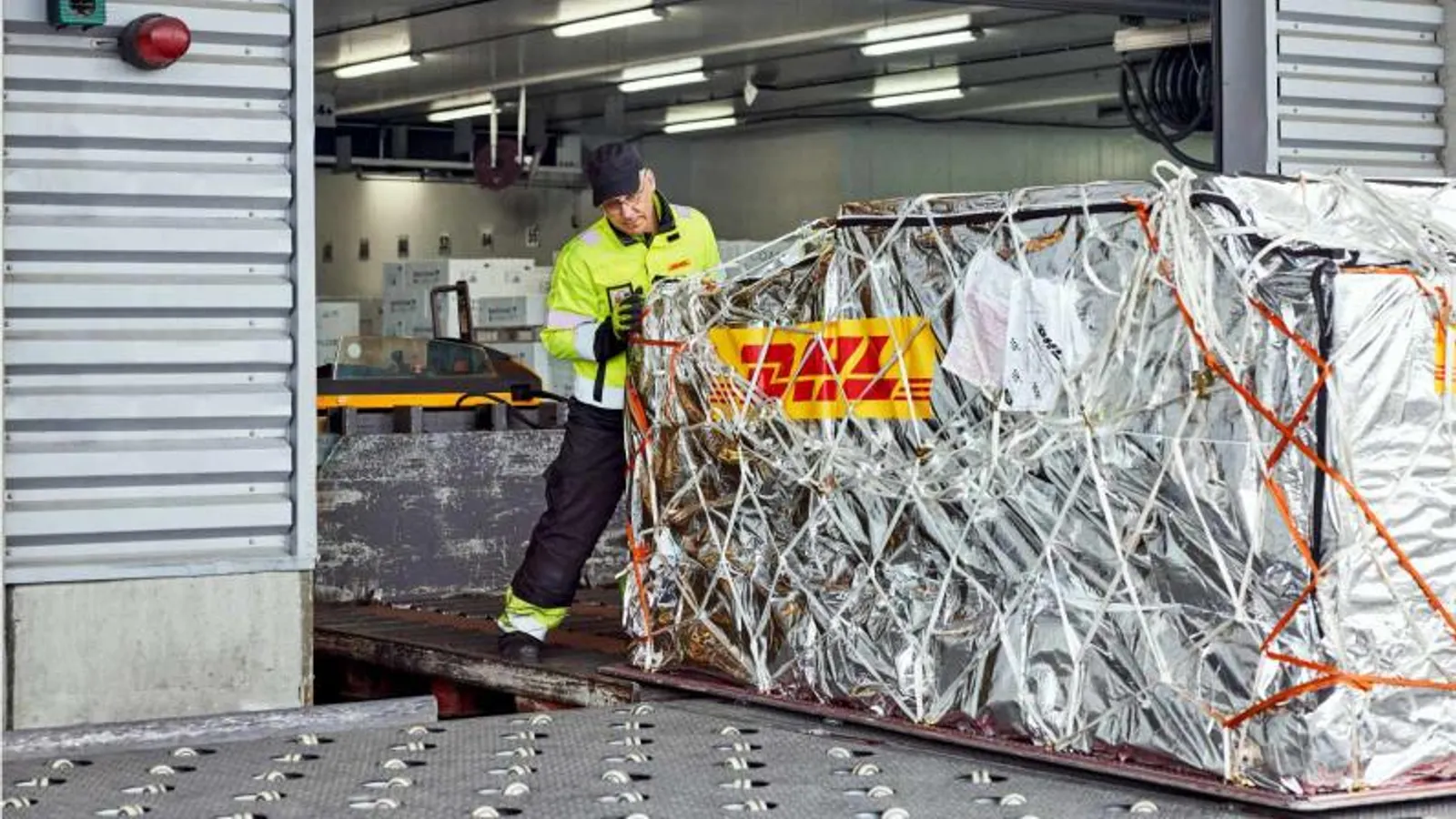
- Near Future (Announced 2026): DHL is scheduled to deploy five advanced, temperature-controlled dollies at its CVG gateway. These units are engineered to bridge the gap between aircraft and ground facilities, safeguarding pharmaceutical shipments against extreme seasonal weather fluctuations during tarmac transfers.
- 2027 (Projected): DHL will officially open a new airside facility at CVG designed specifically to provide climate-controlled storage for both inbound and outbound Unit Load Devices (ULDs). This facility will sit in close proximity to the aircraft parking areas, minimizing exposure to ambient temperatures during loading and unloading.
- Beyond 2027: The logistics provider plans to operationalize a brand-new off-airport facility near CVG. This complex will offer expanded temperature-controlled storage, comprehensive ULD build-up and break-down capabilities, and specialized pallet storage to handle rising cargo volumes.
Supporting Data and Technical Infrastructure
The operational backbone of DHL’s healthcare logistics network relies on a combination of specialized aircraft configurations, stringent regulatory compliance frameworks, and state-of-the-art ground facilities.
Fleet and Aircraft Capabilities
A vast majority of the specialized healthcare corridors within DHL’s network are serviced by the company’s long-haul Boeing 777 freighter aircraft. These planes are engineered with advanced environmental control systems capable of maintaining three distinct, highly regulated temperature zones within the cargo hold. This technological capability allows DHL to co-load pharmaceuticals requiring different thermal ranges—such as controlled room temperature (+15°C to +25°C) and refrigerated ranges (+2°C to +8°C)—on a single flight without compromising product integrity.
Gateway Hubs and Ground Footprints
The Cincinnati/Northern Kentucky International Airport (CVG) functions as one of DHL’s premier healthcare gateways in North America. The facility boasts Good Distribution Practice (GDP)-compliant handling areas, dedicated temperature-controlled storage zones, and specialized equipment designed to process sensitive medical shipments.
In tandem with CVG, DHL operates a dedicated life sciences and healthcare facility in nearby Indianapolis. This geographic clustering of specialized infrastructure creates a robust logistics ecosystem in the American Midwest, capable of absorbing, storing, and redistributing sensitive cargo originating from global manufacturing powerhouses.
Trade Flow Dynamics
Current logistical metrics highlight a distinct geopolitical and industrial shift in pharmaceutical production. According to DHL representatives, market demand is heavily concentrated around pharmaceutical manufacturing epicenters in North America and Europe that export to rapidly developing healthcare markets in Asia. To accommodate this, DHL has structured its flight schedules and ULD management to ensure that inbound Asia Pacific trade flows receive prioritized air freight capacity, while retaining the agility to pivot as global manufacturing footprints evolve.
Official Responses and Industry Perspectives
The strategic pivot toward specialized healthcare logistics is a direct response to evolving customer requirements in the post-pandemic biopharmaceutical landscape.
According to Laura Lehnen, spokesperson for DHL Freight, the dedicated healthcare corridors are a direct manifestation of market demand. "The healthcare corridors… respond to customer demand for reliable pharmaceutical shipment connectivity between healthcare markets," Lehnen explained.
Addressing the fluidity of international trade routes, Lehnen emphasized the dual-directional flexibility built into DHL’s operational strategy: "DHL is seeing stronger demand from pharmaceutical manufacturing hubs in North America and Europe to Asia." She added that volume expectations are currently weighted toward inbound Asia shipments, with the majority of available air freight capacity dedicated to those specific Asia Pacific trade flows. However, she stressed the network’s adaptability: "DHL can therefore support both directions of trade as customer demand evolves and manufacturing and distribution patterns continue to develop."
Detailing the physical infrastructure upgrades at the CVG hub, Lehnen noted that Cincinnati is already an established gateway equipped with GDP-compliant protocols. Looking ahead to upcoming capital investments, she highlighted the introduction of specialized equipment: "In the ‘near future,’ DHL plans to deploy five temperature-controlled dollies to support the transport of healthcare shipments between aircraft and facilities during extreme weather." Furthermore, regarding the 2027 milestone, she confirmed that the new airside facility will "provide temperature-controlled storage for both inbound and outbound Unit Load Devices, or ULDs, near the aircraft to maintain temperature integrity throughout the handling process."
Broader Implications for the Global Healthcare Supply Chain
DHL’s aggressive expansion highlights a broader, highly competitive transformation within the global logistics industry. As biopharmaceuticals, personalized medicines, gene therapies, and temperature-sensitive vaccines become a larger percentage of global healthcare output, the margin for error in cold chain logistics has shrunk dramatically. A single temperature excursion can ruin millions of dollars worth of vital medicine, rendering batches unusable and disrupting patient care pipelines worldwide.
Intensifying Industry Competition
DHL is not alone in recognizing the lucrative nature of pharmaceutical logistics. Major competitors are making parallel moves to secure market dominance.
In June of last year, FedEx launched a dedicated organizational structure specifically tailored to support healthcare and pharmaceutical logistics, a strategic push that has visibly bolstered the company’s earnings. This followed FedEx’s introduction of a specialized air cargo route connecting Dublin, Ireland (DUB)—a major global pharmaceutical manufacturing hub—directly to Indianapolis, Indiana (IND), optimizing transatlantic healthcare transit times.
Technological and Regulatory Pressures
The race to capture healthcare freight is also driving technological innovation across the board. The integration of real-time Internet of Things (IoT) tracking devices, predictive weather analytics, and active temperature-control containers has become the baseline expectation for pharmaceutical clients. Regulatory bodies worldwide are tightening oversight under Good Distribution Practice (GDP) guidelines, forcing logistics providers to invest heavily in certified personnel, climate-mapped facilities, and audited processes.
Future Outlook
As DHL rolls out its next wave of infrastructure investments—including the upcoming tarmac dollies and the 2027 airside ULD storage facility—the bar for cold chain integrity will rise even higher. The ability to seamlessly manage the handoff points between aircraft, tarmac, and warehouse remains one of the most vulnerable links in the cold chain. By insulating these transition phases against extreme weather and ambient temperature spikes, DHL and its competitors are setting a new standard for risk mitigation in the global transport of life-saving therapeutics.