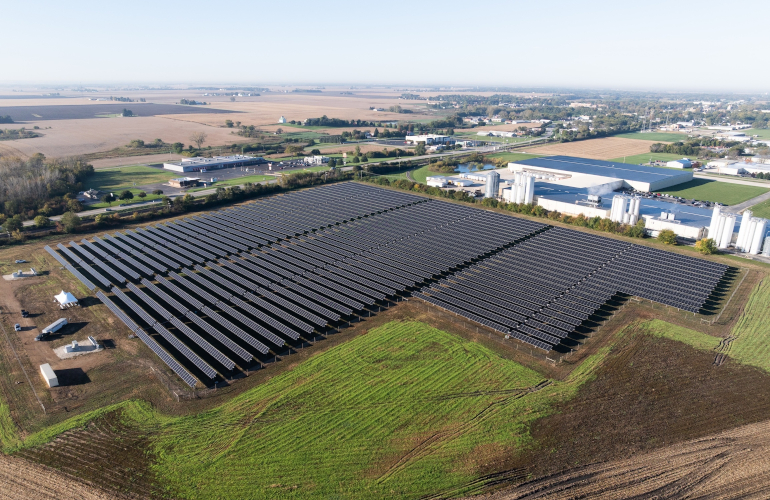
SANDWICH, Ill. — In a milestone that underscores the accelerating momentum of the Midwest’s clean energy transition, renewable energy leaders Generate Capital and TurningPoint Energy (TPE) officially celebrated the ribbon-cutting of a new 3.5-MWac community solar project in Sandwich, Illinois. Located in Kendall County, the installation represents far more than just another collection of photovoltaic panels on the horizon. It stands as a testament to the power of thoughtful public-private collaboration, progressive state-level policy, and a growing commitment to agrivoltaics and ecological land stewardship.
The project is a vital node in a much larger regional strategy: an expansive eight-project, 34.5-MWac portfolio jointly developed by TurningPoint Energy and financed, built, owned, and operated for the long term by Generate Capital. By tapping into the framework established by the Illinois Adjustable Block Program—widely known as Illinois Shines—the partners are successfully democratizing renewable energy, ensuring that the economic and environmental benefits of solar power are no longer restricted to property owners with suitable roof space or high-capital budgets.
Main Facts
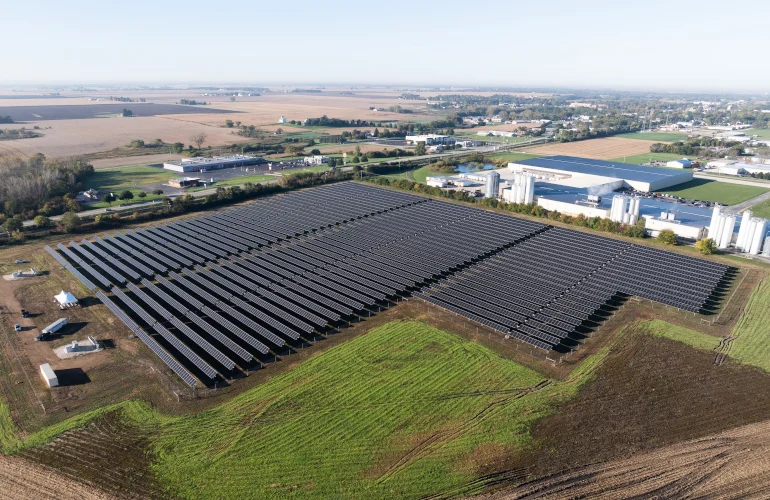
At its core, the newly operational Sandwich installation is a mid-scale commercial solar facility engineered with cutting-edge technology designed to maximize energy capture and land efficiency.
Spanning approximately 23 acres of Kendall County land, the site utilizes an advanced single-axis tracking system. Unlike fixed-tilt arrays that remain stationary throughout the day, single-axis trackers follow the sun’s trajectory from east to west. This dynamic movement ensures that the panels maintain an optimal angle to direct sunlight for the maximum possible duration, significantly boosting the facility’s overall generation capacity.
Furthermore, the project is equipped with bifacial solar panels. Unlike traditional monofacial panels that only absorb light from the front, bifacial modules capture sunlight from both sides—generating electricity from direct solar rays on the front and reflected light (albedo) from the ground on the rear. Together, the single-axis tracking and bifacial technology are projected to produce more than 8 million kilowatt-hours (kWh) of clean, renewable electricity annually. To put that figure into perspective, 8 million kWh is roughly equivalent to powering hundreds of average American households for an entire year, offsetting thousands of metric tons of carbon dioxide emissions that would have otherwise been generated by fossil fuel-fired power plants.
Beyond its technical specifications, the project is structured to deliver immediate socio-economic relief. The installation currently supplies reliable renewable energy and tangible utility bill savings to 90 local subscribers. This subscriber base is a diverse mix of residential households and small-business owners who otherwise might have been priced out of or structurally excluded from the solar revolution.
Chronology
The realization of the Sandwich community solar project is the culmination of years of meticulous planning, regulatory navigation, engineering, and construction. While the ribbon-cutting ceremony marks the official commercial debut, the timeline of the project reflects the rigorous standards required to bring utility-scale and community-scale renewable assets to life in Illinois.
- Policy Foundation and Portfolio Conception: The groundwork for the project was laid years prior through the passage and evolution of Illinois energy legislation, most notably the Future Energy Jobs Act (FEJA) and subsequently the Climate and Equitable Jobs Act (CEJA). These legislative milestones fortified the Illinois Shines program, creating a predictable, market-driven mechanism for independent developers to build community solar. Recognizing the potential, TurningPoint Energy conceptualized an eight-project portfolio totaling 34.5 MWac across the state, subsequently partnering with Generate Capital to secure long-term financing, construction expertise, and operational stewardship.
- Site Selection and Permitting (2024–2025): TPE zeroed in on Kendall County, specifically selecting the 23-acre parcel in Sandwich for its favorable interconnection potential, topography, and community compatibility. Local zoning approvals, environmental reviews, and interconnection agreements with the local electric utility were systematically secured, ensuring adherence to Kendall County’s land-use guidelines.
- Construction Phase (Mid-2026): Physical development of the site shifted into high gear, culminating in construction completion in mid-2026. Eschewing low-cost, non-union shortcuts, the development team mandated prevailing-wage labor, ensuring that highly qualified trade workers and local laborers were on-site throughout the civil engineering, racking assembly, and electrical interconnection phases.
- Interconnection and Subscriber Enrollment (Mid-to-Late 2026): Following rigorous testing, inspection, and utility commissioning, the system successfully synchronized with the local grid. Concurrently, subscriber acquisition efforts culminated in 90 local residents and small businesses enrolling in the community solar program.
- Ribbon-Cutting and Commercial Operation (Late 2026): With the system fully energized and delivering power, executives from Generate Capital and TurningPoint Energy gathered alongside local stakeholders, subscribers, and community leaders to cut the ceremonial ribbon, marking the official opening of the site.
Supporting Data
A deeper examination of the Sandwich community solar project reveals a multi-layered approach to sustainability that extends far beyond the kilowatt-hours flowing into the local grid. The project integrates several distinct data points regarding labor standards, agricultural synergy, and land stewardship:
- Generation Capacity: 3.5 MWac (Megawatts alternating current), contributing to a broader 34.5-MWac portfolio across eight distinct sites in Illinois.
- Physical Footprint: Approximately 23 acres of land, carefully optimized for dual-use agricultural and ecological applications.
- Annual Energy Output: Expected yield exceeding 8 million kWh per year.
- Subscriber Base: 90 active subscribers, encompassing local homeowners, renters, and small businesses.
- Labor Standards: Built entirely utilizing prevailing-wage labor, ensuring high standards of craftsmanship, fair compensation, and safety for Kendall County workers.
- Agrivoltaic Integration: Implementation of managed sheep grazing for vegetation control, eliminating the need for fossil-fuel-powered lawnmowers or chemical herbicides.
- Biodiversity Enhancement: Planting of native, deep-rooting flowering perennials specifically chosen to attract and sustain local pollinator populations, such as bees, butterflies, and beneficial insects.
This intersection of renewable energy generation and ecological management is a hallmark of modern agrivoltaics. By deploying sheep to graze beneath and between the solar arrays, the developers have solved a classic operational challenge—vegetation management—in the most ecologically harmonious way possible. The grazing sheep naturally keep the grass low, preventing shading on the lower edges of the bifacial panels, while simultaneously fertilizing the soil.
Coupled with the integration of native flowering plants, these practices actively improve soil health, prevent erosion, and combat the ongoing decline of vital pollinator species in the American Midwest. It is a powerful rebuttal to the critique that utility-scale and community-scale solar projects strip land of its utility; instead, the Sandwich project proves that energy infrastructure can actively enhance regional biodiversity and agricultural resilience.
Official Responses
Leadership from both partnering organizations emphasized the broader societal and economic implications of the project during the ribbon-cutting celebrations, highlighting a shared vision for long-term sustainable infrastructure.
Peggy Flannery, Managing Director of Investments at Generate Capital, pointed to the immediate, practical benefits that community solar brings to everyday citizens.
“Community solar is a great example of how sustainable infrastructure can deliver immediate, tangible benefits to the communities it serves,” said Flannery. “Together with TurningPoint Energy, we’re bringing reliable, locally generated power to Illinois communities while helping residents and small businesses lower their energy costs. We’re proud to invest in, build and operate projects like this for the long term and to expand access to affordable clean energy across the state.”
Flannery’s remarks touch upon Generate Capital’s foundational business model: building, owning, operating, and financing the "infrastructure of the resource revolution" for the long haul. Unlike speculative developers who flip projects upon completion, Generate’s commitment to long-term asset ownership ensures accountability, reliability, and sustained community partnership.
Echoing these sentiments, Salar Naini, President of TurningPoint Energy, emphasized the meticulous thought process required to design energy systems that harmonize with their host communities.
“This project demonstrates how thoughtfully developed energy infrastructure can create meaningful benefits for communities beyond electricity generation,” noted Naini. “Together with Generate, we’re delivering a project that combines community solar with responsible land stewardship, creating long-term value for subscribers, host communities, and Illinois’ broader clean energy transition.”
Naini’s perspective underscores TPE’s holistic philosophy of development. By looking beyond simple kilowatt-hour generation, TPE and Generate have engineered a facility that actively contributes to the local economy through prevailing-wage jobs, relieves the financial burden of high utility bills for local families, and preserves the ecological integrity of Kendall County’s soil.
Implications
The successful commissioning of the 3.5-MWac community solar project in Sandwich carries profound implications for Kendall County, the state of Illinois, and the broader U.S. clean energy landscape.
Expanding Energy Equity
Historically, the solar energy boom in the United States left behind a significant demographic: renters, low-to-moderate-income families, apartment dwellers, and small businesses with shaded or structurally unviable rooftops. Community solar fundamentally shatters this barrier. Through the Illinois Shines program, a resident living in an apartment or a small business renting commercial space in Sandwich can subscribe to a portion of the off-site solar array. They receive credits on their monthly electric utility bills based on their share of the solar generation, requiring zero upfront capital expenditure, zero rooftop installations, and zero ongoing maintenance responsibilities. The Sandwich project’s 90 initial subscribers represent 90 distinct households and enterprises gaining financial breathing room in an era of volatile fossil-fuel-driven energy markets.
Setting a New Standard for Land Stewardship
As the clean energy transition accelerates, land-use conflicts have occasionally emerged as rural communities push back against poorly planned industrial developments. The Sandwich project offers a masterclass in how to circumvent these conflicts through proactive, multi-beneficial design. By integrating agrivoltaics—specifically rotational sheep grazing—and native pollinator habitats, the developers have transformed a potential point of friction into a point of pride. Farmers, conservationists, and county planners can look to the Sandwich installation as a working blueprint for how renewable energy and agriculture can coexist symbiotically, rather than competitively.
Economic Catalyst and the Labor Force
The decision to utilize prevailing-wage labor for the construction of the Sandwich project highlights the economic potency of green infrastructure investments. Clean energy is no longer just an environmental imperative; it is a major engine of blue-collar job creation. By ensuring that local laborers and qualified trade workers built the facility under fair wage standards, Generate Capital and TurningPoint Energy have injected high-quality jobs directly into the Kendall County economy.
Strengthening the Illinois Shines Ecosystem
Illinois has rapidly emerged as a national leader in progressive energy policy. Programs like Illinois Shines have created a stable, transparent marketplace that attracts institutional capital from major players like Generate Capital and expert development pipelines from firms like TurningPoint Energy. The successful delivery of this 3.5-MWac project—as part of a much larger 34.5-MWac portfolio—proves that the state’s regulatory framework is working as intended, driving private investment into local communities, diversifying the state’s energy mix, and steadily guiding Illinois toward its ambitious decarbonization goals.
As the sun sets over the 23-acre array in Sandwich, casting its light across bifacial panels and grazing sheep alike, the project stands as a shining beacon of the modern energy economy. It is a tangible proof-of-concept that local power generation, economic justice, agricultural preservation, and corporate responsibility are not mutually exclusive goals, but rather complementary pillars of a sustainable and equitable future.