





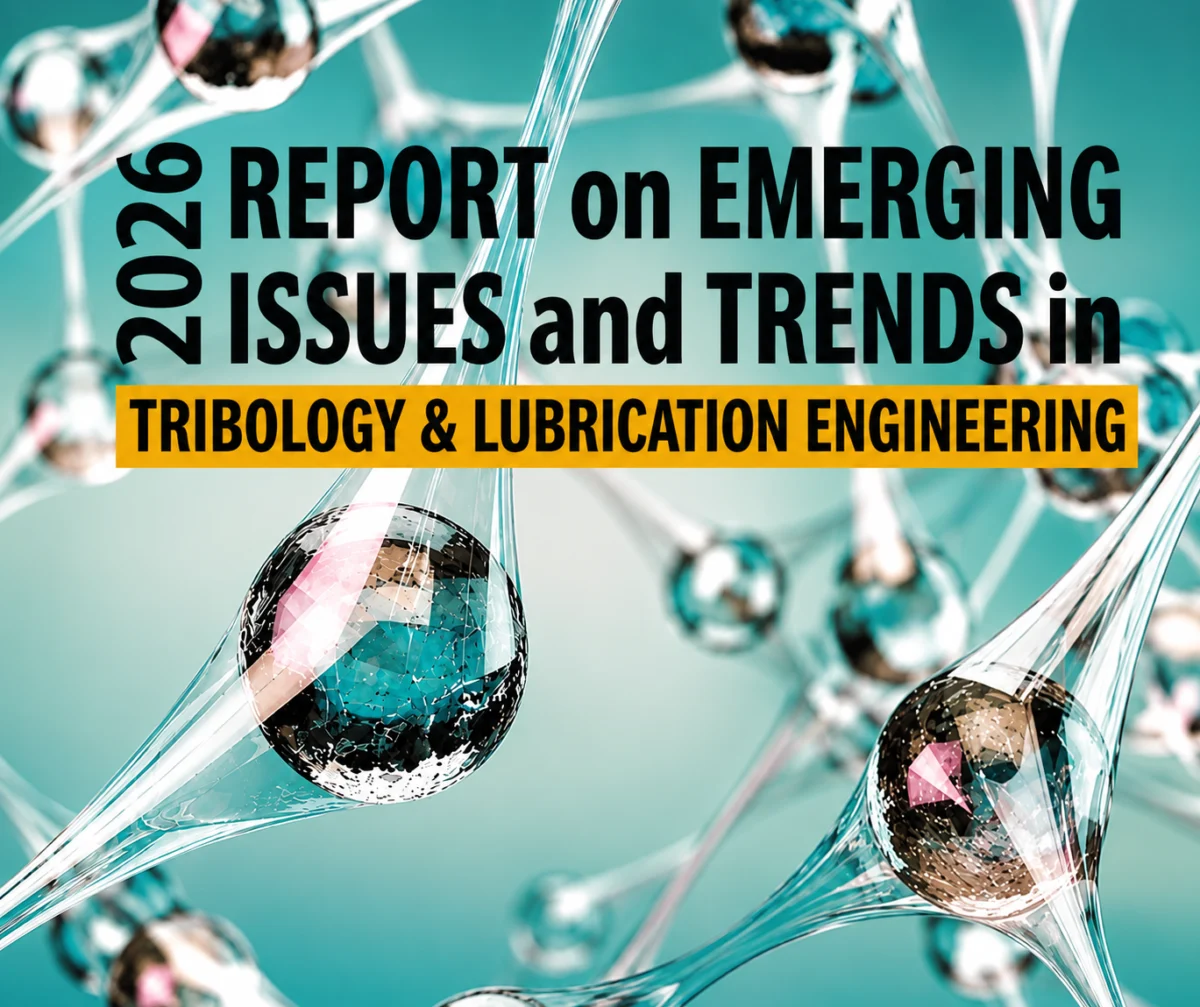
The landscape of industrial engineering is undergoing a period of profound transformation. As global demands for sustainability, digital integration, and extreme thermal management reach a fever pitch, the field of tribology—the science of interacting surfaces in relative motion—has emerged as the silent engine of modern technological progress. Recognizing the pivotal role of this discipline, the Society of Tribologists and Lubrication Engineers (STLE) has officially released its 2026 Report on Emerging Issues and Trends in Tribology and Lubrication Engineering.
Published on a triennial basis, this landmark report serves as a definitive roadmap for professionals, researchers, and corporate stakeholders navigating the rapidly shifting currents of lubrication science. By identifying the critical forces shaping the future of product development and application, the STLE provides a blueprint for how the industry will address the grand challenges of the next decade.
The Core Pillars of the 2026 Report
The 2026 edition of the STLE report moves beyond theoretical research, focusing instead on four high-impact domains that are currently dictating the pace of innovation within the manufacturing, transportation, and power sectors.
1. Artificial Intelligence and Machine Learning
The integration of AI into tribology is no longer a speculative future; it is an active operational reality. The report details how machine learning algorithms are being utilized to predict lubricant failure, optimize additive packages, and design new synthetic molecules with unprecedented speed. By shifting from reactive maintenance to predictive, AI-driven asset management, industries are effectively extending the life of critical machinery while drastically reducing waste.
2. Advanced Manufacturing Paradigms
As manufacturing moves toward smaller, faster, and more complex components, the demands on lubrication have scaled accordingly. The STLE highlights the shift toward "lubrication-by-design," where surface textures and coating technologies are developed in tandem with the physical manufacture of parts. This symbiotic approach allows for lower friction coefficients in extreme environments, such as aerospace propulsion systems and high-speed precision tooling.
3. Thermal Management
In an era dominated by high-density electronics, electric vehicles (EVs), and data centers, thermal management has become the primary constraint on performance. The report examines the evolution of functional fluids that do more than lubricate; they must act as sophisticated thermal transfer agents. The challenge lies in balancing extreme dielectric properties with high heat-capacity cooling, a field where current tribological research is providing the most significant breakthroughs.
4. Decarbonization and Sustainability
Perhaps the most urgent mandate for the modern engineer is the transition to a low-carbon economy. The STLE 2026 report emphasizes the development of bio-based lubricants, circular economy models for oil reclamation, and the reduction of friction-related energy losses in global supply chains. Tribology, the report argues, is the single most effective tool for increasing mechanical efficiency, thereby reducing the carbon footprint of the global industrial base.

A Chronology of Industrial Evolution: The Path to 2026
To understand the gravity of the 2026 report, one must look back at the trajectory of the tribology sector over the last decade.
- 2017–2020: The industry was largely focused on the refinement of traditional additives and the initial shift toward fuel-efficient engine oils. The focus was on regulatory compliance and the incremental improvement of existing formulations.
- 2020–2023: This period saw the "great disruption." Supply chain volatility, coupled with the rapid acceleration of the EV market, forced a fundamental rethink of lubrication chemistry. The STLE’s 2023 cycle identified the early warning signs of the shift toward electrification, prompting significant investment in e-fluids.
- 2023–2026: The current cycle has been defined by the mass adoption of digital twin technology and the institutionalization of sustainability metrics. The industry has moved from "testing to see if it works" to "simulating to ensure it optimizes."
The 2026 report represents the culmination of this evolution, shifting from a focus on individual components to an integrated systems-level perspective.
Supporting Data: Why Tribology Matters
The economic implications of the trends outlined in the 2026 report are staggering. Tribology is often described as the "hidden science" because its impacts are felt in the bottom line of every major industry, even if they remain invisible to the consumer.
- Energy Efficiency: Conservative estimates suggest that approximately 20% to 30% of global energy consumption originates from friction and wear. By optimizing lubrication practices, the industry could theoretically save billions of dollars in energy costs annually.
- Productivity Gains: The STLE notes that predictive maintenance, powered by the AI trends identified in the report, can reduce unplanned downtime by as much as 40%. For a large-scale manufacturing facility, this translates to an immediate increase in annual output and profitability.
- Sustainability Metrics: With ESG (Environmental, Social, and Governance) criteria becoming a prerequisite for institutional investment, the ability to document "friction-reduction-as-a-service" provides companies with a verifiable pathway to lower carbon emissions.
Official Perspective: The STLE Mission
The Society of Tribologists and Lubrication Engineers (STLE) remains the global nexus for the professionals driving these advancements. With a membership base exceeding 15,000 individuals and 200 corporate partners, the STLE acts as the primary clearinghouse for knowledge transfer.
According to STLE leadership, the 2026 report is designed to be more than a summary; it is intended to be a tool for professional survival. "Our members are at the front lines of the energy transition," a representative noted during the launch. "Whether it is engineers working in wind energy, automotive manufacturing, or aerospace, the challenges are becoming more complex. This report provides the technical literacy required to turn those challenges into competitive advantages."
The society provides a robust framework for this advancement, offering certification programs, technical research periodicals, and international networking events that ensure the workforce remains as agile as the technology it manages.
Implications for the Global Workforce
The findings in the 2026 report carry significant weight for the future of the engineering workforce. The document underscores a clear mandate: the modern tribologist must be a polymath.

The Rise of the "Digital Tribologist"
The convergence of AI and lubrication engineering means that the next generation of engineers must be as comfortable with Python and machine learning libraries as they are with rheology and surface chemistry. The report suggests that the demand for professionals who can bridge the gap between data science and physical mechanical systems will outpace supply significantly by 2030.
The Sustainability Mandate
Engineers are now being tasked with the "cradle-to-grave" analysis of their formulations. The implications of the report suggest that environmental impact will soon be a primary design parameter, equal in weight to performance and cost. This necessitates a workforce well-versed in green chemistry and circular supply chain economics.
Global Connectivity
As the report identifies trends that are truly global in nature—such as the international standardization of e-fluid performance—the necessity for professional mobility and cross-border collaboration is at an all-time high. The STLE’s role in facilitating this global dialogue is set to become even more critical.
Accessing the Roadmap
The 2026 STLE Emerging Trends Report on Issues and Trends in Tribology and Lubrication Engineering is currently available to the public. The society has structured the release to ensure broad access, offering the document free of charge to its members—a move aimed at fostering widespread adoption of these critical insights. Non-members can purchase the report for $20, a nominal cost relative to the strategic value of the data contained within.
For those interested in the future of the industry, the report is more than a reading assignment; it is a professional compass. As the world moves toward more efficient, more sustainable, and more intelligent mechanical systems, the knowledge contained within these pages will define who leads the next industrial revolution and who is left behind.
For further information on the report, membership opportunities, or to access the society’s extensive library of technical research, visit stle.org.
In a world defined by motion, the STLE continues to ensure that the world keeps moving—more efficiently, more sustainably, and more intelligently than ever before.