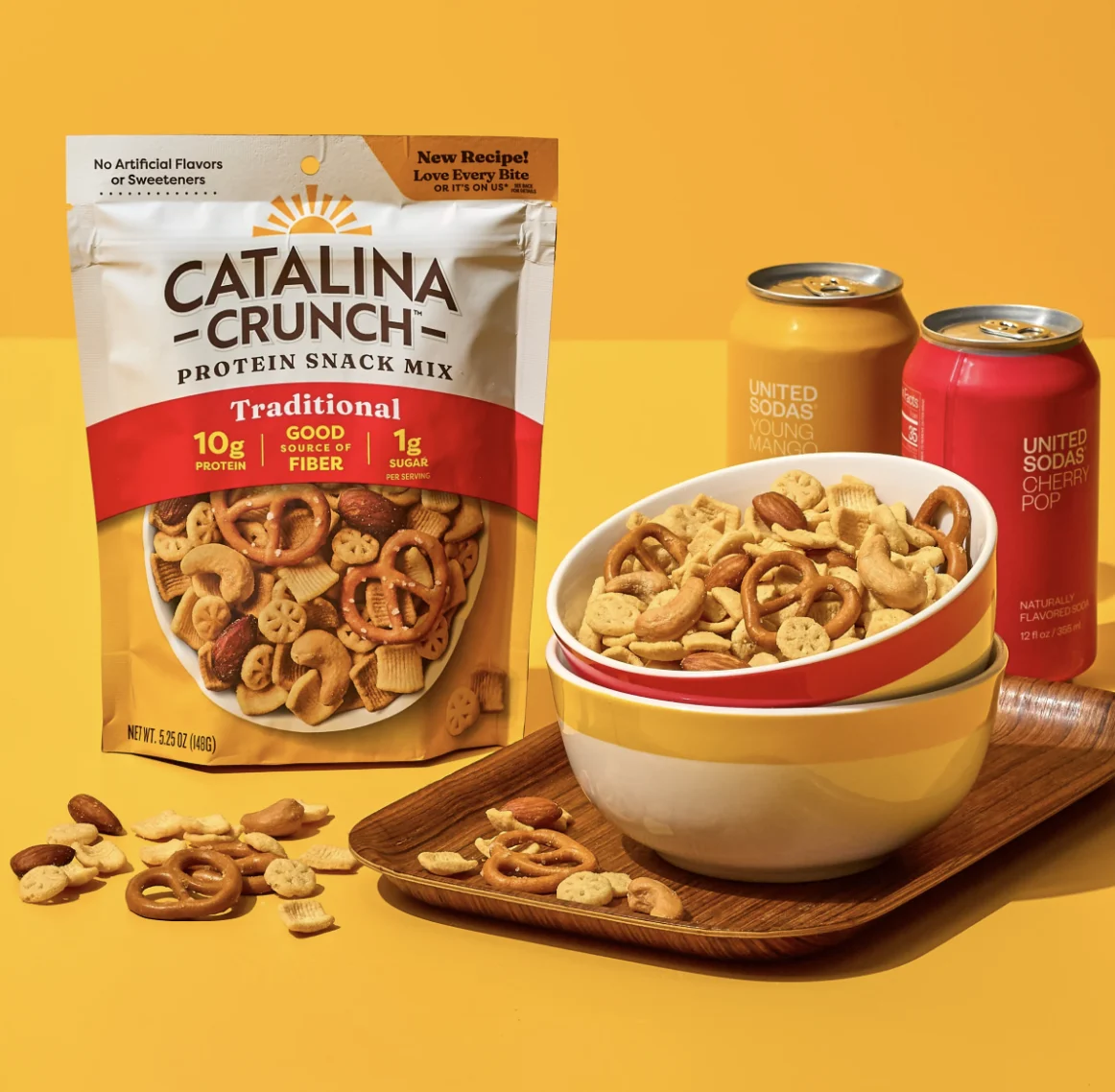
The consumer packaged goods (CPG) landscape is currently undergoing a radical transformation. As consumers pivot away from ultra-processed staples toward functional, macro-conscious nutrition, brands that can successfully bridge the gap between "healthy" and "craveable" are capturing significant market share. Standing at the forefront of this shift is Catalina Crunch, a brand that has carved a niche in the competitive cereal and snack category.
To capitalize on this momentum, the company has appointed industry veteran Charlotte Mostaed as its new Chief Marketing Officer. With a pedigree that includes tenures at Procter & Gamble, Pom Wonderful, and a transformative five-year stint at Health-Ade Kombucha, Mostaed is tasked with a singular, ambitious goal: evolving Catalina Crunch from a beloved niche player into a household staple.
Main Facts: The New Mandate for Growth
Catalina Crunch has demonstrated impressive resilience and growth, currently boasting a 5% household penetration—translating to roughly 6 to 7 million U.S. households. Over the last 18 months alone, the brand has successfully brought 1.7 million new households into its ecosystem. Despite this, the leadership team recognizes that the "better-for-you" space is increasingly crowded.
Mostaed’s primary mandate is to move beyond the current "loyalist" base. While the brand enjoys a robust 47% repeat purchase rate, Mostaed notes that roughly 20% of the brand’s customers currently drive the vast majority of its volume. The challenge, therefore, is twofold: deepening the brand’s connection with these die-hard fans while simultaneously lowering the barrier to entry for the broader, mainstream consumer.
"We need to win with our loyalists and continually delight them, while introducing new trialists to the brand to achieve our next phase of growth," Mostaed explains.
Chronology of Success and Strategic Shifts
The trajectory of Catalina Crunch has been defined by a consistent, double-digit sales growth pattern over the past several years. This growth is largely credited to a strategic expansion into retail distribution. The brand is currently available in 30,000 retail locations, spanning mass merchants, traditional grocery chains, and club stores.
"That’s very exciting for a marketer because the more people can find you, the better your marketing scales," Mostaed says. Her arrival marks a transition point for the company. Having spent years building the foundation and gaining retail footprint, the company is now pivoting from a distribution-heavy strategy to a message-optimization strategy.
Key chronological milestones in this transition include:
- Retail Expansion: Reaching the 30,000-door threshold, creating a national presence that serves as the backbone for future marketing investment.
- Portfolio Maturation: The refinement of the product lineup to focus on high-protein, high-fiber, and low-sugar profiles, which are increasingly sought after by health-conscious demographics.
- Leadership Transition: The appointment of Mostaed, signaling a move toward data-driven, scalable marketing infrastructures to support the next leg of brand awareness.
Supporting Data: Why Macros Matter
The core of Catalina Crunch’s value proposition lies in its "best-in-class macros." However, Mostaed identifies a significant gap: many consumers are still unaware of the specific nutritional benefits that differentiate Catalina Crunch from traditional breakfast options.
"People just aren’t aware, and while many brands do a great job of talking about their ingredients, we have an opportunity to enhance our approach," says Mostaed. Her plan involves a fundamental redesign of packaging to foreground the nutritional profile. By clearly articulating the high-protein and low-sugar benefits directly on the shelf, the brand aims to reduce the "cognitive load" on the shopper, making the value proposition instantly recognizable.
The data supports this pivot. With a 47% repeat rate, the product clearly succeeds once it reaches the consumer’s kitchen table. The "leakage" in the funnel occurs primarily at the shelf level, where new shoppers are choosing between competing products. By optimizing the "macro-communication" on the packaging, the company expects to increase shelf velocity, which is the primary metric for long-term retail success.
Official Responses and Strategic Vision
Mostaed’s philosophy on marketing is shaped by her experiences at CPG powerhouses. She emphasizes that the modern marketing landscape is fragmented, requiring a more surgical approach than the "one-size-fits-all" campaigns of the past.
The Multi-Cohort Strategy
"Nowadays, you go after multiple benefit spaces with multiple cohorts to reach them with the message that is going to resonate most," Mostaed notes. She points out that the marketing needs of a consumer using GLP-1 medications—who may prioritize satiety and blood sugar management—are vastly different from those of a "macro-maxing mom" looking for protein-dense options for her children. By utilizing influencer marketing and targeted digital channels like Pinterest and Reddit, Catalina Crunch plans to tailor its storytelling to these distinct subgroups.
Authenticity in the Age of Influence
Mostaed is acutely aware of the "influencer fatigue" currently affecting many consumers. She argues that the only way to cut through the noise is through radical authenticity. "Consumers can sniff out [inauthentic influencer marketing] nowadays," she says. "It’s not something that brands do behind the scenes anymore. It’s out in front and consumers expect full disclosure."
Her strategy involves identifying influencers who are already legitimate fans of the brand. By providing these individuals with early access and involving them in the feedback loop before product launches, she plans to foster organic advocacy rather than transactional promotion.
Implications for the CPG Industry
The implications of Mostaed’s strategy for the broader food and beverage industry are significant. As discretionary spending comes under pressure, CMOs are being forced to prove the ROI of their marketing budgets with greater rigor. Mostaed is shifting the focus toward a "test and learn" infrastructure that tracks the correlation between marketing spend and shelf velocity.
"It’s not a one-for-one of, ‘I run this piece of media and the next day I see a velocity increase,’" she explains. Instead, she is tracking a more complex set of indicators:
- Digital Engagement: Site visits, click-through rates, and Google search volume as leading indicators of consumer interest.
- Brand Lift: Utilizing studies to measure whether the messaging is actually changing consumer perception.
- Velocity Correlation: Analyzing whether 360-degree marketing pushes result in a measurable uptick in product movement on the shelf within a three-month window.
For the company, this means moving away from "vanity metrics" and toward a system that treats every marketing dollar as a capital investment. "That’s a big responsibility I don’t take lightly," Mostaed says, "spending the company’s money to reach new consumers and prove that’s a worthwhile endeavor."
Conclusion: The Path Ahead
The road to becoming a household name is fraught with challenges, particularly in the high-stakes world of breakfast and snack aisles. However, the combination of a high-repeat product, a massive retail footprint, and a data-centric marketing leader suggests that Catalina Crunch is well-positioned for its next chapter.
As Mostaed settles into her role, the industry will be watching to see if her "test and learn" methodology can successfully broaden the brand’s appeal without diluting its core value proposition. In an era where digital trends evolve at breakneck speed, the ability to pivot, measure, and scale will be the true differentiator. For Catalina Crunch, the goal is clear: to ensure that when the health-conscious consumer walks down the aisle, the brand’s macros—and its story—speak for themselves.