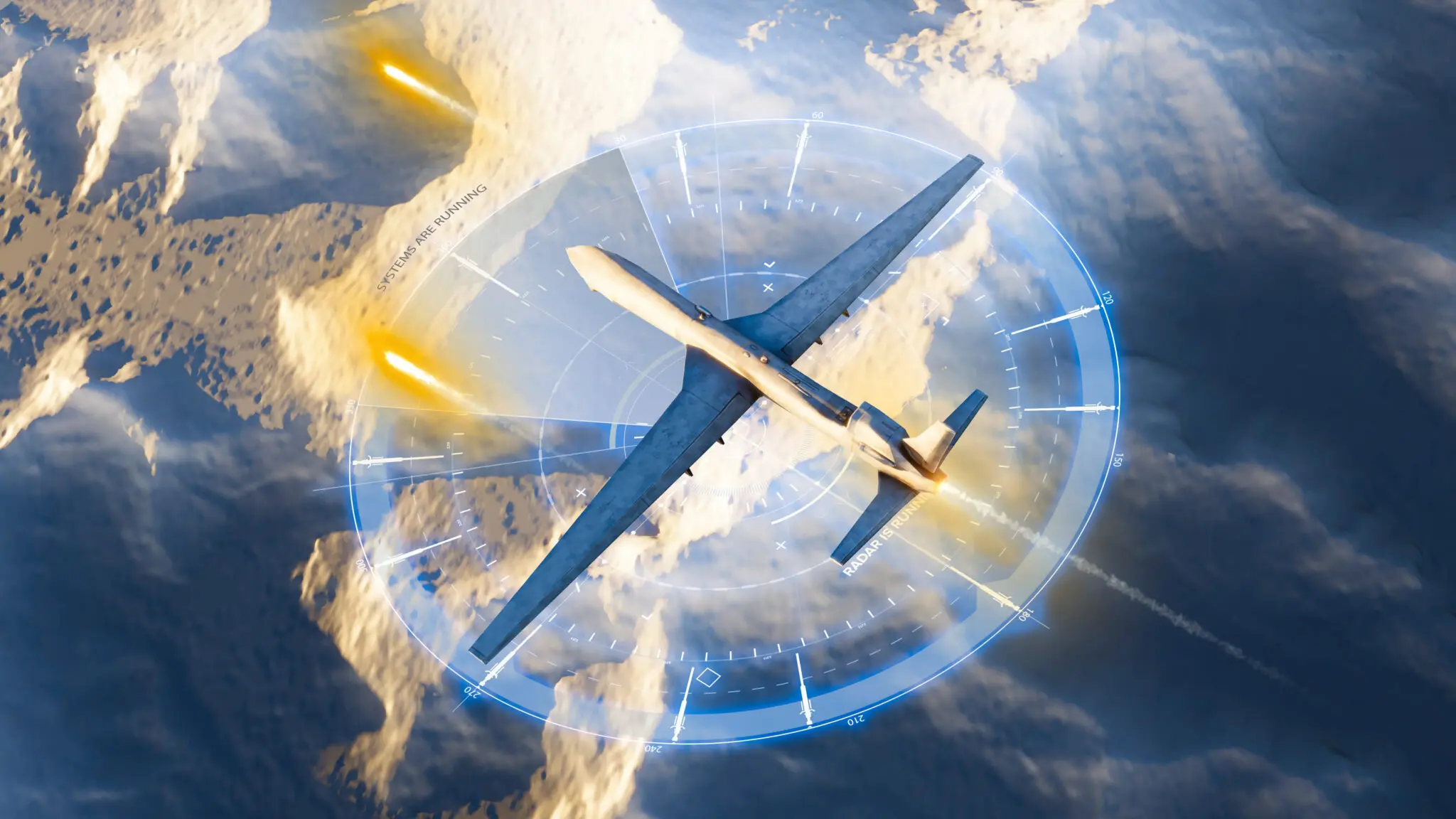
As the telecommunications industry pivots toward 6G, a transformative concept has moved from the periphery to the center of technical discourse: Integrated Sensing and Communications (ISAC). The premise is elegantly simple: since modern cellular networks blanket geographic regions with radio frequency (RF) energy, that same infrastructure could theoretically function as a vast, distributed radar array. By repurposing data-carrying signals for environmental sensing, carriers could detect drones, monitor traffic, or even track biometrics without deploying additional hardware.
However, a significant friction point has emerged. While the 3GPP is currently drafting the official roadmap for ISAC as part of its 6G standards, the defense community—driven by urgent national security needs—is questioning whether these slow-moving international standards can keep pace with the realities of modern warfare and domestic surveillance. A recent industry panel moderated by Anton Monk, SVP of Technology Strategy at Cohere Technologies, highlighted the growing divide between the "standards-first" approach of the commercial sector and the "performance-first" mindset of defense experts like Martin Weiss (DoD Future G), Gus Anderson (Lockheed Martin), and Professor Daniel Bliss (Arizona State University).
The Strategic Imperative: Why Defense is Eyeing ISAC
The U.S. Department of Defense (DoD) is not looking to replace its existing, high-capability long-range radar systems. Instead, it is looking for a force multiplier. Traditional radar systems, while highly effective, are expensive, "exquisite" hardware solutions designed for long-range, high-precision targeting. They are not, however, optimized for the "RF-dark" threats that have become a hallmark of modern conflict.
The turning point for many in the defense sector was "Operation Spider Web" in Ukraine. The conflict demonstrated that low-cost, off-the-shelf drones could bypass traditional military detection systems, effectively operating within the "clutter" of civilian environments. Martin Weiss, representing the DoD’s Future G office, emphasized that the goal of ISAC is to provide persistent, wide-area surveillance of non-emitting objects—specifically small UAVs—across broad geographic regions.
For the military, the value of ISAC lies in its density. While a single long-range radar might be blinded by urban topography or range limitations, an ISAC-enabled cellular network provides a mesh of thousands of sensing points. By converging detections from multiple cell sites, the military can build a composite situational awareness picture that is far more resilient than a single-sensor approach. Furthermore, the economic argument is compelling: the DoD cannot afford to deploy bespoke, expensive sensors on every street corner. If they can leverage existing cellular infrastructure to create a pervasive "sensing-as-a-service" network, the total cost of ownership drops dramatically.
Technical Hurdles: The Physics of Detection
Despite the strategic allure, the engineering challenges of turning a 5G or 6G base station into a radar are formidable. The most immediate obstacle is the nature of the target. A small, consumer-grade drone typically has a radar cross-section (RCS) of roughly 0.1 square meters (-10 dBsm). Detecting such a faint return at a range of five kilometers—the distance of one to two typical cell sites—is an enormous signal-processing challenge.
The "Heroic" Mitigation of Interference
The primary technical bottleneck is self-interference. In a standard radar system, the transmitter and receiver are coordinated. In an ISAC-enabled cellular network, the base station is transmitting high-power data signals while simultaneously trying to listen for the infinitesimal "echo" of a drone. To isolate the target, the system must mitigate self-interference by approximately 140 dB. Professor Daniel Bliss of Arizona State University described this requirement as "heroic."
To achieve this, the industry is moving away from the "monostatic" architecture (where a single antenna sends and receives) toward "pseudo-monostatic" or "multistatic" configurations. By separating the transmission and reception functions—or using adjacent towers to receive the reflected signals from a neighbor’s transmission—engineers can bypass the noise floor that currently hampers receiver sensitivity.
Angle Estimation and Clutter Mitigation
Range resolution is surprisingly manageable due to the high bandwidth available in future 6G networks. However, cross-range angle estimation—determining exactly where a drone is in 3D space—remains the "holy grail" of ISAC development. In dense urban environments, signals bounce off buildings, creating "clutter" that can easily overwhelm the weak signal of a drone. Advanced MIMO (Multiple-Input Multiple-Output) configurations, such as 30×2 and 60×4 antenna arrays, are currently being explored to improve spatial resolution, but these require significant, costly hardware upgrades to existing cell towers.
The Standards Conflict: "Building a Horse vs. A Committee"
The central tension in the industry is whether to wait for 3GPP to standardize ISAC protocols or to move forward with proprietary, vendor-specific systems. Gus Anderson of Lockheed Martin offered a scathing critique of the standards-heavy approach, stating, "The design requirement said build a horse, and so they built a committee, and out came a camel."
The 3GPP process is designed to reach a consensus that satisfies global commercial interests, including massive vendors like Ericsson and Nokia, as well as operators like AT&T and Verizon. This process is inherently slow. Defense stakeholders argue that if they wait for the 3GPP to finalize every specification for ISAC, the technology will be obsolete by the time it is deployed.
Instead, experts are advocating for a "systems-first" approach. In this model, developers would build working, high-performance systems first. Once the technical efficacy is proven in real-world scenarios, the 3GPP would then codify the successful elements to ensure interoperability. This would allow for a "minimalist" approach to standardization—standardizing only the critical interfaces needed for multi-vendor coordination, while leaving the underlying sensing algorithms to evolve at the speed of software.
Commercial Incentives and the Path Forward
The viability of ISAC hinges on more than just engineering; it depends on whether mobile network operators (MNOs) can find a way to monetize it. If operators view ISAC merely as a cost-burden—a feature that requires hardware upgrades but provides no revenue—they will be slow to adopt it.
To make ISAC a reality, proponents are looking toward "Sensing-as-a-Service." If an operator can offer high-fidelity drone tracking or hyper-local weather data as a value-added service to municipal governments or logistics companies, the capital expenditure for upgrading cell sites becomes a business investment rather than a sunk cost.
However, there is a cautionary tale to be found in the industry’s recent history. As Professor Bliss noted, the industry previously "oversold" the utility of millimeter-wave technology, leading to significant disillusionment when the deployment costs outweighed the immediate commercial returns. There is a palpable fear that ISAC could follow a similar path if the industry overpromises and under-delivers on the cost-to-performance ratio.
Implications for the Future
The path to widespread ISAC deployment is clearly bifurcated. On one hand, there is the slow, deliberate, and highly structured march toward 6G standards. On the other, there is the fast, iterative, and high-stakes world of defense-oriented software-defined sensing.
The likely outcome will be a hybrid ecosystem. We will see early, specialized ISAC deployments in high-security zones and smart cities where the value proposition is clear and the funding is available. These systems will likely use software-defined radio (SDR) architectures that can be updated remotely, allowing them to remain relevant even as 3GPP standards evolve.
Ultimately, the successful integration of sensing into our cellular networks will depend on whether the industry can bridge the gap between "communications engineers" and "radar engineers." These two disciplines have operated in silos for decades, governed by different physics and different priorities. ISAC represents a fundamental convergence of these worlds. If they can meet in the middle, the result will be a digital infrastructure that does more than just transmit data—it will act as a sentient, watchful eye over our physical world.
For the defense community, the message is clear: do not wait for the committee. Start building the systems, demonstrate the capability, and let the standards follow. The future of national security may well be found in the signal processing of the next generation of 6G towers.