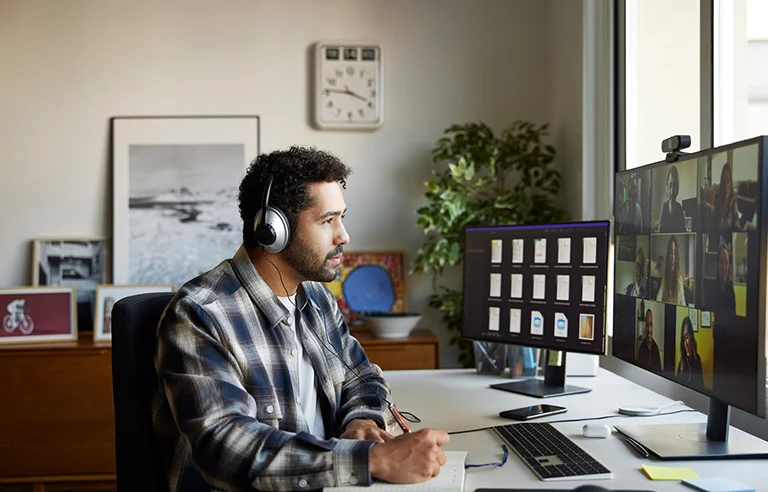
TURKU, FINLAND — For millions of knowledge workers across the globe, the shift toward a hybrid work model has redefined the modern professional landscape. Trading chaotic morning commutes and fluorescent-lit corporate cubicles for the quiet comfort of a home office has been widely celebrated as a victory for work-life balance.
However, a revealing new study conducted by researchers at the University of Turku in Finland suggests that this newfound flexibility comes with an unexpected physiological tradeoff. While hybrid employees enjoy extra minutes of precious sleep on days they work remotely, they also trade active movement for extended periods of sedentary behavior, raising new questions about long-term workplace wellness.
Published in the International Journal of Behavioral Nutrition and Physical Activity, the study offers a granular look into the daily habits of hybrid professionals, utilizing objective sensor data rather than relying solely on subjective questionnaires. The findings present a nuanced picture of the home office environment—one that highlights the urgent need for both employers and remote employees to consciously design healthier work-from-home routines.
Main Facts: The Trade-Off Between Sleep and Movement
At the core of the Turku study is a paradox familiar to many remote workers: the comfort of home promotes better rest, but it simultaneously fosters a more sedentary lifestyle.
To conduct the research, a team led by lead author Kristin Suorsa recruited 97 hybrid workers. These participants were asked to wear specialized movement and sleep-tracking sensors continuously for seven consecutive days, capturing a comprehensive, uninterrupted cycle of both remote workdays and traditional in-office days. Additionally, participants meticulously self-reported their time spent in bed to cross-reference with objective biometric metrics.
The data revealed two primary deviations in daily habits between remote and office days:
- The Sleep Bonus: On days working from home, participants secured an average of 15 minutes more sleep compared to days they commuted to a centralized workplace.
- The Sedentary Penalty: Conversely, on those same remote days, participants spent an alarming 45 more minutes sitting or lying down, representing a significant drop in overall daily physical activity.
Furthermore, the study documented a broader decline in overall physical engagement. Not only did prolonged sitting increase, but both light physical activity and moderate-to-vigorous physical activity (MVPA) dropped during remote workdays.
For occupational health experts, these findings complicate the blanket narrative that remote work is universally beneficial for employee well-being. While eliminating a stressful 45-minute highway or subway commute clearly yields restorative benefits for sleep hygiene, the domestic environment appears to act as an anchor, tethering professionals to their desks for hours on end without the natural interruptions built into a traditional office workday.
Chronology: How the Study Unfolded
Understanding the depth of these findings requires looking closely at how the research was conceptualized, executed, and brought to the scientific community.
Phase 1: Conceptualization and Recruitment
As remote and hybrid work models transitioned from temporary pandemic-era emergency measures into permanent corporate fixtures, public health researchers turned their attention to the long-term lifestyle impacts. The research team at the University of Turku recognized a critical gap in the literature: while much was known about productivity and mental health in hybrid environments, objective data regarding 24-hour activity cycles (sleep, sedentary behavior, and physical activity combined) remained scarce.
In response, the team designed a study targeting local hybrid workers—individuals who split their time between a corporate office and a home workstation. They successfully recruited 97 healthy adult participants willing to commit to a rigorous, week-long monitoring protocol.

Phase 2: The Monitoring Period
Rather than relying on participants’ memories—which are notoriously unreliable when estimating minutes spent sitting or sleeping—the researchers utilized advanced wearable sensors.
- For seven straight days and nights, the sensors tracked biometric and kinetic data.
- Participants recorded their time spent in bed in daily logs to provide context for the sensor-measured sleep intervals.
- The methodology allowed researchers to compare the exact same individuals across two different working environments (home vs. office), effectively controlling for individual lifestyle differences.
Phase 3: Data Analysis and Dissemination
Once the week-long tracking period concluded, the research team aggregated and analyzed the massive influx of accelerometer and sleep data. They isolated remote workdays from in-office workdays to run comparative behavioral models.
Upon identifying the stark 15-minute sleep increase paired with the 45-minute sedentary spike, the team prepared their findings for peer review. The study was officially accepted and published in the International Journal of Behavioral Nutrition and Physical Activity, instantly drawing the attention of occupational safety professionals, human resource leaders, and public health advocates worldwide.
Supporting Data: Breaking Down the Numbers
The implications of the Turku study become clearer when examining the specific behavioral mechanisms driving these shifts. The data illustrates how subtle differences in physical architecture and daily routines can profoundly impact human physiology.
The Anatomy of Sedentary Behavior
When asked what drove the 45-minute surge in sedentary time during remote workdays, the data pointed away from a generalized lack of motivation and toward a more mechanical culprit: standing time.
Lead author Kristin Suorsa highlighted a striking environmental factor in a press release accompanying the study: "The increase in sedentary behavior during remote workdays was mostly caused by spending less time standing. One possible explanation is that, unlike in offices generally, standing workstations are not always available in a home setting."
In a modern corporate office, employees are frequently nudged—often subconsciously—into upright postures and ambulation. They stand up to greet colleagues at cubicle walls, walk across sprawling campuses or multi-floor buildings to attend meetings, journey to communal cafeterias for lunch, or utilize centralized printing stations.
At home, however, the physical workspace is frequently compressed. Laptops rest on kitchen islands, dining tables, or dedicated home-office desks. Without the built-in friction of a commute and the architectural sprawl of an office building, the path of least resistance at home is overwhelmingly horizontal or seated.
The Sleep Equation
The 15-minute sleep advantage observed on remote days is not surprising to sleep specialists. Commuting is one of the primary daily stressors for modern workers, often requiring early wake-up times to beat traffic or catch rigid public transit schedules.
By erasing the commute, hybrid workers claw back crucial morning minutes that are directly reinvested into rest. However, sleep experts caution that while 15 extra minutes is a positive step, it does not fully offset the metabolic and musculoskeletal risks associated with a nearly one-hour increase in daily sedentary time.
Official Responses and Expert Perspectives
The release of the Turku study has reverberated through occupational health and safety circles, prompting responses from researchers, ergonomics experts, and workplace wellness advocates.

The Call for Intentional Movement
In their official conclusions, the study authors did not call for an end to hybrid work. Instead, they urged a proactive, behavior-modification approach. The researchers actively encourage remote and hybrid employees to deliberately engineer movement into their home-based schedules.
"Workers need to recognize that the home environment naturally promotes stillness," noted one ergonomic consultant reviewing the findings. "Because the physical cues to stand up and walk around—like a colleague walking over to your desk or a meeting across the building—do not exist at home, remote workers must invent their own interruptions."
The Ergonomic Deficit
Safety advocates have seized upon Suorsa’s observation regarding the lack of standing desks in home environments. While many forward-thinking corporations subsidize ergonomic chairs, dual-monitor setups, and height-adjustable standing desks for corporate headquarters, home offices are frequently furnished out-of-pocket by employees using standard, residential furniture.
This creates a systemic disparity: employees who enjoy ergonomic optimization at the office may revert to kitchen chairs and static desk setups at home, accelerating physical fatigue, joint stiffness, and sedentary habits.
Implications: The Future of Hybrid Work and Occupational Health
As organizations continue to refine their hybrid policies, the findings from Finland carry profound implications for employers, employees, and the future of workplace safety management.
1. Re-evaluating Corporate Wellness Programs
Historically, corporate wellness programs focused heavily on gym memberships, nutrition seminars, and stress-management apps. The Turku study suggests that wellness initiatives must evolve to address the microscopic habits of the workday—specifically, the insidious creep of sedentary behavior.
Employers embracing hybrid models should consider extending their ergonomic stipend programs directly into employees’ homes. Providing financial assistance for adjustable standing desks, balance boards, or under-desk walking pads can directly counteract the environmental shortcomings of residential spaces.
2. Redefining Workplace Policies
Safety managers can no longer view occupational health as ending the moment an employee logs off from the physical corporate building. Under duty-of-care principles, companies must acknowledge that the home office is a workplace.
Proactive organizations are beginning to implement structural policies designed to protect remote workers from physical stagnation. Examples include:
- "Camera-off" Walking Meetings: Encouraging employees to take routine 1-on-1 check-ins while pacing their living rooms or walking around their neighborhoods.
- Micro-Break Prompts: Utilizing software reminders that prompt employees to stand up, stretch, or execute a brief mobility routine every 45 to 60 minutes.
- Asynchronous Communication Standards: Discouraging the expectation of immediate responses, which often traps employees in continuous, unmoving desk-bound marathons for fear of missing a message.
3. Balancing Rest and Activity
Ultimately, the study paints a picture of hybrid work as a double-edged sword. It offers a tangible victory for mental health and sleep hygiene by returning precious hours of the day to the worker. Yet, it introduces a hidden physical tax in the form of diminished activity and prolonged immobility.
The challenge for the modern workforce is not choosing between rest and movement, but learning how to harmonize them. By understanding the distinct behavioral traps of the home environment, hybrid workers and their employers can take targeted steps to preserve the sleep benefits of working from home while leaving the sedentary pitfalls behind.