




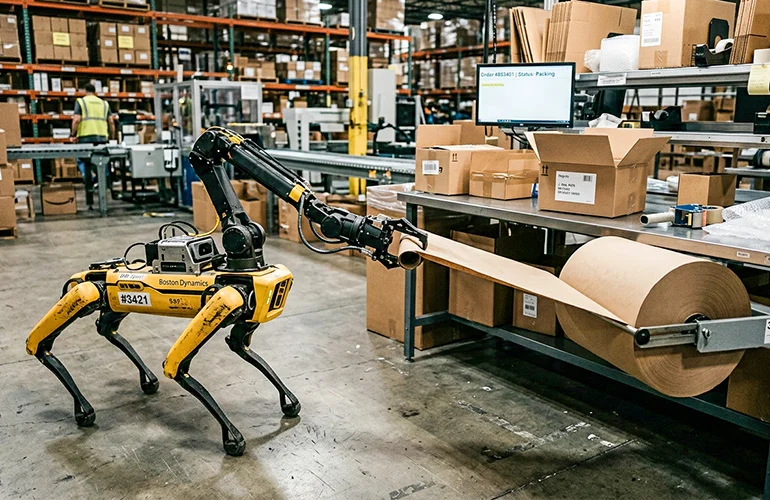
In the high-stakes theater of modern global supply chain management, warehouse managers have long been held hostage by a persistent, seemingly intractable paradox: the "Green Dilemma." For years, the industry has operated under the assumption that sustainability and profitability are fundamentally at odds. Reducing a carbon footprint—through paper-based packaging, minimized transit empty space, or energy-efficient facility management—was often viewed as a cost center, a necessary evil required for compliance or public relations, but one that inevitably hindered the relentless pursuit of high-throughput operational excellence.
However, a paradigm shift is underway. As we approach the 2026 Robotics Summit & Expo in Boston, the conversation is moving away from the binary choice between "profit" and "planet." Instead, it is gravitating toward a new, technologically driven reality: Physical AI. Omar Asali, Chairman and CEO of Ranpak, is set to headline this discourse, arguing that the integration of artificial intelligence into the physical hardware of the warehouse is the key to reconciling environmental stewardship with the bottom line.
The Paradigm Shift: Moving Beyond Digital AI
For the better part of a decade, the term "AI" has been almost exclusively synonymous with Large Language Models (LLMs), predictive data analytics, and digital optimization software. While these tools have undoubtedly streamlined logistics forecasting, they have historically been disconnected from the "last meter" of the warehouse floor—the physical manipulation of goods.
Physical AI represents the bridge between the digital intellect and the tangible world. It is the evolution of robotics from pre-programmed, repetitive machinery into adaptive, sensor-driven systems capable of perceiving the environment in real-time. A robot equipped with physical AI does not simply move a box from Point A to Point B; it understands the fragility of the contents, the dimensions of the package, the environmental impact of the filler material being used, and the optimal way to pack the item to minimize waste.
The Role of Perception in Sustainability
At the upcoming Robotics Summit, Asali will delineate how physical AI serves as the "connective tissue" of the modern warehouse. By utilizing sophisticated computer vision and haptic feedback, these systems can identify the most efficient packaging configurations instantly. This reduces the reliance on plastic fillers, decreases the volume of shipping containers (thereby optimizing fuel consumption during transport), and significantly lowers the frequency of damaged goods—a hidden, yet massive, sustainability failure.
Chronology: The Evolution of Warehouse Automation
To understand why this moment is critical, one must look at the historical trajectory of warehouse technology.
- 1990s – Early 2000s: The Mechanization Era. Warehouses began utilizing static conveyor systems and basic automated sortation. While throughput increased, the systems were rigid and energy-intensive.
- 2010s: The Rise of AMR/AGV. The introduction of Autonomous Mobile Robots (AMRs) revolutionized internal transport. However, these machines were largely "blind," requiring rigid environmental parameters to function effectively.
- 2020 – 2024: The Software-First Boom. The industry shifted focus toward cloud-based warehouse management systems (WMS). While highly effective at data crunching, this left a "physical gap" between the software’s commands and the robots’ ability to interact with complex, variable physical items.
- 2025 – Present: The Physical AI Convergence. We are currently witnessing the integration of generative and adaptive AI directly into robotics controllers. Machines are now capable of handling irregular shapes, dynamic environments, and complex tasks that were previously only possible for human laborers.
This evolution has laid the groundwork for the current push toward "intelligent sustainability." The machines are finally as smart as the software that guides them, allowing for a level of granular efficiency that was previously impossible.
Supporting Data: Debunking the Profit vs. Planet Myth
The skepticism surrounding green logistics is rooted in the fear of high capital expenditure (CapEx) and the fear that environmental constraints will slow down conveyor speeds. Ranpak’s recent operational data suggests that these fears are misplaced.
According to internal performance metrics to be shared by Asali, companies that have integrated AI-driven packaging systems have seen:
- Material Reduction: A 20-30% reduction in corrugated material usage by optimizing box sizes relative to the specific products inside, facilitated by real-time spatial analysis.
- Energy Efficiency: A decrease in total power consumption per unit processed, as robots execute more efficient, shorter paths and require fewer re-runs due to packing errors.
- Throughput Gains: While initial adoption may present a learning curve, once optimized, physical AI systems consistently outperform human-only packing stations in terms of consistent hourly output, significantly reducing the cost-per-package.
- Carbon Footprint Impact: By reducing the volumetric weight of shipments, companies are fitting more products into fewer trucks, leading to a measurable reduction in "scope 3" emissions—the most difficult segment of the supply chain to decarbonize.
These figures illustrate that sustainability is not merely a philanthropic endeavor; it is a competitive advantage. In a market where fuel costs are volatile and carbon reporting requirements are tightening, these operational efficiencies translate directly into sustained EBITDA growth.
Official Perspectives: The Vision of Human-Centered Automation
A common anxiety surrounding the advancement of robotics is the displacement of the human workforce. However, the perspective offered by industry leaders like Asali is decidedly human-centric. The goal of physical AI is not to create a "lights-out" warehouse, but to transform the nature of the work performed by employees.
"We are not removing the human from the loop," proponents argue. "We are removing the human from the mundane, repetitive, and physically taxing tasks."
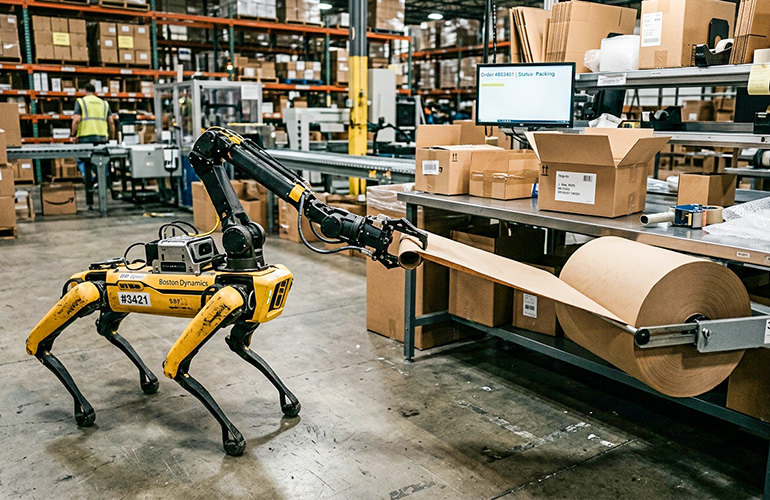
By deploying robots to handle the repetitive, high-frequency tasks—such as pulling packaging paper, folding boxes, and basic sorting—warehouses can transition their human workers into roles that require judgment, problem-solving, and emotional intelligence. This shift is expected to decrease workplace injuries, improve employee retention, and foster a more engaged workforce. In this vision, the technology acts as a force multiplier for the human staff, rather than a replacement.
Implications for the Future of Logistics
The implications of this shift are profound. If physical AI can successfully bridge the gap between sustainability and profitability, we can expect to see a rapid acceleration in the adoption of "Green Robotics" across the entire supply chain.
The Standardization of "Sustainable ROI"
As we move toward 2027 and beyond, the industry will likely see the development of standardized metrics for "Sustainable ROI." Companies will no longer just report on dollars earned; they will report on the carbon saved per dollar earned. This will force vendors to prove the environmental impact of their hardware, effectively turning sustainability into a key performance indicator (KPI) as standard as speed or accuracy.
The Decentralization of Fulfillment
Physical AI also enables greater decentralization. By making smaller, localized fulfillment centers more efficient through automation, companies can move their inventory closer to the end consumer. This significantly reduces the "last-mile" carbon impact, further aligning the logistics model with modern environmental expectations.
Conclusion: A Call to Action at the Robotics Summit
For logistics professionals and warehouse managers, the upcoming Robotics Summit & Expo is not merely a trade show; it is a strategic briefing on the future of the industry. The session, "How Physical AI Is Driving Profitable, Scalable Sustainability in Warehouses," scheduled for Wednesday, May 27, 2026, at 2:30 PM, promises to provide a practical framework for implementation.
Attendees will leave with a clearer understanding of how to quantify the ROI of green initiatives and how to select the right physical AI partners to transition their operations into the next generation. As the global economy continues to demand higher standards of accountability, the choice for warehouse managers is becoming increasingly clear: adapt to the era of physical AI, or be left behind by a rapidly evolving, environmentally conscious marketplace.
Event Details:
- Session: How Physical AI Is Driving Profitable, Scalable Sustainability in Warehouses
- Speaker: Omar Asali, Chairman and CEO of Ranpak
- Date: May 27, 2026
- Location: Thomas M. Menino Convention & Exhibition Center, Boston
- Registration: Visit the Robotics Summit website to secure your spot.
The technology to reconcile our economic ambitions with our environmental responsibilities is no longer on the horizon; it is currently being deployed on the warehouse floor. The question remains: how quickly will the industry act to embrace it?