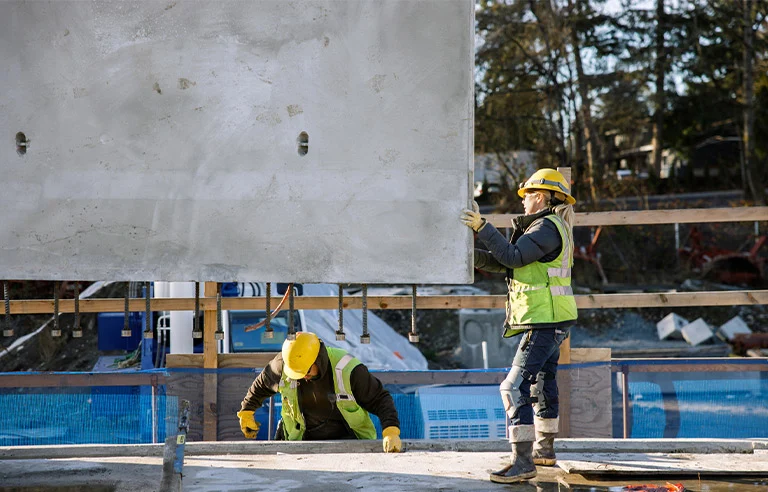
PORTLAND, OR — For decades, the construction industry has functioned as the backbone of global infrastructure, yet its internal architecture remains stubbornly rigid. A transformative new study led by researchers at Oregon Health and Science University (OHSU) has peeled back the layers of this high-stakes environment, revealing that for women in the skilled trades, the job site is often a landscape defined by significant health and safety inequities.
Published in the Journal of Workplace Behavioral Health, the research offers a piercing examination of the experiences of tradeswomen, highlighting a industry that, while essential, has yet to fully adapt its safety protocols, equipment design, or cultural norms to accommodate a diverse workforce.
The Core Findings: A Holistic View of Tradeswomen’s Reality
The OHSU-led research team approached their investigation with a mandate to move beyond mere statistics, opting instead for semi-structured interviews with tradeswomen and industry subject matter experts. By prioritizing qualitative data, the study sought to “capture a holistic view of women’s experiences in skilled trades,” moving past the surface-level metrics of hiring and retention to examine the day-to-day lived realities of those on the front lines.
The study identified several critical failures in the current construction ecosystem. At the top of the list is the pervasive issue of ill-fitting personal protective equipment (PPE). While PPE is intended to be the final line of defense against injury, the industry standard—often designed for the male physique—regularly leaves women with oversized vests, loose gloves, and ill-fitting respirators. In high-hazard environments, these "minor" discrepancies represent significant, preventable risks.
Beyond physical gear, the researchers uncovered a profound deficit in ongoing training. Women reported that educational opportunities were often inconsistent, lacking the depth or frequency required to ensure long-term mastery and safety. This "training gap" not only hinders professional advancement but creates a secondary safety risk, as workers are expected to perform complex tasks without the robust, continuous support systems provided to their male counterparts.
Chronology: The Evolution of the Study
The path to this publication was marked by a meticulous, multi-phase research design:
- Phase I: Literature Review and Framework Development (Early 2023): Researchers began by analyzing existing data on workplace health, safety, and gender parity. They noted a significant void in research specifically focused on the intersection of physiological safety and gender within the construction sector.
- Phase II: Data Collection (Mid-2023 to Early 2024): The team engaged in a series of semi-structured interviews. These conversations were designed to be open-ended, allowing tradeswomen to speak candidly about their daily stressors, safety concerns, and the culture of their respective job sites.
- Phase III: Synthesis and Thematic Analysis (Spring 2024): The research team categorized participant responses, identifying recurring themes such as isolation, the "brotherhood" culture, and the logistical challenges of pregnancy and childcare in a field-heavy environment.
- Phase IV: Publication and Peer Review (Late 2024/Early 2025): The findings underwent rigorous peer review before being accepted by the Journal of Workplace Behavioral Health, providing a foundation for policy recommendations.
Supporting Data: Beyond the Hard Hat
While the study is qualitative in nature, its implications are supported by long-standing industry data regarding the underrepresentation of women in construction. Despite a global push for gender diversity in STEM and vocational fields, women continue to represent a small fraction of the skilled construction workforce.
The OHSU researchers noted that the physical environment is not the only obstacle; the "social environment" is equally punitive. The study highlights that the construction industry’s traditional culture—often characterized by rigid hierarchies and a resistance to "softer" human resources policies—acts as a catalyst for high turnover.
Positive Aspects: The Incentive to Stay
Crucially, the study was not merely a catalogue of grievances. Participants highlighted several positive aspects that keep them in the trades, including:
- Financial Independence: The high earning potential of skilled trades remains a significant draw for women seeking to close the gender wage gap.
- Tangible Accomplishment: There is a unique, deep-seated pride in creating physical structures that impact society, which many participants cited as a primary driver of job satisfaction.
- Camaraderie and Mentorship: When positive, the relationships formed on a job site can be life-changing, providing a sense of team cohesion that is difficult to replicate in an office setting.
Official Responses and Strategic Recommendations
The OHSU research team did not stop at identifying problems; they provided a roadmap for transformation. Their proposed strategies are categorized into three pillars: institutional, cultural, and logistical.
Institutional Reforms
The study calls for an urgent increase in women in leadership positions. By diversifying the decision-making body of construction firms, the industry can better anticipate the needs of its diverse workforce. This includes strengthening accountability mechanisms to ensure that safety and inclusivity are treated with the same weight as project budgets and timelines.
Cultural Shifts
"By engaging top managers, supervisors and workers, the construction industry can advance fairness, mentorship and respectful work environments," the authors write. This requires a shift away from the "tough it out" mentality that has historically discouraged the reporting of harassment or the request for better, safer working conditions.
Logistical Enhancements
The study emphasizes the need for:
- Retention-focused Education: Ongoing, inclusive training programs that cater to diverse learning styles.
- Health Resources: Access to gender-appropriate health resources, including specialized medical support and reproductive health considerations.
- Peer Support: The creation of formal mentorship networks that connect experienced tradeswomen with new apprentices, reducing the isolation often felt by women entering male-dominated fields.
- Site Infrastructure: Something as fundamental as healthier food options on jobsites and adequate, hygienic sanitation facilities for all genders were highlighted as immediate, low-cost ways to signal respect for a diverse workforce.
Implications: Building a Sustainable Future
The implications of the OHSU study extend far beyond the individual experiences of the participants. As the construction industry faces a chronic labor shortage and an aging workforce, the ability to recruit and retain women is no longer a matter of corporate social responsibility—it is a matter of economic survival.
The Business Case for Inclusion
When safety protocols are designed with only one demographic in mind, the entire workforce is at risk. By standardizing the use of ergonomic, well-fitting PPE, firms can reduce the incidence of injuries and associated workers’ compensation claims. Similarly, by establishing robust anti-harassment policies, companies can decrease turnover, thereby preserving institutional knowledge and reducing the massive costs associated with onboarding new staff.
Creating a Family-Friendly Jobsite
Perhaps the most significant challenge mentioned by participants was the difficulty of balancing family life with the inflexible, often grueling schedules of construction. The study strongly recommends that firms adopt family-friendly policies—such as predictable scheduling and flexible leave—to prevent the premature exit of skilled women from the industry.
Conclusion: A Call to Action
The OHSU study serves as a wake-up call for an industry that has remained largely stagnant in its approach to workforce management for generations. The researchers conclude that the path to a safer, more equitable construction sector lies in a collaborative approach. It requires the active participation of top-tier executives, on-site supervisors, and the rank-and-file workers who define the culture of the job site.
By treating the health and well-being of tradeswomen as a core business priority, the construction industry can transform itself into a modern, inclusive, and highly productive sector. The research is clear: the barriers to entry for women are not just physical—they are embedded in the systems and cultures that govern the sites. With targeted policy interventions and a fundamental shift in perspective, these barriers can be dismantled, paving the way for a more resilient and sustainable future for all who build our world.
For those interested in the full methodology and findings, the study is available in the Journal of Workplace Behavioral Health (2025/2026 archives).