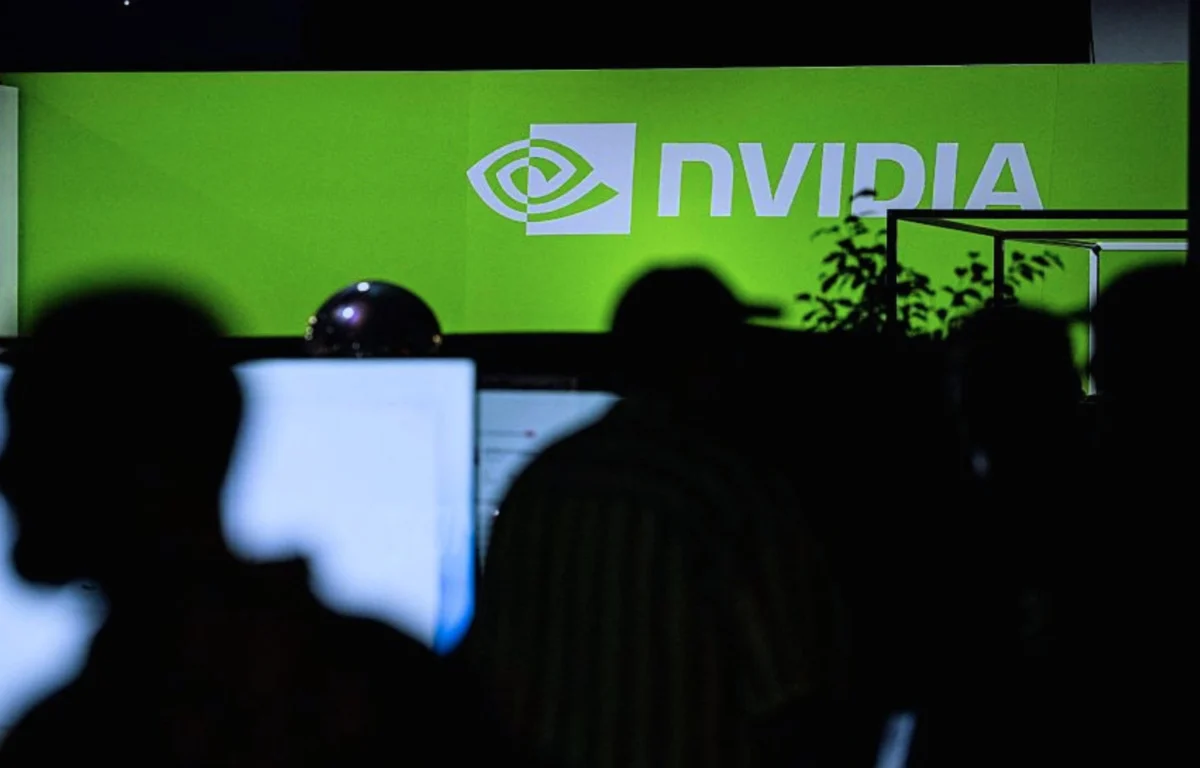
In a landmark shift for the future of artificial intelligence, a coalition of industry giants—including Nvidia, Microsoft, Meta, IBM, Hugging Face, and Mistral—issued a unified call to action on July 24. Their collective message, titled Open Weights and American AI Leadership, argues that the next phase of the digital revolution will not be defined by walled-off, proprietary black boxes, but by the proliferation of an "open ecosystem."
This movement represents a fundamental pivot in how businesses and governments perceive the architecture of innovation. For years, the AI narrative was dominated by the "frontier model" race—a competition to build the largest, most expensive, and most secretive systems. However, the signatories of this letter suggest that true leadership, particularly in the United States, depends on distributing capabilities throughout the broader economy rather than hoarding them behind closed APIs. At the heart of this movement is a singular, powerful concept: Sovereignty.
The Core Concept: Redefining Sovereignty in the Age of Intelligence
Sovereignty is no longer just a geopolitical term used by nations; it has become the most critical metric for corporate resilience. As organizations integrate Large Language Models (LLMs) into their operational workflows, the dependency on third-party providers has created a new class of strategic risk.
For a business, sovereignty is multifaceted. It involves:
- Model Sovereignty: The ability to lock in a version of a model so it does not shift due to a provider’s update cycle.
- Data Sovereignty: Maintaining control over where data is processed, who accesses it, and the legal jurisdiction governing that data.
- Infrastructure Sovereignty: The flexibility to host AI workloads on local servers or preferred cloud providers, avoiding "vendor lock-in."
- Economic Sovereignty: Managing the long-term cost of operations without being beholden to the fluctuating pricing models of a single supplier.
- Knowledge Sovereignty: Ensuring that the intellectual capital—prompts, fine-tuning, and retrieval systems—remains the property of the enterprise, not the model provider.
Understanding the Architecture: Open vs. Closed Weights
To grasp why industry leaders are pushing for open weights, one must understand the technical distinction defined by NIST (the National Institute of Standards and Technology). An AI "weight" is essentially a numerical parameter that dictates how a model processes information—it is the digital "brain" of the AI.
The Closed-Weight Paradigm
In a closed-weight system, the model is a "black box." A company accesses the AI exclusively through an application or an API (Application Programming Interface). The provider manages everything: the hosting, the updates, the data environment, and the pricing. If the provider decides to change the model’s performance or deprecate a version, the client is forced to adapt, often at a significant cost to their own operations.
The Open-Weight Paradigm
An open-weight model makes those parameters available for download. Subject to specific licenses—such as the Apache License 2.0—organizations can download, evaluate, adapt, and deploy these models on infrastructure of their choice. This turns AI from a service into a tool, allowing the enterprise to maintain control over the "checkpoint"—the specific state of the model at a point in time.
The Chronology of a Paradigm Shift
The movement toward open weights did not emerge in a vacuum. It is the result of a multi-year evolution:
- 2022–2023: The rapid adoption of proprietary models (GPT-4, Claude) created immediate utility but surfaced concerns regarding data privacy and "black box" behavior.
- Early 2024: Open-source and open-weight models (such as Llama 3 and Mistral) began reaching parity with closed-source frontier models, proving that proprietary secrets were not a requirement for high-level performance.
- July 24, 2024: The joint letter, Open Weights and American AI Leadership, marked the official institutionalization of the open-weight movement. By securing signatures from companies like Nvidia and Microsoft, the coalition signaled that even the architects of the closed-AI boom recognize the need for a more decentralized future.
Operational Stability: Why Control Matters
For enterprises, the most compelling argument for open weights is predictability. In a closed system, a provider might update a model to improve its overall performance, but that update could inadvertently break a business’s specific workflow.
If a company uses an AI to classify legal documents or extract data from invoices, they likely have a set of benchmarks against which the AI is tested. A surprise update from a provider can change the model’s tone, reasoning, or output format, forcing the enterprise to re-validate its entire workflow.
With open weights, the business decides the update schedule. They can keep a model version fixed, ensuring consistent results for years, while their engineering teams refine the "surrounding architecture"—the retrieval-augmented generation (RAG) layers, prompts, and inference settings. This creates a stable production environment where the business, not the vendor, sets the pace.
Data and Infrastructure: The Jurisdictional Challenge
Data sovereignty is perhaps the most pressing concern for multinational corporations. When using a closed-source API, data must be sent to the provider’s server. Even with contractual promises, these providers are subject to the legal jurisdictions of their home countries.
For example, the U.S. CLOUD Act allows U.S. authorities to request data from providers even if that data is hosted on servers in Europe. This creates a legal conflict for European companies bound by strict privacy laws like the GDPR. The French data protection authority, CNIL, has frequently warned that sensitive data handled by foreign-controlled entities may remain exposed to extra-judicial access.
By using open-weight models, companies can host their AI on their own infrastructure—or on local European cloud providers like Scaleway or OVHcloud—ensuring that the data never leaves their control or their desired legal jurisdiction.
Economic and Knowledge Sovereignty: Protecting ROI
Closed models often force a "one-size-fits-all" pricing strategy. As usage grows, costs can scale exponentially, leaving the customer with little leverage. Open-weight models democratize this access. Companies can match a specific, smaller model to a specific, simple task, rather than paying for the most expensive frontier model for every operation.
Furthermore, there is the issue of Knowledge Sovereignty. An AI project is not just the model itself; it is the accumulation of fine-tuning data, proprietary prompts, and specialized retrieval systems. In a closed-weight system, if a company decides to leave a provider, they often lose the "glue" that held their specific project together. With open weights, all these assets are portable. The knowledge remains within the enterprise, transferable between different applications and even different model versions.
Security: The Argument for Transparency
Critics of open-weight models often cite security risks, arguing that making weights public allows bad actors to exploit vulnerabilities. However, the coalition’s letter challenges this assumption: "Relying solely on closed models is not inherently safe."
Closed systems are opaque; they cannot be audited by the public, and vulnerabilities may go undetected for months or years. Open-weight models, by contrast, invite the scrutiny of the global research community. When thousands of independent researchers can inspect, red-team, and test a model, vulnerabilities are often identified and patched more rapidly. It does not guarantee perfection, but it enables a "crowdsourced" approach to security that is impossible with closed systems.
Implications for the Future of AI
The commitment to open weights by companies like Nvidia and Microsoft signals a maturing industry. It acknowledges that for AI to be truly integrated into the global economy, it must be robust, reliable, and owned by those who use it.
As we move forward, the "Sovereignty Shift" will likely lead to:
- A Hybrid Ecosystem: Companies will likely use proprietary models for highly generalized tasks while shifting their critical, high-value, and sensitive workflows to self-hosted, open-weight models.
- Increased Competition: Smaller, specialized AI providers will flourish, as they can compete on their ability to host and fine-tune open-weight models, breaking the dominance of the current cloud-AI oligopoly.
- Regulatory Harmonization: Governments will likely develop standards for "sovereign AI" that favor transparent, hostable architectures over opaque, offshore-dependent services.
In conclusion, the movement toward open weights is a move toward professionalization. By demanding sovereignty over the models that power their operations, businesses are ensuring that AI remains a tool they can master, rather than a service they are merely renting. The era of the "black box" is fading; the era of transparent, controllable, and sovereign intelligence is just beginning.