October 2, 2026 — In a landmark development reshaping the landscape of modern retail logistics, global shipping and supply chain giant A.P. Moller – Maersk has announced a sweeping operational partnership with athletic apparel and footwear icon Puma. The strategic alliance, formalized to optimize regional inventory flows, grants Maersk the strategic right to leverage surplus capacity across three of Puma’s core United States distribution centers. By integrating Puma’s established warehouse footprint with Maersk’s expansive end-to-end logistics network, the collaboration establishes a new benchmark for asset-sharing, omnichannel flexibility, and cutting-edge warehouse automation within the North American market.
Main Facts
The agreement centers on a collaborative model where Maersk will not only oversee and manage logistics operations for Puma across key domestic hubs, but will also deploy surplus capacity in these facilities to service its broader portfolio of corporate customers.
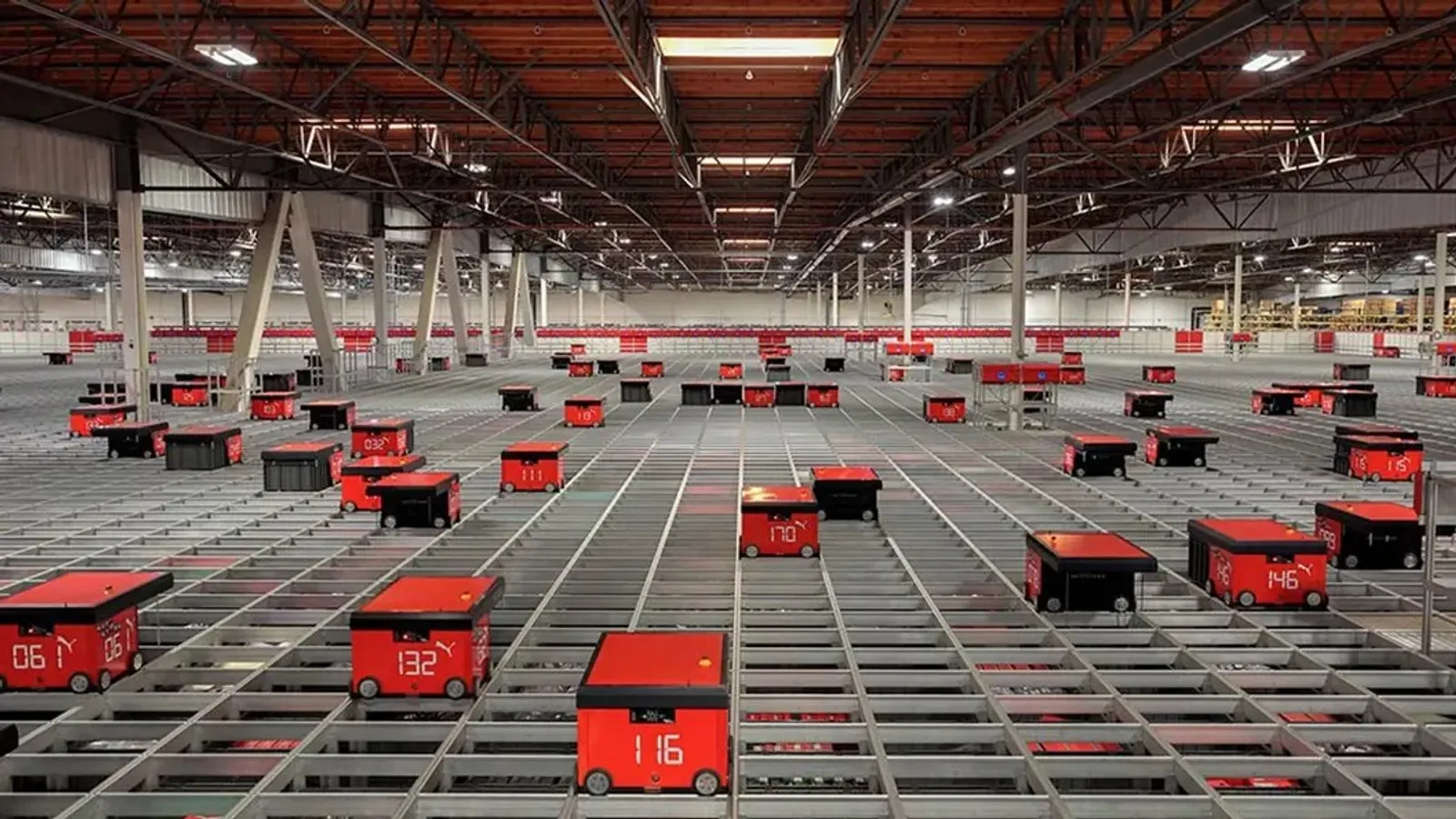
The crown jewel of this multi-facility agreement is Puma’s distribution center in Torrance, California. Set to become fully operational for multi-client use by 2027, the Torrance facility will house Maersk’s inaugural deployment of AutoStore automated storage and retrieval technology designed to service multiple corporate accounts concurrently. Strategically positioned near vital air and ocean cargo gateways, the Torrance facility is engineered to process an astonishing annual throughput of approximately 20 million units.
By pairing Puma’s high-performance physical infrastructure with Maersk’s proprietary software, transportation networks, and global logistics expertise, the partnership addresses a critical industry need: maximizing existing supply chain investments while minimizing environmental waste and capital expenditure on redundant real estate.
Chronology
The genesis of this partnership follows years of aggressive evolution by Maersk. Long recognized primarily as an ocean shipping titan, the company has systematically diversified its operations to capture the high-margin end-to-end logistics, warehousing, and distribution sectors.
- 2024: Maersk significantly accelerated its omnichannel ambitions by opening a specialized fulfillment center dedicated to servicing iconic apparel brand Levi Strauss & Co., streamlining digital and physical retail touchpoints.
- Early 2025 – Mid 2026: Supply chain pressures, fluctuating consumer demand, and rising real estate costs compelled major retailers to re-evaluate their capital outlays. Discussions between Maersk and Puma intensified around shared-capacity models, aiming to alleviate localized bottlenecks in high-volume import regions like Southern California.
- Recent Months (2026): Maersk reinforced its domestic infrastructure footprint by unveiling a massive $100 million state-of-the-art fulfillment hub in Hopedale, Massachusetts, tailored for large-scale e-commerce operations.
- October 2, 2026: The official announcement of the Maersk-Puma partnership is published, cementing a shared-capacity framework across three U.S. distribution centers and setting the stage for the 2027 rollout of multi-client AutoStore technology in Torrance.
Supporting Data & Technological Integration
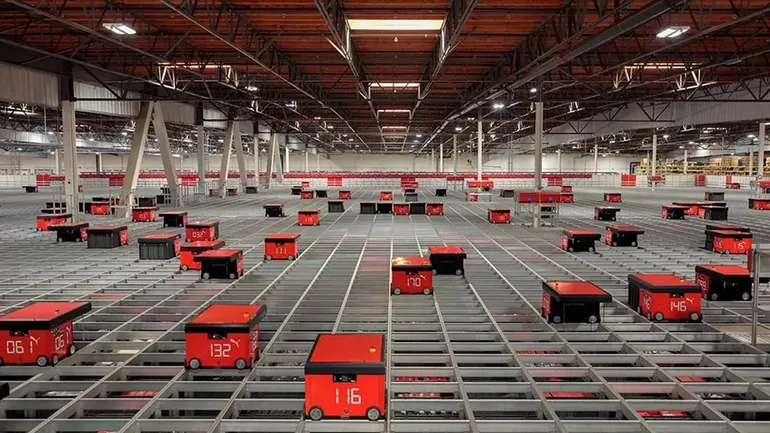
The architectural backbone of the Torrance hub relies on advanced warehouse automation, specifically the AutoStore automated storage and retrieval system (AS/RS). Unlike traditional manual pick-and-pack warehouses, the AutoStore system leverages a high-density, compact grid framework.
- Capacity and Throughput: The Torrance distribution center is explicitly equipped to manage an estimated 20 million units of annual throughput, highlighting its capability to handle high-velocity e-commerce and wholesale demands.
- Geographic Advantage: Located in Torrance, California, the facility sits in close proximity to major West Coast air and ocean gateways, dramatically reducing transit times from port to shelf.
- Automation Mechanics: Within the AutoStore grid, inventory containers are stacked vertically and retrieved by a fleet of intelligent robots. These robots automatically bring goods directly to human operators stationed at ergonomic workstations, significantly accelerating pick-and-pack cycle times while drastically reducing error rates.
- Portfolio Scaling: This initiative expands Maersk’s growing network of tech-enabled facilities, which now includes the Levi Strauss fulfillment ecosystem and the $100 million, high-capacity e-commerce center in Hopedale, Massachusetts.
Official Responses and Industry Perspectives
Leadership from both organizations have emphasized the mutual benefits and strategic foresight embedded within the agreement.
Dave Hune, North America Head of Maersk Contract Logistics, highlighted the shifting economic realities facing contemporary corporations during the announcement:
"Many companies are looking for ways to get more value from the logistics infrastructure they’ve already invested in."
Hune and other logistics executives underscored that modern supply chains can no longer rely on single-purpose, siloed real estate assets. By pooling resources, brands can hedge against market volatility while unlocking dormant capital.

In an official corporate release, Maersk further elaborated on the holistic nature of the arrangement, noting that the partnership successfully bridges physical real estate, global transportation conduits, and advanced software layers:
"As supply chains become increasingly complex, fulfillment plays a growing role in helping businesses position inventory closer to demand, respond more quickly to market changes and serve consumers across channels."
Industry analysts have similarly praised the deal for offering a blueprint on how legacy retailers can monetize their logistics networks during economic downturns or periods of fluctuating demand, transforming fixed overhead costs into dynamic revenue-generating assets.
Implications for the Supply Chain Industry
The Maersk-Puma alliance carries profound implications for the broader logistics and retail sectors, signaling several notable paradigm shifts:
1. The Rise of Shared-Capacity Logistics (Multi-Tenant Warehousing)
Traditionally, major brands guarded their distribution centers fiercely, viewing proprietary warehouses as competitive moats. The Puma-Maersk agreement challenges this dogma. By opening facility doors to third-party customers managed by a logistics intermediary, brands can defray massive facility upkeep costs while maintaining priority access to their own inventory. This model is expected to inspire copycat agreements across the retail and consumer packaged goods (CPG) sectors.

2. Accelerated Adoption of Goods-to-Person Automation
The deployment of multi-client AutoStore technology at the Torrance facility highlights the maturation of scalable automation. As labor markets remain tight and wage pressures persist, third-party logistics (3PL) providers must integrate high-density robotics to remain competitive. Facilities capable of processing 20 million units annually with minimal human intervention will rapidly become the gold standard for metropolitan-adjacent distribution hubs.
3. Deepening the Integrated 3PL Transformation
Maersk’s ongoing evolution from a maritime carrier to an all-encompassing supply chain orchestrator is now firmly entrenched. By controlling the ocean voyage, customs brokerage, drayage, automated warehousing, and final-mile distribution, Maersk minimizes the friction points traditionally managed by fragmented third-party vendors. For retailers, partnering with a unified provider reduces administrative overhead and provides unprecedented end-to-end visibility.
4. Strategic Inventory Positioning
With consumer expectations anchored around rapid, omnichannel fulfillment, brands must decentralize their inventory. Positioning advanced hubs near critical coastal gateways—such as the Southern California importing corridor—allows companies like Puma and Maersk’s shared-network clients to absorb supply chain shocks, bypass congested inland transit lanes, and pivot seamlessly between wholesale, retail, and direct-to-consumer (D2C) fulfillment streams.
As the Torrance facility prepares for its full multi-client rollout in 2027, the industry will be watching closely to see how effectively automated shared-space models can scale. If successful, the Maersk-Puma partnership may well define the next decade of resilient, cost-effective, and technologically advanced global supply chain management.