Introduction: A $95 Million Wake-Up Call
In the high-stakes environment of chemical processing, the margin for error is razor-thin. When that margin is eroded by inadequate system design, insufficient training, and a breakdown in procedural oversight, the consequences are often catastrophic. A recent final report from the U.S. Chemical Safety and Hazard Investigation Board (CSB) into the June 2025 explosion at the Shell Polymers Monaca facility in Pennsylvania serves as a sobering reminder of this reality.
The incident, which resulted in $95 million in property damage and the emergency evacuation of 15 personnel, was not the result of a single mechanical failure, but a "perfect storm" of human error facilitated by a poorly designed human-machine interface (HMI). As CSB Chair Steve Owens noted in the wake of the investigation, chemical facilities must prioritize process control systems that are not only functional but intuitive—systems that communicate critical information clearly to the operators tasked with managing them.
The Chronology of the Incident
The events leading to the catastrophic failure at the Shell Polymers Monaca facility began during a routine operational transition involving the plant’s furnace infrastructure. On the day of the incident, the facility was engaged in managing flow paths to the quench tower, a critical component of the polymerization process.
The Triggering Event
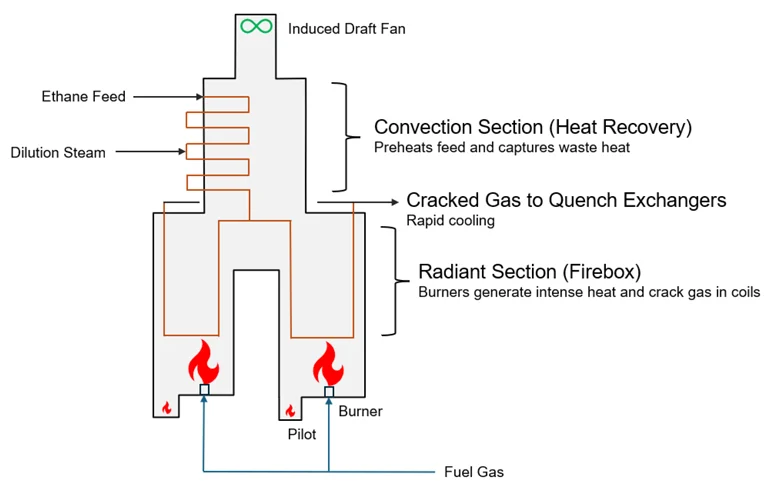
According to CSB investigator Owen Trippany, the explosion was precipitated by the inadvertent and simultaneous opening of two motor-operated valves. These valves were intended to isolate the furnace during maintenance or transition phases. Because the control system failed to prevent this simultaneous action, an unintended flow path was created.
"During the transition, an unintended flow path was created, allowing cracked gas from other operating furnaces feeding the quench tower to enter the furnace by firebox," Trippany explained during the CSB’s September 17 public business meeting. As the flammable process gas flooded into the furnace, it inevitably made contact with the furnace’s lit pilots. The result was an immediate, high-energy ignition.
The Blast and Aftermath
The ignition within Furnace 5 triggered a violent explosion, which rapidly cascaded into a significant fire. The force of the blast caused an immediate loss of containment, resulting in severe structural damage to the furnace unit and surrounding infrastructure. While 15 workers were on-site at the time of the event, the facility’s emergency protocols—which facilitated a rapid evacuation—prevented what could have been a multi-fatality disaster.
Deep Dive: Systemic Failures and Human Factors
The CSB investigation moved beyond the mechanical failure of the valves to examine the underlying systemic issues that allowed the accident to occur. The board’s findings point to three primary pillars of failure: inadequate operator training, ineffective administrative controls, and a deficient human-machine interface (HMI).
The "Knowledge Gap" in Control Operations
One of the most concerning findings was the lack of competency assigned to the task at hand. The process control engineer on duty at the time of the incident possessed limited knowledge of the specific process and, crucially, had never performed the task in question before.
This raises significant questions regarding Shell’s internal competency management. In complex chemical environments, assigning an inexperienced operator to a critical, non-routine task without rigorous supervision or specialized training is a recipe for disaster. As Chair Owens emphasized, the incident underscores "the importance of ensuring that the personnel who are assigned to critical tasks actually have the experience to do them."
The HMI Conundrum
The investigation revealed that the design of the safety system’s human-machine interface was fundamentally flawed. An HMI is the "dashboard" through which an operator views the state of the plant. In this instance, the interface made it difficult to clearly discern between different furnace valves. When an operator cannot quickly and accurately identify which component they are interacting with, the likelihood of an "inadvertent" action increases exponentially.
Modern industrial design standards dictate that HMIs should provide clear, unambiguous feedback, especially when high-risk operations are being performed. The CSB report suggests that Shell’s interface failed to meet these standards, essentially setting the operator up for failure by providing a confusing, cluttered, or non-intuitive visual representation of the valve array.
Ineffective Administrative Controls
Beyond the interface and the operator, the facility’s administrative controls—the rules, procedures, and oversight mechanisms meant to prevent accidents—were found to be insufficient. Even if an operator makes a mistake, robust administrative controls, such as "two-person verification" or automated safety interlocks, should act as a final barrier to prevent a catastrophe. The fact that the valves could be opened simultaneously suggests a lack of hardware-based safety interlocks or software-level logic that should have blocked the command.
Official Responses and Industry Accountability
The CSB’s report serves as both a critique of the specific incident at Monaca and a broad directive to the petrochemical industry. The board’s focus remains on the "Swiss Cheese" model of accident causation, where multiple layers of defense failed sequentially.
The CSB Perspective
Chair Steve Owens was unequivocal in his assessment. By highlighting that no one was killed or seriously injured, he underscored the "luck" involved in the outcome. However, the CSB is not interested in relying on luck. The agency’s recommendations are designed to force a shift in how chemical facilities view process safety. The report advocates for:
- Enhanced Human Factors Engineering: Requiring that HMI designs be tested for clarity and operator responsiveness.
- Competency-Based Staffing: Mandating that critical operational tasks are performed only by personnel who have documented experience and have been cleared for that specific task.
- Hardware-Based Safety: Moving away from total reliance on human perception and toward automated interlocks that physically prevent unsafe valve configurations.
Shell’s Position
While the report focuses on the findings of the CSB, the incident has inevitably placed Shell under the microscope of regulatory scrutiny. For a facility that represents a massive capital investment, a $95 million loss is not just a financial hit—it is a reputational one. Shell is now tasked with implementing the CSB’s findings, which will likely involve a comprehensive overhaul of their control systems and a restructuring of their operator training and authorization programs.
Broader Implications: A Changing Standard for Safety
The Shell Monaca explosion is not an isolated event; it is part of a larger trend of industrial incidents that highlight the fragility of highly automated, complex systems. As the chemical industry shifts toward greater automation to improve efficiency, the "human in the loop" becomes more critical, not less.
The Role of Technology in Safety
The industry is currently grappling with how to integrate AI and advanced process control (APC) with legacy mechanical infrastructure. The challenge, as evidenced by this report, is that technology can often obfuscate danger rather than clarify it. If an operator is overwhelmed by data or misled by a poorly designed screen, technology becomes a liability.
A Call for Industry-Wide Reform
The lessons from Monaca should resonate across the energy and chemical sectors. Facilities should take this opportunity to conduct a "safety audit" of their own control rooms. Key questions to ask include:
- Can an operator easily distinguish between critical components on our HMI?
- Are our "non-routine" procedures actually documented and practiced by those responsible for them?
- Do we have physical or logic-based barriers to prevent the simultaneous operation of conflicting valves?
Conclusion: The Path Forward
The Shell Polymers Monaca explosion was a preventable tragedy. It was a failure of engineering, a failure of training, and a failure of oversight. As the CSB continues its advocacy for a more safety-conscious industrial culture, the findings from this investigation stand as a mandatory reading for plant managers, process engineers, and corporate executives alike.
The cost of safety is high, but the cost of the alternative—measured in millions of dollars, environmental damage, and potential loss of life—is infinitely higher. By focusing on intuitive design, rigorous competency standards, and redundant safety barriers, the industry can ensure that when a human operator steps into a control room, they are equipped to prevent the next disaster rather than inadvertently trigger it. The $95 million lesson from Monaca must not be forgotten; it must be the catalyst for a safer, more transparent, and more robust approach to chemical process management.