The rapid integration of Artificial Intelligence (AI) into the corporate landscape is forcing a radical, often uncomfortable, rethink of organizational structures. For decades, the standard operating procedure for Learning and Development (L&D) has been reactive: wait for technology to be implemented, identify the subsequent "skills gap," and deploy training modules to bridge that divide.
However, in the era of AI, this sequence is not merely inefficient—it is fundamentally obsolete. By the time L&D is brought to the table to ask, "How do we train our people for this new way of working?" the most consequential decisions—workflow redesign, task automation, and role definition—have already been finalized. This "last-mile" approach to workforce development is failing to keep pace with the velocity of technological change.
To remain relevant, L&D leaders must pivot. They must move upstream, transitioning from the creators of training curricula to the architects of work itself.
The Chronology of Transformation: From Reaction to Design
The conventional path of organizational change follows a predictable, yet flawed, trajectory. First, leadership selects an AI tool to drive efficiency. Second, operations managers redesign workflows to incorporate that technology. Third, job descriptions are rewritten to reflect the new automated reality. Only then is the L&D function notified, tasked with the Herculean effort of upskilling employees to fit into a mold that has already been cast.
This reactive model ignores a critical reality: Skills do not exist in a vacuum. A skill is merely a byproduct of work. When the work changes, the required capability changes. When the decision-making authority shifts from a human to an algorithm, the very nature of human expertise is fundamentally altered.
The CHI Innovation Cycle: A New Blueprint
A compelling alternative to this reactive model is the "CHI Innovation Cycle," pioneered by the Centre for Healthcare Innovation at Tan Tock Seng Hospital in Singapore. The cycle suggests a more sophisticated, iterative approach:
- Care and Process Redesign: Before introducing technology, the organization must scrutinize existing processes to identify inefficiencies and define a desired future state.
- Technology Integration: Only after the workflow is optimized do teams introduce IT, robotics, or AI to enable that specific future state.
- Job Redesign: Once the technological infrastructure is set, roles are revamped. This involves shifting work between groups and focusing human effort on higher-value activities.
The lesson here is clear: Learning and development should not be the final step in this chain; it should be an active participant in the design of the chain itself. By inserting L&D into the planning phase, organizations can ensure that the "human element" is not an afterthought, but a core component of the operational strategy.
The Expertise Paradox: Protecting the Pipeline
One of the most dangerous, yet overlooked, implications of AI-driven automation is the erosion of the "expertise pipeline." Historically, junior employees develop professional judgment through the performance of mundane, operational tasks—drafting documents, analyzing initial data sets, or handling routine client inquiries. These activities are the training ground for mastery.
When AI is deployed to automate these entry-level tasks, organizations gain immediate productivity. However, they simultaneously eliminate the "apprenticeship" opportunities required to build the experts of tomorrow.
If a junior analyst never performs the manual data cleaning that AI now handles, how will they ever develop the deep, intuitive understanding of the data necessary to challenge AI’s conclusions? The risk is that we are creating a "competency void," where organizations have the tools to perform work but lack the experienced human capital to oversee, interpret, and innovate upon that work.
L&D leaders must now ask a dual-purpose question: "Can AI perform this task?" must be immediately followed by, "What capability is developed by performing this task, and how will we replicate that development if the task disappears?"
Supporting Data: Efficiency vs. Efficacy
The objective of AI integration should not be merely to do less work, but to do better work. The "Ward of the Future" initiative at Tan Tock Seng Hospital serves as a benchmark for this philosophy. By combining physical environment redesign with workflow automation, the hospital achieved a 24.8% increase in direct patient care time and a significant reduction in the physical burden on nursing staff (walking 3.9 fewer kilometers per shift).
Crucially, this wasn’t just a win for productivity; it was a win for human capital. Staff attrition dropped from 8% to 6%, and job satisfaction scores climbed. The takeaway is that automation, when paired with thoughtful job redesign, allows for the redirection of human capacity toward higher-value, more rewarding activities.
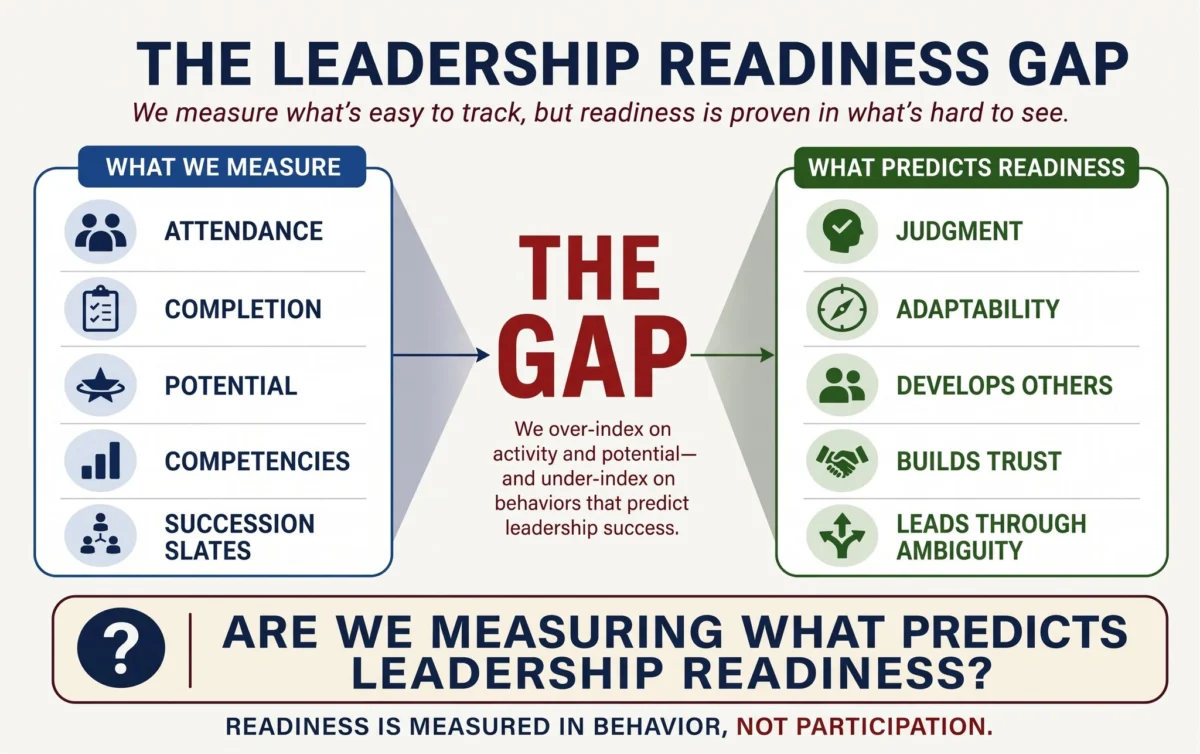
However, this requires a shift in how L&D measures success. Traditionally, L&D metrics focus on training completion, test scores, or course satisfaction. In an AI-enabled environment, these metrics are insufficient. Leaders should instead track:
- Quality of Judgment: Can the human verify the AI’s output?
- Exception Handling: Does the employee have the capability to intervene when the AI encounters an edge case?
- Time-to-Independence: Has the redesign shortened or lengthened the path to proficiency?
Implications: The L&D Professional as an Architect of Work
The mandate for the modern L&D leader is shifting. To succeed, they must transition from being a service provider for training to becoming an "architect of work." This does not mean that L&D should own the entire job redesign process, which remains a cross-functional responsibility involving HR, operations, and IT. Rather, it means that L&D must bring its unique expertise to the table at the earliest stage of the pilot.
Strategic Questions for the AI Era
When the leadership team meets to discuss the next wave of automation, the L&D representative should be prepared to pose critical, high-level questions:
- Work Architecture: Which parts of this workflow are developmental, and how will we replace those developmental experiences if we automate them?
- Human-Machine Synergy: Where does the human add the most value? Are we designing for the machine to do everything, or are we designing for the human to do the "hard" parts (interpretation, strategy, empathy)?
- Capability Velocity: How quickly do we need this new capability to exist, and what combination of formal training, coaching, and real-time support will get us there?
- Resilience: If the AI system fails or produces an error, does the human workforce possess the underlying fundamental knowledge to maintain operational continuity?
A New Mandate for Leadership
The shift toward "workforce development by design" rather than "workforce development by reaction" is the defining challenge of the next decade. For too long, L&D has been relegated to the role of a support function, tasked with fixing the "skills gap" created by someone else’s decisions.
In the AI era, this is a recipe for organizational stagnation. When the nature of work is in constant flux, the only sustainable competitive advantage is a workforce that is designed for adaptability.
By moving upstream, L&D leaders can ensure that technology is not used to "automate away" the learning system, but to elevate it. They have the opportunity to move from creating courses for work to creating learning through work. This is the difference between a workforce that is merely "trained" to keep up with the machines and a workforce that is empowered to lead the organization into an AI-augmented future.
The question for L&D leaders is no longer "Are our employees ready for the new job?" but rather "Were we present when the new job was designed?" If the answer is no, the organization has already lost the advantage. The era of reactive learning is over; the era of architectural workforce design has begun.