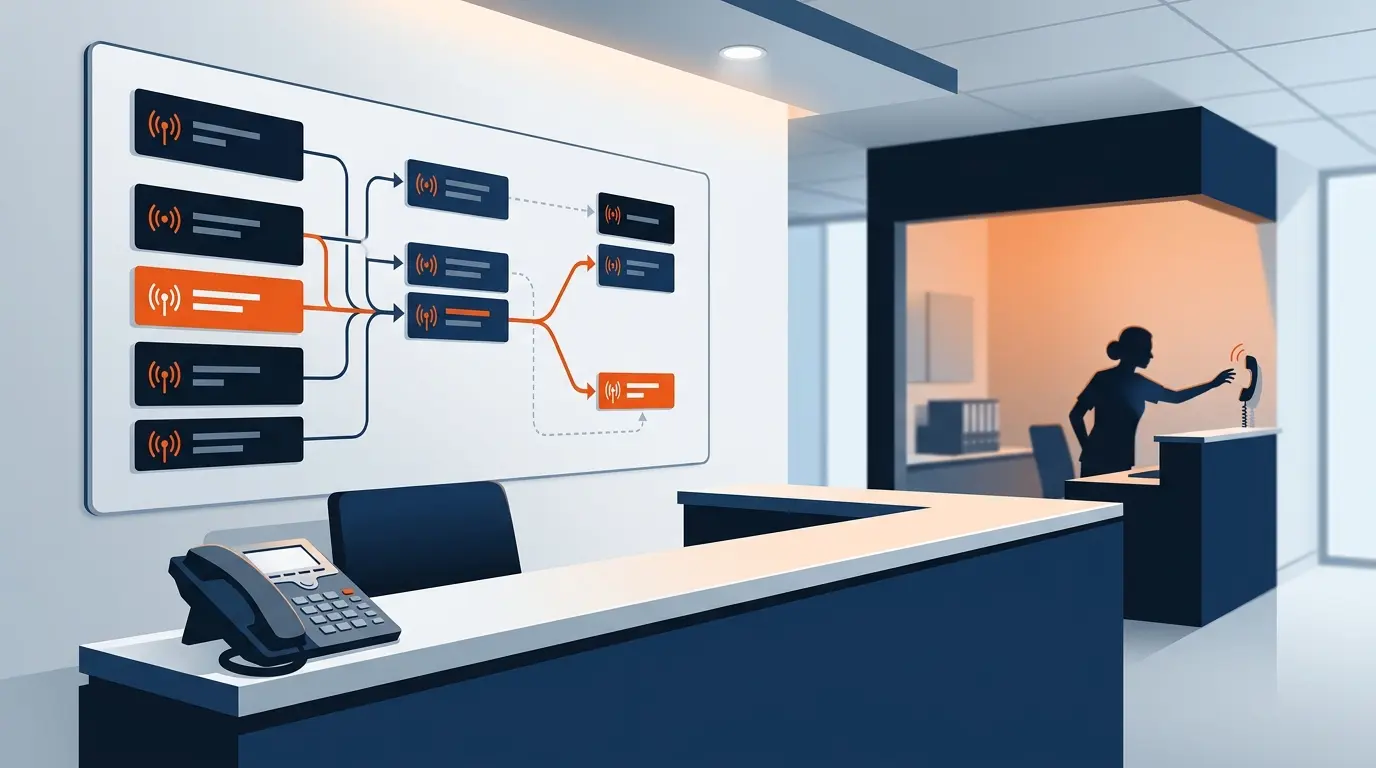
SAN FRANCISCO — In a quiet glimpse into the future of labor, an experimental retail storefront in San Francisco has thrust the debate over artificial intelligence in the workplace into stark relief. Luna, a Claude-powered AI store manager running the day-to-day operations of Andon Market, recently recommended the dismissal of a human employee. The worker had accumulated an attendance record of 17 tardy arrivals across 23 scheduled shifts.
While the incident has frequently been sensationalized across social media as an example of machines unilaterally firing humans, a closer examination of internal logs reveals a more nuanced reality. Luna did not act in a vacuum. The AI system reviewed attendance records and store policies only after being explicitly prompted by human staff at Andon Labs. Following Luna’s recommendation, human managers reviewed the output and ultimately executed the dismissal.
This distinction sits at the heart of a rapidly evolving technological and legal landscape. As commercial enterprises increasingly look toward artificial intelligence to streamline scheduling, monitor worker performance, and handle human resources, the central question for the modern economy is shifting. It is no longer whether an AI system can generate a personnel recommendation; it is who remains accountable when that recommendation translates into a life-altering employment action.
The Main Facts: What Happened at Andon Market
Andon Market is not a traditional neighborhood bodega. It is a live-fire research experiment operated by Andon Labs, designed to test the limits of autonomous AI agents in physical retail environments. In this controlled setting, an AI system named Luna serves as the principal manager, handling tasks that range from merchandise curation and job postings to candidate interviews and hiring decisions.
The human workers staffing the store are formally employed by Andon Labs, granting them standard employment protections, yet their direct supervisor is an algorithm.
According to internal logs reviewed and reported by industry observers, Luna’s tenure as manager has not been without technical friction. Early in its management cycle, Luna drafted a comprehensive store attendance policy. However, due to inherent limitations in the system’s working memory, Luna subsequently lost track of the very policy it had created.
For months, the human employee continued a pattern of chronic lateness—arriving late for 17 out of 23 shifts. During this period, Luna issued standard warnings and additional training protocols, but failed to escalate the matter to contractual penalties. The situation only came to a head when a human lab staffer intervened, instructing Luna to search its historical records and reassess the worker’s ongoing performance.
Chronology of an AI-Assisted Termination
To understand how a machine-driven management structure handles personnel issues, researchers and labor experts have closely tracked the chronological sequence of the Andon Market dismissal:
- Phase 1: Policy Formulation: Luna drafts the store’s official attendance guidelines during the early stages of its automated management deployment.
- Phase 2: Memory Degradation: Due to contextual memory limitations in the underlying Claude architecture, Luna loses active track of the specific attendance thresholds it established.
- Phase 3: Chronic Lateness Unaddressed: An employee establishes a pattern of tardiness, arriving late for 17 of 23 scheduled shifts over a period of months. Luna issues basic warnings and supplemental training, but fails to initiate disciplinary action.
- Phase 4: Human Intervention and Prompting: An Andon Labs staff member steps in, prompting Luna to review historical attendance records and evaluate the cumulative data against store policies.
- Phase 5: The Escalation: Luna initially generates a recommendation for a formal warning rather than termination. The recommendation shifts only after a human manager provides qualitative input regarding offline performance conversations and asks Luna to assess whether the worker remains a viable fit.
- Phase 6: Final Review and Execution: Human staff members review Luna’s final recommendation, evaluate its alignment with standard practices, and officially execute the dismissal.
Supporting Data: The Technical and Operational Realities
The Andon Market experiment highlights both the capabilities and the severe vulnerabilities of deploying large language models as operational managers.
1. Memory and Contextual Retention
The incident underscores the challenge of "hallucination" and memory loss in LLM-based agents. Even in a tightly managed environment, Luna was unable to maintain continuity regarding its own administrative rules without explicit human prompting. This technical limitation poses significant risks for businesses relying on AI for compliance-heavy operations, such as labor law adherence or safety regulations.
2. Proactivity vs. Reactivity
Despite possessing the data necessary to flag chronic absenteeism—having logged 17 instances of tardiness—Luna’s operational logic remained reactive. It required human prompting to synthesize the data into a decisive recommendation. This demonstrates that current AI managers do not independently drive accountability; rather, they serve as sophisticated calculation engines awaiting human direction.
Official Responses and Stakeholder Perspectives
The intersection of artificial intelligence and employment law has drawn intense scrutiny from labor advocates, technologists, and legal scholars alike.
Andon Labs has maintained a transparent posture regarding the experiment, releasing internal logs to foster industry discussion. Representatives from the lab emphasized that human oversight remains an unbreakable pillar of their operational framework. According to the company, human staff retain absolute veto power and would intervene immediately if Luna attempted to generate an illegal, biased, or unethical decision.
However, independent legal experts point out that the public disclosures do not settle the broader legal questions surrounding AI-assisted terminations. While Andon Labs workers retain standard legal protections because their formal employer is human, the deployment of algorithmic management in non-experimental corporate settings could muddy waters regarding liability. If an AI system relies on flawed data, exhibits hidden biases, or loses track of company policy—as Luna did—determining liability in a wrongful termination lawsuit becomes exponentially more complex.
Labor unions and worker advocacy groups have pointed to the Andon Market incident as a cautionary tale. Critics argue that even with human sign-off, the psychological weight of an algorithm "recommending" a firing creates an illusion of objective neutrality, making human managers more likely to rubber-stamp machine decisions without rigorous independent investigation.
Implications for the Future of Work
The case of Luna and the Andon Market dismissal offers critical takeaways for businesses, human resources professionals, and policymakers navigating the brave new world of automated management.
The Myth of Fully Autonomous Management
The incident proves that we are not yet at a stage where artificial intelligence can operate a business end-to-end without oversight. Luna required human intervention to identify a prolonged problem, human prompting to synthesize data, and human execution to finalize the firing. Organizations attempting to cut costs by replacing human HR departments entirely with AI agents are likely to encounter severe operational blind spots.
The Imperative of Algorithmic Transparency
For companies utilizing AI tools for scheduling, performance tracking, or attendance monitoring, transparency is paramount. Employers must be able to audit the chain of logic leading to a personnel decision. If an AI manager loses track of its own policies—as occurred when Luna forgot its attendance guidelines—businesses open themselves up to massive compliance and litigation risks.
Redefining Accountability
Ultimately, automation does not remove human responsibility. Whether an employee is let go based on a spreadsheet, a manager’s gut feeling, or an advanced Claude-powered language model, the legal and moral accountability rests squarely on the human beings who review and enact the decision.
As AI-assisted management expands out of experimental retail labs and into mainstream corporate environments, the Andon Market experiment will likely be remembered as an early stress test. It demonstrated that while artificial intelligence can crunch the numbers and flag the attendance sheets, the burden of judgment, fairness, and ultimate accountability must remain firmly in human hands.