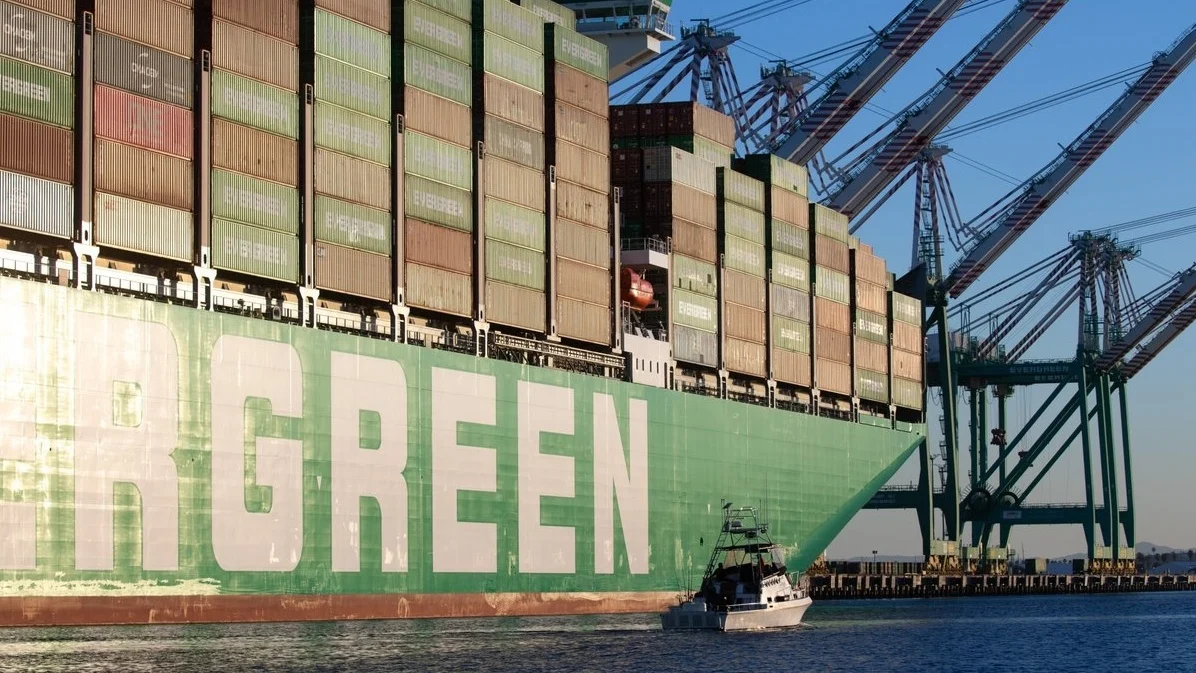
LOS ANGELES — In a historic milestone for North American maritime trade, the Port of Los Angeles handled a staggering 1,042,652 twenty-foot equivalent units (TEUs) in September, marking the single busiest month in the facility’s 118-year history. Propelled by persistent import demand, this record-shattering month successfully capped off an extraordinary quarterly and four-month cargo surge that defied broader economic headwinds, rising interest rates, volatile trade policies, and persistent geopolitical disruptions.
The monumental September throughput easily surpassed the port’s previous monthly high, which was set just two months prior in July 2025, beating that benchmark by more than 20,000 TEUs. As the gateway continues to serve as a primary barometer for trans-Pacific commerce, the latest figures underscore a structural shift in how retailers, manufacturers, and logistics providers manage inventory amidst a volatile global supply chain landscape.
Main Facts
The latest data released by port authorities highlights a sweeping expansion across virtually all cargo categories during September:
- Total Monthly Volume: The port processed 1,042,652 TEUs, crossing the elusive 1-million-TEU threshold in a single month for the first time.
- Loaded Imports: Accounting for the lion’s share of the growth, loaded imports surged to 545,696 TEUs, representing a substantial 19% increase compared to the same period last year.
- Loaded Exports: Outbound loaded boxes also saw healthy growth, climbing 10% year-over-year to reach 125,751 TEUs.
- Empty Containers: Reflecting the heavy imbalance in global trade, empty-container volume hit an all-time monthly high of approximately 371,206 TEUs, as carriers rapidly repositioned equipment to Asia to keep up with relentless export demands.
- Year-to-Date Performance: Through the first nine months of the year, the Port of Los Angeles has handled nearly 8.1 million TEUs, tracking roughly 3% ahead of its pace from the previous year.
This unprecedented volume was not an isolated spike but rather the crescendo of a multi-month wave that has fundamentally tested the operational resilience of America’s busiest container port.
Chronology of the Surge
To fully understand the magnitude of September’s record, industry analysts point to an extended, highly unconventional peak shipping season that began earlier than usual and refused to follow traditional cyclical patterns.
Early Summer Acceleration (June – July)
The momentum began building in early summer. As retailers anticipated potential regulatory changes and sought to hedge against looming tariff adjustments, cargo volumes began climbing steeply in June. By July 2025, the port had already established a new monthly high, signaling that the traditional late-summer peak shipping season was arriving months ahead of schedule.
The Record-Breaking Quarter (July – September)
Rather than tapering off after the traditional back-to-school inventory push, import volumes accelerated further. From July through September, the Port of Los Angeles handled nearly 3 million TEUs, making it the busiest single quarter in the port’s nearly 12-decade history.
The Four-Month Marathon (June – September)
When expanded to a four-month window from June through September, the port achieved its strongest stretch ever recorded, moving nearly 4 million TEUs. September served as the ultimate capstone to this marathon, proving that carrier networks and terminal operators could sustain maximum capacity well beyond normal historical tolerances.
Supporting Data and Economic Context
What makes this volume explosion particularly remarkable is the macroeconomic environment in which it occurred. Traditional economic theory suggests that rising interest rates, inflationary pressures, persistent economic uncertainty, and erratic tariff policies should cool consumer spending and dampen trade volumes. Instead, the opposite occurred.
[Port of Los Angeles: Key Volume Metrics]
+--------------------------+-------------------+-----------------------------------+
| Metric                   | Volume (TEUs)     | Comparison / Growth               |
+--------------------------+-------------------+-----------------------------------+
| September 2025 Total     | 1,042,652         | Busiest month in 118-year history |
| Previous Monthly Record  | ~1,022,000        | Set in July 2025 (surpassed by 20k)|
| Q3 2025 Total            | ~3.0 million      | Busiest quarter on record         |
| June–Sept 2025 Total     | ~4.0 million      | Strongest 4-month stretch         |
| September Loaded Imports | 545,696           | Up 19% year-over-year             |
| September Loaded Exports | 125,751           | Up 10% year-over-year             |
| September Empty Boxes    | 371,206           | Highest monthly total in history  |
| 9-Month YTD (2025)       | ~8.1 million      | Up 3% ahead of 2024 pace          |
+--------------------------+-------------------+-----------------------------------+
Several key market drivers explain this divergence:
- Resilient Consumer Demand: Despite cost-of-living pressures, American consumers continued to spend, keeping retail shelves bare of excess stock and forcing merchants into continuous inventory replenishment cycles.
- Tariff Stabilization: According to port leadership, tariff rates retreated from the aggressive spikes seen earlier in the year. This temporary policy breathing room provided importers with the cost certainty necessary to pull forward inventories and execute large-scale replenishment strategies.
- Global Routing Crises: Ongoing security and operational challenges along alternative global maritime arteries—most notably the Suez Canal and the Panama Canal—forced shipping lines to reconfigure services. Many carriers routed additional vessel strings toward U.S. West Coast ports, viewing Los Angeles as a faster, more reliable alternative to congested East and Gulf Coast gateways.
- Extended Peak Season: Retailers described the shipping cycle as an "extended peak season," where holiday inventory builds bled seamlessly into general stock replenishment, keeping the trans-Pacific supply chain operating at a fever pitch.
Official Responses
During a media briefing detailing the numbers, Port Executive Director Gene Seroka emphasized the historical significance of the performance and praised the collective effort required to keep cargo moving smoothly without severe landside congestion.
"September was a month for the record books, and it was part of an extraordinary run for the Port of Los Angeles," Seroka told reporters. He credited the cargo surge to a combination of enduring consumer demand, proactive inventory rebuilding by major corporations, and the strategic redirection of freight away from troubled global trade lanes.
Seroka also highlighted how shifting trade policy factors played a role, noting that a moderation in tariff pressures allowed importers to execute supply chain decisions with greater financial predictability.
Los Angeles Mayor Karen Bass echoed Seroka’s sentiments, framing the port’s success as a testament to the city’s economic vitality and the exceptional caliber of its workforce.
"Los Angeles is strong because our Port is strong, and none of this would be possible without our talented, dedicated, and skilled workforce," Mayor Bass stated. She specifically commended the members of the International Longshore and Warehouse Union (ILWU) and port management for handling the historic influx of goods efficiently, ensuring that cargo kept flowing off ships, onto chassis, and out to national distribution networks without debilitating bottlenecks.
Broader Implications for the Supply Chain
The Port of Los Angeles’ record-shattering September carries profound implications for the broader logistics and transportation sectors as the industry looks toward the remainder of the year and into the future:
- Validation of West Coast Resilience: For years following the pandemic-era supply chain disruptions, the West Coast fought to reclaim market share amid fears of labor strife and cargo diversion. The flawless handling of a 1-million-TEU month proves that Southern California possesses unmatched capacity, efficiency, and scalability.
- Equipment and Infrastructure Stress: While the port successfully managed the volume without the legendary vessel queues of 2021–2022, the record number of empty containers (371,206 TEUs) highlights the persistent challenge of equipment imbalances. Ensuring a steady supply of chassis and railcars remains critical as empty boxes must be swiftly cleared to prevent terminal yard congestion.
- Shifting Shipper Strategies: The willingness of shippers to rely on Los Angeles despite macroeconomic noise and geopolitical friction demonstrates that predictability and speed often outweigh cost volatility. As bottlenecks continue to plague traditional chokepoints like the Panama Canal, the trans-Pacific route through Southern California has solidified its status as the nation’s premier trade highway.
As the extended peak season gradually winds down, the Port of Los Angeles stands as a towering example of modern logistical capacity. By moving nearly 8.1 million TEUs through the first three quarters of the year, the port has not only cemented its own legacy but has also provided a vital stabilizing anchor for the entire American economy.