By Kai Guo
October 13, 2026
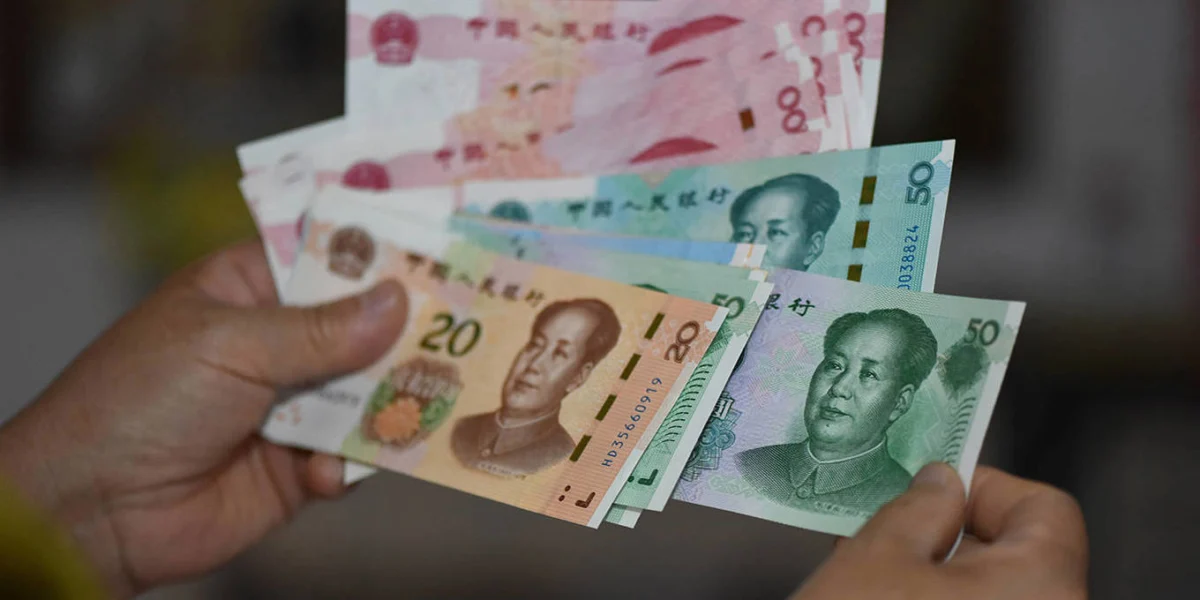
BEIJING—The renminbi has once again found itself at the epicenter of intense global economic debates. As China’s merchandise trade surplus widened to a staggering $1.2 trillion in 2025 and its manufacturing sector cemented its dominance across global supply chains, a near-consensus has emerged among international financial commentators and policymakers: the Chinese currency is significantly undervalued.
The prevailing narrative in Western capitals and financial hubs is straightforward. Critics argue that Beijing is artificially suppressing the value of the renminbi to maintain an unfair competitive advantage, flooding foreign markets with cheap goods and devastating domestic manufacturing sectors in the United States, Europe, and the developing world. The prescribed remedy is equally direct: China must let its currency appreciate sharply. According to this view, a stronger renminbi would automatically shrink the country’s massive trade surplus, relieve competitive pressure on foreign rivals, and restore equilibrium to the global economy.
However, this superficial diagnosis misdiagnoses the root cause of China’s external imbalances. The persistent weakness of the renminbi is not primarily the result of manipulative exchange-rate policies; rather, it is a symptom of deeply entrenched structural domestic demand weakness. Forcing currency appreciation without first addressing the anemia of domestic consumption would be deeply counterproductive—not just for Beijing, but for the global economy as a whole.
Main Facts
To understand the current friction surrounding the renminbi, one must examine the macroeconomic reality underpinning China’s external surplus.
- The $1.2 Trillion Surplus: According to official trade data, China’s merchandise trade surplus reached a historic milestone of $1.2 trillion in 2025, driven by an unyielding export machine coupled with subdued import demand.
- The Undervaluation Argument: Prominent economic think tanks and financial analysts have calculated that the renminbi may be undervalued by as much as 30% on a purchasing power and fundamental trade-weighted basis.
- The Domestic Consumption Crisis: While the export sector roars, domestic consumer confidence remains sluggish. Household consumption accounts for an unusually low share of China’s Gross Domestic Product (GDP) compared to other major economies, leaving a massive savings glut that is systematically funneled into industrial overcapacity and export channels.
- The Policy Dilemma: External pressure is mounting on the People’s Bank of China (PBOC) to engineer a rapid currency correction. Yet, central bank officials understand that an unbacked appreciation in a weak domestic demand environment could trigger severe deflationary pressures, corporate bankruptcies, and widespread unemployment.
Chronology of Events: The Road to the 2026 Currency Debate
The tension surrounding the renminbi’s valuation is the culmination of years of structural divergence between domestic consumption and manufacturing output in China.
2023–2024: The Post-Pandemic Divergence
Following the lifting of strict pandemic lockdowns, international observers anticipated a robust rebound in Chinese consumer spending. Instead, a protracted property sector crisis crippled household wealth, leading to a profound psychological shift toward precautionary saving. While retail demand stagnated, local governments continued to pour capital into advanced manufacturing and green technologies (solar, electric vehicles, batteries), generating massive industrial output destined for export markets.
Early 2025: Surging Surpluses and Trade Friction
As global inflation cooled, cheap Chinese exports flooded international markets. Trade partners in the European Union and the United States responded with a wave of anti-dumping investigations, tariff hikes, and protectionist rhetoric. Despite these barriers, Chinese export volumes continued to shatter records, culminating in the year-end announcement of a $1.2 trillion merchandise trade surplus.
Late 2025: The "Undervalued" Consensus Solidifies
Prominent financial institutions and research organizations published comprehensive studies arguing that the renminbi’s exchange rate was heavily misaligned with macroeconomic fundamentals. Financial media and trade associations began treating the "undervalued renminbi" as an economic certainty, ramping up political pressure on Beijing ahead of international summits.
October 2026: The Global Stand-Off
As trade ministers and central bankers convene for the autumn international economic meetings, the debate over exchange rates reaches a fever pitch. International pressure mounts for Beijing to use monetary policy as a blunt instrument to rebalance global trade, setting the stage for a high-stakes standoff over sovereignty, structural reform, and macroeconomic management.
Supporting Data and Economic Realities
The argument that currency manipulation is the primary driver of China’s trade surplus ignores fundamental accounting identities and domestic economic indicators.
The Savings-Investment Imbalance
In any economy, a trade surplus is structurally equal to the excess of domestic saving over domestic investment ($S – I = X – M$). In China, this identity manifests as a chronic shortage of domestic consumption.
[High National Savings] + [Weak Domestic Consumption]
       │
       ▼
[Insufficient Domestic Absorption]
       │
       ▼
[Excess Production Directed to Global Markets ($1.2T Surplus)]
Because Chinese households face inadequate social safety nets—including limited healthcare, pension coverage, and unemployment insurance—they maintain exceptionally high precautionary savings rates. With domestic consumers unwilling or unable to absorb the nation’s immense industrial output, the excess production must find an outlet abroad.
Exchange Rate Mechanics vs. Structural Realities
Proponents of forced appreciation assume that a stronger currency will automatically make Chinese goods more expensive abroad, thereby reducing export volumes and curbing the surplus. However, this mechanical view overlooks two critical factors:
- Inelastic Global Demand: Many Chinese high-tech and green-transition exports (such as electric vehicles and solar panels) possess unique cost-efficiency and technological advantages that make global demand relatively price-inelastic. Even with a stronger currency, international buyers may continue purchasing Chinese goods due to a lack of viable, cost-competitive alternatives.
- Import Cost Compression: A stronger renminbi would lower the cost of imported raw materials and energy for Chinese factories. This would partially offset the currency penalty on finished exports, cushioning profit margins and blunting the intended deflationary impact on foreign trade volumes.
Official Responses and Policy Stance
Beijing’s economic policymakers, including officials at the People’s Bank of China and the State Council, have pushed back against external demands for rapid currency appreciation. Their reluctance is rooted in hard-earned lessons from economic history.
The Specter of the Plaza Accord
Chinese policymakers frequently study the lessons of the 1985 Plaza Accord, in which the United States pressured Japan to appreciate the yen. While the accord temporarily reduced trade tensions, it triggered a massive asset-bubble in Japan, followed by decades of economic stagnation known as the "Lost Decades." Beijing is acutely aware that forcing an artificial appreciation while domestic demand remains fragile could induce a Japanese-style deflationary trap, choking off economic growth entirely.
The PBOC’s Mandate
The People’s Bank of China has consistently emphasized that the exchange rate should be determined by market supply and demand, anchored to a basket of currencies rather than a single political target. Official statements underscore that the current weakness of the renminbi reflects cyclical and structural adjustments within the domestic economy—specifically, weak property markets and cautious consumer behavior.
Rather than deploying the exchange rate as an external shock absorber, Beijing’s official focus remains centered on localized fiscal stimuli, debt restructuring for local governments, and targeted measures to stabilize the real estate sector. However, critics argue these steps have been too timid to fundamentally shift the national propensity to save.
Global Implications: Why Forcing Appreciation Backfires
If international pressure succeeds in forcing an artificial, unbacked appreciation of the renminbi, the consequences could destabilize not only China but the global economy.
1. Amplified Deflationary Pressures at Home
If Chinese exporters are suddenly squeezed by a sharp currency hike without a corresponding rise in domestic purchasing power, profit margins will evaporate. This would force widespread corporate restructuring, wage cuts, and layoffs in China’s manufacturing sector. Higher domestic unemployment would further depress consumer confidence, driving savings rates even higher and deepening the domestic slump.
2. Disruption of Global Supply Chains
China is no. longer merely an assembler of low-end consumer goods; it is the indispensable linchpin of global manufacturing, supplying intermediate goods, components, and raw materials to factories across Asia, Europe, and the Americas. A chaotic, policy-induced shock to China’s industrial base would create severe supply bottlenecks, reigniting cost-push inflation in Western economies that rely on Chinese components.
3. The Wrong Cure for the Wrong Disease
The global obsession with the exchange rate is a distraction from the real necessary reforms. To achieve genuine, sustainable rebalancing, China does not need a stronger currency engineered by decree; it needs a comprehensive fiscal overhaul.
Rebalancing requires shifting state resources away from industrial subsidies and infrastructure investment toward households. This means building a robust social safety net, increasing pension transfers, funding public healthcare, and reducing structural barriers to internal migration (the hukou system). By putting money directly into the pockets of everyday citizens, Beijing could unleash organic domestic demand, naturally drawing in more imports and narrowing the trade surplus over time.
Conclusion
The debate over the renminbi’s valuation captures the frustration of a global trading system struggling to adjust to China’s industrial scale. Yet, treating the symptom—a weak exchange rate—while ignoring the disease—anemic domestic demand—is a recipe for economic failure.
Forcing the renminbi to appreciate through external pressure will not fix global imbalances; it will only risk destabilizing China’s economy and transmitting new shocks worldwide. True global economic rebalancing requires Beijing to pivot inward, empowering its consumers through structural reforms. Until domestic demand takes center stage, exchange rate debates will remain a noisy distraction from the fundamental economic transformation that China—and the world—urgently requires.