As artificial intelligence permeates every corner of the enterprise, the role of the Enterprise Resource Planning (ERP) system is undergoing a profound metamorphosis. For decades, ERP platforms were defined by their role as a "system of record"—a digital vault for transactions, ledgers, and operational data. However, the current AI-driven landscape presents a dual challenge: how to embed intelligence into workflows without creating a fragmented data landscape, and how to expose that sensitive, governed data to AI without compromising security.
With the release of Acumatica 2026 R2, which became generally available on October 1, 2026, the company is tackling these challenges head-on. By introducing a new analytics architecture and adopting the Model Context Protocol (MCP), Acumatica is positioning the ERP not merely as a transaction engine, but as a secure, governed foundation for the next generation of agentic AI workflows.
Main Facts: A New Era for the ERP Ecosystem
The Acumatica 2026 R2 release represents a strategic pivot for the cloud ERP provider. Rather than simply adding "copilot" features as an overlay, the company has overhauled the underlying infrastructure to ensure that AI can access business context securely.
Key highlights of the 2026 R2 release include:
- Model Context Protocol (MCP) Integration: A groundbreaking move that allows external AI tools—such as ChatGPT, Claude, and Gemini—to securely query ERP data.
- Native Data Warehouse: A separation of transactional and analytical workloads, ensuring that high-intensity reporting does not bottleneck operational performance.
- Advanced AI Automation: Moving beyond simple summarization, the platform now enables AI to execute defined actions on records based on user-driven context.
- Industry-Specific Enhancements: Targeted updates for construction, manufacturing, distribution, and e-commerce, ensuring that AI-driven efficiency gains reach the shop floor and the field.
Chronology of Development: From Experimentation to Practicality
The journey to 2026 R2 was not an overnight shift but the culmination of a multi-year strategy.
- Early 2024: The market witnessed the "GenAI Gold Rush," where ERP vendors rushed to integrate basic conversational search and summarization tools.
- Late 2025: As businesses moved from pilot programs to production, the limitations of "add-on" AI became apparent. Security silos and data latency emerged as significant hurdles.
- Q1–Q3 2026: Acumatica focused on structural engineering. The development team prioritized the decoupling of the transactional database from the analytical layer, recognizing that AI-driven analytics require a different performance profile than daily accounting tasks.
- October 1, 2026: The general availability of 2026 R2 marks the shift toward "Agentic ERP," where the system acts as a central nervous system for external AI agents rather than a closed, internal-only platform.
Supporting Data: The Need for Separation
The decision to introduce a Native Data Warehouse is backed by the practical realities of enterprise resource demands. In a traditional monolithic ERP environment, running a complex, AI-driven predictive analytics model can consume the same compute resources required for order processing or payroll calculations.
By offloading analytical workloads to a dedicated, performance-optimized copy of the ERP data, Acumatica provides:

- Reduced Latency: Transactional systems remain lean and responsive.
- Increased Compute Power: Analytical engines can run complex queries without fear of crashing the core ERP interface.
- Data Integrity: The "Source of Truth" remains the transactional system, while the Warehouse acts as a highly available, read-optimized staging area for AI agents.
This architecture ensures that when an external AI tool asks a question about inventory levels or supply chain risks, it is querying a high-performance replica, ensuring the answer is delivered in milliseconds without interrupting the warehouse manager’s ability to ship products.
Official Perspectives: The Vision for 2026
The leadership team at Acumatica emphasizes that this release is about moving past the "AI hype cycle" and delivering tangible business value.
Jon Pollock, Chief Product Officer at Acumatica, noted the necessity of the shift during the product launch:
"Growing businesses aren’t looking for more AI experiments; they’re looking for practical AI solutions that empower teams to work smarter every day. Our focus is on removing the friction between the user and the data they need, while maintaining the rigid security controls that define a true ERP."
Miten Mehta, Chief Engineering Officer at Acumatica, echoed this sentiment, highlighting the developer-friendly nature of the new tools:
"We’re focused on making advanced AI capabilities easier to apply in the real world. By allowing our customers and partners to build their own agents using plain-text prompts and our existing Generic Inquiries, we are democratizing access to enterprise intelligence."
Implications: The Shift Toward Distributed Intelligence
The most significant implication of the 2026 R2 release is the potential obsolescence of the "ERP-only" interface. By adopting the Model Context Protocol (MCP), Acumatica acknowledges that employees are no longer content to live inside a single application.

1. The Death of the Monolithic Interface
In the past, to get an answer from the ERP, one had to log in to the ERP. With MCP, the ERP becomes a "governed data provider" that can feed information to a user’s preferred environment—whether that is a browser-based AI chat tool, a spreadsheet, or an integrated project management dashboard.
2. Governance as a Competitive Advantage
As organizations feed more data into AI, the risks of data leakage and improper access grow. Acumatica’s approach ensures that existing role-based permissions are enforced at the API level. Even when a user interacts with a third-party AI, the AI only "sees" what the specific user is authorized to see within the Acumatica environment. This turns security from a "blocker" into an "enabler" of AI adoption.
3. Industry-Specific Depth
While the architectural changes are the "headline," the industry-specific updates reflect where the rubber meets the road.
- Construction: The new Service Management and construction exchange applications allow for real-time collaboration between the field and the office, with AI acting as a document auditor.
- Manufacturing: With "Shop Floor Kiosk 2.0," AI manages production scheduling in real-time, adjusting for supply chain delays before they impact the bottom line.
- Distribution: Intelligent picking strategies and Available-to-Promise (ATP) enhancements leverage predictive data to help wholesalers optimize their inventory turnover.
Conclusion: The ERP as the Bedrock of AI
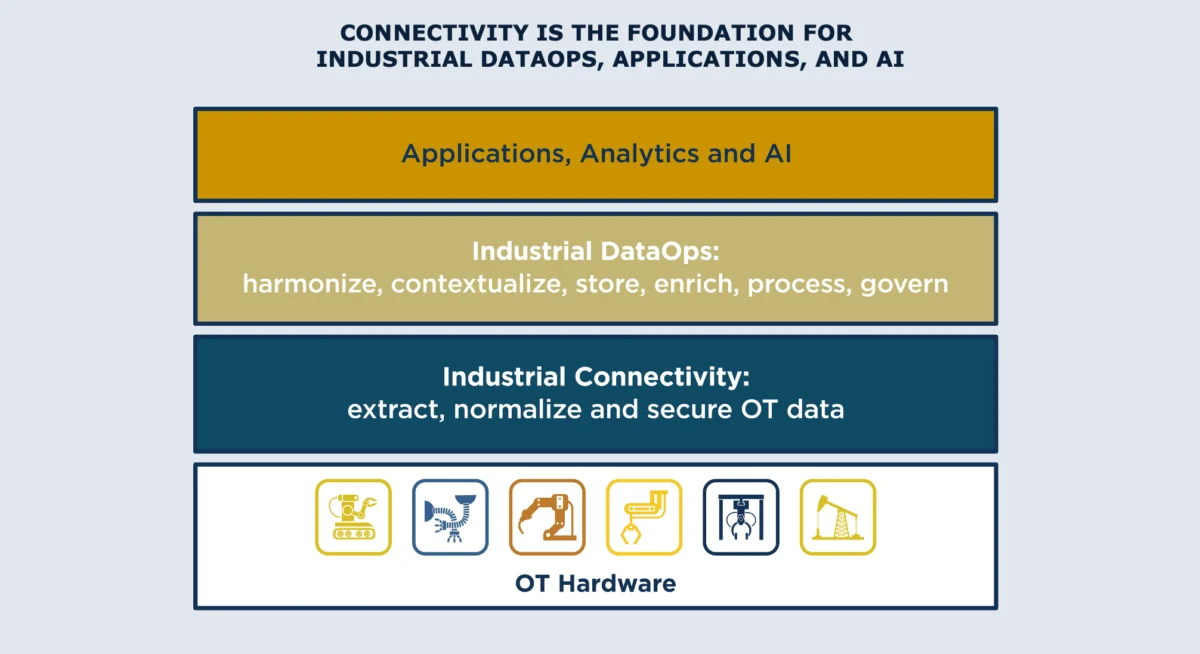
As we look toward the latter half of the decade, the competitive divide in the ERP market will likely be defined by the "Governance-Intelligence Gap." Many platforms can provide basic AI features; fewer can provide a secure, governed foundation that supports external agents without fragmenting the data architecture.
Acumatica 2026 R2 is a definitive move to close that gap. By treating the ERP as a foundational layer—the "source of truth" that provides context to a broader, distributed ecosystem of AI tools—Acumatica is future-proofing its platform. The system of record is not disappearing; rather, it is evolving into the essential infrastructure upon which the intelligent, autonomous enterprise will be built.
For mid-market organizations, this means they no longer have to choose between the power of AI and the safety of their ERP. With this release, they can have both, ensuring that as their AI capabilities scale, their control over their most sensitive data scales right alongside them. The future of ERP is no longer just about recording what happened; it is about providing the intelligence to decide what happens next.