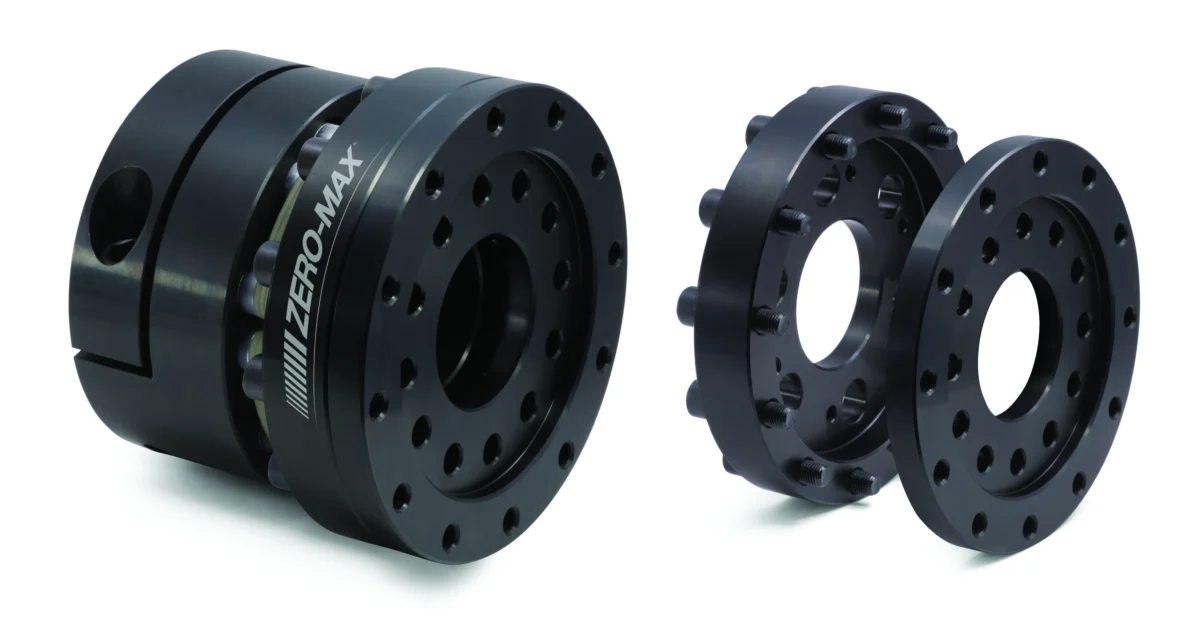
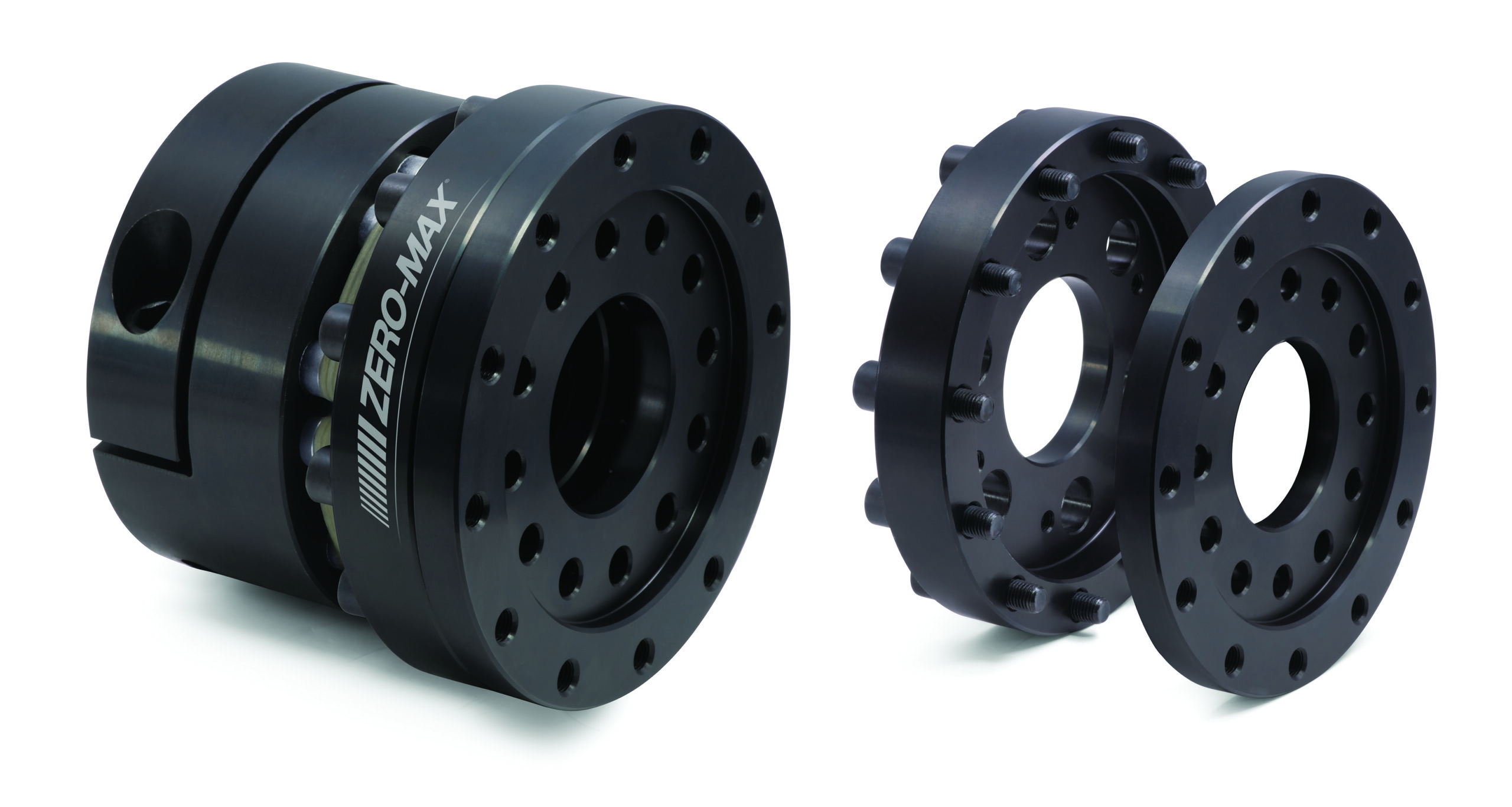
PLYMOUTH, MN — In an effort to streamline motion control assemblies and optimize performance in high-precision drive systems, Zero-Max has announced the addition of a specialized ISO flange adaptor to its acclaimed CD Power-Series flexible shaft couplings. This engineering enhancement is designed to meet the rigorous demands of modern automation, robotics, and servo-driven applications by delivering a direct, space-saving connection to standardized industrial gear reducers and actuators.
The newly introduced ISO flange adaptor allows the CD Power-Series to integrate seamlessly with equipment utilizing standard ISO 9409-1 bolt patterns. By eliminating the need for intermediate transition components, this direct-mount solution preserves high torsional stiffness, improves system positioning accuracy, and minimizes overall footprint, weight, and rotational inertia.
Main Facts: Streamlining High-Precision Motion Control
The integration of the ISO flange adaptor represents a significant leap forward in coupling design for high-performance automation machinery.
- Direct ISO Compatibility: The new adaptor mount is fully compatible with ISO 9409-1 bolt patterns, which are universally utilized across precision gear reducers, industrial robots, actuators, and advanced automation equipment.
- Optimized Torsional Stiffness: Traditional multi-component setups—which typically require a separate shaft adaptor to bridge an ISO flange and a conventional coupling hub—frequently suffer from reduced torsional rigidity and added compliance. Zero-Max’s direct-connection design maintains high torsional stiffness vital for servo-driven precision.
- Reduced Assembly Footprint: By removing transition hardware, engineers can significantly reduce the overall size, weight, and system inertia of the drive package, enabling faster acceleration rates and improved dynamic response.
- Customizable Locating-Pin Integration: To accommodate gear reducers that incorporate a locating pin in the ISO mounting flange for precise post-service orientation, Zero-Max offers a matching locating-pin feature on the CD Power-Series adaptor mount.
- Versatile Hub Configurations: Alongside the ISO flange option, the CD Power-Series continues to be offered with a wide variety of opposing hub configurations, supporting both keyed and keyless shaft mounting options tailored to diverse industrial environments.
Chronology: The Evolution of the CD Power-Series
To understand the significance of this latest release, it is helpful to examine the developmental timeline of Zero-Max’s coupling technology and the shifting requirements of the motion control marketplace.
The Shift Toward Servo-Driven Optimization
Over the past two decades, industrial automation has transitioned rapidly from traditional induction motor drives to highly dynamic, servo-driven architectures. This evolution placed entirely new demands on mechanical power transmission components. While traditional couplings focused primarily on torque transmission and basic misalignment accommodation, modern servo systems demand zero backlash, exceptionally high torsional stiffness, and minimal settling time during high-speed indexing operations.
Introduction of the CD Power-Series
To address these challenges, Zero-Max engineered the CD Power-Series flexible shaft couplings. Built around a robust, composite-disc design, these couplings were specifically optimized to handle high-torque, servo-rated applications while compensating for angular, parallel, and axial misalignments without introducing destructive reaction loads to connected bearings and shafts.
The Rise of Standardized Robotics and Reducer Interfaces
As industrial robotics and modular automation platforms matured, Original Equipment Manufacturers (OEMs) increasingly adopted standardized mounting geometries—most notably the ISO 9409-1 standard for mechanical interfaces. While this standardization simplified mounting for many components, connecting high-performance flexible couplings to ISO flanges often required custom or secondary adaptor plates. These workarounds frequently compromised precision by introducing mechanical slack, compliance, and unnecessary length to the drive train.
The 2026 ISO Flange Adaptor Integration
Responding directly to engineering feedback from the field, Zero-Max developed and launched the integrated ISO flange adaptor for the CD Power-Series. This milestone bridges the gap between standardized robotic/gearhead interfaces and high-performance flexible couplings, providing engineers with an out-of-the-box solution that eliminates custom machining and preserves drive train integrity.
Supporting Data: Engineering Dynamics and Performance Metrics
Precision motion control systems are governed by strict mathematical and physical principles. Understanding how coupling selection influences these metrics underscores the value of Zero-Max’s new design.
Minimizing Rotational Inertia ($J$)
Rotational inertia is a critical parameter in servo sizing. The acceleration torque ($tau_a$) required of a motor is directly proportional to the total system inertia:
$$taua = Jtexttotal times alpha$$
Where $J_texttotal$ is the sum of the motor rotor inertia, coupling inertia, and load inertia, and $alpha$ is angular acceleration.
In high-speed indexing applications where cycles occur hundreds of times per minute, even small reductions in coupling mass and diameter yield compounding energy savings and lower thermal stress on the servo motor. By removing intermediate transition adapters, the Zero-Max ISO flange configuration reduces the effective radius and mass of the connection assembly, directly lowering $J_texttotal$ and enhancing system efficiency.
Preserving Torsional Rigidity ($k_t$)
Torsional stiffness is the measure of how much a coupling twists under an applied torque load, expressed in Nm/rad. In high-precision positioning systems, low torsional stiffness manifests as wind-up, leading to phase lag, positioning errors, and extended settling times.
Conventional setups that use a secondary shaft adaptor introduce an extra mechanical interface, two additional sets of clamping hardware, and an elongated load path. Each additional joint acts as a compliance point, degrading the overall torsional stiffness of the assembly. Zero-Max’s direct ISO flange adaptor eliminates this intermediate joint, ensuring that the high torsional stiffness inherent to the CD Power-Series composite-disc design is transferred directly from the gear reducer output to the driven load.
Misalignment Compensation Capacities
Despite their extreme rigidity under torsional loads, CD Power-Series couplings are engineered to accommodate inevitable mechanical misalignments that occur due to thermal expansion, frame deflection, and assembly tolerances:
- Angular Misalignment: Tolerates angular deviations smoothly without generating excessive side loads.
- Parallel Misalignment: Accommodates offset shafts through symmetric flex-element geometry.
- Axial Motion: Permits free axial float, preventing damaging pre-loads on motor and gearbox bearings.
Official Responses and Industry Perspectives
Engineering leadership at Zero-Max emphasizes that product development is continuously driven by the practical needs of automation engineers facing tighter space constraints and higher precision targets.
"Modern automation engineers are constantly challenged to pack more performance into smaller machine envelopes," noted a representative for Zero-Max engineering. "When designing precision servo systems utilizing advanced gear reducers and robotic actuators, every millimeter and every gram matters. By engineering a direct ISO flange adaptor into the CD Power-Series, we are giving our customers a way to achieve an uncompromising, high-stiffness connection without the bulk and compliance associated with traditional multi-component adapter assemblies."
Industry analysts note that mechanical component manufacturers are increasingly focusing on modularity and direct-mount capabilities. As factories become more automated and automated guided vehicles (AGVs), articulated robots, and high-speed packaging lines demand greater uptime and precision, components that reduce points of potential failure become invaluable to system integrators.
Implications: What This Means for Machine Builders and Integrators
The introduction of the ISO flange adaptor for the CD Power-Series couplings has wide-ranging implications for machine builders, system integrators, and maintenance engineers across multiple industries.
1. Enhanced Positioning Accuracy in Robotics and Indexing
In applications such as electronic component placement, CNC indexing tables, and multi-axis articulated robots, positioning accuracy is paramount. By maintaining high torsional stiffness and eliminating the wind-up associated with bulky transition adaptors, machines equipped with the new CD Power-Series couplings will achieve faster settling times and tighter positional tolerances. This directly translates to higher throughput and reduced scrap rates in high-speed manufacturing environments.
2. Simplified Procurement and Reduced Bill of Materials (BOM)
Previously, engineers specifying a flexible coupling to mate with an ISO 9409-1 reducer flange often had to source a standard coupling, procure a custom or off-the-shelf adaptor bushing, and verify compatibility across multiple vendor specifications. Zero-Max’s integrated solution simplifies the engineering workflow, reduces the number of line items on the BOM, and streamlines assembly times on the factory floor.
3. Tailored Adaptability for Specialized Maintenance
Maintenance and retrofit operations frequently encounter legacy equipment where component orientation is critical. Zero-Max’s capability to incorporate a matching locating-pin feature into the ISO adaptor mount ensures that repaired or retrofitted machinery can maintain exact angular orientation after servicing. This eliminates costly trial-and-error realignment procedures during downtime events.
4. Comprehensive Application Support
Recognizing that proper sizing and selection are vital to the success of servo-driven systems, Zero-Max supports the engineering community with dedicated technical assistance. Engineers and system integrators can access sizing calculations, CAD models, and expert application support via phone, email, or online consultations to ensure optimal coupling selection for their specific operational parameters.
Conclusion
The expansion of the CD Power-Series flexible shaft coupling line with the new ISO flange adaptor demonstrates Zero-Max’s continued commitment to advancing mechanical power transmission technology. By combining direct ISO 9409-1 compatibility, superior torsional stiffness, reduced rotational inertia, and flexible hub configurations, Zero-Max provides a robust solution for the most demanding precision motion control challenges.
For more detailed technical specifications, CAD files, or to consult with an application engineer regarding your next automation project, visit the official Zero-Max website at zero-max.com.