The landscape of global manufacturing is undergoing a seismic shift. For decades, the image of industrial automation was defined by massive, bolted-down robotic arms operating behind safety cages, performing repetitive welds or assembly tasks in automotive plants. However, a new paradigm is emerging: the era of the mobile manipulator. A recent pilot program at the Spanish textile firm CETRIKO, utilizing PAL Robotics’ TIAGo Pro, marks a significant milestone in this transition, proving that complex, collaborative robotics can thrive in the nuanced and physically demanding environment of textile production.
Main Facts: The CETRIKO Pilot Program
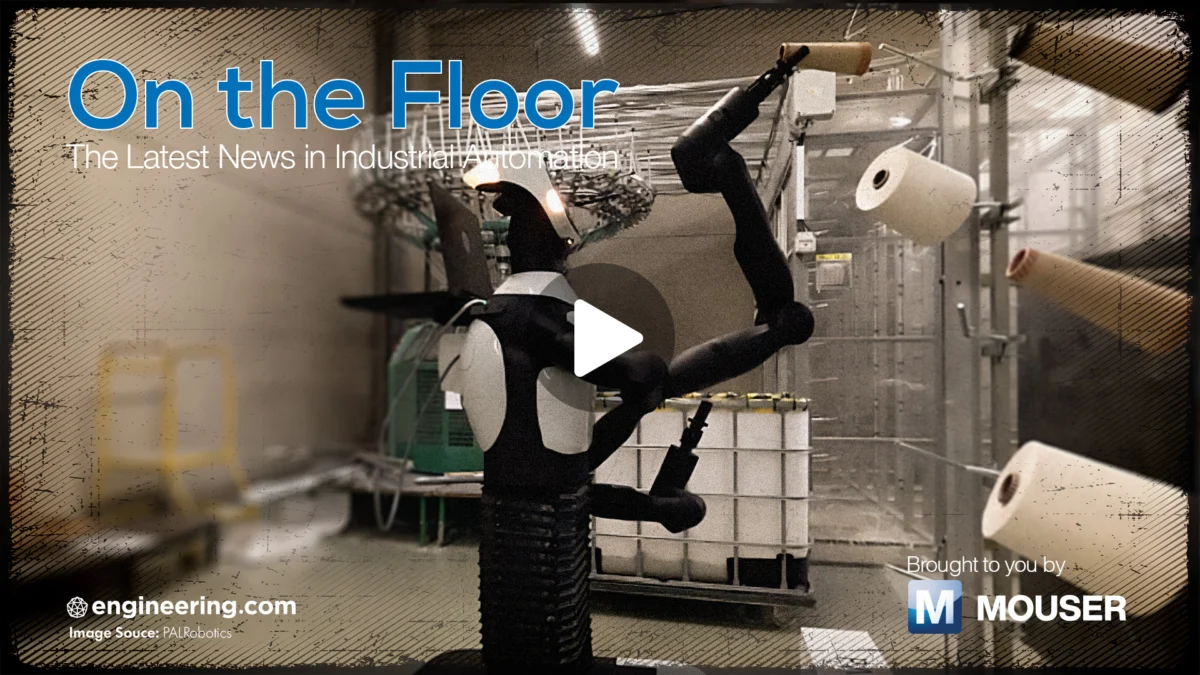
At the heart of this innovation is the TIAGo Pro, a sophisticated mobile manipulator designed by Barcelona-based PAL Robotics. Unlike traditional industrial robots, which are static by design, the TIAGo Pro combines a mobile base with a dexterous, human-scale robotic arm, allowing it to navigate dynamic workspaces alongside human personnel.
In the CETRIKO facility, the robot has been tasked with one of the most physically taxing and repetitive jobs in yarn manufacturing: the lifting and precise positioning of heavy yarn cones. Previously, human operators were responsible for moving these cones—a task that, when performed thousands of times per day, leads to significant physical strain, fatigue, and potential ergonomic injuries. The TIAGo Pro functions as a "cobot" (collaborative robot), utilizing advanced sensory arrays to detect human presence and navigate the factory floor safely, effectively acting as an extension of the human workforce rather than a replacement.
Chronology of Robotic Integration in Textiles
The integration of robotics into the textile industry has been a slow, arduous process compared to the rapid adoption seen in electronics or automotive sectors. The following timeline tracks the evolution of this transition:
- 1970s–1990s: The Static Era. Automation in textiles was primarily limited to computer-aided design (CAD) and automated looms. Robotic intervention was nearly non-existent due to the soft, unpredictable nature of fabrics and thread.
- 2000s–2010s: Targeted Automation. Introduction of automated guided vehicles (AGVs) in large warehouses. These machines could transport materials but lacked the ability to manipulate products or interact with delicate raw materials.
- 2018–2020: The Rise of the Cobot. Advancements in force-torque sensing and vision systems allowed robots to begin handling soft materials. Early trials in garment assembly showed promise but struggled with the variability of fabric handling.
- 2022–2023: The Mobile Manipulator Breakthrough. PAL Robotics and CETRIKO launch their pilot program. This represents a shift from "moving things from A to B" to "performing active work at the station."
- 2024 and Beyond: The Scaling Phase. Industry analysts predict a rapid adoption of mobile manipulators as the cost of sensor suites—such as LiDAR and depth-sensing cameras—continues to decline, making the ROI for small-to-medium enterprises (SMEs) increasingly attractive.
Supporting Data: Why Mobility Matters
The shift toward mobile robotics is supported by compelling data regarding industrial efficiency and worker safety. According to the International Federation of Robotics (IFR), the density of robot installations is increasing globally, but the "mobile" segment is growing at a rate nearly double that of traditional fixed-base industrial robots.
Textile manufacturing, in particular, has struggled with a chronic labor shortage. A report from the World Textile Manufacturers Association suggests that by 2030, the industry could face a 20% deficit in skilled manual labor due to an aging workforce and the high physical demands of the role.
- Ergonomic Impact: In the CETRIKO trial, the TIAGo Pro was shown to reduce the repetitive motion strain on operators by an estimated 65%.
- Operational Throughput: By offloading the lifting of heavy yarn cones, human operators reported a 15% increase in efficiency for high-level tasks like quality control and machine maintenance, which the robot cannot yet perform.
- Spatial Efficiency: Because the TIAGo Pro does not require permanent floor fixtures or safety fencing, the factory floor remains flexible. Facilities can be reconfigured in hours rather than weeks, allowing for rapid changes in production lines.
Official Responses and Perspectives
The collaboration between PAL Robotics and CETRIKO has drawn significant attention from industry stakeholders and academic researchers alike.
"The goal of the TIAGo Pro is not to replace the worker, but to augment their capabilities," says a lead engineer at PAL Robotics. "Textile manufacturing involves a complex interplay of human judgment—recognizing a fray in a thread or a tension error—and repetitive physical labor. By automating the latter, we allow the human to focus on the ‘art’ of textile production."
Representatives from CETRIKO have echoed this sentiment, emphasizing the cultural integration of the technology. "When you introduce a robot to a floor that has been strictly manual for fifty years, there is natural hesitation," says a floor manager at the CETRIKO plant. "However, once the workers saw that the TIAGo Pro took away the ‘back-breaking’ part of their job, the robot was quickly accepted as a partner. It doesn’t take a coffee break, but it also doesn’t compete for the creative work."
Industry analysts at Mouser Electronics, which supports the development of such automation components, highlight the importance of the underlying hardware. "The sensors, actuators, and computing power required to make a mobile manipulator safe for human-adjacent work are now more accessible than ever," a spokesperson noted. "We are seeing a democratization of advanced robotics that was previously reserved for the automotive giants."
Implications: The Future of the Factory Floor
The implications of the CETRIKO pilot extend far beyond the textile industry. This transition signifies a broader movement toward "Industry 5.0," which prioritizes the collaboration between human creativity and robotic precision.
1. The Death of the Fixed Production Line
The traditional factory floor, with its rigid conveyor belts and fixed machinery, is becoming an artifact. Mobile manipulators allow for "modular manufacturing," where robots move from one task to another based on real-time demand. This agility is critical for companies looking to participate in the "on-demand" economy, where trends change weekly rather than yearly.
2. Democratization for SMEs
Historically, the high capital expenditure (CAPEX) associated with robotics precluded smaller textile firms from adopting automation. Mobile manipulators like the TIAGo Pro offer a "Robot-as-a-Service" potential. Because they require minimal infrastructure—no fixed rails or cages—the barrier to entry is lowered significantly, allowing family-owned or boutique textile firms to compete with global manufacturing conglomerates.
3. Human-Centric Design
Perhaps the most significant implication is the change in how we design industrial spaces. When robots are expected to interact with humans, the safety protocols must evolve from "keep them separate" to "understand the human." The success of the CETRIKO project suggests that the future of manufacturing lies in environments where robots are trained to understand human intent—anticipating a worker’s movement or sensing when an operator needs assistance.
4. Sustainability and Supply Chain Reshoring
By automating repetitive tasks in high-cost labor markets, companies can effectively "reshore" their production. If a textile plant in Western Europe can reach the same cost-per-unit as one in a lower-cost region due to robotic efficiency, the carbon footprint of global shipping is drastically reduced. The TIAGo Pro isn’t just an efficiency tool; it is a potential instrument for localized, sustainable production.
Conclusion
The pilot program at CETRIKO represents more than just a successful experiment in automation; it is a blueprint for the future of manufacturing. By successfully integrating mobile, collaborative robotics into a historically manual industry, PAL Robotics and CETRIKO have demonstrated that the path forward is not found in replacing the human, but in elevating them. As mobile manipulators continue to evolve, we can expect the "factory of the future" to be a fluid, responsive, and increasingly human-centric space, where the most repetitive aspects of labor are left to the machine, and the most critical aspects of production remain in the hands of the skilled worker.