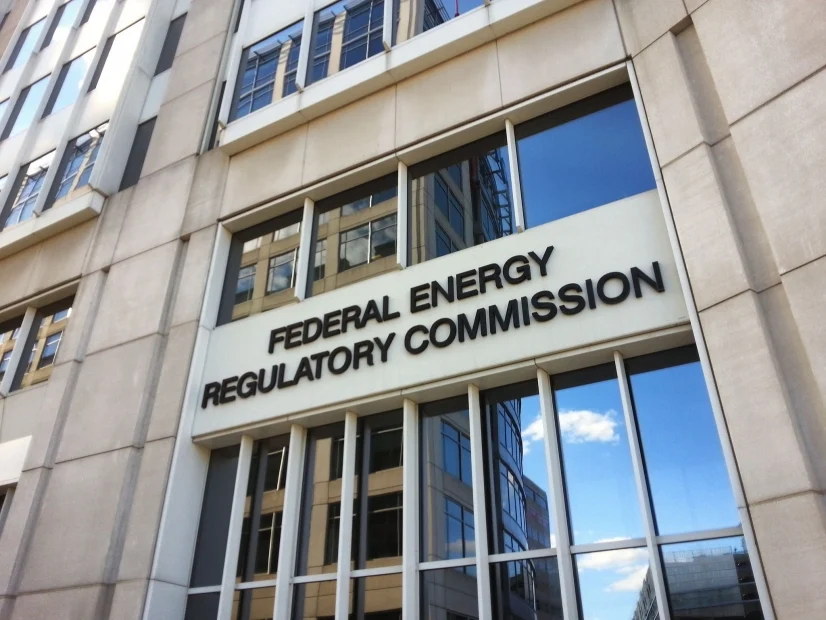
WASHINGTON — In an era where artificial intelligence is steadily reshaping legal discovery, corporate compliance, and regulatory affairs, energy sector professionals face a long-standing bottleneck: the Federal Energy Regulatory Commission’s (FERC) eLibrary. For decades, navigating this colossal, labyrinthine repository of public records has required armies of attorneys, regulatory analysts, and compliance specialists to spend countless hours digging through dense documents.
Today, that paradigm is shifting. Permeta, a purpose-built artificial intelligence platform, has officially announced the beta launch of FERC.ai. This groundbreaking service bridges the gap between massive regulatory databases and everyday workflows by making the mammoth public record of FERC fully conversational. Integrated seamlessly with leading large language models (LLMs)—including Anthropic’s Claude, OpenAI’s ChatGPT, and Microsoft’s Copilot—FERC.ai allows users to query over half a million filings using natural language, complete with precise citations and direct links to source documents.
Main Facts: What is FERC.ai and How Does It Work?
At its core, FERC.ai is designed to dissolve the friction of energy regulatory research. Rather than forcing users to master complex Boolean search operators or manually sift through hundreds of PDF filings to understand how a precedent was applied in a past proceeding, FERC.ai introduces an intuitive, conversational interface.
Key Capabilities and Architecture
- Extensive Coverage: The platform currently indexes more than 500,000 filings, with new records ingested every single hour. Its scope spans diverse sectors overseen by the Commission, including electric, natural gas, hydropower, and oil proceedings.
- Comprehensive Document Types: FERC.ai processes applications, formal orders, public comments, protests, exhibits, and detailed staff reports. Crucially, it evaluates not just the final decisions handed down by the Commission, but also the rich evidentiary record that led up to those decisions—including arguments made by intervenors and formal responses from applicants.
- Semantic Search Capabilities: Traditional keyword searches often fail when different parties use varying terminology to describe the same technical or environmental concept. FERC.ai leverages advanced AI to understand intent and context, enabling users to find relevant passages even when disparate terminology is deployed across different dockets.
- Model Context Protocol (MCP) Integration: FERC.ai connects to Claude, ChatGPT, and Copilot via the Model Context Protocol, an open standard designed to allow AI assistants to securely access external, specialized data sources. Research takes place entirely within the user’s preferred AI assistant, preserving conversational flow and allowing for iterative, deep-dive follow-up questions.
Chronology: From Concept to the Beta Launch
The journey toward bringing generative AI to federal energy regulation reflects the rapid acceleration of AI tooling over the past several years.
- The Pre-AI Era of Regulatory Research: For decades, navigating the FERC eLibrary was notoriously difficult. Legal teams relied on specialized knowledge, legacy database tools, and manual document review to track dockets, corporate mergers, and environmental disputes.
- The Rise of Purpose-Built Legal AI (2023–2024): As generative AI matured, early enterprise applications proved the value of Retrieval-Augmented Generation (RAG) in parsing legal briefs, SEC filings, and patent applications. However, specialized, highly technical regulatory domains like FERC remained largely underserved by off-the-shelf models due to the unique vocabulary and vast volume of filings.
- Development by Permeta: Recognizing the niche yet immense market demand, Permeta’s engineering team engineered a proprietary platform specifically designed to ingest, structure, and index the complex data architecture of FERC proceedings.
- The Beta Launch (Present): Permeta has officially opened FERC.ai to the public in a beta phase. The company has rolled out a structured pricing and onboarding model, offering a 14-day free trial followed by a discounted introductory rate of $200 per month for early adopters who lock in their pricing for a year.
Supporting Data and Technical Scope
To truly appreciate the utility of FERC.ai, one must examine the staggering scale of the dataset it indexes. FERC regulates the transmission and wholesale sale of electricity and natural gas in interstate commerce, licenses hydroelectric projects, and oversees the interstate transportation of oil by pipeline. This mandate generates a relentless flood of paperwork.
- 500,000+ Active Filings: The beta platform launches with over half a million documents immediately queryable.
- Real-Time Updates: With new records added hourly, users are not working with a static, outdated snapshot of regulatory history; they can track active proceedings as they evolve.
- Granular Tracking: During internal testing, beta users successfully executed complex multi-step research tasks, such as:
- Tracing the precise historical application of a specific statutory clause across dozens of distinct dockets.
- Rapidly isolating a target company’s filings within a sprawling, multi-year proceeding.
- Mapping intricate corporate ownership structures and asset transfers derived from Section 203 merger applications.
By bringing these capabilities directly into mainstream enterprise AI assistants, Permeta bridges the gap between high-level strategic legal work and tedious document retrieval.
Official Responses and Industry Perspectives
The introduction of FERC.ai has drawn strong reactions from seasoned energy attorneys, regulatory compliance officers, and technology leaders alike.
MardiLyn Saathoff—former general counsel for Oregon Governor Ted Kulongoski and former general counsel, chief compliance officer, and senior vice president of regulatory affairs for Northwest Natural—highlighted the immediate operational impact of the tool.
"FERC.ai brings the contents of FERC’s e-library inside the AI assistant I already use," Saathoff noted. "FERC.ai cites sources for each answer it provides so every point can be validated and provides me with a summary comparison of how other parties approached an issue across proceedings and flags what needs deeper analysis — all without spending hours digging through eLibrary."
For legal and regulatory professionals, the ability to instantly cross-examine how opposing counsel or intervener groups framed similar arguments in past dockets represents a massive qualitative leap forward.
Permeta CEO Eric Redmond emphasized that the platform is fundamentally designed to augment human expertise rather than replace the rigorous analysis required in energy law.
"When you’re preparing an application or evaluating a project, it’s critical to understand what happened in similar proceedings," Redmond said. "FERC.ai saves days of digging and gives you the source documents to double-check the answer."
Note on Independence: Permeta has explicitly clarified that FERC.ai is an independent, privately developed product. It is neither affiliated with nor officially endorsed by the Federal Energy Regulatory Commission.
Implications: How AI is Reshaping Energy Regulation and Compliance
The rollout of FERC.ai carries profound implications for the energy sector, legal practice, and the broader intersection of public governance and artificial intelligence.
1. Democratizing Access to Regulatory Proceedings
Historically, navigating FERC was an asymmetrical advantage. Large utility conglomerates, deep-pocketed energy developers, and specialized Washington, D.C., legal boutiques maintained vast internal knowledge bases and dedicated teams just to monitor eLibrary filings. By lowering the barrier to entry through conversational AI, platforms like FERC.ai democratize access to public regulatory data. Smaller non-governmental organizations (NGOs), local public advocates, and mid-sized renewable energy startups can now conduct sophisticated historical research with a fraction of the traditional overhead.
2. Accelerating Project Deployment and Infrastructure Development
The United States is currently undergoing a massive energy transition. Billions of dollars in wind, solar, storage, and transmission infrastructure are waiting in interconnection queues across regional transmission organizations (RTOs) and independent system operators (ISOs). Regulatory delays at FERC can stall projects for years, inflating capital costs and chilling investment. Tools that streamline application preparation, anticipate regulator objections based on past precedent, and accelerate compliance review can help grease the wheels of crucial infrastructure development.
3. The Future of Regulatory Legal Tech
FERC.ai serves as a bellwether for how niche government agencies and public records will be consumed in the age of generative AI. As open standards like the Model Context Protocol gain traction, legal tech is moving away from proprietary, siloed software dashboards toward flexible integrations that embed legal research directly into the digital workspace where professionals already draft documents, communicate with clients, and formulate strategy.
Looking Ahead
As FERC.ai moves through its beta phase, its performance will be closely watched by energy executives, legal tech investors, and regulatory bodies alike. If the platform successfully balances speed and depth with the absolute precision required in federal legal practice, it may well establish a new industry standard for how humanity interacts with the sprawling archives of government oversight.