In the complex architecture of modern civilization, electrical power is the lifeblood of industry, commerce, and daily life. Yet, this invisible force is inherently volatile. Beneath the surface of every wall outlet, industrial control panel, and utility-scale substation lies a silent, sophisticated layer of defense: circuit protection. These devices, often overlooked until a failure occurs, serve as the critical "fail-safe" that prevents catastrophic fires, equipment destruction, and fatal electrical shocks. As our power grids become increasingly complex and digitized, the role of circuit protection is evolving from simple mechanical interruption to intelligent, predictive system management.
The Physics of Failure: Understanding Electrical Hazards
To appreciate the necessity of circuit protection, one must first grasp the delicate balance of an electrical circuit. Using the common hydraulic analogy, electrical current represents the flow rate, voltage acts as the pressure, and resistance serves as the pipe size or internal friction. When these parameters remain within design specifications, energy flows efficiently. When they deviate, however, the system enters a state of failure.
The Four Primary Threats
- Overloads: This occurs when a circuit is forced to carry more current than it was rated to handle—often due to excessive load connections. The resulting sustained heat (Joule heating) is a slow-motion disaster, degrading insulation and wiring over time, making it a leading culprit in electrical fires.
- Short Circuits: These represent the most catastrophic fault, occurring when a low-resistance path—such as a frayed wire—bypasses the intended load. Current surges to near-infinite levels, resulting in violent arcing and immediate, often irreversible, damage to infrastructure.
- Ground Faults: These occur when current deviates from its intended path to the ground, potentially through a person. Because the human body is conductive, this condition poses an immediate risk of electrocution.
- Overvoltage (Surges): Sudden spikes in electrical pressure, often triggered by lightning strikes or utility-scale switching, can penetrate sensitive electronic components, rendering sophisticated control systems useless in a nanosecond.
The Core Protectors: Fuses and Circuit Breakers
The hierarchy of electrical protection begins with Overcurrent Protection Devices (OCPDs), primarily divided into two categories: the "sacrificial" fuse and the "resettable" circuit breaker.
Fuses: The Sacrificial Standard
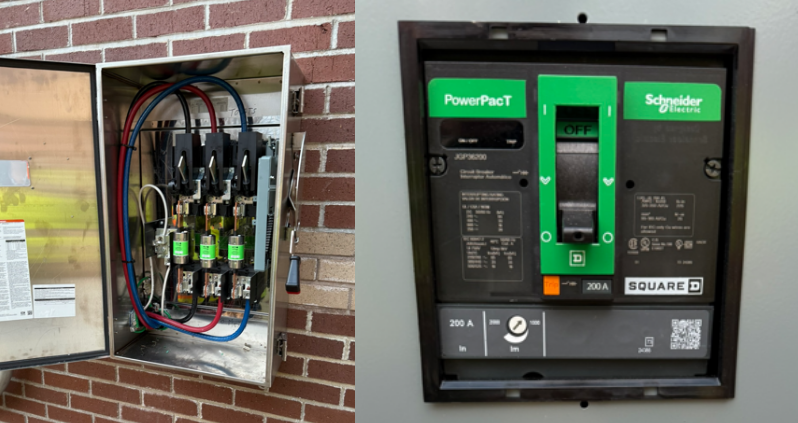
A fuse is the embodiment of simplicity. It acts as a sacrificial element designed to melt when subjected to specific thermal loads. Based on the principle of $I^2R$ heating, the fuse element reaches its melting point precisely when the current exceeds its rating for a defined duration.
- Advantages: Fuses are cost-effective, offer extremely high-speed interruption during short-circuit events, and possess no moving parts to degrade.
- Limitations: The primary drawback is the necessity of manual replacement after a fault, which leads to increased downtime in industrial settings.
Circuit Breakers: The Reusable Guardian
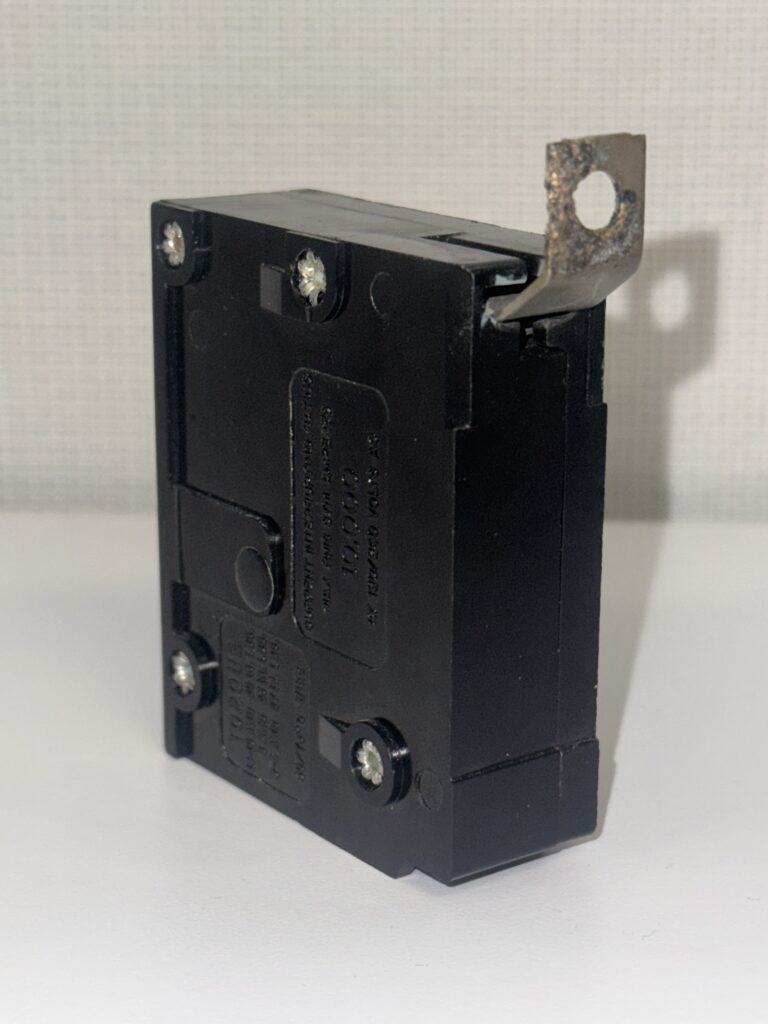
Circuit breakers provide the operational flexibility required in modern facilities. They function as electromechanical switches that can be reset once a fault is cleared. Most modern breakers utilize two mechanisms:
- Magnetic Trip: Uses an electromagnet to trigger an immediate disconnect during high-current short circuits.
- Thermal Trip: Uses a bimetallic strip that bends under sustained heat, tripping the breaker during a prolonged overload.
Advanced Protection: Layering for Safety
Modern electrical codes, such as the National Electrical Code (NEC), increasingly mandate a "layered" approach to safety. By integrating specialized sensors, engineers can create a comprehensive defense grid.
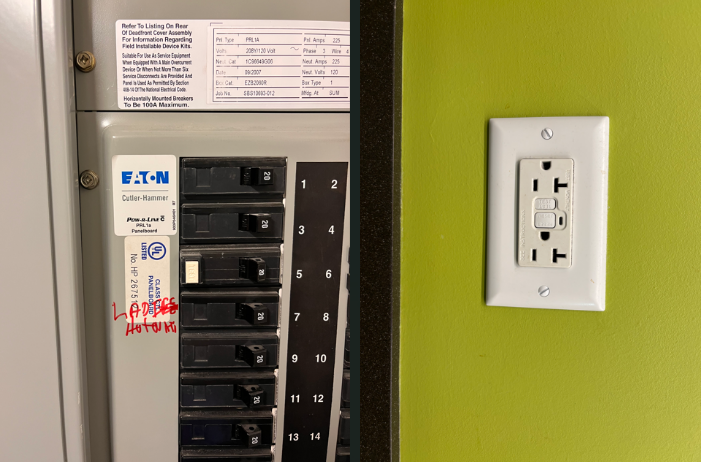
- Ground Fault Circuit Interrupters (GFCIs): These devices compare the current flowing "in" versus "out" of a circuit. If a discrepancy as small as 4–6 milliamperes is detected—a level often indicating a leak through a human body—the GFCI kills the power in milliseconds.
- Arc Fault Circuit Interrupters (AFCIs): Unlike traditional breakers that look for current magnitude, AFCIs use digital signal processing to monitor current waveforms. They look for the high-frequency signatures (40–100 kHz) associated with dangerous arcing, which often precedes electrical fires.
- Surge Protection Devices (SPDs): These act as pressure-relief valves for the grid, diverting excess voltage spikes to the ground before they can reach sensitive downstream electronics.
Medium-Voltage Systems: The Backbone of Grid Stability
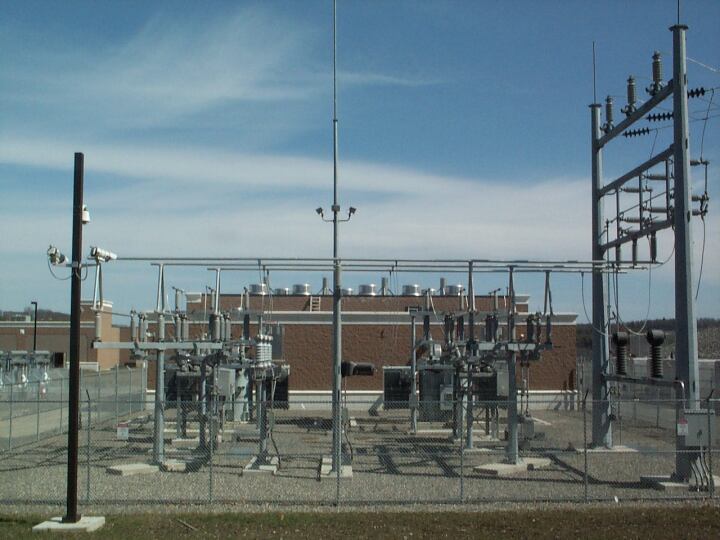
While residential protection is vital, the stakes are significantly higher at the medium-voltage (MV) level (1 kV to 35 kV). MV systems represent the "arteries" of the power grid, connecting transmission networks to local distribution.
The Role of Protective Relays
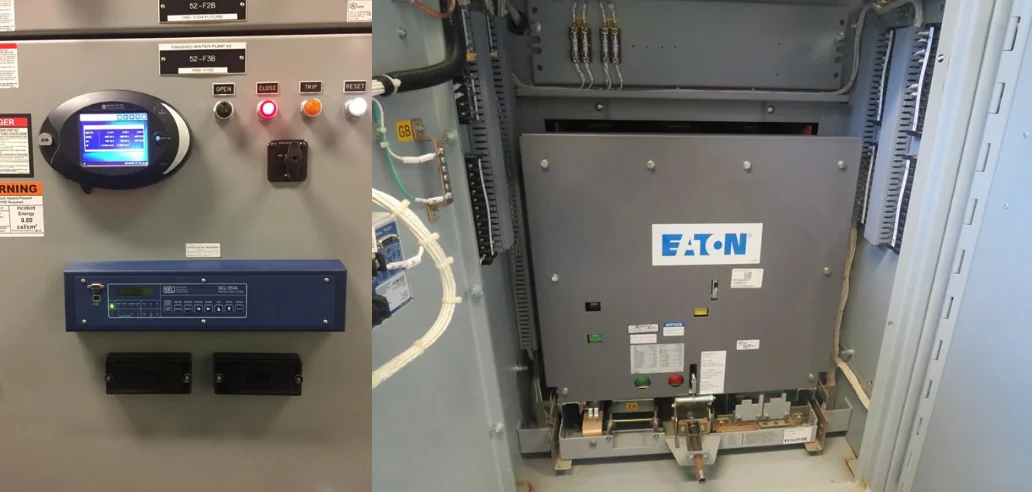
In MV systems, the "brain" of the operation is the protective relay. These are not mere switches; they are sophisticated computers that analyze real-time data on voltage, frequency, and harmonic distortion.
- Selective Coordination: This is the engineering art of ensuring that only the circuit closest to the fault trips. By carefully timing the response of downstream breakers versus upstream relays, engineers can isolate a localized fault without causing a site-wide blackout.
- The Digital Transformation: Modern digital relays allow for remote diagnostics, event logging, and, crucially, communication with smart grid infrastructure.
Supporting Data and Industry Implications
The transition toward "Smart Grids" is redefining how we view circuit protection. According to recent industry assessments, the integration of IoT-enabled sensors within switchgear is reducing unplanned downtime by an estimated 20–30% in industrial facilities.
Chronology of Evolution
- Pre-1900s: Primitive wire-based fuses.
- Mid-20th Century: Widespread adoption of molded-case circuit breakers (MCCBs).
- Late 20th Century: Introduction of GFCIs and AFCIs for residential safety.
- Current Era: Digital relays, predictive analytics, and self-healing grid architectures.
Official Industry Perspectives
"We are moving away from reactive protection to predictive intervention," notes a lead engineer at a major infrastructure firm. "The goal of modern circuit protection is not just to trip when things go wrong, but to report why they went wrong before a full-scale failure occurs. We are effectively giving the power grid a nervous system."
Regulatory bodies, including the IEEE and NFPA, are currently pushing for more stringent testing of mechanical trip mechanisms in industrial settings. They argue that as systems grow more reliant on automated processes, the "hidden" failure of a mechanical breaker—where the device looks functional but is physically seized—represents a major, yet manageable, safety risk.
Implications for the Future
As we look toward an energy landscape dominated by decentralized renewable sources and electric vehicle charging infrastructure, the challenges facing circuit protection are mounting. Photovoltaic (PV) systems and battery energy storage systems (BESS) introduce unique fault characteristics, such as direct current (DC) arcing, which is notoriously difficult to extinguish compared to alternating current (AC).
Furthermore, the rise of "self-healing" grids—which use automated switches and AI-driven relays to reroute power in real-time—will rely entirely on the integrity of these protection devices. If the sensors are inaccurate, the automated response could actually exacerbate the fault rather than contain it.
Conclusion
Circuit protection is the foundation of the modern world. It is a field where the highest level of physics meets the most practical requirements of safety. Whether it is a tiny fuse in a home appliance or a massive medium-voltage relay in a utility substation, these devices are the silent sentinels of our electrical infrastructure. As we continue to electrify our transportation, heat our homes with heat pumps, and power our industries with data-driven automation, the robustness, intelligence, and reliability of our circuit protection systems will determine the resilience of our entire civilization. We ignore these components at our peril; we optimize them at our collective advantage.