AUSTIN, Texas — In an era where speed and precision dictate market dominance, electronics manufacturers face mounting pressure to accelerate their quotation pipelines. The transition from an incoming printed circuit board (PCB) design file to a production-ready, highly accurate quote has traditionally been a labor-intensive, multi-step ordeal.
Addressing this critical industry bottleneck, Boardera Software and Cetec ERP have officially announced a strategic technology integration. This new partnership bridges the gap between AI-driven PCB quoting automation and enterprise resource planning (ERP), promising to transform how Electronics Manufacturing Service (EMS) providers handle complex requests for quotation (RFQs).
By fusing Boardera’s artificial intelligence capabilities with Cetec ERP’s robust inventory and management infrastructure, the collaboration seeks to eliminate redundant manual data entry, optimize component sourcing, and surface manufacturability issues long before a contract is signed.
Main Facts: What the Integration Entails
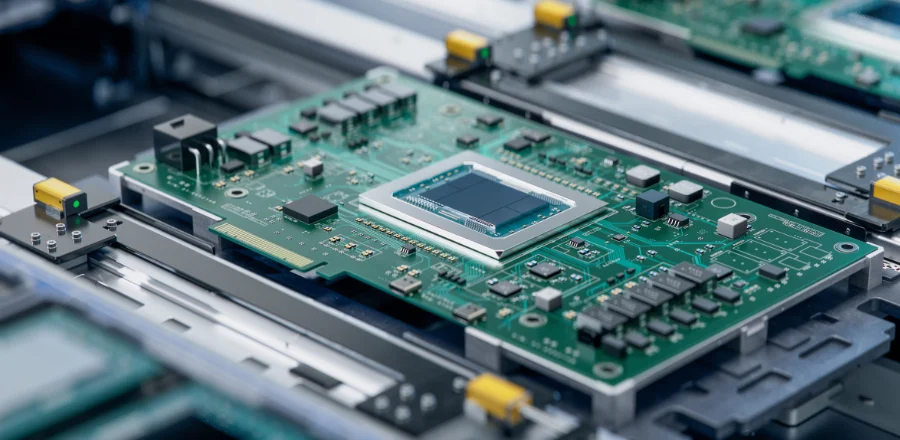
At its core, the Boardera-Cetec ERP integration is designed to automate the traditionally manual and disjointed process of turning raw PCB design packages into comprehensive, validated production quotes.
- Automated Design Analysis: Boardera’s AI engine ingests complex PCB design files, fabrication notes, and bill-of-materials (BOM) data, rapidly extracting and organizing necessary production metrics.
- Smart Inventory Cross-Referencing: Through the new API-driven bridge, Boardera directly queries Cetec ERP’s parts inventory. This allows the quoting software to automatically factor in components that the manufacturer already has on hand, bypassing the need for employees to manually cross-check spreadsheets or ERP databases.
- Comprehensive Cost Calculation: The system combines real-time inventory data with the manufacturer’s custom labor configurations, pricing rules, and mathematical formulas to execute automated BOM scrubbing, component sourcing, labor calculations, and comprehensive PCB pricing.
- Early DFM Reporting: Beyond basic costing, the integrated platform performs automated Design-for-Manufacturability (DFM) reviews, flagging potential production roadblocks, layout risks, and component obsolescence issues early in the sales cycle.
Chronology: The Evolution Toward Automated EMS Quoting
The journey toward this integration reflects a broader, industry-wide push toward digital transformation within the electronics assembly sector.
The Era of Manual Silos
For decades, EMS quoting teams operated in fragmented environments. When an RFQ arrived—typically containing disparate CAD files, Gerber files, PDFs, and unstructured BOM spreadsheets—estimating engineers had to manually parse the documents. They would check component distributors for pricing and stock, calculate labor times based on historical intuition, and manually cross-reference internal stock rooms to see if parts were already available. This process often took days, or even weeks, during which competitors could swoop in with faster bids.
The Rise of AI Point Solutions
In recent years, specialized software vendors began introducing standalone AI tools designed to parse BOMs and automate design file scrubbing. While these tools drastically reduced the time required to analyze a package, they often created a new friction point: data isolation. Quoting tools frequently lived outside the core enterprise resource planning systems, requiring employees to manually export quotes or re-enter part availability data into platforms like Cetec ERP once a job was won.
The Convergence of ERP and AI Quoting
Recognizing that true efficiency requires end-to-end workflow continuity, developers began pushing for direct integrations between front-end quotation engines and back-end manufacturing execution systems. The partnership between Boardera and Cetec ERP represents the culmination of this trend, moving the industry away from siloed point solutions and toward unified, API-connected ecosystems where front-end sales data and back-end inventory realities speak to one another in real time.
Supporting Data & Industry Context: The Hidden Costs of Manual Quoting
To understand the significance of the Boardera and Cetec ERP integration, one must examine the macroeconomic pressures facing modern electronics manufacturers.
The Cost of Speed in RFQ Turnaround
According to industry benchmarks in contract manufacturing, the speed at which an EMS provider returns a quote is often the single biggest determinant of win rates. Procurement managers at Original Equipment Manufacturers (OEMs) typically source quotes from multiple suppliers; the vendor that provides the most accurate and fastest quote frequently captures the business. Historically, manual quoting cycles consume between 4 to 48 hours per complex assembly. Automated platforms aim to compress this window down to minutes.
The Complexities of BOM Scrubbing and Sourcing
A standard PCB assembly quote involves evaluating hundreds—sometimes thousands—of unique line items. Quoting teams must navigate:

- Component Lifecycle Status: Identifying whether a chosen resistor, capacitor, or microchip is active, End-of-Life (EOL), or obsolete.
- Global Supply Chain Volatility: Fluctuating component lead times and dynamic distributor pricing require constant verification against live market data.
- Internal Stock Utilization: Failing to account for existing warehouse stock leads to redundant purchasing, tying up working capital and inflating quote prices unnecessarily.
By automating these variables and tying them directly into Cetec ERP’s inventory ledgers, the new integration addresses the root causes of quoting errors, stock mismanagement, and administrative bloat.
Official Responses: Industry Leadership Weighs In
Key stakeholders from both organizations emphasize that the partnership was forged out of a practical need to reduce "human touches" in the factory workflow.
“This integration gives EMS companies a practical way to reduce the human touches required to move from an incoming RFQ to a production-ready order in their manufacturing ERP,” stated Jordan Jolly of Cetec ERP.
Jolly’s perspective highlights a chronic pain point in electronics manufacturing: administrative overhead. Every hour an engineer spends copying part numbers from a PDF into an ERP system or double-checking component counts is an hour stolen from high-value engineering, process optimization, and customer service.
Representatives from Boardera echoed these sentiments, noting that the synergy between AI-driven data extraction and structured ERP inventory management creates a multiplier effect for operational efficiency. By letting artificial intelligence handle the unstructured chaos of incoming design files while relying on Cetec ERP to manage structured enterprise data, manufacturers achieve a balanced, highly responsive quoting apparatus.
Implications for the Future of Electronics Manufacturing
The deployment of AI-ERP integrations like the one between Boardera and Cetec ERP carries profound implications for the broader electronics manufacturing landscape.
1. Democratization of Speed for Small and Mid-Sized EMS Providers
Historically, highly customized, automated quoting infrastructure was the exclusive domain of Tier-1 contract manufacturers with massive software development budgets. Integrations embedded within accessible platforms like Cetec ERP democratize these advanced capabilities, allowing small and mid-sized EMS providers to punch above their weight class and offer enterprise-grade responsiveness to their customers.
2. Shift in Engineering Roles
As routine BOM scrubbing, component sourcing, and preliminary DFM checks become automated, the role of the manufacturing estimator and quoting engineer will continue to evolve. Rather than acting as data-entry clerks parsing spreadsheets, engineering professionals will transition into strategic advisors—focusing on edge-case exceptions, complex process engineering, and high-level client consultation.
3. Tighter Supply Chain Integration
As front-end sales tools become natively linked to back-end inventory management, the entire supply chain becomes more transparent. Manufacturers will gain earlier, more accurate visibility into material requirements, allowing them to make smarter bulk purchasing decisions, negotiate better supplier terms, and drastically reduce inventory write-offs caused by unexpected design revisions.
Conclusion
The partnership between Boardera Software and Cetec ERP marks a vital step forward in the digital evolution of electronics assembly. By eliminating the historical divide between AI-powered quotation analysis and core manufacturing data, the integration offers a streamlined, error-resistant pathway from raw design files to profitable, production-ready orders. As market demands for speed and accuracy continue to intensify, innovations of this caliber will increasingly separate industry leaders from the rest of the pack.