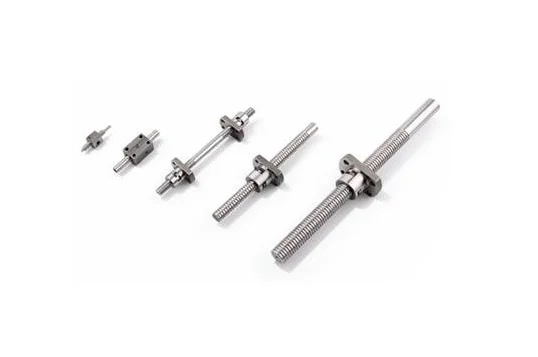
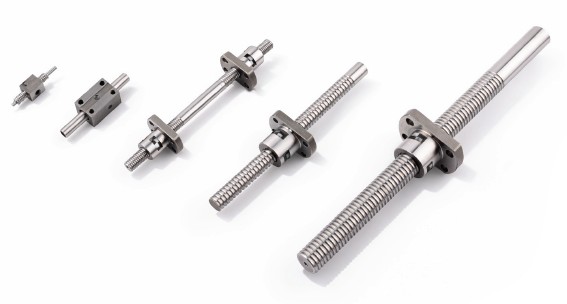
WOOD DALE, ILLINOIS — In an era where modern automation systems demand ever-increasing levels of speed, miniaturization, and micro-precision, original equipment manufacturers (OEMs) are continually pushing the boundaries of mechanical engineering. To address these evolving industry needs, DINGS™ Motion USA has announced a significant expansion of its precision motion product portfolio, introducing a new line of miniature ball screw and nut assemblies designed specifically for advanced OEM linear motion applications.
Engineered to deliver exceptional mechanical efficiency, ultra-low backlash, and deep application-specific customization, the new product line aims to resolve some of the most persistent bottlenecks in high-precision motion system design—ranging from rigid catalog limitations to fragmented supply chain logistics.
Main Facts: The DINGS™ Miniature Ball Screw Integration
The newly introduced miniature ball screw assemblies by DINGS™ Motion USA are engineered for integration into space-constrained automation environments where high throughput and positioning accuracy are critical. Key highlights of the rollout include:
- High Efficiency and Low Backlash: Designed to convert rotary motion into linear motion with minimal energy loss, ensuring precise positioning and repeatable accuracy.
- Tailored Customization: Departing from traditional rigid, off-the-shelf catalog configurations, DINGS™ builds its assemblies around the specific geometric, load, and environmental parameters of the end application.
- Vertical Integration: By manufacturing its ball screws in-house through a vertically integrated framework, the company retains strict quality control over material processing, threading, and finishing.
- Streamlined Sourcing: The addition bridges a critical gap in DINGS™’s broader motion ecosystem, enabling OEMs to source integrated linear motion assemblies—including motors, lead/ball screws, guidance elements, and feedback systems—from a single vendor.
- Accelerated Lead Times: In-house production capabilities allow the company to compress custom development cycles, shrinking traditional multi-month wait times down to mere weeks.
Chronology: The Evolution Toward Total System Integration
To understand the strategic significance of this product launch, it is helpful to examine the timeline of how modern linear motion requirements have evolved and how DINGS™ has positioned itself within the sector.
Phase 1: The Traditional Sourcing Model (Pre-Automation Shift)
Historically, engineers designing automated machinery relied on a fragmented supply chain. One vendor was typically contracted for stepper or servo motors, a second specialized supplier provided mechanical screws or belts, and a third party handled linear guides and feedback encoders. While this method worked well for legacy industrial machinery with generous spatial tolerances, it introduced compounding mechanical tolerances, prolonged procurement cycles, and complicated troubleshooting when performance anomalies arose.
Phase 2: The Demand for Miniaturization and Customization
As industries such as medical diagnostics, laboratory automation, semiconductor manufacturing, micro-electronics assembly, and optical inspection experienced rapid technological advancements, the physical footprint of machinery shrank dramatically. Simultaneously, performance expectations soared. Engineers required sub-micron precision, higher velocities, and quieter operation. Standard, mass-produced miniature ball screws often failed to meet these rigorous demands, forcing OEMs to compromise on performance or invest heavily in bespoke engineering from boutique manufacturers, which frequently resulted in exorbitant costs and extended lead times.
Phase 3: The DINGS™ System-Level Strategy
Recognizing these friction points, DINGS™ Motion USA steadily expanded its capabilities beyond core motor technologies. Over successive product cycles, the company integrated comprehensive linear motion components into its portfolio. The introduction of miniature ball screw assemblies represents the latest milestone in this evolutionary timeline. By bridging the gap between rotary actuators and precision mechanical transmission, DINGS™ has transformed itself from a component supplier into a total linear axis solution provider, capable of optimizing complete kinematic chains from the motor winding to the load attachment point.
Supporting Data and Technical Context: Overcoming Mechanical Limits
Standard off-the-shelf linear components frequently present technical hurdles for design engineers working on bleeding-edge applications. To contextualize the value of the new DINGS™ assemblies, engineers must look closely at the mechanical constraints governing miniature motion control.
The Backlash Dilemma
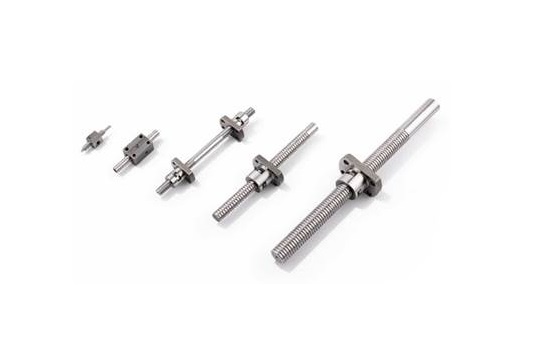
In precision positioning applications, backlash—the lost motion experienced when the drive reverses direction—is a primary enemy of accuracy. Miniature lead screws can sometimes suffer from higher friction and wear over time, while standard miniature ball screws from mass-market catalogs may lack the precise preload adjustments necessary to eliminate axial play. DINGS™ has engineered its miniature ball screw and nut assemblies to achieve ultra-low backlash profiles, ensuring that every fraction of a motor rotation translates directly into predictable, repeatable linear displacement.
The Customization Gap vs. Lead Time Reality
Traditionally, OEMs faced an agonizing trade-off: choose a standard catalog component to secure a short lead time (thereby compromising on performance, space constraints, or load capacity), or commission a fully custom ball screw assembly that could take 12 to 24 weeks to manufacture and deliver.
Through its vertically integrated manufacturing infrastructure, DINGS™ alters this equation. By controlling every phase of production—from raw material sizing and thread rolling to precision grinding and nut assembly—the company eliminates third-party dependencies. This vertical integration not only guarantees stringent quality assurance but also dramatically compresses lead times for custom configurations from several months down to just a few weeks.
Optimizing the Full Axis
A motor is only as effective as the mechanical transmission and guidance systems attached to it. Recognizing this, DINGS™ emphasizes an "axis-level" design philosophy. Instead of evaluating a ball screw or a motor in isolation, the company’s engineering staff collaborates with OEM development teams to analyze the entire dynamic envelope:
- Inertial matching between the motor and the load.
- Critical speeds and whipping tendencies of miniature spans under high rotational velocities.
- Thermal expansion characteristics in sensitive environments.
- Guidance mechanisms and encoder feedback resolution.
This holistic approach ensures that the mechanical, electrical, and control elements function harmoniously, preventing premature component wear and maximizing system uptime.
Official Responses and Industry Perspectives
Industry analysts and company representatives have noted that the launch addresses a vital, underserved niche in the motion control marketplace.
"As automation systems become faster, smaller, and vastly more precise, engineers frequently discover that standard off-the-shelf ball screw assemblies simply cannot satisfy the rigorous demands of their applications," notes technical literature from DINGS™ Motion USA. "Challenges such as limited customization options, lengthy supply chain lead times, and the operational friction of sourcing motors and mechanical hardware from disparate vendors can stall innovation. Our goal with this expansion is to remove those roadblocks entirely."
Engineering leaders within the OEM community have similarly voiced appreciation for single-source accountability. When a motion subsystem—comprising the motor, ball screw, bearings, and feedback loop—is engineered and validated by a single supplier, the finger-pointing often associated with multi-vendor integration disappears. If a prototype requires modification, a single engineering conversation can yield a revised design blueprint that moves rapidly from virtual CAD models to physical prototyping on the factory floor.
Implications for OEMs and the Future of Automation
The commercial and technical implications of DINGS™ Motion USA’s miniature ball screw rollout extend across several vital industrial sectors:
1. Accelerated Time-to-Market for OEMs
In highly competitive global markets, the first company to deliver a next-generation medical device, automated microscope, or semiconductor inspection tool often captures the lion’s share of market revenue. By slashing custom component lead times from months to weeks, DINGS™ empowers OEMs to accelerate their prototyping, testing, and commercial release cycles.
2. Streamlined Supply Chain Management
Managing dozens of Tier-2 and Tier-3 suppliers drains administrative resources and exposes manufacturing operations to geopolitical and logistical supply chain shocks. By consolidating the sourcing of motors, lead screws, miniature ball screws, and support mechanics under the DINGS™ umbrella, OEMs can simplify their bill of materials (BOM), reduce administrative overhead, and secure predictable replenishment schedules.
3. Elevated Precision in Compact Footprints
As end-users demand smaller, lighter, and more portable equipment—particularly in point-of-care medical diagnostics and portable analytical instruments—the availability of high-efficiency miniature ball screws opens up new design possibilities. Engineers can now achieve high load capacities and smooth, frictionless motion in spaces previously restricted to lower-efficiency sliding or lead screw mechanisms.
4. Collaborative Engineering Partnerships
The shift toward application-specific customization reinforces a broader industry trend: the transition from transactional vendor-buyer relationships to deep, collaborative engineering partnerships. By embedding its technical team alongside OEM designers early in the conceptualization phase, DINGS™ helps mitigate engineering risks before physical tooling is ever cut, ensuring right-first-time manufacturing success.
Conclusion
The introduction of miniature ball screw and nut assemblies by DINGS™ Motion USA marks a significant step forward in the realm of high-precision linear motion. By combining high mechanical efficiency, ultra-low backlash, rapid custom turnaround times, and a comprehensive system-level design philosophy, DINGS™ provides OEMs with the tools required to conquer the next generation of automation challenges.
For engineering teams looking to optimize their linear axes—from initial prototype conception to full-scale production—the expanded portfolio offers a streamlined path toward greater performance, reliability, and market agility.
For more information regarding technical specifications, customization parameters, and engineering support, visit the official DINGS™ Motion USA website at dingsmotionusa.com.