




BERLIN — In a major development for the industrial automation sector, Teradyne Robotics—the parent company behind global cobot pioneer Universal Robots (UR) and autonomous mobile robot leader Mobile Industrial Robots (MiR)—announced a high-profile partnership with physical AI software developer Sereact. Officially unveiled at NVIDIA GTC Berlin, the collaboration aims to supercharge the deployment of artificial intelligence in unstructured manufacturing, retail, and logistics environments.
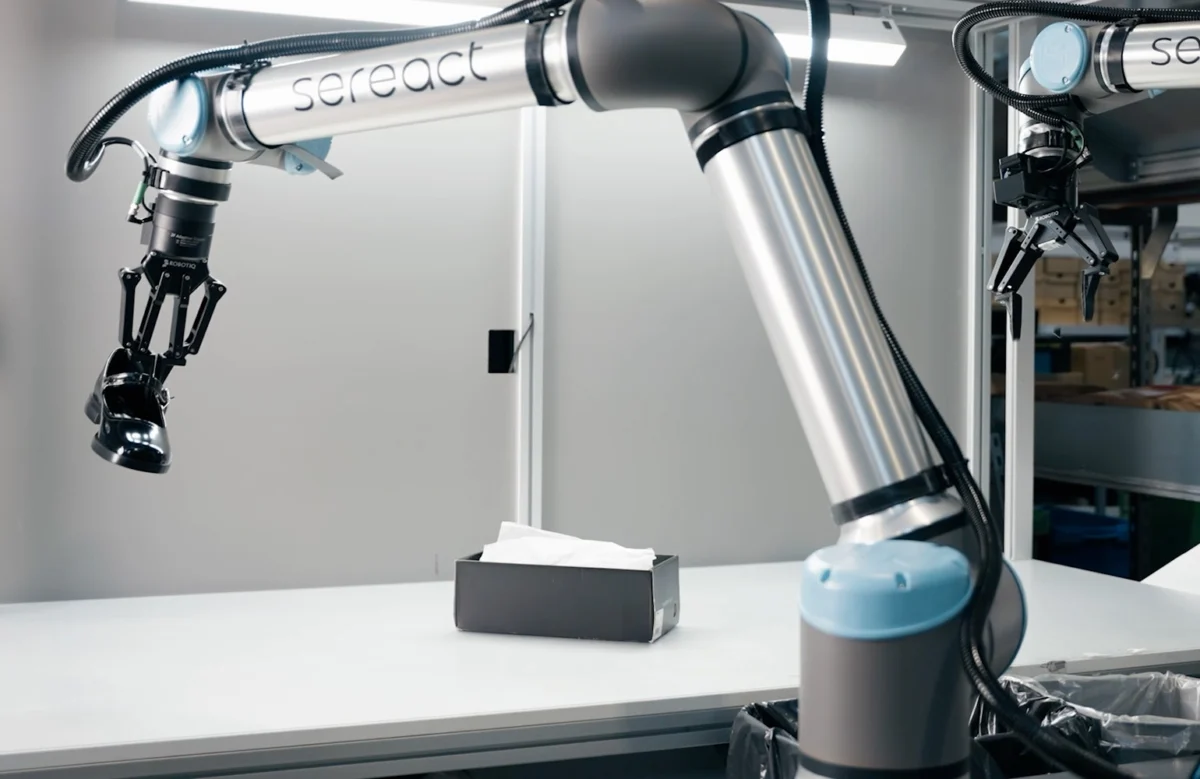
Rather than existing purely as a speculative pilot program, the partnership hits the ground running. The companies revealed that they have already successfully integrated and shipped hundreds of Universal Robots arms in dual-arm configurations to active customer sites across Europe. By pairing Sereact’s advanced "Cortex" physical AI platform with Teradyne’s hardware ecosystem, the partnership is offering a turnkey, field-tested solution for some of the most complex, labor-intensive tasks in modern supply chains.
Main Facts: The Intersection of Physical AI and Industrial Hardware
At its core, the Teradyne-Sereact partnership bridges the gap between advanced cognitive software and ruggedized industrial automation.
- The Partners: Teradyne Robotics provides the robust, globally deployed hardware backbone via Universal Robots and Mobile Industrial Robots. Sereact contributes Cortex, a state-of-the-art physical AI software platform capable of giving robots human-like perception and dexterity.
- The Technology: Cortex acts as a unified "brain" for robotic hardware, enabling systems to autonomously identify, grasp, and handle completely unknown, mixed, or irregularly packaged items without requiring specialized reprogramming for each new product variant.
- Current Scale: The collaboration has already moved past theoretical proofs-of-concept, with hundreds of dual-arm Universal Robots systems powered by Sereact currently operational in European fulfillment centers.
- Global Expansion: To support soaring demand—particularly in the North American market—Sereact strategically established its U.S. headquarters in Charlestown, Massachusetts, earlier this year.
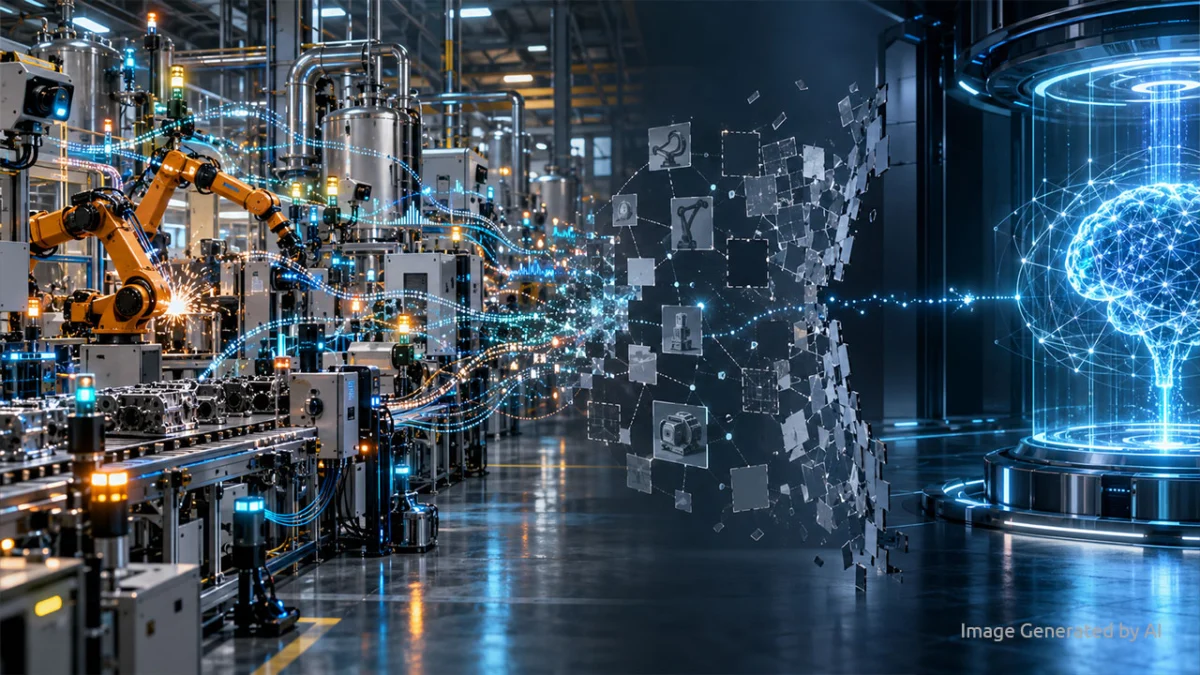
- NVIDIA Ecosystem Integration: The joint technology stack relies heavily on NVIDIA’s advanced hardware and software frameworks, ranging from synthetic training data generation in simulation to edge computing at line speed.
Chronology of Collaboration: From Concept to European Deployments
The convergence of Teradyne’s hardware and Sereact’s software did not happen overnight; it represents the culmination of a systematic effort to transition artificial intelligence out of computer screens and into physical, high-throughput industrial settings.
Early Foundations and Software Development
Sereact built its reputation on developing cognitive software that allows robotic arms to interact with the physical world dynamically. Traditional industrial automation excels at repetitive tasks involving uniform objects on predictable paths. However, modern e-commerce and logistics operate on chaos: items arrive in infinite shapes, sizes, and packaging types. Sereact developed Cortex to solve this perception-and-action gap.
Expanding Footprints and U.S. Inroads
Recognizing the massive global appetite for automated supply chain solutions, Sereact expanded its operational footprint. By opening its Massachusetts headquarters in the summer, the company positioned itself to capture the rapidly growing North American logistics and warehousing market, establishing closer proximity to key systems integrators and enterprise end-users.
Live Deployments in European Fulfillment Centers
Long before the formal announcement at NVIDIA GTC Berlin, the two companies were quietly proving their concept in the crucible of real-world retail logistics. Through a partnership with CEVA Logistics, Sereact and Universal Robots systems were integrated into massive fulfillment operations managed for Zalando—a leading European fashion and lifestyle technology platform.
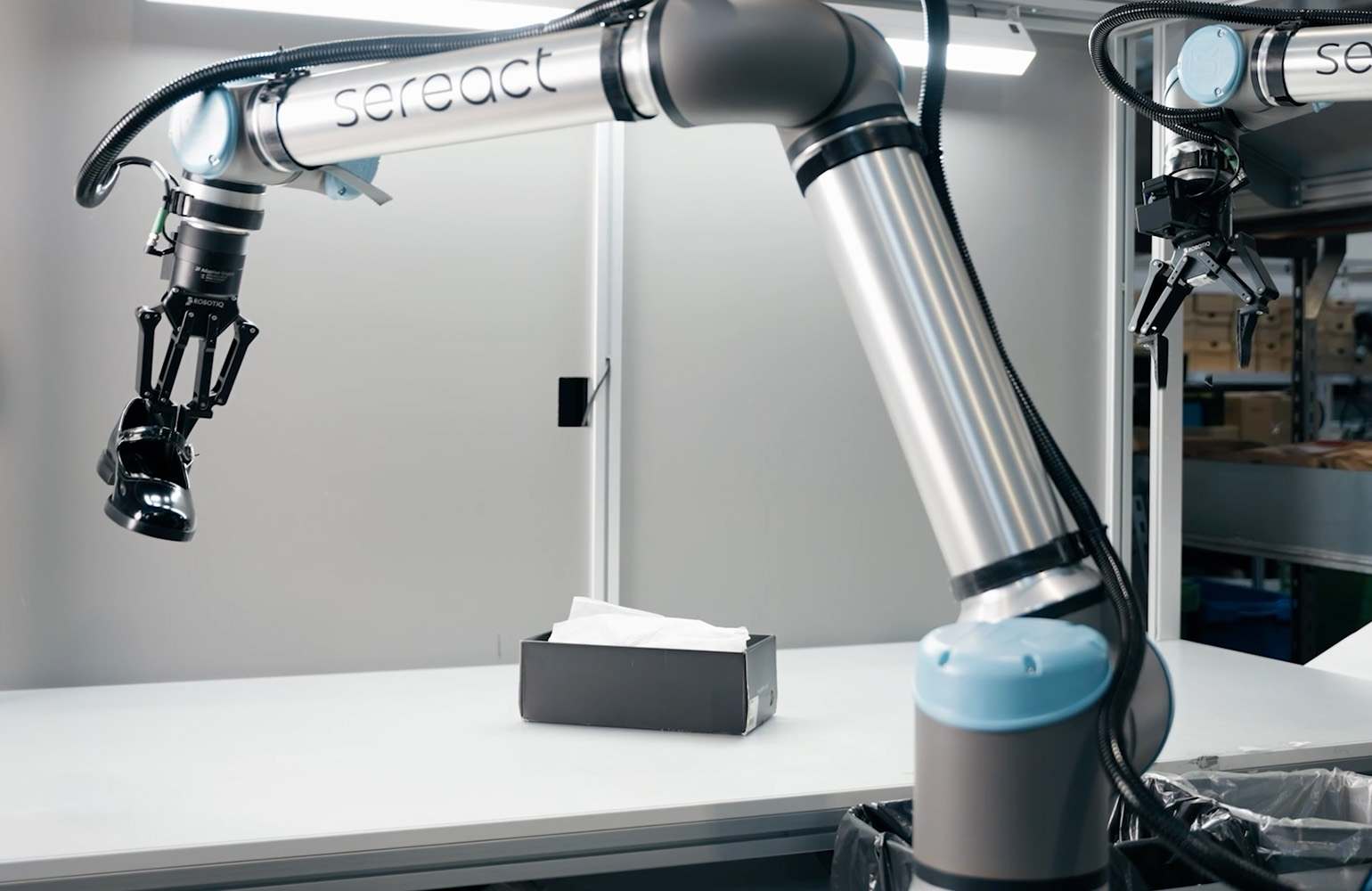
At Zalando’s state-of-the-art logistics hubs in Greven, Germany, and Świebodzin, Poland, these AI-driven dual-arm robots were deployed to autonomously handle the grueling task of processing returned apparel and footwear. This initial rollout marks phase one of a broader strategic initiative to scale returns automation across Europe.
Supporting Data: Conquering the Logistics Bottleneck
Logistics experts have long pointed to reverse logistics—specifically customer returns—as one of the most cost-prohibitive and operationally challenging segments of supply chain management.
The Returns Crisis
In retail, return rates can range anywhere from 15% to over 30%, depending on the sector. Processing these returns manually requires human workers to inspect, sort, repackage, and restock items individually. Because returned goods rarely arrive in a predictable sequence or uniform condition, automating the process has historically eluded traditional automation engineers.
The Unified "Brain" Advantage
According to Sereact, the Cortex platform fundamentally changes the unit economics of automation by utilizing a centralized production model:
- Zero Retraining Required: A single AI brain serves every connected robot across a facility, eliminating the need to retrain algorithms when new product SKUs enter the inventory.
- Collective Learning: What one robot learns while picking an oddly shaped garment or footwear box in a Polish fulfillment center instantly benefits every other robot running the Cortex platform globally.
- Hardware Agnosticism Meets Hardware Reliability: By running on Universal Robots’ globally trusted collaborative robot arms—which boast a deployment history exceeding 100,000 units worldwide—enterprises inherit a field-proven mechanical foundation.
The NVIDIA Technological Stack
The speed, accuracy, and scalability of the joint Sereact-Teradyne solution are deeply anchored in NVIDIA’s computing ecosystem:
- Training Phase: Sereact’s Cortex is trained within NVIDIA Isaac Sim, an open simulation framework utilizing NVIDIA Cosmos open-world models.
- Refinement: The models undergo rigorous reinforcement learning post-training via the NVIDIA Isaac Lab framework and are thoroughly benchmarked on Teradyne hardware before deployment.
- Edge Inference: At the operational cell level, Cortex runs on NVIDIA Jetson Thor, ensuring lightning-fast inference required to keep pace with high-speed production lines. Meanwhile, NVIDIA DGX Spark handles site-level development, validation, and continuous model updates.
- Digital Assets: Teradyne Robotics is further streamlining developer workflows by contributing SimReady OpenUSD robot assets for its UR and MiR products to the SimReady Central Library on Hugging Face, significantly reducing asset preparation time for simulation engineers.
Official Responses and Industry Perspective
Leadership from both Teradyne Robotics and Sereact emphasized that the partnership reflects a broader industry maturation—moving away from flashy tech demos toward pragmatic, revenue-generating deployments.
"Physical AI only matters when it performs in real-world operations, and that is where Universal Robots has always been at home," stated Jacob Pascual Pape, Chief Commercial Officer of Teradyne Robotics. "Our robots are built for the AI era: open, connected, and proven through more than 100,000 industrial deployments. That is why Sereact has chosen our platform."
Pape highlighted that the joint solution has already transcended the pilot stage:
"When combined with Sereact’s Cortex, the joint solution handles mixed goods, unknown items, and varied packaging. This has moved well beyond the demo or pilot stage with the technology now usefully deployed at real customer sites. Our technologies are a natural fit and through our partnership we will scale these AI-powered solutions fast across applications, industries and markets."
Echoing these sentiments, Dr. Ralf Gulde, Co-Founder and CEO of Sereact, pointed to the operational relief the platform provides to overworked warehouse staff.
"Returns, replenishment, kitting — with Cortex, every one of these applications runs on the same production model," said Dr. Gulde. "One brain serves every robot, with no retraining for each new item or task. And what one robot learns, every robot benefits from. Partnering with Teradyne Robotics and its global distribution and integrator network helps us bring that one brain to their customers around the world."
Implications: Regulatory Compliance and the Future of Supply Chains
Beyond boosting operational efficiency and mitigating labor shortages, the Teradyne Robotics and Sereact partnership carries significant regulatory and environmental implications.
Navigating EU Sustainability Mandates
In regions like the European Union, regulatory frameworks are tightening around retail waste. Recent EU regulations increasingly prohibit the destruction, shredding, or landfill disposal of returned, unsold merchandise. Retailers are legally pressured to recondition and reintegrate returned items into their inventory streams as quickly as possible.
By automating the rapid inspection, sorting, and processing of returned goods, the Sereact-UR robotic cells give retailers a scalable mechanism to comply with these strict environmental laws, turning a costly regulatory burden into a streamlined operational workflow.
Transforming Industrial Use Cases
While retail returns serve as the immediate poster child for the partnership, the underlying technology has expansive applications across broader industrial sectors. The joint offering is designed to seamlessly manage a diverse spectrum of critical logistics and manufacturing workflows, including:
- Piece picking and advanced sortation
- Automated order induction
- Complex machine tending
- Bin consolidation
- Kitting and packing
- General mixed-goods handling
A Blueprint for the Next Era of Robotics
By combining Teradyne’s massive global integrator network and hardware footprint with Sereact’s cutting-edge cognitive software and NVIDIA’s simulation-to-edge computing pipeline, the partnership establishes a powerful blueprint for the robotics industry. As physical AI continues to evolve, the ability to deploy unified, intelligent software across standardized industrial hardware will likely dictate which enterprises successfully navigate the automated future of global retail and logistics.