




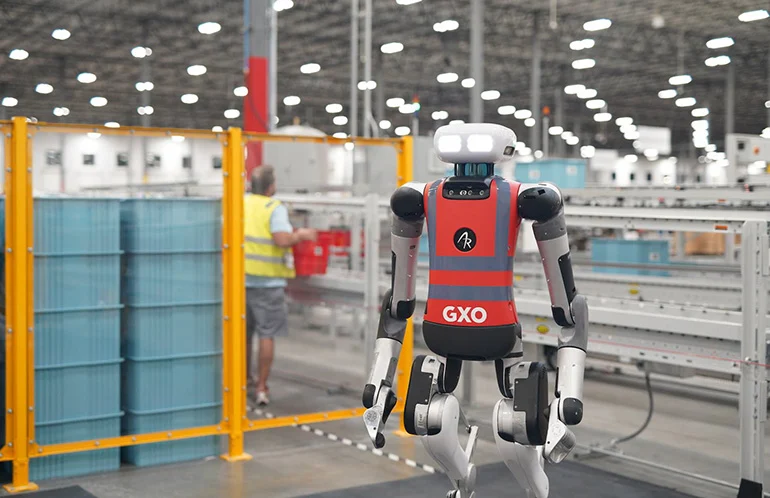
In a significant milestone for the burgeoning field of industrial robotics, Agility Robotics and GXO Logistics have announced a major expansion of their commercial partnership. The move marks a transition for the humanoid robot Digit, moving it from experimental pilot programs to wider, integrated deployments across GXO facilities in North Carolina and Tennessee. This expansion signals a pivotal shift in the logistics sector: the move from asking if humanoid robots can perform meaningful work to determining where they can be scaled to provide the greatest operational advantage.
The Evolution of a Strategic Partnership
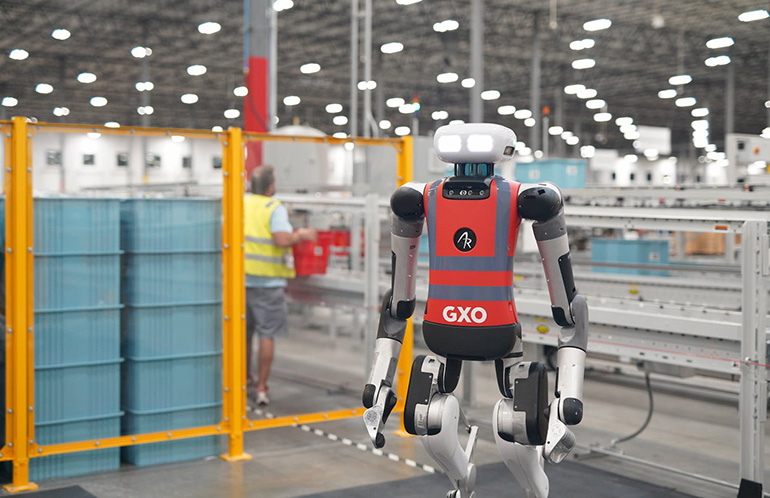
The collaboration between Agility Robotics, a pioneer in legged locomotion, and GXO Logistics, the world’s largest pure-play contract logistics provider, traces its roots back to 2023. At that time, the two companies made industry headlines by launching the first-ever commercial deployment of a humanoid robot in a live, active warehouse environment in Flowery Branch, Georgia.
This initial project was more than a proof-of-concept; it served as the inaugural "Robotics-as-a-Service" (RaaS) agreement for humanoid technology. Since the inception of that deployment, Digit has logged significant operational time, successfully moving more than 100,000 totes. This performance data has proven critical for Agility Robotics, allowing the company to refine its software and hardware based on real-world constraints rather than laboratory simulations.
The current expansion into Tennessee and North Carolina represents the next phase of this "continuous learning" model. By integrating Digit into multiple, geographically distinct sites, the companies are stress-testing the scalability of the Agility Arc—the cloud-based fleet management platform that orchestrates the robots’ tasks.
Chronology of Innovation: From Research to Commercial Reality
The trajectory of Digit’s development reflects the rapid acceleration of the broader humanoid market.
- 2015: Agility Robotics is founded in Salem, Oregon, focused on developing legged locomotion systems capable of navigating environments designed for humans.
- 2023: GXO and Agility launch the first live commercial trial of Digit at a facility in Georgia, establishing the RaaS model for humanoids.
- 2024: Agility Robotics receives the inaugural RBR50 "Robot of the Year" award, acknowledging Digit’s status as a leader in commercializing humanoid mobility.
- August 2026: GXO leadership provides an update on their broader automation strategy, noting that while they have conducted 45 distinct humanoid pilots, they are still optimizing for Return on Investment (ROI).
- October 2026: The partners announce the expansion of Digit deployments. Simultaneously, Agility unveils "Digit 5," the next iteration of the robot, featuring enhanced mobility and safety features.
- 2027 (Projected): Full deployment of the newer Digit 5 hardware across GXO sites and the initiation of humanoid trials at an AGCO agricultural equipment factory.
The Technical and Operational Backbone
The success of the Agility-GXO partnership rests on a foundation of rigorous data collection. Agility Robotics reports having accumulated over 65,000 hours of real-world operational experience. This data is not merely anecdotal; it is utilized to ensure that the robots adhere to strict industry safety standards while performing repetitive material handling tasks—such as moving totes and placing them onto conveyor systems—with high reliability.
Supporting this physical deployment is a robust infrastructure strategy. Agility Robotics has invested heavily in its "RoboFab" facility, a 70,000-square-foot plant designed to manufacture up to 10,000 robots annually. Furthermore, to support the growing complexity of these deployments, the company is expanding its footprint in Pittsburgh with a new 50,000-square-foot facility dedicated to technical support and commercial integration.
The hardware is also undergoing a rapid maturation cycle. The upcoming migration to Digit 5, unveiled recently by Agility, is highly anticipated. Designed with next-generation leg architecture and enhanced safety sensors, Digit 5 is engineered to operate in even closer proximity to human workers, effectively blurring the lines between collaborative robots (cobots) and general-purpose humanoid workers.
Official Perspectives: Aligning Vision with Execution
The leadership teams at both organizations view this partnership as the blueprint for the future of the supply chain.
Peggy Johnson, CEO of Agility Robotics, emphasizes that the industry has reached an inflection point. "Customers are moving beyond asking whether humanoid robots can work to deciding where they can scale them," Johnson stated. "Years of experience performing real work in GXO’s operations have shaped how we build, deploy and support Digit, and we’re focused on disciplined execution as we grow this partnership."
GXO CEO Patrick Kelleher echoed these sentiments, framing the integration of humanoids as a logical extension of GXO’s broader automation strategy. "Innovation is most powerful when it delivers practical solutions that create value for our customers and our people," Kelleher said. He added that the collaboration is not just about replacing labor, but about "turning emerging technologies into real-world operational advantage," ultimately aiming to create a better working environment for human employees by handling the most repetitive, strenuous tasks.
The Broader Context: Seeking ROI in a Crowded Market
While the excitement surrounding humanoid robots is palpable, it is tempered by the pragmatic realities of logistics economics. GXO has been notably transparent about its experimentation process. Beyond Agility, the company has explored other humanoid platforms, including Apptronik’s "Apollo" and the "Reflex" robot from Reflex Robotics.
During an earnings call in mid-2026, Kelleher acknowledged that while the efficacy of the technology is improving rapidly, the industry is likely "a couple of years away" from achieving a definitive, standardized ROI. The current phase is characterized by intense data gathering and "learning by doing." The fact that GXO is willing to commit to an expanded deployment of Digit, despite the ongoing search for ROI, underscores the company’s belief that the long-term competitive advantage lies in mastering these systems before they reach peak cost-efficiency.
Implications for the Future of Labor and Logistics
The expansion of the Agility-GXO partnership carries profound implications for the global logistics sector:
- Standardization of Humanoid Integration: As more companies follow GXO’s lead in using RaaS models, we can expect to see the emergence of standardized protocols for how humanoids interact with existing Warehouse Management Systems (WMS).
- The "Digit 5" Impact: The transition to Digit 5 will be a bellwether for the industry. If the improved version can demonstrate significantly higher uptime and task versatility, it may trigger a wave of adoption across other 3PL (Third-Party Logistics) providers.
- Labor Dynamics: By offloading repetitive, low-value tasks to machines, firms like GXO aim to shift their human workforce toward higher-value roles, such as system maintenance, fleet management, and complex problem-solving. This transition, however, will require significant investment in retraining programs.
- Capital Market Confidence: As Agility Robotics prepares to go public via its merger with Churchill Capital Corp. XI, the success of these deployments is critical. Investors are closely watching the "real-world" metrics—uptime, error rates, and maintenance costs—to justify the high valuations currently assigned to AI and robotics companies.
Conclusion
The expanded deployment of Digit within GXO’s logistics network represents a critical transition for the field of industrial humanoid robotics. By moving from isolated pilots to multi-site, scalable deployments, Agility Robotics and GXO are providing the industry with a much-needed case study on how to integrate autonomous, general-purpose labor into existing, complex workflows.
While the path to universal profitability for these machines remains a work in progress, the dedication shown by these two partners suggests that the "humanoid era" is no longer a futuristic vision—it is an active, evolving component of the modern supply chain. As technology continues to iterate at the pace of Digit 5, the question for the rest of the industry will soon shift from "how do we test this?" to "how quickly can we scale this to remain competitive?"