In the high-stakes theater of wildfire management, the difference between a contained incident and a catastrophic community loss is often measured in minutes. As climate change renders the "wildfire season" in the American West an obsolete concept—replacing it with a year-round state of volatility—the limitations of current technology have become painfully apparent. While detection systems have evolved, the transition from "fire spotted" to "fire suppressed" remains a slow, human-dependent process.
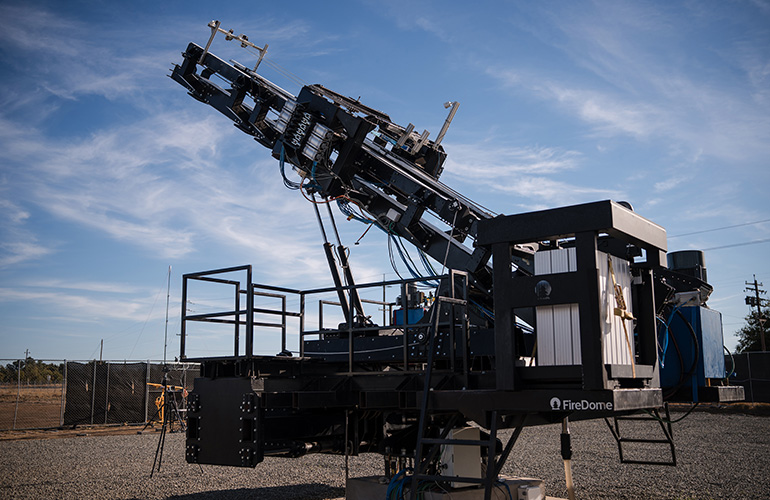
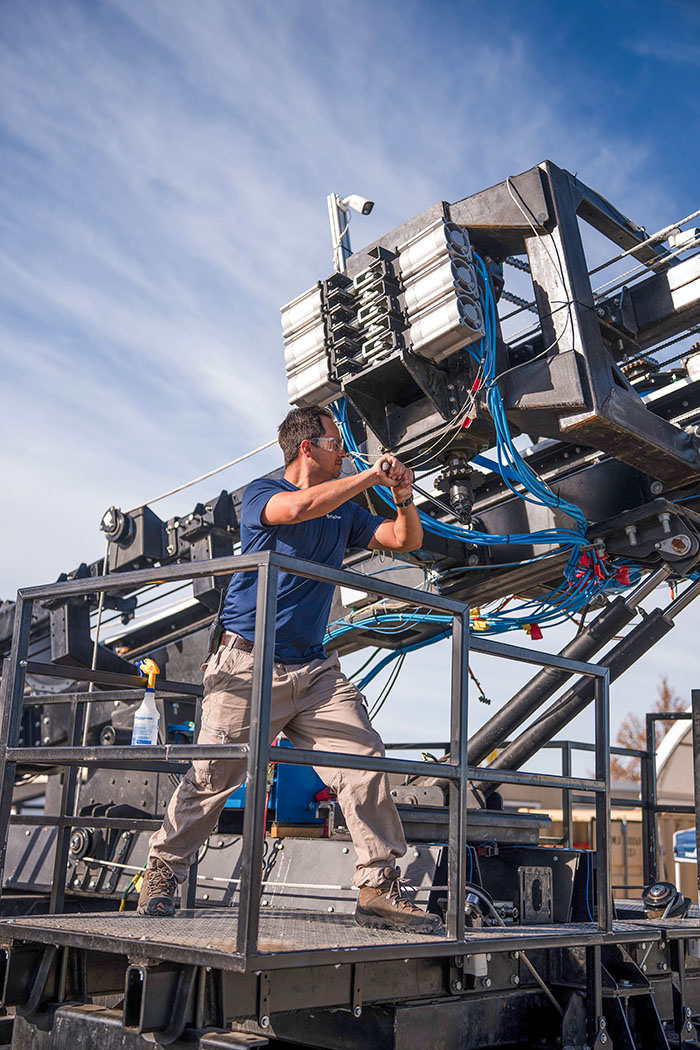
Enter FireDome, a California-based startup seeking to bridge this critical gap. By deploying an autonomous, ground-based "artillery" system, the company is shifting the paradigm from reactive firefighting to proactive, robotic defense. Designed to protect high-value infrastructure and vulnerable communities, FireDome’s technology operates at the edge of the wildland-urban interface (WUI), laying down firebreaks and coating structures long before traditional crews can reach the scene.
The Genesis of an Autonomous Solution
The story of FireDome is one of strategic pivot and technological necessity. Its origins trace back to an early 2024 climate-tech conference in Israel, where co-founders Gadi Benjamini and Dr. Adi Naor Pomerantz first crossed paths. Benjamini, a veteran of the methane mitigation space, and Dr. Pomerantz, now serving as Chief Technology Officer, shared a common frustration: the global investment in wildfire technology was heavily skewed toward detection, with almost no innovation directed toward immediate, automated action.
"Most of the technologies at that point were meant to detect fires when they’re early, and not to react to the fires," Benjamini explained in a recent interview. "You have detection, and then firefighters come to the scene. They come late, they have to spread out resources between different fronts, and that makes it much more difficult to succeed."
Initially, the duo envisioned an ambitious, wide-scale autonomous network embedded deep within the wildlands. However, the engineering realities of range and coverage quickly tempered their approach. To be effective in deep, rugged terrain, a system would require an impractical range of over a mile. Realizing that there is no "silver bullet" for the wildfire crisis, the team pivoted to a focused, high-impact strategy: protecting specific, critical assets—such as residential communities, energy infrastructure, and industrial sites—where the return on investment for autonomous defense is immediate.
Chronology of Development: From Concept to Yuba County
The development trajectory of FireDome has been rapid, characterized by a transition from theoretical modeling to physical testing.
- Early 2024: Founding of FireDome following the identification of the "action gap" in wildfire suppression.
- Mid-2024: R&D phase focused on the mechanics of long-range, non-explosive, liquid-payload delivery.
- Late 2025 – Early 2026: Finalization of the "Smart Capsule" technology and the mechanical launcher design.
- Late 2026: Deployment of the first full-scale prototype in Yuba County, California. This testbed serves as the primary evaluation site for local fire agencies and potential commercial partners.
- Spring 2027: Scheduled initiation of production for the first fleet of commercial units, with active recruitment of early-adopter sites.
Supporting Data: The Ember Crisis
Perhaps the most sobering insight from the FireDome team is their re-framing of how homes are actually destroyed. Data from recent California wildfire events, including those in the Los Angeles area, indicate that 85% to 90% of structure losses in the WUI are not caused by direct contact with a wall of flame, but by wind-driven embers.
These embers, lofted miles ahead of the main fire front, ignite roofs, decks, and siding. Once a single home ignites, it becomes an "ember generator," creating a domino effect that can incinerate an entire neighborhood in hours.

FireDome’s technical specifications are designed specifically to counteract this phenomenon:
- Range: Each launcher covers a radius of approximately 1,000 feet, protecting up to 70 acres of land.
- Payload: "Smart Capsules" hold roughly 10 gallons of liquid—either fire retardant or water—designed to be released mid-air a few feet above the target for optimal, non-aerosolized coverage.
- Precision: The system targets specific coordinates, creating an elliptical coverage pattern (15–25 feet long) that can be overlapped to form continuous firebreaks.
Official Perspectives and Operational Integration
The integration of robotic systems into the domain of professional firefighting is a delicate process, requiring the trust of fire chiefs and incident commanders. Rather than attempting to replace human firefighters, FireDome is positioning itself as a force multiplier.
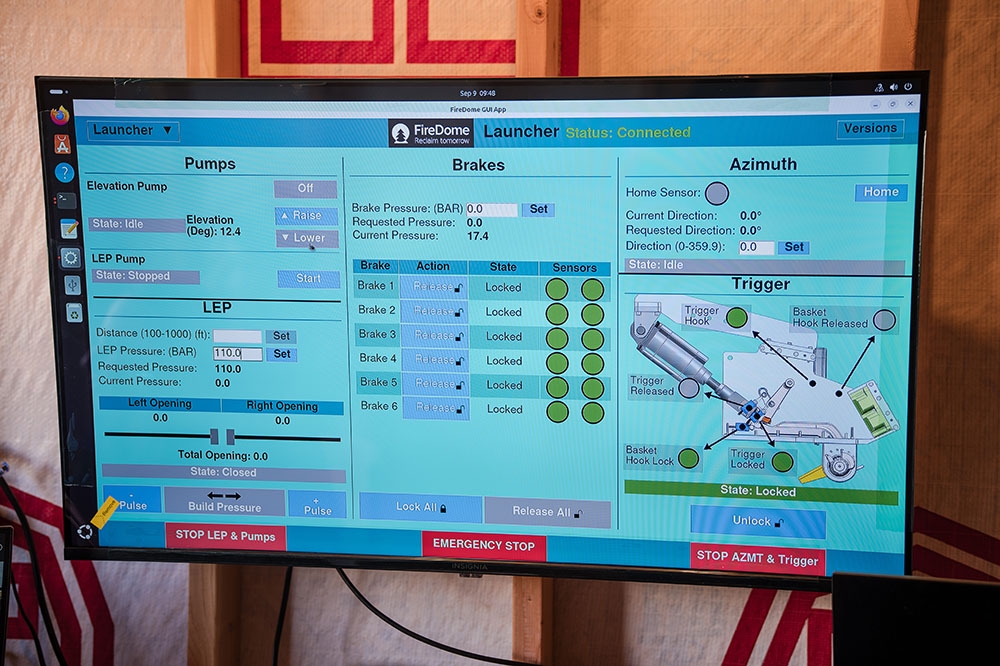
The company is currently working with California fire agencies to integrate its systems into the existing "Incident Command" workflow. In this model, FireDome units appear as a specific resource on a commander’s tablet, much like a helicopter or a ground crew.
"The system is autonomous, and they can shut it off," Benjamini noted. "It starts on its own, and both the customer and firefighters have the ability to intervene remotely." This ensures that the system acts in accordance with the broader tactical goals of the incident commander, allowing human experts to allocate their limited manpower to the most critical sectors while the FireDome handles the "grunt work" of localized spot-fire suppression.
Business Implications: Insurance and "Protection as a Service"
For many homeowners in the American West, the wildfire crisis is as much a financial issue as a physical one. With major insurers pulling out of fire-prone regions, homeowners are facing a "coverage cliff." FireDome’s business model aims to address this by offering a "Protection as a Service" (PaaS) structure.
By treating fire defense as a subscription service, FireDome lowers the barrier to entry for HOAs, municipalities, and private landowners. For those who prefer to own their assets, the company also offers a capital expenditure (CapEx) model with a maintenance-focused service agreement. The goal is to provide a quantifiable risk-mitigation strategy that could eventually influence insurance underwriting, potentially helping homeowners retain or secure affordable coverage.
Industrial and Future Applications
While wildfires in the WUI are the primary focus, the technology has clear implications for industrial safety. Large-scale solar farms, energy storage facilities, and remote industrial plants face similar risks of cascading fire failure.
Because these locations often have stringent safety codes for indoor environments, FireDome is pitching its launcher as an "outer perimeter" layer of defense. In an industrial context, the system could detect a battery-bank fire or a localized equipment spark and suppress it before it threatens the entire grid or facility.
A New Category in Field Robotics
The success of FireDome will likely be measured by its ability to prove that robots can operate in chaotic, unstructured environments. For the broader field of robotics, this project represents a significant case study in "Climate Defense Infrastructure."
- Resilience through Redundancy: By having an autonomous system already "on-site" and "awake" when a fire breaks out, property owners are no longer solely dependent on the arrival times of human crews, which can be delayed by traffic, smoke, or resource exhaustion.
- Adaptive Mission Planning: The system’s ability to use pre-programmed scenarios—tailored to specific wind directions and fuel loads—demonstrates a sophisticated level of situational awareness that is necessary for any robot operating in a dynamic, high-stakes environment.
- Human-Machine Teaming: The most successful robots of the next decade will be those that integrate seamlessly into human-led workflows. FireDome’s focus on incident command integration is a blueprint for how future robotics companies should approach public safety.
As the company moves toward full-scale production in 2027, the focus will be on proving that this "robotic artillery" can withstand the extreme conditions of a fire event while maintaining perfect reliability. For communities living in the shadow of the next wildfire, FireDome offers a compelling promise: a silent, mechanical sentinel that waits for the worst-case scenario, ready to hold the line when every minute counts.