




As record-high diesel prices continue to squeeze operating margins, commercial fleet managers are being forced to re-evaluate their long-term fuel strategies. Volatile energy markets, coupled with tightening environmental regulations and mounting corporate sustainability pressures, mean that the traditional status quo of relying entirely on fossil-fuel combustion engines is rapidly becoming financially untenable.
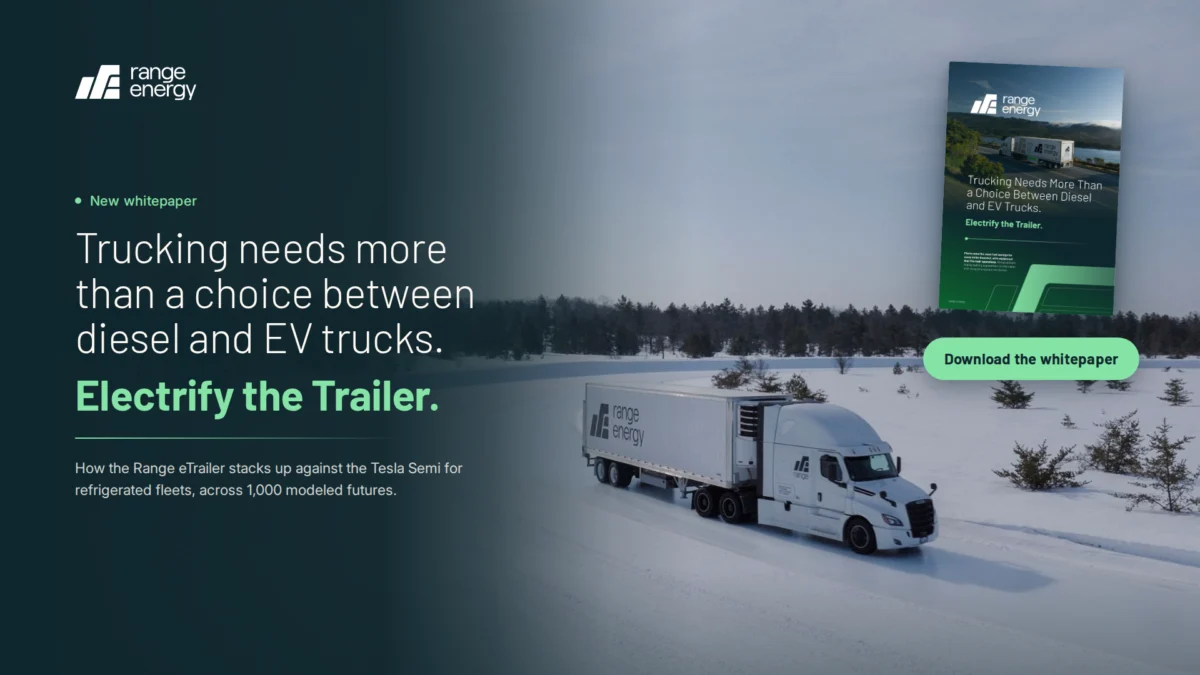
A newly released whitepaper from Range Energy dives deep into this economic and operational dilemma, contrasting three distinct paths available to modern fleets: maintaining the status quo, transitioning to dedicated electric tractors, or adopting innovative auxiliary electrification technologies such as the Range eTrailer. For refrigerated fleets—which bear the unique financial burden of simultaneously burning diesel in both the main truck engine and the transport refrigeration unit (TRU)—the search for viable alternatives has taken on absolute urgency.
Main Facts: The Core Dilemma Facing Modern Fleets
The commercial transportation sector stands at a critical technological crossroads. Fleet operators are no longer asking if they need to transition away from pure diesel dependence, but how and when they can do so without disrupting their bottom lines.
According to Range Energy’s analysis, fleets generally weigh three primary strategic directions:
- The Status Quo (Do Nothing): Sticking with conventional internal combustion engine (ICE) diesel tractors. While requiring zero upfront capital expenditure for new infrastructure or vehicle tech, this leaves fleets entirely vulnerable to volatile fuel pricing, escalating carbon taxes, and mandatory compliance phase-outs.
- The Electric Tractor Route: Purchasing battery-electric semi-trucks, such as the Tesla Semi. While offering zero tailpipe emissions, this path requires massive infrastructural overhauls—including heavy-duty charging depots—and long wait times in manufacturing and grid-connection queues.
- The eTrailer Approach: Investing in electrified trailers, such as the Range eTrailer (slated for serial production in late 2027). This approach bridges the gap, offering electrified propulsion assistance and auxiliary power without requiring fleets to immediately replace their entire tractor inventory or wait years for heavy-duty depot electrification.
The debate largely hinges on timing and scalability. Fleets must weigh the multi-year capital investment of building out heavy-duty charging infrastructure today against adopting intermediate, trailer-based electrification solutions designed to integrate with existing assets.
Chronology: The Evolution of Fleet Electrification Pressures
To understand why fleet managers are looking so closely at alternatives like the eTrailer and electric semi-trucks, it is vital to examine the timeline of regulatory, technological, and market pressures that have shaped the industry over the past decade.
- 2018–2020: The Early Regulatory Push
State-level mandates, particularly in California under the California Air Resources Board (CARB), begin setting aggressive timelines for zero-emission vehicle (ZEV) adoption in medium- and heavy-duty trucks. Fleets realize that long-term compliance will require alternative powertrains. - 2021–2022: The Diesel Price Shock
Global supply chain disruptions and geopolitical conflicts send diesel prices skyrocketing to historic highs. Operating costs spike overnight, making fuel efficiency and alternative energy sources a top boardroom priority. Refrigerated ("reefer") fleets suffer disproportionately due to the dual-burn requirement of truck engines and TRUs. - 2023–2024: Infrastructure Bottlenecks Emerge
Early adopters of battery-electric trucks encounter severe roadblocks. While Class 8 electric tractors become commercially available, fleets find that local electrical grids cannot support rapid-charging depots, leading to multi-year utility upgrade queues. - 2025–2026: The Rise of Bridge Technologies
With heavy-duty charging infrastructure lagging behind vehicle manufacturing, the market shifts toward pragmatic interim solutions. Technologies that can reduce fuel consumption on existing or transitional fleets—such as electrified trailers and hybrid powertrains—gain significant traction. - Late 2027 (Projected): Serial Production of the Range eTrailer
Industry milestones point toward the commercial rollout of advanced eTrailer platforms, offering fleets a scalable method to electrify freight movement without waiting for complete national charging grid buildouts.
Supporting Data: The Economic and Operational Burden of Diesel
The numbers underlying the commercial freight sector’s diesel reliance paint a stark picture of why alternative options are garnering so much attention.
The Double-Burn Problem of Refrigerated Transport
Refrigerated fleets face a compounding economic penalty. Not only do they consume massive amounts of diesel to propel heavy Class 8 trucks across long-haul routes, but they must also run a secondary internal combustion engine housed within the trailer to power the transport refrigeration unit (TRU).
- Fuel Consumption: A standard TRU can consume anywhere from 0.7 to 1.5 gallons of diesel per hour, depending on the ambient temperature and the required cargo set-point (e.g., deep-frozen pharmaceuticals versus fresh produce).
- Emissions Output: Operating two fossil-fuel engines simultaneously results in high particulate matter and carbon dioxide output, placing reefer fleets directly in the crosshairs of upcoming stringent environmental regulations.
Infrastructure Lead Times
Building out a commercial truck-charging depot is not a plug-and-play process. According to utility and logistics data, establishing a megawatt-level charging station for heavy-duty electric trucks typically involves:
- 12 to 36 months of grid capacity assessment and local utility coordination.
- Significant capital investment running into millions of dollars for transformers, switchgear, and high-voltage lines.
- Operational downtime risks if fleet scaling outpaces charging availability.
In contrast, auxiliary technologies like eTrailers can often operate within existing fueling and maintenance workflows, bypassing the immediate need for depot-wide electrical upgrades.
Official Responses and Industry Perspectives
Industry stakeholders, logistics executives, and analysts have offered varied perspectives on how fleets should navigate this complex transition.
Freight operators emphasize that capital deployment must be balanced against operational reality. “You cannot run a fleet on ambition alone; you need to run it on working infrastructure and predictable cash flow,” notes one logistics operations director. While corporate sustainability mandates push firms toward zero-emission goals, the day-to-day pressure of meeting delivery SLAs means that unproven or logistically impossible timelines are routinely rejected by boardrooms.
Technology providers like Range Energy argue that fleet decarbonization does not have to be an all-or-nothing proposition. By focusing on the trailer—the component of the rig that actually carries the payload and houses much of the auxiliary energy demand—operators can capture immediate efficiency gains.
Conversely, proponents of pure battery-electric vehicle (BEV) ecosystems maintain that skipping intermediate steps and committing fully to electric tractors is the only way to achieve absolute zero-emission compliance by the 2030s. They argue that investing in transitional technologies risks sinking capital into assets that may be regulated out of use prematurely.
Implications for Fleet Operators and the Bottom Line
The strategic choices outlined in the Range Energy whitepaper carry profound implications for the future of logistics management, financial planning, and environmental compliance.
1. Capital Allocation and Risk Mitigation
Fleet managers must carefully calculate their capital expenditure (CapEx) ROI. Committing millions to charging infrastructure and electric tractors requires deep pockets and long-term financial stability. For mid-sized and smaller fleets, phased approaches—such as investing in fuel-saving trailer technologies—offer a way to lower diesel consumption immediately without risking insolvency on unproven infrastructure timelines.
2. Supply Chain Resilience
Energy price volatility will likely remain a fixture of the global economy. Fleets that successfully diversify their energy usage—incorporating electric assistance, regenerative braking recovery via eTrailers, and optimized routing—will be insulated against sudden spikes at the diesel pump. This resilience translates directly into more stable freight rates for shippers and healthier operating margins for carriers.
3. Regulatory Compliance Without Disruption
With environmental agencies tightening emissions standards year over year, non-compliance is no longer an option. Technologies that reduce emissions without requiring a total reinvention of a fleet’s operational blueprint provide a vital compliance buffer.
Looking Ahead
As the industry looks toward milestones like the late 2027 serial production of advanced eTrailer systems and the gradual expansion of national charging corridors, fleet managers must take a proactive stance. Downloading comprehensive industry whitepapers, analyzing route-specific energy demands, and modeling total cost of ownership (TCO) will be essential exercises for any logistics operation looking to survive and thrive in the post-diesel era.