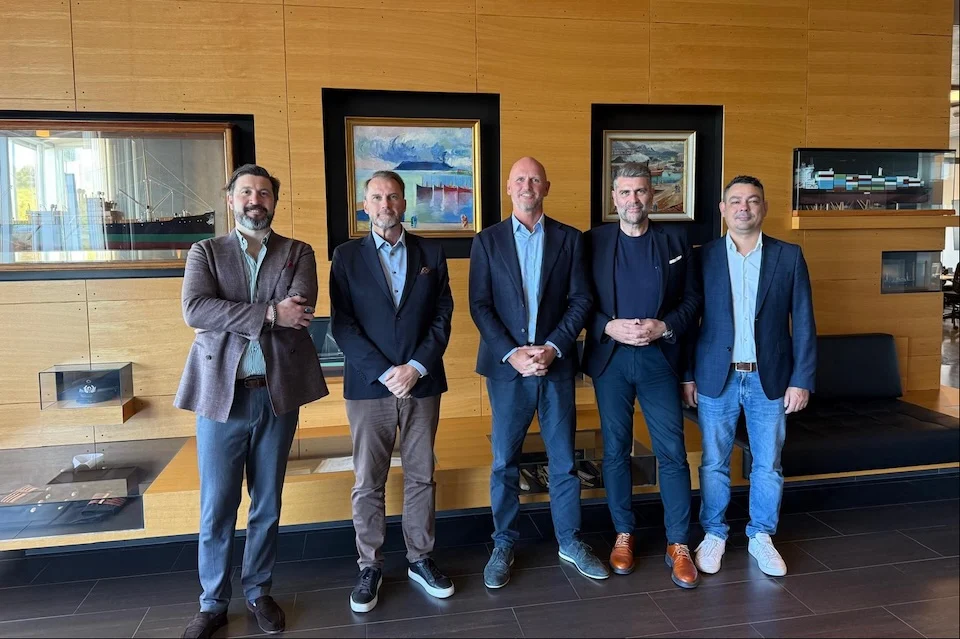
Keflavík, Iceland — Global General Sales and Service Agent (GSSA) powerhouse Kales Group has officially entered the Icelandic aviation and logistics market. The expansion is anchored by a strategic joint venture-style partnership with prominent local forwarder and logistics service provider TVG-Zimsen. Launching under the banner of "Kales Iceland," the new enterprise hits the ground running with a landmark commercial agreement to manage cargo operations and development for Air China.
The move marks a significant evolution for Iceland’s air cargo ecosystem, bridging the island nation’s flourishing export market—particularly its high-demand perishable seafood sectors—with rapidly expanding direct trade lanes into mainland Asia.
Main Facts: A New Gateway for Icelandic Cargo
The inception of Kales Iceland introduces a specialized, commercially focused independent GSSA framework designed to optimize cargo capabilities for international carriers operating in the North Atlantic.
- The Partners: The venture unites Kales Group’s extensive international network and multi-market GSSA expertise with TVG-Zimsen’s deep-rooted knowledge and operational footprint within the Icelandic logistics landscape.
- The Launch Contract: Kales Iceland begins operations backed by a major GSSA contract with Air China, taking charge of the carrier’s commercial cargo development and local service execution across the country.
- The Route: The operational catalyst for this expansion is Air China’s new scheduled route connecting Beijing (PEK) and Keflavík (KEF) via Copenhagen (CPH).
- Frequency and Aircraft: Set to commence on October 26, the service will operate three times per week utilizing widebody Airbus A330-300 aircraft, carrying a mix of passengers and dedicated bellyhold freight.
- Strategic Value: The new logistics corridor establishes a direct, high-frequency bridge for Icelandic exporters looking to penetrate Asian markets, while granting domestic importers streamlined access to manufacturing hubs across China.
Chronology of the Expansion
The establishment of Kales Iceland and the rollout of the Air China partnership is the culmination of months of strategic planning, market assessment, and bilateral negotiations between European GSSA leaders and Icelandic logistics operators.
Phase 1: Identifying the North Atlantic Opportunity
As global trade patterns shift and demand for time-sensitive, high-value perishables accelerates, major carriers have increasingly looked to secondary and specialized European hubs. Iceland, traditionally dominated by transatlantic flows to North America and European redistribution networks, presented a unique untapped market. Its booming aquaculture and fishing industries required more direct, reliable cargo arteries to high-growth consumer markets in Asia.
Phase 2: Structuring the Kales-TVG-Zimsen Alliance
Recognizing that foreign market entry requires localized expertise, Kales Group initiated talks with TVG-Zimsen, one of Iceland’s most trusted freight forwarding and logistics institutions. The parties engineered an operational model under the Kales Iceland banner. This entity was designed to leverage TVG-Zimsen’s domestic relationships with local exporters, importers, and regulatory bodies, paired with Kales’ global airline management systems and international commercial reach.
Phase 3: Securing the Air China Agreement
With the joint entity established, Kales Iceland secured its foundational client: Air China. The carrier was concurrently finalizing plans to introduce a tri-weekly passenger-freighter service linking Beijing and Keflavík via Copenhagen. Recognizing the commercial complexity of launching cargo operations in a new market, Air China contracted Kales Iceland to handle its local GSSA representation, sales development, and operational coordination.
Phase 4: Operational Launch (October 26)
The partnership culminates with the inaugural flight of Air China’s Airbus A330-300 service on October 26. This milestone operationalizes Kales Iceland as a fully functioning GSSA provider, setting the stage for future airline acquisitions and long-term network growth in the region.
Supporting Data and Market Dynamics
To understand the weight of Kales Group’s entry into Iceland, one must examine the unique trade dynamics governing the region’s air cargo sector.

The Seafood and Perishables Engine
Icelandic economic output relies heavily on the export of fresh seafood, high-grade salmon, and premium aquaculture products. These commodities are exceptionally time-sensitive; shelf life directly dictates market value. Historically, seafood exporters faced multi-leg journeys, often transiting through major European hubs like Amsterdam, Frankfurt, or London Heathrow before securing onward connections to Asian destinations.
The new Beijing–Keflavík routing via Copenhagen significantly compresses transit times. By integrating widebody belly capacity (Airbus A330-300), Kales Iceland provides regional freight forwarders with consistent, predictable tonnage capable of moving perishable goods from Icelandic processing plants to Asian markets within optimum timeframes.
Aircraft Specifications: Airbus A330-300
- Aircraft Type: Widebody twin-engine jet
- Role: Passenger and Bellyhold Cargo Operations
- Frequency: 3 flights per week
- Key Itinerary: Beijing Capital International Airport (PEK) – Copenhagen Airport (CPH) – Keflavík International Airport (KEF)
The choice of the A330-300 provides a balanced mix of passenger revenue and substantial under-floor cargo capacity, making it an ideal aircraft for developing trade lanes where directional imbalances might otherwise challenge pure freighters. Typically, eastbound flights will carry heavy loads of fresh seafood and perishables, while westbound legs will accommodate manufactured goods, electronics, and general cargo originating from China.
Official Responses and Executive Perspectives
Leadership from both partnering entities emphasized that the creation of Kales Iceland is much more than a routine business expansion—it is a foundational shift in how international airlines can access the Icelandic market.
Raffaele Manna, Managing Director of TVG-Zimsen, highlighted the synergies of the collaboration:
"The establishment of Kales Iceland represents an exciting new chapter for airline representation in Iceland. By combining TVG-Zimsen’s understanding of the Icelandic market with Kales’ international GSSA expertise and airline network, we are creating a strong foundation for airlines looking to develop their business in Iceland."
Manna also pointed to the broader geopolitical and economic ramifications of closer ties between Iceland and China:
"It is exciting to see Iceland and China becoming more closely connected. Direct air connectivity creates opportunities that go far beyond the flight itself, strengthening trade, relationships, and cooperation between our two countries. We are proud that Kales Iceland can contribute to building on those opportunities."
Sebastiaan Scholte, Chief Executive Officer of Kales Group, underscored the strategic goals of the new organization:

"By combining Kales’ international experience and airline network with TVG-Zimsen’s local market knowledge, we have a strong foundation for developing Kales Iceland. Our ambition is to build a professional, independent, and commercially focused GSSA organization that creates value for our airline principals and for the entire Icelandic cargo community."
In an official statement released by Kales Iceland, the commercial implications for local industries were clearly delineated:
"Icelandic exporters, particularly those shipping fresh seafood and other time-sensitive products, gain a new route to reach customers in the Chinese market. At the same time, importers benefit from a new scheduled freight connection and greater access to goods and suppliers in China."
Implications for the Global Air Cargo and Logistics Industry
The launch of Kales Iceland and the initiation of Air China’s new service carry several notable implications for forwarders, carriers, and the broader European logistics landscape.
1. Decentralization of Cargo Hubs
For decades, major Asian carriers focused their European networks on primary megahubs. The establishment of direct links to secondary markets like Keflavík—facilitated by specialized GSSAs—demonstrates a growing appetite for point-to-point niche routing. By utilizing a Copenhagen stopover, Air China can aggregate European and North Atlantic traffic efficiently, while Kales Iceland ensures that local supply and demand are aggressively managed on the ground.
2. Enhanced Competition and Service Quality
The presence of a dedicated, independent GSSA like Kales Iceland disrupts traditional handling models. By offering specialized commercial and operational support, Kales Iceland bridges the gap between international airlines and local stakeholders (including freight forwarders, exporters, and customs brokers). This professionalization typically leads to faster turnaround times, better rate transparency, and more robust customer service for shippers.
3. Blueprint for Future Airline Representation
The success of this joint venture could serve as a blueprint for other global GSSAs looking to penetrate island economies or isolated regional markets. As supply chains remain vulnerable to disruptions at congested mega-airports, agile regional corridors backed by robust local-international partnerships are proving to be resilient alternatives.
Conclusion
With Kales Iceland officially operational and the Air China Beijing-Keflavík route set to take flight on October 26, the Icelandic logistics sector stands on the threshold of a new era. Through the strategic alliance of Kales Group and TVG-Zimsen, exporters of perishable goods gain a direct, reliable pipeline to the lucrative Chinese consumer base, while importers secure seamless access to Asian manufacturing markets. As Kales Iceland builds out its independent GSSA footprint, the initiative cements a vital commercial and cultural bridge between Iceland and East Asia.