





By Staff Reports
Updated October 2026
Main Facts
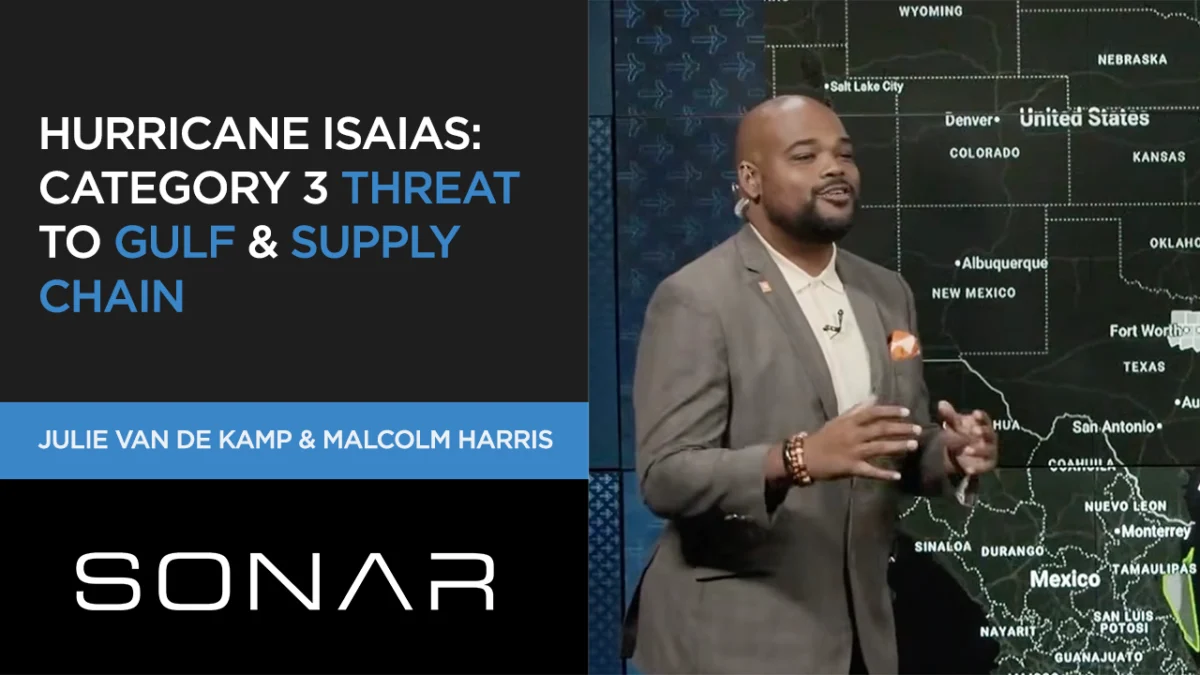
As Hurricane Isaias tracks steadily across the warm waters of the Gulf of Mexico, supply chain operators, energy executives, and emergency management officials across the American Southeast are bracing for severe disruptions. Currently classified as a Category 1 storm, Isaias is projected to undergo rapid intensification over the coming days. According to meteorological models and logistics analyses provided by FreightWaves Sonar, the storm is expected to strengthen into a Category 2 system by Wednesday before potentially peaking as a formidable Category 3 hurricane—wielding maximum sustained winds of up to 100 miles per hour—just before making landfall around 2:00 p.m. on Friday.
The projected impact zone spans a critical economic corridor, stretching from just east of Houston, Texas, across to the Florida Panhandle. This geographic footprint encompasses vital components of the nation’s supply chain infrastructure, including major interstate freight routes, vital deep-water ports, and a colossal concentration of domestic energy production and refining assets.
Chief among the concerns for economists and logistics professionals is the threat to the U.S. energy sector. Up to six major oil refineries lie directly in the path of the projected impact zone. Collectively, Gulf State refineries account for a staggering 50% of the entire nation’s petroleum refining capacity, processing approximately 18.2 million barrels of crude oil per day. Any prolonged operational shutdowns, power outages, or physical infrastructure damage caused by the storm could severely tighten refined product supplies at a time when diesel prices are already elevated nationwide.
Concurrently, regional freight markets are beginning to feel the strain. Logistics managers are reporting early spikes in tender rejections and localized capacity crunches across transportation hubs in New Orleans, Mobile, and Montgomery, as shippers race against the clock to move inventory out of harm’s way before conditions deteriorate.
Chronology of the Storm and Supply Chain Response
Understanding the timeline of Hurricane Isaias is critical for fleet operators, shippers, and emergency response teams attempting to safeguard personnel and assets.
Early-Week Formation and Tracking
- Monday: Meteorological teams utilizing advanced tracking systems, including FreightWaves’ Sonar, WeatherOptics, and Everstream tools, identify the intensifying system in the Gulf. Forecasters note that the storm’s eye is becoming increasingly well-defined, signaling favorable atmospheric conditions for rapid strengthening.
- Tuesday: Offshore oil and gas producers operating in the Gulf of Mexico begin proactive safety protocols, initiating the evacuation of nonessential personnel from offshore drilling platforms and rigs, though baseline production remains stable for the time being.
Mid-Week Strengthening and Pre-Landfall Operations
- Wednesday (Projected): Isaias is forecast to cross the threshold into a Category 2 hurricane. Freight markets in the Southeast begin flashing early warning signs. Tender rejection rates in key regional markets such as New Orleans, Mobile, and Montgomery climb into the 17% to 19% range—notably higher than the national baseline. Spot market volumes tick upward as panicked or proactive shippers attempt to clear out warehouses and distribution centers.
- Thursday (Projected): The storm approaches the upper limits of its potential strength, threatening to achieve Category 3 status with 100-mph winds. Coastal ports, including the Port of Mobile and the Port of New Orleans, evaluate impending gale-force conditions, preparing to implement vessel traffic restrictions and secure shore-side cargo handling equipment.
Landfall and Immediate Aftermath
- Friday at 2:00 PM (Projected): Hurricane Isaias is expected to make landfall somewhere between the Louisiana coastline and the Florida Panhandle. Torrential rainfall, severe wind gusts, and coastal storm surges threaten low-lying areas.
- Post-Landfall (Weekend and Beyond): Attention shifts rapidly from evacuation and asset protection to disaster relief and recovery. Federal Emergency Management Agency (FEMA) staging locations in cities such as Atlanta and Jacksonville prepare to mobilize, generating a massive surge in emergency freight demand as relief supplies, building materials, and utility repair teams rush into the affected sectors.
Supporting Data and Meteorological Analysis
The potential fallout of Hurricane Isaias cannot be overstated when evaluated against the backdrop of current economic and logistics metrics.
Precipitation and Flood Risks
Meteorologist Malcolm Harris, who provided the core meteorological analysis for the event, emphasizes that torrential rainfall and catastrophic flooding represent the most dangerous hazards associated with the storm.
- Rainfall Projections: Broad swaths of the Gulf Coast region are expected to receive cumulative rainfall totals ranging from 3 to 6 inches.
- Localized Downpours: Certain isolated areas could experience extreme precipitation spikes of up to 10 inches, significantly increasing the risk of flash flooding and river overflows.
- Targeted Vulnerability: Harris specifically highlights vulnerable coastal and low-lying zones, such as Gulf Shores, Alabama, and the Baton Rouge, Louisiana area, advising residents and industrial operators to monitor real-time weather feeds closely.
Energy Infrastructure Metrics
The concentration of energy assets in the Gulf Coast makes the region a single point of failure for national fuel supply chains:
- National Refining Share: Gulf State facilities represent 50% of total U.S. refining capacity.
- Total Daily Volume: The region processes 18.2 million barrels of crude oil daily.
- Economic Vulnerability: Industry experts note that even minor disruptions to these facilities can create cascading supply chain shocks, rippling through wholesale fuel markets and directly impacting retail diesel prices for long-haul trucking fleets.
Freight Market Dynamics
Data from regional freight hubs illustrate how rapidly supply chains react to impending natural disasters:
- Tender Rejection Rates: Markets in New Orleans, Mobile, and Montgomery are already recording tender rejections between 17% and 19%. As carriers prioritize safety or accept more lucrative spot-market loads elsewhere, contract compliance typically degrades.
- Outbound Volume Shifts: Shippers are aggressively pulling forward shipments, leading to short-term volume surges in outbound freight from threatened ports and urban manufacturing centers.
Official Responses and Expert Commentary
As Hurricane Isaias tracks closer to the coastline, industry leaders, logistics analysts, and meteorological experts have issued clear guidance on how stakeholders should prepare.
Logistics and Market Perspectives
Julie Van de Kamp, a prominent voice in freight market analysis, addressed the dual threat of potential physical damage and pre-existing economic pressures during a recent market briefing:
“Gulf State refineries account for 50% of the national refining capacity of 18.2 million barrels per day. I don’t think this storm is going to be strong enough to do a lot of damage—but it is something for us to keep watching as we’re already in this current environment where diesel prices are incredibly elevated,” Van de Kamp stated.
Van de Kamp also weighed in on the expected post-landfall market behavior, predicting a classic "Southeast pop" in spot freight rates and tender rejections. The magnitude of this rate spike, she explained, will ultimately depend on the severity of inland flooding, structural damage to warehouses, and the speed at which motor carriers can safely re-enter and navigate affected supply chain corridors once the all-clear is given.
Meteorological Warnings
Malcolm Harris underscored the importance of treating the storm with absolute seriousness, urging no complacency among residents, logistics facilities, or municipal leaders in the projected path:
“I do not play about the weather,” Harris remarked bluntly, emphasizing that communities spanning from the Louisiana bayous to the beaches of the Florida Panhandle must prepare for a punishing combination of driving rain, destructive winds, and dangerous storm surges.
Harris urged citizens and businesses in high-risk zones to utilize common sense when evaluating evacuation orders and to take proactive steps to safeguard property before conditions deteriorate beyond the point of safe transit.
Strategic Implications for Supply Chains and Logistics Operators
The impending arrival of Hurricane Isaias serves as a stark reminder of the vulnerability inherent in modern, just-in-time supply chains when intersecting with extreme weather events. Logistics operators, fleet managers, and enterprise shippers must factor several critical implications into their operational planning:
1. Fuel Cost Volatility and Sourcing Challenges
Because the storm threatens half of the nation’s refining infrastructure, logistics operators running diesel-reliant fleets must prepare for potential regional fuel shortages and price spikes. Fleet managers should consider topping off fuel tanks ahead of the storm and identifying alternative fuel sourcing pathways in unaffected neighboring regions to buffer against immediate post-landfall price shocks.
2. Port Congestion and Intermodal Delays
With the Port of Mobile and the Port of New Orleans sitting squarely in the crosshairs, maritime logistics will face inevitable delays. Inbound container ships may be forced to anchor offshore or reroute to unaffected deep-water ports such as Houston—which, according to current projections, is expected to escape the worst of the storm. Drayage carriers and intermodal rail operators must prepare for cargo bunching and terminal dwell time increases once ports eventually reopen.
3. Capacity Reallocation and Emergency Freight Surges
As commercial freight grinds to a temporary halt in the direct impact zones, available trucking capacity will experience wild fluctuations. Outbound rejections will likely soar as shippers scramble to clear backlogs post-storm. Conversely, relief and reconstruction efforts will generate a massive wave of emergency freight demand. Fleets capable of pivoting to FEMA-contracted relief freight, building materials, and utility support will play a crucial role in regional recovery, though they must navigate treacherous road conditions and compromised infrastructure.
4. Technological Vigilance
FreightWaves will continue tracking high-frequency data streams via Sonar’s WeatherOptics and Everstream applications. Logistics professionals are strongly encouraged to utilize these predictive analytics tools to monitor real-time shifts in tender rejections, capacity tightness, and volume fluctuations, enabling data-driven routing and risk-mitigation decisions as Hurricane Isaias makes its final approach toward the Gulf Coast.