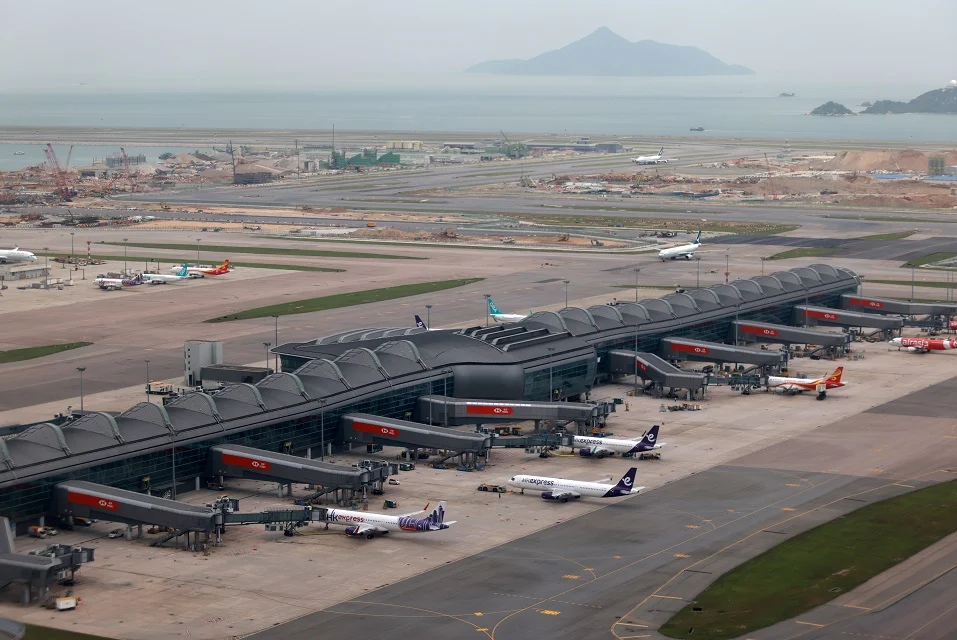
HONG KONG — In a major vote of confidence for the future of global aviation and logistics, Asia Airfreight Terminal (AAT), a subsidiary of aviation services giant SATS, has successfully renewed its operating franchise with Airport Authority Hong Kong (AAHK). The landmark agreement secures AAT’s position at Hong Kong International Airport (HKIA) for an additional 15 years, covering the vital operational window from 2028 through 2043.
This multi-decade commitment underscores the enduring strategic importance of Hong Kong as a premier global air cargo hub. It arrives during a period of massive infrastructural evolution for HKIA, highlighted by the full-scale commissioning of its ambitious three-runway system and deeper, more robust multimodal transportation networks spanning the rapidly expanding Greater Bay Area (GBA).
AAT’s renewal follows a similar 15-year franchise extension secured by rival cargo handler Hactl earlier in the summer, signaling a unified industry front and long-term stability among HKIA’s critical ground-handling ecosystem as the airport prepares for unprecedented future volumes.
Main Facts: The 2028–2043 Franchise Agreement
The newly finalized contract ensures that AAT will continue providing comprehensive, end-to-end cargo terminal services at HKIA for nearly half a century by the time the agreement concludes. Operating out of the world-class logistics hub, AAT handles everything from physical freight processing to intricate air waybill documentation on behalf of international airlines.
Key elements of the 15-year renewal include:
- Extended Timeline: The agreement officially bridges the gap from 2028 to 2043, providing deep operational continuity for global carriers operating out of Hong Kong.
- Parent Company Backing: As part of the SATS network, AAT leverages global best practices, advanced supply chain technologies, and strong financial backing to drive regional growth.
- Capacity Expansion: AAT has committed to heavy capital expenditure aimed at scaling its cargo handling capacity to an impressive 2 million tonnes annually.
- Specialized Infrastructure: The renewal secures the ongoing operation of high-value facilities such as COOLPORT, AAT’s dedicated cold-chain handling center.
The agreement cements AAT’s role as a linchpin in the international supply chain, ensuring that HKIA remains capable of absorbing the anticipated surge in cross-border e-commerce, high-tech manufacturing components, and sensitive temperature-controlled pharmaceuticals.
Chronology: A History of Growth and Modernization
AAT’s operational footprint at Hong Kong International Airport is rich with milestones, tracing back to the dawn of the airport’s modern era at Chek Lap Kok.
- 1998 — Groundbreaking Entry: AAT began operations at HKIA under an initial franchise awarded by the Airport Authority Hong Kong, coinciding with the grand relocation of Hong Kong’s aviation hub from the congested Kai Tak Airport to the purpose-built island facility at Chek Lap Kok.
- The 2000s — Scaling for the Century: Throughout the 2000s, AAT steadily upgraded its terminal infrastructure, implementing automated material handling systems (AMHS) to process surging export and import volumes driven by mainland China’s manufacturing boom.
- 2010s — Diversification and Cold Chain Focus: Recognizing the changing demands of the global airfreight market, AAT heavily invested in specialized handling solutions. A major milestone was the launch of COOLPORT, its on-airport cold-chain facility designed to handle temperature-sensitive commodities with absolute precision.
- 2020s — Global Integration and Pandemic Resilience: Despite global supply chain disruptions caused by the COVID-19 pandemic, AAT maintained critical trade corridors. During this decade, integration with SATS brought advanced digitalization initiatives, automated tracking, and streamlined warehouse management protocols.
- 2024 — The Three-Runway System Milestone: HKIA commissioned its long-awaited three-runway system, shifting the airport’s capacity limits upward and prompting forward-looking terminal operators to secure their long-term futures.
- June 2026 — Industry-Wide Commitments: Rival handler Hactl secured a 15-year franchise extension in June 2026, setting a precedent that AAT quickly followed.
- Late 2026 — The 15-Year Renewal: AAT officially seals its agreement with AAHK, locking in its operational mandate through 2043 and clearing the runway for the next wave of capital investments.
Supporting Data: Infrastructure, Capacity, and Certifications
To maintain its competitive edge in a hyper-efficient market, AAT has continually upgraded its physical and digital assets. The terminal is not merely a warehouse; it is a high-tech data and logistics node equipped to handle the most demanding supply chain requirements.

Expanding Capacity to 2 Million Tonnes
Under the terms and strategic roadmap of the new franchise, AAT is aggressively upgrading its facilities to scale its maximum annual throughput capacity to 2 million tonnes. This expansion is vital as global trade volumes rebound and structural shifts in manufacturing redirect high-value cargo through Asian transit hubs.
COOLPORT and Specialized Accreditations
AAT’s crown jewel for perishable and pharmaceutical logistics is COOLPORT. Designed to eliminate temperature excursions in the cold chain, the facility boasts industry-leading certifications that make it a preferred destination for global pharma shippers and fresh produce importers:
- IATA CEIV Pharma (Center of Excellence for Independent Validators in Pharmaceutical Logistics): Validates adherence to the highest standards of temperature-controlled transport for medical goods, vaccines, and active pharmaceutical ingredients (APIs).
- IATA CEIV Fresh: Ensures the integrity of perishable goods, mitigating spoilage risks for fresh foods, seafood, and cut flowers transiting through HKIA.
- WHO GDP (Good Distribution Practice): Confirms that medicines are consistently stored, transported, and handled according to the stringent safety and quality guidelines set by the World Health Organization.
These certifications allow AAT to capture high-yield, high-margin cargo sectors that require rigorous compliance, end-to-end visibility, and zero-tolerance operational error rates.
Official Responses: Leadership Perspectives
The announcement of the franchise renewal drew enthusiastic responses from both corporate leadership and regional authorities, emphasizing the collaborative effort required to keep Hong Kong at the apex of global logistics.
Mike Chew, Chief Executive at AAT, highlighted the significance of the partnership and the strategic direction of the company:
"We are honoured to continue our long-standing partnership with Airport Authority Hong Kong. Building on nearly three decades of experience at HKIA, we will continue to invest in enhancing the infrastructure, technology, and operational capabilities—including increasing our cargo handling capacity to 2 million tonnes—for the long-term development of Hong Kong’s air cargo industry."
Chew’s remarks underscore a proactive approach to technological adoption. As labor markets tighten and customer demands for real-time tracking escalate, AAT’s upcoming capital expenditure will heavily target automation, artificial intelligence in warehouse management, and seamless paperless documentation workflows.
Airport Authority Hong Kong (AAHK) executives similarly welcomed the agreement, noting that long-term commitments from anchor handlers like AAT and Hactl provide the institutional stability necessary to market HKIA aggressively to international carriers, freighter operators, and global forwarders.

Implications: What the Renewal Means for HKIA and the Greater Bay Area
The securing of AAT’s franchise through 2043 carries profound implications for the regional and global air cargo landscape.
1. Solidifying HKIA’s Status as the World’s Busiest Cargo Hub
Hong Kong International Airport has historically vied for the crown of the world’s busiest cargo airport by freight volume. With the three-runway system fully operational, HKIA’s physical aircraft movement capacity has leaped forward—growing from a two-runway bottleneck to a high-capacity airfield capable of handling over 100 million passengers and upwards of 10 million tonnes of cargo annually in the long run. Ground handlers like AAT expanding to 2 million tonnes ensures that the ground infrastructure scales in tandem with the airside capacity.
2. Synergy with the Greater Bay Area (GBA)
The economic integration of the Greater Bay Area—encompassing Hong Kong, Macao, and nine cities in Guangdong Province—represents one of the most powerful economic growth engines in the world. HKIA has increasingly integrated its operations with mainland hinterlands through innovative multimodal connectivity initiatives, such as sea-air and land-air intermodal transshipment models (exemplified by projects like the GBA Fresh Lane used by Cathay Cargo). AAT’s long-term presence guarantees that manufacturers in electronics, biotechnology, and advanced manufacturing across Guangdong can rely on a seamless, frictionless export gateway directly to global markets via Hong Kong.
3. Investor Confidence and SATS’ Regional Strategy
For SATS, the parent company of AAT, securing this franchise anchors its regional growth strategy in North Asia. Following SATS’ major acquisitions and international expansion initiatives in recent years, solidifying core assets in prime operational hubs like Hong Kong ensures steady cash flows and reinforces its market leadership in ground handling and cargo terminal operations.
4. Sustainability and Digital Transformation Ahead
Looking toward 2043, the next decade and a half will require massive transformations in sustainability. AAT’s future investments will inevitably focus on green terminal initiatives—such as solar-powered warehousing, electric ground support equipment (e-GSE), and energy-efficient refrigeration systems for COOLPORT. Furthermore, the push toward digital platforms like the Hong Kong International Airport’s data platform will drive greater transparency, predictive analytics, and faster dwell times for shippers.
Conclusion
As global supply chains navigate economic headwinds, geopolitical shifts, and technological disruptions, the renewal of AAT’s franchise at HKIA offers a powerful anchor of stability. By locking in its operations through 2043, upgrading its capacity to 2 million tonnes, and doubling down on specialized cold-chain and digital capabilities, Asia Airfreight Terminal has positioned itself—and Hong Kong International Airport—to dominate the future of international air cargo for decades to come.