



ANNAPOLIS, Md. — In an aggressive push to shield residents and businesses from surging electricity prices, Maryland Governor Wes Moore has officially announced the launch of “Megawatts for Maryland.” Administered by the Maryland Energy Administration (MEA), the ambitious $200 million competitive auction program is designed to fast-track the development of new clean energy generation and storage projects across the state over the next two years.
The initiative, authorized under the landmark Utility RELIEF Act signed earlier this year, represents a comprehensive state-level strategy to inject fresh capacity into the regional power grid, mitigate the strain of rising demand, and create a more sustainable, affordable energy future for Marylanders.
Main Facts
At its core, “Megawatts for Maryland” is a structured financial intervention designed to combat mounting inflation in the energy sector. Key components of the program include:
- Substantial Capital Investment: The program authorizes the MEA to draw up to $100 million annually over a two-year period from the state’s Strategic Energy Investment Fund, totaling a $200 million commitment.
- Competitive Auction Framework: Funding will be distributed through a rigorous, competitive auction process designed to award grants directly to renewable energy generation and battery storage developers.
- Cost-Reduction Mechanism: The grants are specifically targeted at offsetting the initial development and construction costs for clean energy developers, allowing them to pass long-term savings down to ratepayers.
- Capacity Targets: State officials project the initiative will introduce hundreds of megawatts of new clean energy to the Maryland grid, with the ultimate capacity goal of powering more than 150,000 homes.
- Strategic Legislative Backing: The program stems directly from the Utility RELIEF Act, a multi-faceted legislative effort crafted to address cost-of-living pressures and modernize Maryland’s approach to regional utility pricing.
Furthermore, state officials have candidly noted that the program is strategically structured to fill a critical void left by the rollback of federal clean energy incentives, specifically targeting the investment tax credit adjustments resulting from federal legislation under the Trump administration known as the One Big Beautiful Bill Act (OBBBA).
Chronology
The rollout of “Megawatts for Maryland” is the culmination of a deliberate, escalating state response to energy market volatility that has unfolded over the past year.
Early 2025: Legislative Foundation
Recognizing an impending crunch on regional energy supplies and utility bills, Maryland lawmakers and the executive branch began drafting sweeping legislative reforms. These discussions culminated in the drafting and eventual passage of the Utility RELIEF Act, which laid the legal and financial groundwork for state-level interventions in energy production and consumer cost protection.
September 2025: Executive Action on Data Centers
As technological infrastructure—particularly energy-intensive data centers—expanded rapidly throughout the mid-Atlantic, Governor Moore issued an executive order aimed at managing the localized energy costs and grid strains directly associated with data center development in Maryland. This order served as an early warning signal regarding the state’s impending grid capacity challenges.
Spring 2026: Financial Relief Deployment
Before the launch of the generation auction, Maryland deployed immediate relief, issuing $300 million in direct utility cost relief to consumers via mechanisms authorized under the Utility RELIEF Act to provide immediate breathing room to struggling households.
Summer 2026: Program Formalization and Launch
Governor Moore officially announced the operational launch of “Megawatts for Maryland,” opening the pathway for the MEA to structure the inaugural competitive auctions. Developers were invited to review guidelines for the $100 million annual grants, marking the official shift from consumer-side financial relief to supply-side capacity building.
Supporting Data and Market Context
The launch of “Megawatts for Maryland” does not occur in a vacuum; it is a direct reaction to macroeconomic pressures facing regional power markets.
Regional Demand and Price Pressures
Wholesale electricity prices across the mid-Atlantic region have faced sustained upward pressure due to a combination of aging fossil-fuel infrastructure retirements, transmission constraints, and an exponential spike in electricity demand. Much of this demand is driven by the explosive growth of digital infrastructure, including regional data centers, alongside normal residential and commercial electrification trends.
Bridging the Federal Funding Gap
The transition from federal to state-level subsidization is a defining feature of the new program. With the legislative shifts under the One Big Beautiful Bill Act (OBBBA), renewable energy developers face a sudden contraction in federal investment tax credits that previously made utility-scale solar and storage projects economically viable on tight timelines.
By injecting $200 million in state-backed grant capital through a competitive bidding model, Maryland is effectively replacing the lost federal incentive structure. By defraying up-front capital expenditures for developers, the state ensures that clean energy projects remain profitable to build within Maryland borders rather than migrating to states with more favorable localized subsidies.

Grid Impact and Scale
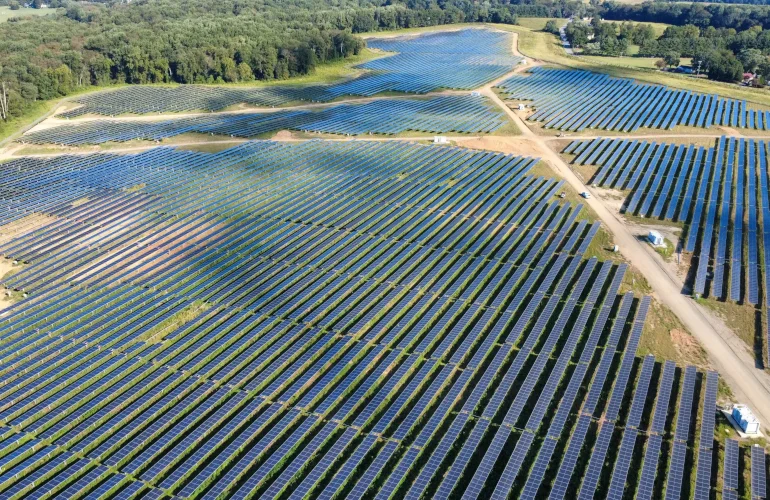
While individual project caps and specific bidding windows will be managed by the MEA, the overarching target of powering upwards of 150,000 homes requires a massive injection of solar photovoltaic and advanced battery storage capacity. Energy storage is a particularly vital component of the auction parameters, as battery systems stabilize the grid during peak demand hours, preventing costly reliance on peaking fossil-fuel plants that drive up spot market prices.
Official Responses
The unveiling of the program has garnered widespread support from state leadership, who view the initiative as a necessary and innovative use of public funds to protect constituents.
Governor Wes Moore emphasized the urgent, hands-on nature of the administration’s approach to the crisis:
"We’re using every tool at our disposal to bring Marylanders relief as energy costs skyrocket in our region and across the country. This program will tackle rising electricity demand with cleaner, cheaper, in-state energy generation that will drive down costs for the long-term."
Maryland House of Delegates Speaker Joseline A. Peña-Melnyk highlighted the legislative intent behind anchoring the program within the Utility RELIEF Act, pointing out the balance between fiscal responsibility and consumer advocacy:
"Maryland families and businesses need reliable electricity at prices they can afford. That’s why we made increasing our state’s energy supply a central part of the Utility RELIEF Act. This $100 million investment puts that commitment into action, using a competitive process to bring new solar generation online while making responsible use of public dollars. Building more energy capacity here at home is an important part of our long-term strategy to ease pressure on utility bills and create a more affordable energy future for Marylanders."
Energy sector analysts and consumer advocacy groups have similarly praised the competitive auction model. By forcing developers to bid against one another for grant funding, the MEA can ensure that taxpayer dollars are deployed efficiently, extracting the maximum possible megawatt output per dollar spent.
Implications
The launch of “Megawatts for Maryland” carries profound implications for the state’s energy landscape, economic competitiveness, and environmental trajectory over the coming decade.
1. Stabilization of Consumer Utility Bills
For the everyday Maryland ratepayer, the ultimate success of the program will be measured in the predictability and moderation of monthly utility bills. By increasing the aggregate supply of cheap, zero-fuel-cost renewable energy inside the state’s transmission footprint, Maryland can insulate its consumers from the volatile swings of natural gas and international fossil-fuel commodity markets.
2. A Blueprint for State-Level Federal Backstops
As federal energy policy experiences cyclical shifts, Maryland’s proactive stance offers a potential blueprint for other progressive states. By utilizing strategic energy investment funds to directly substitute for lost federal tax credits, Maryland is demonstrating how regional jurisdictions can maintain aggressive clean energy deployment timelines despite shifting federal legislative landscapes.
3. Economic Development and Job Creation
The influx of $200 million in capital grants will stimulate localized economic activity. Renewable energy and storage development requires substantial engineering, procurement, construction, and ongoing maintenance labor. By incentivizing in-state construction, the program is poised to create hundreds of high-paying local union and green-collar jobs, keeping economic benefits within Maryland communities.
4. Long-Term Grid Resilience
Beyond pure economics, the integration of hundreds of new megawatts of solar generation paired with storage assets fundamentally enhances the resilience of the local grid. Distributed generation reduces reliance on long-distance transmission lines, which are increasingly vulnerable to extreme weather events supercharged by climate change.
As the MEA prepares to open the first round of bidding for “Megawatts for Maryland,” all eyes will be on Annapolis to see how swiftly developers respond to the call and how effectively the state can turn financial strategy into tangible, cost-cutting energy infrastructure.