Main Facts
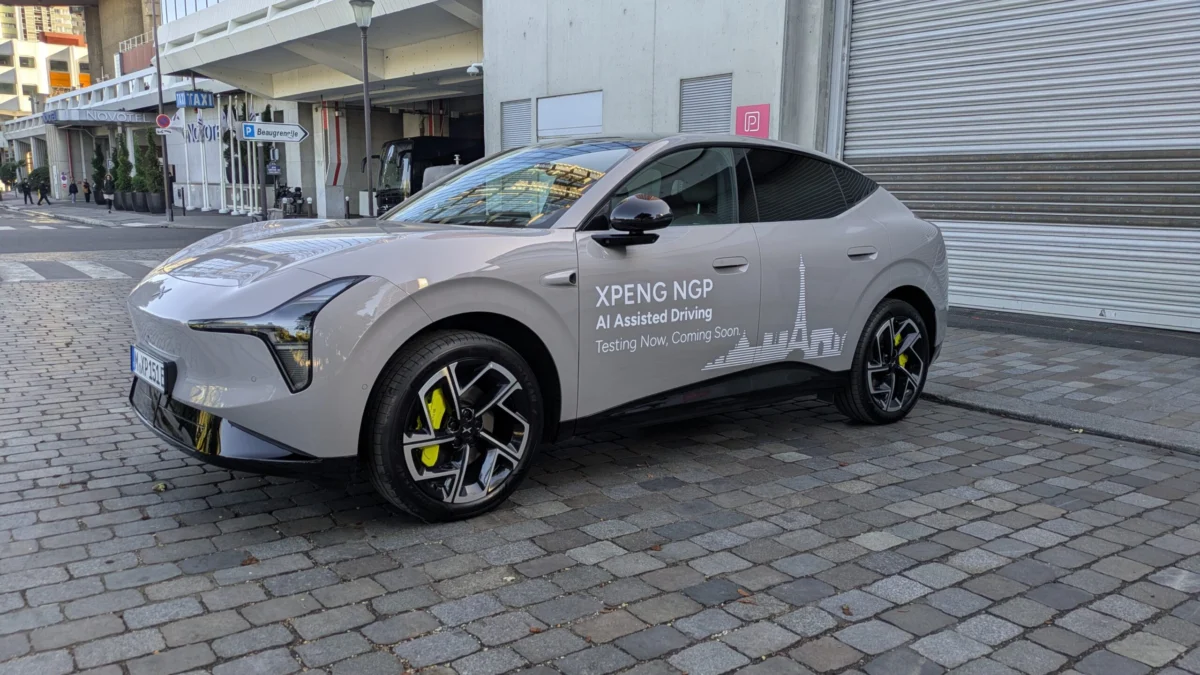
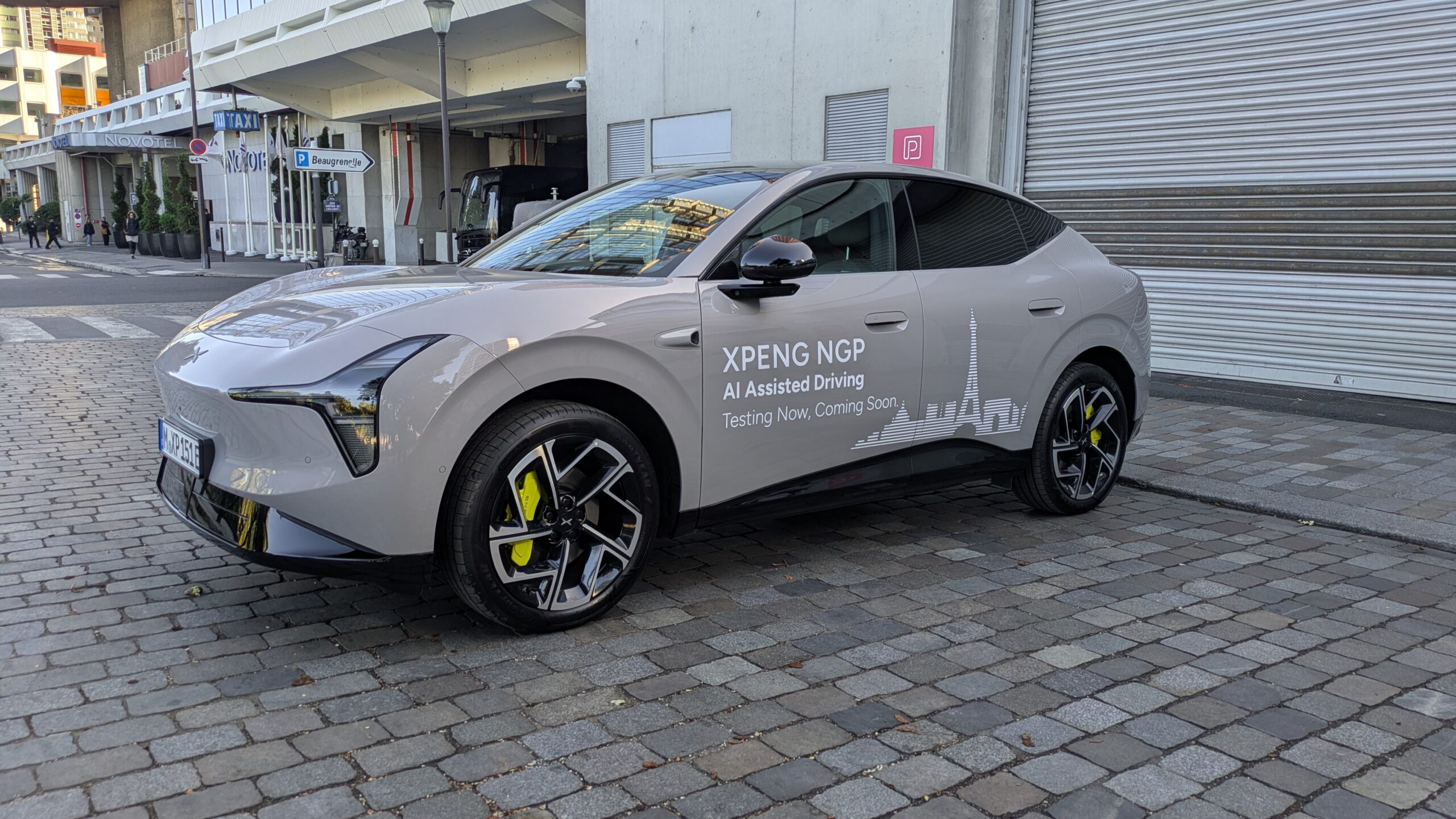
The intersection of advanced artificial intelligence and legacy urban infrastructure produced one of the most compelling automotive test cases of the year during a recent hands-on demonstration in Paris. XPENG, a prominent innovator in the smart electric vehicle space, showcased its cutting-edge Navigation Guided Pilot (NGP) system powered by VLA 2.0 (Vision-Language-Action) operating within the XPENG L03.
While the system has previously undergone rigorous evaluations in massive metropolitan hubs such as Guangzhou, Beijing, Munich, and Amsterdam, the notoriously chaotic and aggressive driving environment of Paris presented an entirely unprecedented hurdle. Characterized by fluid lane markings, unpredictable pedestrian jaywalking, and drivers who routinely treat traffic laws as loose suggestions, the French capital offered the ultimate trial by fire for autonomous driving logic.
Out of all the automotive manufacturers invited to demonstrate their intelligent driving capabilities at the Paris Motor Show, only XPENG and Tesla possessed the technical confidence to deploy their systems in live, unscripted Parisian traffic. Although official European regulatory approval for VLA 2.0 is still pending—meaning a local safety driver had to remain behind the wheel—the performance of the L03 offered a startling glimpse into the future of mobility.
The vehicle combined human-like behavioral prediction, superior spatial efficiency, and exceptional cabin comfort, easily outperforming the average human driver in terms of safety, compliance, and operational smoothness.
Chronology
The Road to Paris: A Global Testing Campaign
The deployment of XPENG’s L03 in Paris did not happen in a vacuum. It represents the latest waypoint in an aggressive international rollout designed to prove that Chinese-developed intelligent driving software can adapt seamlessly to foreign road networks.
- Early 2026: Initial sampling of XPENG’s intelligent architecture took place in Guangzhou and Beijing, establishing baseline capabilities in dense, high-congestion domestic environments.
- Mid 2026: The testing grounds shifted to Europe, starting with Munich and Amsterdam, where the software was benchmarked against local conditions and competing platforms like Tesla’s Full Self-Driving (FSD).
- Recent Trip to Paris: The testing culminated in the French capital during the Paris Motor Show. Recognizing the unique nature of Parisian traffic, the author teamed up with Joel from the prominent YouTube channel Tech Jamo, inviting him to ride shotgun during a scheduled test loop alongside XPENG representative Tanya and a local French test driver.
The Parisian Test Loop
Because European regulations do not yet officially sanction Level 3 or fully autonomous consumer deployment without specific local sign-offs, the testing team operated in a strict supervisory mode. The French test driver managed the physical controls while the vehicle’s NGP with VLA 2.0 orchestrated the navigation.
Right from the departure point, voice controls were utilized to activate the front-seat massager—an immediate crowd-pleaser that set a luxurious tone for the journey. As the L03 traversed the rougher, uneven surfaces of Parisian backstreets and boulevards, the vehicle demonstrated an advanced level of predictive path-planning.
Unlike typical human drivers who rely on jerky, reactive braking and acceleration, the L03 anticipated urban obstacles well in advance. In one notable instance, the vehicle smoothly calculated the trajectory and speed of a pedestrian stepping onto the roadway, decelerating organically so that it arrived at the crossing point precisely as the pedestrian cleared the path. This calculated fluidity eliminated the dreaded "accordion effect" in traffic behind the vehicle, promising notable reductions in energy consumption.
Supporting Data & Comparative Analysis
Cabin Ergonomics and Build Quality
Riding in the rear passenger compartment of the L03 during the extended Paris test provided valuable insights into the vehicle’s structural and ergonomic design. Despite its compact footprint, the L03 delivered a surprising degree of interior volume, outperforming competitors in its class.
When compared directly to the Audi Q4 Sportback e-tron—inspected by the team at the Paris Motor Show—the XPENG offering featured superior material quality, tighter build tolerances, and a notably more premium ambiance. Furthermore, the vehicle’s suspension managed the notoriously battered Parisian asphalt with quiet composure, completely eliminating the motion sickness often triggered by harsh urban driving conditions.
Heads-Up Display (HUD) and Interface Innovation
From the back seat, observers had a clear vantage point over the driver’s shoulder to evaluate the vehicle’s Heads-Up Display (HUD). The projection cleanly delivered critical navigation cues and speed telemetry without visual clutter.
Discussions inside the cabin sparked an innovative interface concept: a "dark mode" that powers down secondary center screens while keeping the HUD active, managed entirely via natural voice commands. This design philosophy aligns with the preferences of tech-forward drivers who appreciate minimalist interiors, echoing features found in vehicles like the Honda E. While this specific software iteration is not yet native to the L03, XPENG’s well-documented history of rapid, user-feedback-driven updates suggests it could appear in future over-the-air (OTA) deployments.
Regulatory Realities: Speed Limits and Compliance
One of the most fascinating technical observations during the Paris run centered on regulatory compliance. Parisian motorists frequently exceed local speed limits, treating velocity as a fluid negotiation with law enforcement.
By default, however, the XPENG L03 strictly adhered to local speed limits to comply with upcoming United Nations DCAS (Driver Control Assistance Systems) regulations. In contrast, competing systems like Tesla FSD have historically permitted over-speeding behaviors, a discrepancy that will inevitably face regulatory correction as European frameworks tighten.
Official Responses and Industry Perspectives
The Driver’s View: Joel from Tech Jamo
Joel, an owner of a Tesla Model 3 equipped with Hardware 3 (HW3), offered a vital, peer-reviewed perspective on the vehicle’s capabilities. Having a deep familiarity with Western automated driving systems, Joel expressed immediate admiration for the smoothness, build quality, and operational refinement of the XPENG software.
In post-ride debriefing sessions, Joel noted that while Tesla FSD possesses aggressive path-finding traits, the XPENG system achieved a level of interpersonal driving harmony that felt far less jarring. The consensus between the reviewers was clear: while NGP with VLA 2.0 remains classified as an advanced Level 2 driver assistance system, its execution frequently eclipses the behavioral quality of human drivers.

XPENG’s Global Ambitions
XPENG representatives on the ground, including Tanya, emphasized the company’s commitment to iterative global localization. Rather than applying a single, rigid algorithm to every continent, XPENG’s VLA 2.0 architecture leverages advanced machine learning to rapidly parse unfamiliar roadway customs, cyclist behaviors, and pedestrian patterns.
The software’s ability to process chaotic environments—moving effortlessly from the structured avenues of Munich to the aggressive gauntlet of Beijing and Paris—demonstrates a scalable framework designed for true international deployment.
Implications
The Human vs. Machine Safety Paradigm
The implications of XPENG’s Parisian demonstration extend far beyond a simple product review. For decades, automakers have argued that autonomous and semi-autonomous systems must achieve perfection before entering complex urban environments. Yet, the reality of human driving in cities like Paris is far from perfect; it is emotionally charged, erratic, and frequently hostile, complete with shouting matches and aggressive hand gestures.
By contrast, the XPENG L03 demonstrated that an advanced AI system can remain calm, collected, and strictly rule-abiding while maintaining traffic flow. Even when navigating unfamiliar streets filled with aggressive local drivers, the vehicle did not succumb to road rage or reactionary decision-making.
What This Means for the Future of Smart Mobility
As advanced driver-assistance systems (ADAS) evolve toward generalized autonomy, the competitive landscape is shifting rapidly. The fact that XPENG and Tesla were the sole entities willing to put their software on the line at the Paris Motor Show underscores a widening chasm in the intelligent vehicle industry. Companies relying on legacy engineering approaches are struggling to match the velocity of software-defined iteration demonstrated by Chinese EV makers.
For European consumers, the arrival of systems like NGP with VLA 2.0 signals a tectonic shift in expectations. While regulatory hurdles remain high—and full Level 3 certification will require patience—the psychological barrier has been broken. Intelligent driving is no longer a sterile highway-cruising gimmick; it is rapidly becoming an indispensable urban co-pilot capable of conquering the most chaotic streets the world has to offer.