BAYAMÓN, Puerto Rico — Across the Caribbean territory of Puerto Rico, a quiet energy revolution is underway. Driven by a volatile electrical grid characterized by frequent, prolonged blackouts and compounded by the constant threat of catastrophic hurricane activity, residents and business owners are increasingly taking power generation into their own hands.
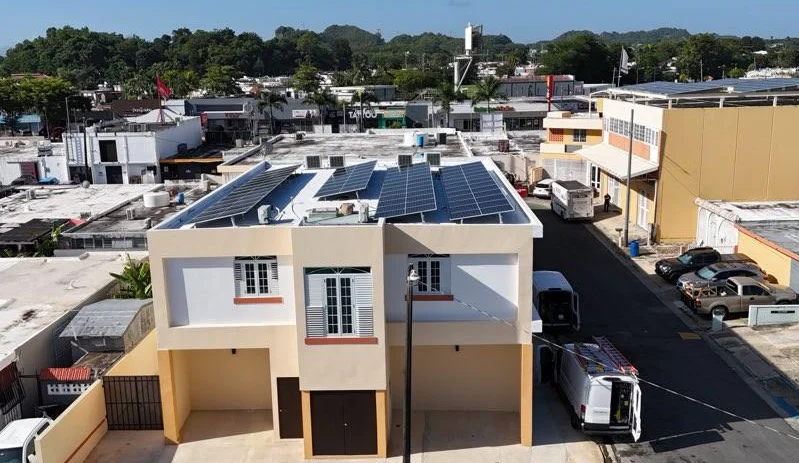
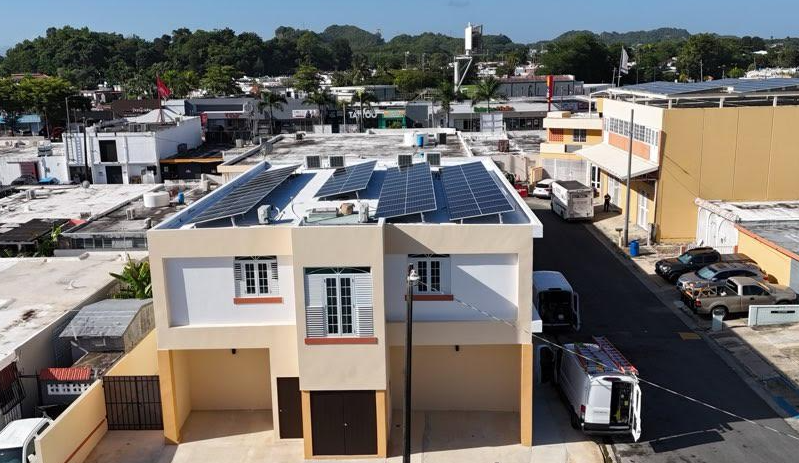
Nowhere is this shift more evident than in a newly completed, highly specialized solar-plus-storage installation in the northern municipality of Bayamón. Faced with a tight architectural footprint that prohibited the use of a traditional diesel or gas-powered backup generator, a two-unit residential apartment building has turned entirely to solar energy and advanced battery storage. Engineered by Ricardo Fonseca, owner of Ingenious Solution Services, the project showcases an innovative approach to urban energy independence: a decentralized, multi-system configuration that operates without grid communication or fossil fuel backups, yet seamlessly powers modern residential life.
Main Facts: The Bayamón Apartment Complex Project
The core of the Bayamón installation relies on advanced engineering to solve a classic urban dilemma: how to provide robust, uninterrupted emergency backup power on a property with zero clearance for bulky auxiliary generators.
Because the apartment structure occupies the entirety of its urban plot, traditional mechanical generators were entirely out of the question. To overcome this limitation, Fonseca designed a decentralized, multi-system photovoltaic array utilizing Briggs & Stratton SimpliPHI 6.6 batteries.
At first glance, the setup appears to be a single, heavy-duty triple battery system. In reality, it consists of three completely independent, non-communicating systems deployed across distinct zones of the property:
Apartment Unit One: Powered by eighteen 550-watt solar panels paired with 19.8 kWh of Briggs & Stratton SimpliPHI batteries (utilizing a triple-battery configuration).
Apartment Unit Two: An identical, independent mirror setup featuring eighteen 550-watt solar panels and 19.8 kWh of dedicated battery storage.
Common Areas and Access Security: A separate SimpliPHI 6.6 battery dedicated exclusively to powering the property’s four motorized security gates and common area lighting.
Each apartment system bears a heavy residential electrical load, running core household appliances including central or split-unit air conditioners, water heaters, electric stoves, lighting circuits, and everyday kitchen electronics. Despite these heavy demands, the systems operate with remarkable efficiency. Depending on solar irradiance, the depleted batteries can fully recharge via the rooftop solar panels in as little as 75 minutes, or stretch to a maximum of 150 minutes under heavy cloud cover.
Chronology: From Pharmaceutical Validation to Residential Solar Dominance
To understand how Ingenious Solution Services became a premier provider of energy resilience in Puerto Rico, one must trace the professional evolution of its founder, Ricardo Fonseca, and the inflection points that reshaped the island’s infrastructure sector.
The Early Years and Industrial Foundations
Ricardo Fonseca’s career in Puerto Rico’s technical services sector spans more than two decades. Long before photovoltaic systems became ubiquitous across the island’s rooftops, Fonseca’s business specialized in high-precision industrial sectors.
Phase One (Industrial Servicing): Ingenious Solution Services originally built its reputation by offering specialized "validations" for the island’s booming pharmaceutical manufacturing sector, ensuring strict regulatory compliance and equipment calibration.
Phase Two (Broadening Technical Scope): As local demand shifted, Fonseca expanded his company’s portfolio to encompass comprehensive facility maintenance, including commercial electricity, advanced plumbing, industrial refrigeration, appliance repair, and thermal imaging studies.
The Watershed Moment: Hurricane Maria
The defining catalyst for Fonseca’s current business trajectory was the catastrophic landfall of Hurricane Maria. The storm completely pulverized Puerto Rico’s fragile electrical grid, plunging the entire island into the longest blackout in U.S. history.
In the wake of Maria, public trust in the central utility collapsed. This sparked an unprecedented, sustained surge in demand for decentralized photovoltaic (PV) and energy storage systems. Recognizing the critical need for reliable power, Fonseca pivoted his company’s deep technical expertise toward renewable energy integration, turning Ingenious Solution Services into a frontline defender of Puerto Rican energy resilience.
The Bayamón Installation Timeline
The project in Bayamón highlights the complex regulatory and operational realities of installing solar infrastructure on the island:
Prior Client Relationship: The property owner was already a familiar client, having previously contracted Fonseca to install a massive 30-kW three-phase commercial backup system paired with 46 kWh of battery storage for his primary business.
System Design and Physical Deployment: Due to the property’s spatial constraints, Fonseca engineered the triple-independent layout, executing a clean, space-saving installation of the Briggs & Stratton hardware.
The Self-Consumption Phase (5 Months): Following physical completion, the building operated entirely in "self-consumption mode" for a grueling five-month period. During this window, the system generated and stored clean energy locally while the installation team navigated bureaucratic procedures and waited for final electrical inspection and approval from Luma Energy, the island’s primary transmission and distribution operator.
Grid-Tie Integration: With official net metering installations and formal electrical certifications finalized, the property is now poised to begin exporting surplus green energy back into the public grid.
Supporting Data: Technical Specifications and Performance Metrics
The success of the Bayamón installation relies heavily on the technical capabilities of the hardware chosen. Fonseca has maintained an eight-year working relationship with Briggs & Stratton, deploying approximately a dozen of the company’s SimpliPHI 6.6 battery systems across various residential and commercial sites.
A comparative evaluation of the system’s performance parameters underscores why installers on the island are shifting toward these specific units:
Technical Parameter
System Specification / Performance Metric
Solar Panel Capacity
Eighteen (18) 550-W high-efficiency panels per residential unit
Storage Capacity (Per Unit)
19.8 kWh via Briggs & Stratton SimpliPHI 6.6 triple-battery configuration
Fast-Charge Time (Optimal Sun)
75 minutes from empty to full capacity via PV array
Fast-Charge Time (Low Sun)
Maximum 150 minutes under heavy cloud cover
Grid Interaction Mode
Autonomous self-consumption (prior to utility approval); Net-metered export capable
System Independence
Zero communication links between residential units and common area arrays; zero generator dependence
Physical Footprint
Compact wall-mounted/floor-standing units, lighter and smaller than competing Tesla power walls
Field Reliability and Component Longevity
In an environment as harsh as Puerto Rico—characterized by high ambient humidity, salt-air corrosion, and extreme weather events—hardware durability is non-negotiable. Fonseca notes that many alternative inverter and battery brands fail prematurely, often succumbing to environmental wear or internal software glitches within a few years of deployment.
In contrast, the SimpliPHI 6.6 units have proven virtually bulletproof in the field. Fonseca highlights several practical engineering advantages that make these batteries superior for tight urban spaces:
Form Factor: They possess a smaller physical footprint than competing high-density batteries (such as Tesla Powerwalls), making them significantly easier to maneuver into restrictive utility closets and narrow hallways.
Weight and Handling: They are substantially lighter, reducing labor fatigue and structural mounting requirements during installation.
Installer-Friendly Design: Recent hardware updates, including controller connection points accessible from either side, have streamlined wiring layouts and reduced installation times.
Official Responses and Stakeholder Perspectives
The human element of energy transitions often reveals the true value of technological investments. Stakeholders ranging from seasoned contractors to everyday apartment dwellers have reported transformative experiences with decentralized solar-plus-storage solutions.
Contractor Insights: Ricardo Fonseca
Reflecting on his two decades in the trade, Fonseca remains staunchly loyal to equipment that performs reliably under pressure. His transition to exclusively installing Briggs & Stratton products stems from direct observation of industry-wide failures.
"The only battery systems I install are from Briggs & Stratton," Fonseca stated emphatically. "I frequently receive calls about other products that aren’t working, reporting malfunctions, so I’ve seen all the problems other battery and inverter manufacturers have: they don’t last more than a few years and fail in various ways."
Fonseca also emphasized the psychological relief experienced by his clients. He shared an anecdote regarding a residential customer running three heavy air-conditioning units throughout the night who expressed absolute astonishment that the home’s power never wavered—even without a diesel generator running in the background.
"The system works wonderfully," Fonseca added. "They’ve never run out of electricity."
End-User Experience and Community Impact
For the residents of the Bayamón apartment building, the transition to autonomous power has eliminated the anxiety traditionally associated with the island’s hurricane season and routine grid failures. Operating for five months entirely off-grid (via self-consumption) proved to the tenants that the system could independently sustain a modern, high-load lifestyle—powering refrigeration, climate control, and security infrastructure without interruption.
Furthermore, the integration of a dedicated battery for the property’s electric security gates ensures that residents are never locked out or left vulnerable during widespread neighborhood blackouts, addressing both safety and convenience concerns in one elegant design.
Implications: The Future of Urban Resilience in Puerto Rico
The successful deployment of the Bayamón apartment complex project carries profound implications for the broader architectural and energy landscape of Puerto Rico and other climate-vulnerable island territories.
1. Decentralization as a Survival Strategy
Traditional utility paradigms rely on centralized power plants transmitting electricity across miles of vulnerable overhead lines. In Puerto Rico, where tropical storms routinely flatten transmission towers, centralized grids represent a single point of failure. Projects like the Bayamón complex prove that micro-decentralization—where individual buildings, or even individual apartments within a building, generate and store their own power independently—is the most resilient path forward. By removing inter-system communication dependencies, the failure of one unit does not cascade into neighboring living spaces.
2. Overcoming Spatial Limitations in Urban Architecture
As Caribbean cities and municipalities become denser, properties are increasingly built lot-line to lot-line, leaving no room for traditional external combustion generators or massive commercial solar farms. The Bayamón case study serves as a blueprint for high-density urban retrofitting. By utilizing compact, high-density energy storage units like the SimpliPHI 6.6 and splitting loads logically (such as separating common security gates from residential living units), urban property owners can achieve total energy independence without violating spatial constraints.
3. Economic and Environmental Horizons
With the integration of official net-metering meters and Luma Energy certifications finalized, the Bayamón property transitions from being a purely defensive energy consumer to an active grid contributor. By exporting excess daytime solar generation back into the local distribution network, properties like this help stabilize the surrounding grid while generating financial returns for the property owners.
4. Expansion of Green Enterprise
Riding on the success of high-profile, complex installations like the one in Bayamón, Ingenious Solution Services is preparing for major regional expansion. Building upon a hard-earned reputation for technical excellence and reliability, Fonseca plans to scale his operations across the island.
"Thanks to my reputation and the experienced team I’ve built, I plan to expand my business to other areas of Puerto Rico," Fonseca outlined, noting target expansion zones stretching from Mayagüez to Fajardo, as well as into the mountainous central regions of Naranjito and Aibonito.
As more contractors adopt these advanced deployment strategies and high-performance hardware, Puerto Rico moves steadily closer to a decentralized energy future—one resilient rooftop at a time.