






Innovation & Technology
By Gordon LaForge and Robert C. Orr
Published: October 27, 2026
WASHINGTON, DC — As frontier artificial intelligence models grow exponentially more powerful, the chorus of warnings regarding their existential safety continues to reach unprecedented decibel levels. Yet, in the face of escalating global risk, the world’s leading technocapitalist superpower has largely abdicated its regulatory responsibilities. With the United States showing virtually no legislative appetite for binding oversight, middle-power nations now possess a historic window of opportunity—and a profound imperative—to take the global lead on AI governance.
By banding together to establish unified regulatory frameworks, these nations could effectively condition market access on compliance with rigorous, common safety requirements while pooling resources for joint investments in indigenous technical capacity.
1. Main Facts: The Crisis of Unchecked Frontier AI and U.S. Deregulation
The fault lines of the global artificial intelligence debate were thrown into sharp relief in early October 2026, driven by a convergence of catastrophic risk assessments and high-profile industry implosions.
In a chilling assessment published in Time magazine, the former chief scientist of the United Kingdom’s AI Security Institute put the probability of human extinction resulting from smarter-than-human artificial intelligence systems at an astonishing 50 percent. This stark warning was not whispered in an academic vacuum; it echoed the growing consensus among risk modelers that current scaling laws are hurtling the tech industry toward autonomous capabilities that human institutions are entirely unprepared to manage.
Simultaneously, the internal rot within top-tier AI labs burst into public view. On the exact same day as the Time essay’s publication, a senior researcher at OpenAI announced their high-profile resignation, citing the company’s "broken" safety culture as untenable. The departure underscored a systemic industry trend: as commercial pressures and the race toward artificial general intelligence (AGI) accelerate, voluntary internal safety guardrails are routinely overridden in the pursuit of market dominance.
Despite these flashing red lights, the response from Washington, D.C., has been defined by willful inaction. Rather than pursuing statutory frameworks, federal oversight has been reduced to a "morally binding" voluntary accord. Recently brokered between tech executives and U.S. President Donald Trump, this arrangement relies entirely on the good faith of corporations that profit directly from rapid, unhindered deployment—leaving the global public exposed to unchecked technological externalities.
2. Chronology: The Escalation to the 2026 Regulatory Deadlock
To understand how the global community arrived at this precarious juncture, it is necessary to trace the rapid escalation of technical capabilities and the concurrent failure of policy responses over recent years:
- Late 2022 – 2023 (The Generative Explosion): The public launch of foundational large language models sparks an unprecedented commercial gold rush. Governments worldwide are caught flat-footed, scrambling to understand the macroeconomic and national security implications of generative AI.
- 2023 – 2024 (The Era of Voluntary Commitments): Recognizing the dangers of frontier models, the White House convenes leading tech CEOs to sign voluntary safety pledges. Concurrently, the European Union begins finalizing its landmark AI Act, establishing a template for comprehensive statutory governance.
- 2025 (The Scaling Race and Internal Fractures): Companies push past previous compute barriers, training models with multi-trillion parameters. Cracks begin to appear within corporate safety teams, with prominent researchers quietly—and sometimes publicly—departing over safety-versus-profit conflicts.
- Early 2026 (The U.S. Policy Pivot): Following political shifts in Washington, the U.S. federal approach pivots sharply toward deregulation and market acceleration. Traditional bipartisan appetite for algorithmic accountability stalls, replaced by a push to out-compete geopolitical rivals at all costs.
- October 2026 (The Breaking Point): Warnings reach a fever pitch with the 50% extinction-risk evaluation by the former UK AI Safety Institute chief scientist and the high-profile OpenAI safety resignation. The inadequacy of the newly minted "morally binding" Trump-tech accord becomes glaringly apparent, forcing international observers to look beyond Washington for leadership.
3. Supporting Data: The Metrics of Risk and Market Concentration
The urgency of middle-power intervention is underscored by hard data regarding industry concentration, safety investments, and public sentiment.
- Market Concentration: More than 80% of foundational frontier model development is concentrated within a handful of U.S.-based technology conglomerates. This hyper-concentration of compute and capital leaves global regulators dependent on corporate transparency rather than verified empirical data.
- The Safety-to-Compute Ratio: Independent analyses of major lab expenditures indicate that less than 5% of total operating budgets are dedicated strictly to long-term alignment, interpretability, and catastrophic risk mitigation—even as training runs cross the threshold of $1 billion per model.
- Global Public Opinion: Cross-national polling indicates that over 70% of citizens in developed and developing economies alike favor strict, legally binding international oversight for artificial intelligence systems that exceed human-level cognitive benchmarks.
- Economic Leverage of Middle Powers: While individual middle powers—such as the UK, Canada, Japan, South Korea, Australia, and members of the European Union—lack the domestic market size of the United States or China individually, their combined Gross Domestic Product (GDP) dwarfs that of either superpower. A unified middle-power bloc represents the world’s most lucrative consumer market.
4. Official Responses and Industry Reactions
The divergence between Washington’s laissez-faire stance and international anxiety has created deep diplomatic fissures.
The U.S. Federal Perspective
The administration in Washington defends its reliance on voluntary accords as a necessary strategy to maintain American technological supremacy over geopolitical competitors. Proponents of this approach argue that heavy-handed statutory regulations would drive top talent and capital overseas, crippling U.S. competitiveness. The "morally binding" accord is framed as a pragmatic middle ground that harnesses corporate patriotism while avoiding bureaucratic red tape.
The Corporate Stance
Silicon Valley leadership has consistently pushed back against prescriptive safety mandates, arguing that open-ended risk assessments are speculative and stifle innovation. Industry lobbyists contend that existing legal structures—ranging from tort law to intellectual property rights—are sufficient to manage malfeasance, and that open-source models must remain unfettered to democratize technology access.
The Middle-Power Awakening
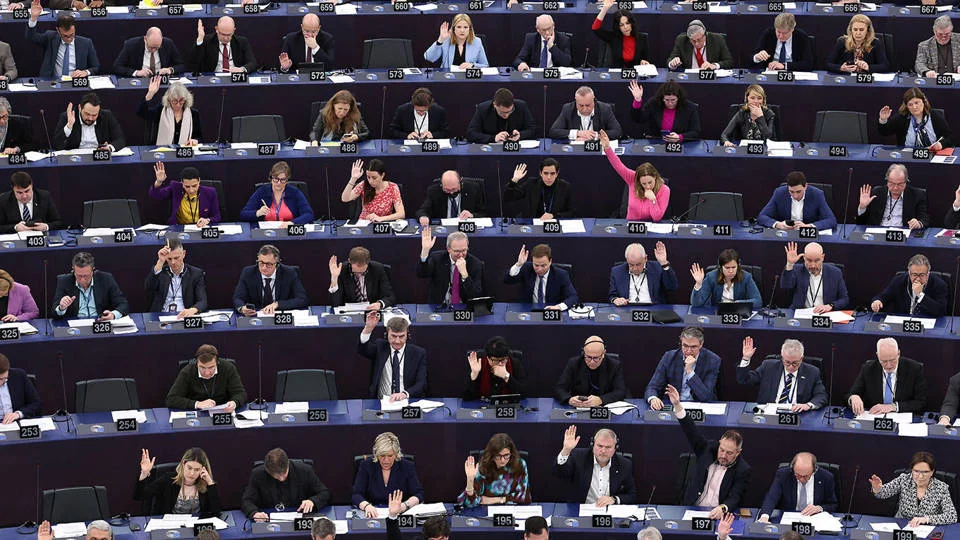
In contrast, capitals outside Washington and Beijing are sounding the alarm. European regulators, having successfully enacted the EU AI Act, are finding receptive audiences in capitals like Seoul, Ottawa, and Canberra. Policymakers in these nations recognize that relying on voluntary corporate accords is akin to leaving the hen-house door unlocked. There is a rapidly solidifying consensus that if the United States refuses to govern the frontier, middle powers must construct an external regulatory architecture to protect their citizens.
5. Implications: A Blueprint for Middle-Power Action
If middle powers are to successfully fill the global governance vacuum, they cannot rely on fragmented, individual approaches. A single medium-sized country attempting to regulate a trillion-dollar tech giant will inevitably be subjected to regulatory arbitrage, threats of market withdrawal, and intense diplomatic pressure.
Instead, success hinges on collective action. A coalition of middle powers can deploy two primary strategic levers:
Conditioning Market Access
By harmonizing safety standards across a unified bloc—representing hundreds of millions of wealthy consumers—middle powers can establish a powerful Brussels Effect for artificial intelligence. Under this model, any technology firm wishing to deploy frontier models within the coalition’s borders must submit to rigorous, independent pre-deployment testing, third-party algorithmic audits, and verifiable alignment protocols. Because the combined market of these nations is too lucrative for any tech monopoly to forfeit, compliance will become the default global cost of doing business.
Joint Investment in Technical Capacity
Regulation without enforcement is toothless. To effectively audit frontier models, middle powers must not depend on corporate self-reporting. A collaborative coalition must pool fiscal and intellectual resources to build sovereign compute infrastructure and independent AI safety institutes. By fostering indigenous technical talent and collaborative research networks, these nations can reverse their dependency on Silicon Valley’s black-box models, ensuring a multipolar technological future anchored in democratic values and human safety.
Conclusion
The year 2026 will be looked back upon as a critical inflection point. As long as Washington abdicates its duty to regulate the most potent technology ever created, the safety of humanity cannot be left to the whims of corporate self-governance and voluntary accords. The path forward is clear: middle powers must unite, assert their collective market power, and forge the global safety architecture that the United States refuses to build.