For decades, the holy grail of corporate Learning and Development (L&D) has been the seamless delivery of the right learning to the right person. We have navigated the evolution from static catalogs to keyword-driven search, eventually graduating to sophisticated recommendation engines and adaptive learning pathways. Artificial intelligence has acted as the ultimate accelerant, allowing organizations to tailor assessments, curate content, and analyze learner behavior with unprecedented precision.
However, as the dust settles on the initial AI implementation phase, a profound realization is dawning on Chief Learning Officers (CLOs) and organizational leaders: Personalization does not equal readiness. While AI is peerless at suggesting the next course, it is far less capable of providing evidence that an employee is prepared to perform in the high-stakes, nuanced reality of their daily work. The industry is currently witnessing a paradigm shift where the focus is moving away from "content consumption" toward "demonstrated capability."
The Chronology of Learning Evolution
To understand where we are going, we must evaluate how we arrived here. The trajectory of learning technology has followed a distinct, value-driven path:
- The Catalog Era (Legacy): Organizations maintained vast, static libraries. The burden was on the learner to find what they needed, often resulting in low engagement and poor skill alignment.
- The Search & Recommend Era (2010s): Algorithms began predicting needs based on peer behavior and job roles. This reduced the "noise" of irrelevant content, yet failed to account for individual performance gaps.
- The Adaptive Era (Early 2020s): Learning platforms began adjusting the difficulty of content based on quiz performance. While this improved retention of knowledge, it remained largely tethered to theoretical understanding rather than practical application.
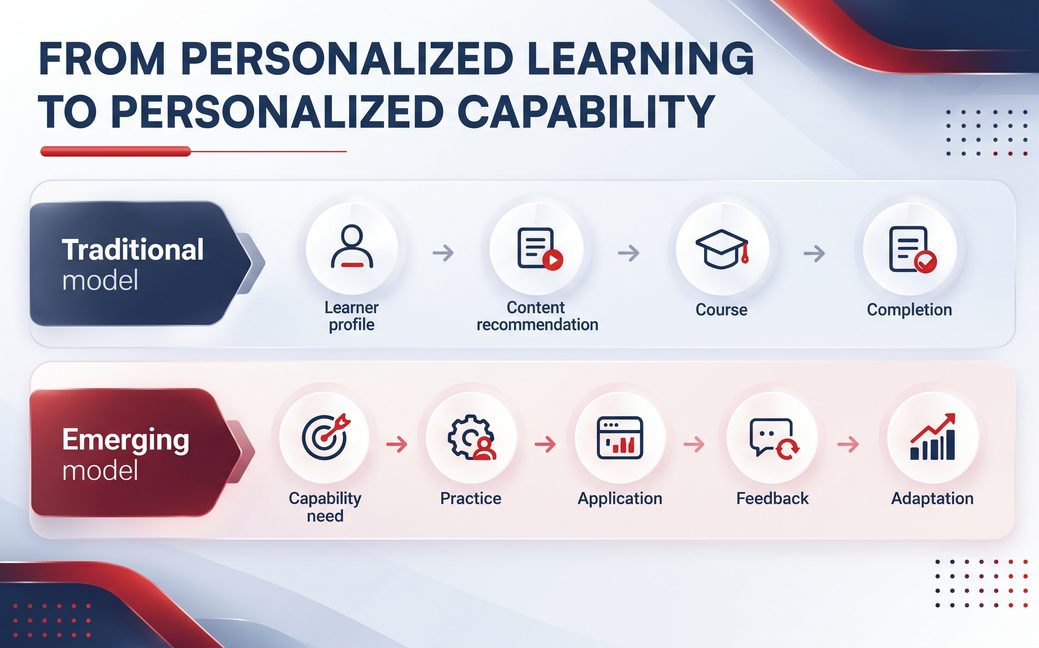
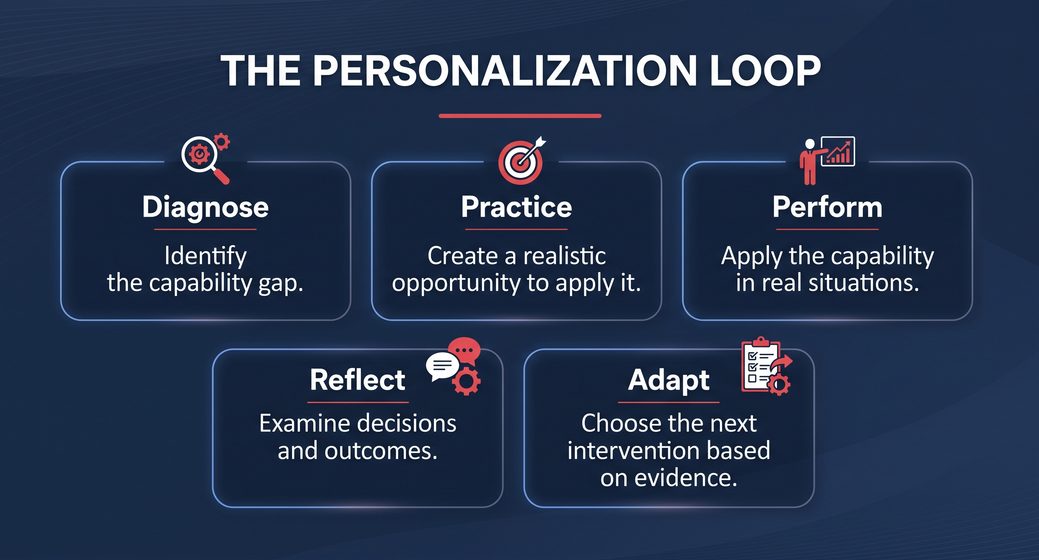
- The Capability Era (Present): We are currently moving toward an AI-integrated model where the goal is no longer just "completing a module," but rather diagnosing gaps, facilitating deliberate practice, and measuring real-world proficiency.
The Mirage of Relevance: Why Content Isn’t Enough
Personalization has traditionally functioned as a content-delivery mechanism. By analyzing a learner’s skill gaps, a system recommends a course. While this improves efficiency, it creates a "relevance trap." Completing a course is merely a proxy for engagement; it confirms that a learner has interacted with information. It provides zero evidence of the ability to synthesize that information into effective work.
The distinction is critical. If a manager completes a course on "Handling Difficult Conversations," the system marks the skill as "achieved." However, in the chaotic, emotional, and unpredictable environment of a real-world office, that manager may still fail to execute the conversation effectively. The current L&D model often mistakes the acquisition of knowledge for the attainment of capability.

Supporting Data and Emerging Technologies
The shift toward performance-based development is being forced by the rapid proliferation of agentic AI. Gartner’s latest projections indicate that by the end of 2026, roughly 40 percent of enterprise applications will incorporate task-specific AI agents—a massive leap from less than 5 percent in 2025.
This data suggests that the true value of AI in the workplace will not be found in generic "chatbots" that provide general summaries. Instead, the highest ROI will come from domain-specific agents—tools that understand the nuances of a specific role, such as a legal assistant navigating a contract negotiation or an engineer troubleshooting a specific, proprietary piece of hardware.
For L&D professionals, this means that "one-size-fits-all" training is becoming obsolete. If an organization is to remain competitive, they must integrate AI into the process of work, rather than keeping it as a separate portal for "learning."
The Next Frontier: Deliberate Practice
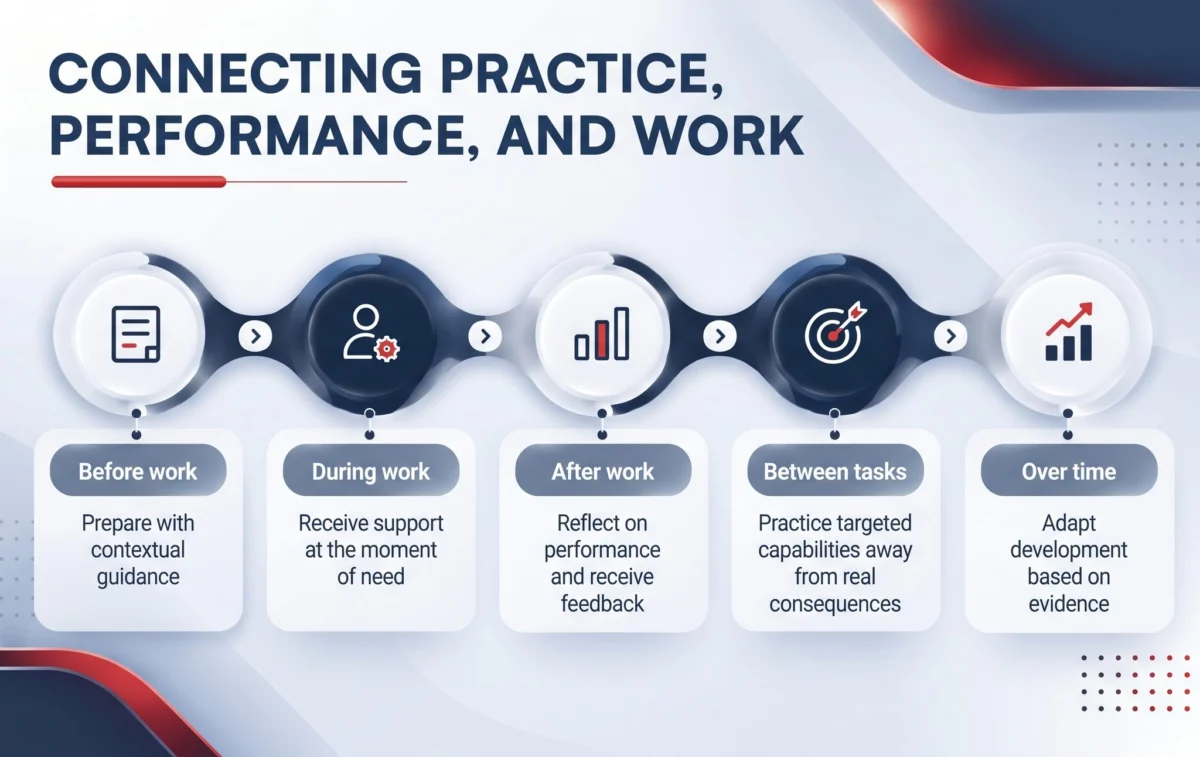
The central thesis of the new L&D model is that practice is the bridge between knowledge and performance.
The AI-Enabled Sandbox
Artificial intelligence provides a unique opportunity to create low-risk, high-fidelity practice environments. Unlike static modules, an AI-enabled simulation can:
- Adapt in real-time: If a user makes a mistake, the AI can adjust the complexity or the tone of the simulated counterpart to challenge the user further.
- Provide immediate feedback: Rather than waiting for a post-course survey, the user receives actionable insights on their decision-making process immediately after a simulation.
- Scale coaching: While human mentors remain vital for high-level judgment and accountability, AI can handle the repetitive, foundational rounds of practice, freeing up human coaches to focus on complex, nuanced guidance.
The "No-Learning" Intervention
Perhaps the most disruptive realization for L&D leaders is that sometimes, the best intervention is no intervention. If an AI-driven capability diagnostic shows that an employee already possesses the required proficiency for a task, the system should recognize this and clear the path. Forcing an experienced employee through a remedial course is not just a waste of time; it is a morale killer that treats experienced professionals like novices.
Implications for the Modern CLO
As this shift toward "Capability-First" learning takes hold, Chief Learning Officers must rethink their strategy. This requires a departure from traditional metrics.
Redefining Success Metrics
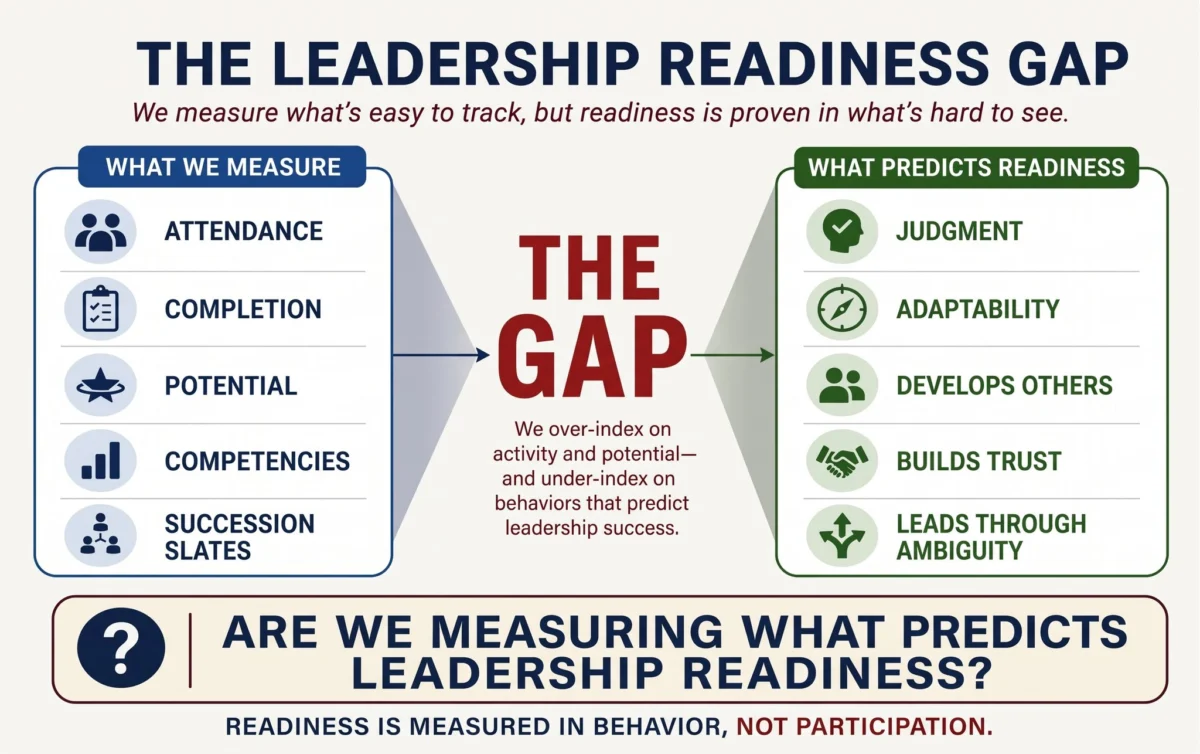
For decades, L&D departments have been measured by "vanity metrics": completion rates, total learning hours, and learner satisfaction scores. While these remain important for administrative tracking, they are poor indicators of business impact.
CLOs must advocate for a more complex, multi-layered evidentiary approach to measuring readiness:
- Demonstrated Proficiency: How did the learner perform in a controlled, simulated environment?
- Application Quality: How does the output of their work change after the intervention?
- Expert Observation: Does the employee’s direct manager or a subject matter expert see a change in behavior?
- Consistency: Does the employee perform the skill reliably over time, or was it a one-time success?
The Governance of Evidence
One of the greatest challenges for CLOs will be establishing the "governance of evidence." To measure performance without creating a culture of surveillance, organizations must draw clear boundaries. The goal is to provide enough signals to identify development needs, not to track every keystroke an employee makes. This requires transparency, clear communication with the workforce, and a culture that views data as a tool for empowerment rather than a tool for punishment.
Official Perspectives: Aligning with Business Strategy
In recent industry forums, leaders have begun to emphasize that L&D can no longer operate in a silo. The successful L&D function of the future will be deeply embedded in the organizational strategy.
- Define Observable Behaviors: Before deploying any AI-based training, the L&D team must work with the business to define what "good" looks like in concrete, observable terms. "Better communication" is not a target; "The ability to de-escalate a customer complaint within three minutes" is.
- Decide Where Practice Belongs: Not every skill requires a high-tech simulation. Some capabilities—particularly those requiring high emotional intelligence—are best developed through peer-led coaching or on-the-job apprenticeship.
- Establish Trust in Data: CLOs must negotiate with stakeholders on what constitutes "meaningful evidence." If the business trusts the data, they will be more willing to fund and support the L&D initiatives derived from that data.
Conclusion: From Personalization to Performance
The goal of the last decade was to solve the "delivery problem"—getting content to the user. The goal of the next decade is to solve the "readiness problem"—ensuring the user can deliver results.
Personalization remains a vital component of this transition. Employees should not be subjected to irrelevant content. However, relevance is merely the entry point. The future of corporate learning lies in the intelligent orchestration of practice, feedback, and performance measurement.
As we redesign the workforce around the capabilities enabled by AI, L&D leaders have a unique opportunity to stop being "content providers" and become "performance architects." By focusing on capability rather than just consumption, they can ensure that their organizations are not just learning—they are actually performing at the highest possible level when the moment of truth arrives.
The era of the "right learning at the right time" has passed. We are entering the era of the "right person demonstrating the right capability at the right moment."