In a significant pivot for the American energy landscape, the State of Indiana has emerged as a focal point for a large-scale nuclear revival. On October 19, two distinct but complementary ventures were announced, signaling a strategic shift to repurpose decommissioned or aging fossil-fuel infrastructure to meet the surging electricity demands of a digitized economy. As the grid grapples with the energy-intensive requirements of data centers and the broader push toward decarbonization, utilities and private tech giants are betting on nuclear energy as the bedrock of a reliable, carbon-free future.
Main Facts: A Dual-Pronged Nuclear Strategy
The dual announcements in Indiana represent two different approaches to the nuclear challenge: the deployment of large-scale, traditional reactor fleets and the utilization of modular, high-temperature gas-cooled reactors.
The first initiative, spearheaded by AtkinsRéalis in partnership with the State of Indiana and the Hoosier Energy Rural Electric Cooperative, explores the potential for a fleet of up to eight CANDU (Canada Deuterium Uranium) reactors. This project envisions a massive contribution to the state’s generation portfolio, targeting up to 6 gigawatts (GW) of capacity. The initiative emphasizes a fleet-based approach, aiming to leverage standardized designs and repeatable construction processes to reduce capital costs and build a robust, localized supply chain.
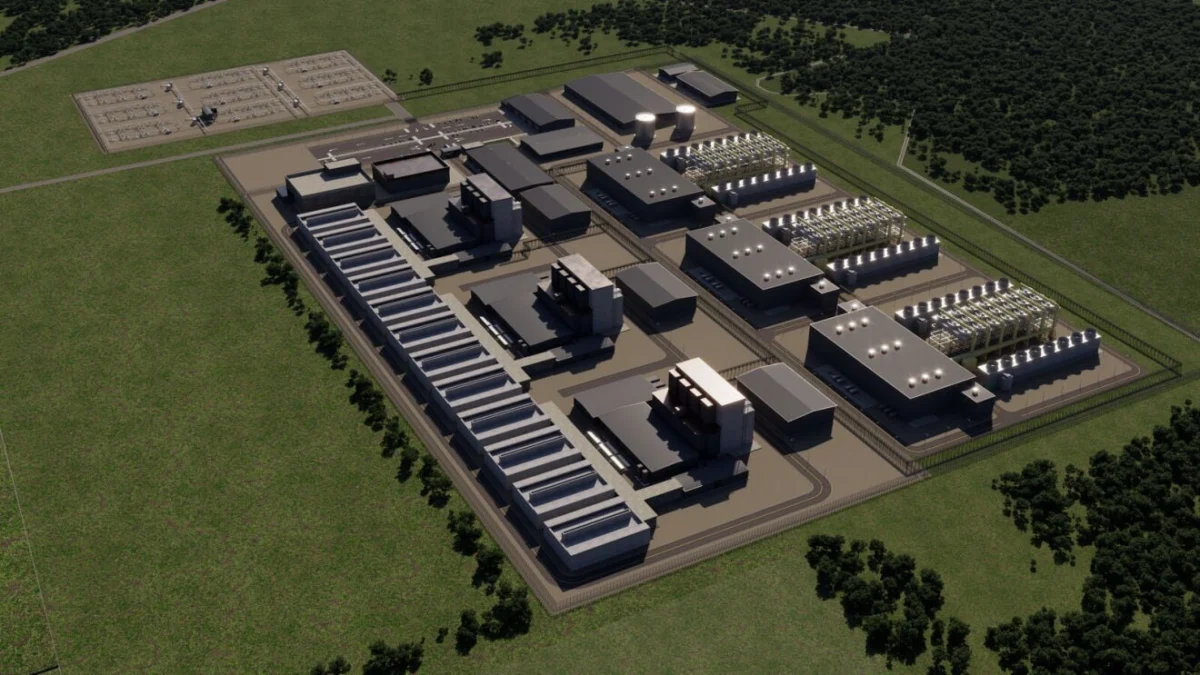
Simultaneously, a separate project is gaining traction in Sullivan County. American Electric Power (AEP), through its subsidiary Indiana Michigan Power (I&M), has entered into a joint development agreement with X-energy, backed by strategic funding from Amazon. This project aims to deploy 960 megawatts (MW) of small modular reactor (SMR) capacity at the site of the former Breed Generating Station. The Breed site, once a powerhouse of coal-fired generation, is being reimagined as a modern energy campus capable of powering both the regional grid and the ever-expanding infrastructure of Amazon’s data centers.
Chronology: The Road to Nuclear Deployment
The movement toward these projects did not occur in a vacuum; it is the culmination of years of regulatory maneuvering, corporate partnerships, and shifting energy policy.
The CANDU Licensing Path
AtkinsRéalis has been systematically laying the groundwork for reintroducing CANDU technology to the U.S. market. The current MOU follows a significant milestone achieved in June 2026, when the company submitted a formal Letter of Intent to the U.S. Nuclear Regulatory Commission (NRC) to initiate the licensing process.
- August 2026: The NRC held its first public meeting regarding the licensing of the CANDU technology, marking the formal start of the regulatory dialogue.
- October 2026: Following the initial discussions, AtkinsRéalis submitted the first of seven planned "topical reports." This initial report focuses on the quality assurance program, a critical precursor to full-scale design certification.
- October 19, 2026: The official announcement of the MOU with the State of Indiana and Hoosier Energy provided the political and commercial impetus to move from concept to feasibility study.
The X-energy and Amazon Alliance
The partnership between Amazon and X-energy is built on a multi-year investment cycle aimed at accelerating the transition to clean energy.

- 2024: Amazon anchored X-energy’s $700 million Series C-1 financing round through its Climate Pledge Fund. This capital was earmarked for completing the Xe-100 reactor design and the construction of the TRISO-X fuel fabrication facility in Oak Ridge, Tennessee.
- Mid-2026: Amazon and X-energy announced the Cascade Advanced Energy Facility in Washington, the first major step in their goal to add 5 GW of new nuclear capacity to the U.S. grid by 2039.
- October 2026: The Breed Generating Station project was formalized, marking the second major deployment under the joint agreement.
Supporting Data: Why Nuclear and Why Now?
The urgency driving these projects is rooted in the unprecedented growth of high-performance computing. Data centers—the backbone of the cloud and artificial intelligence—consume power at a rate that is straining existing transmission networks.
The Breed Site Advantage
The selection of the former Breed Generating Station is a strategic masterstroke. Repurposing coal sites offers several logistical advantages:
- Existing Interconnection: Coal plants were built with robust access to high-voltage transmission lines. Retrofitting these sites for nuclear avoids the multi-year process of building new transmission infrastructure.
- Infrastructure Reuse: Many existing water cooling systems, rail access points, and site security perimeters remain functional, significantly lowering the "greenfield" development costs.
- Community Impact: The local workforce in Sullivan County, familiar with the nuances of power plant operations, provides a ready-made labor pool, smoothing the transition from fossil fuels to clean energy.
Technology Profiles: CANDU vs. Xe-100
- CANDU (Canada Deuterium Uranium): Known for its ability to utilize natural uranium and its flexibility in fuel cycles, the CANDU design is a proven workhorse. The proposal for an eight-reactor campus suggests a utility-scale play intended to replace massive baseload coal or gas capacity.
- Xe-100 SMR: The Xe-100 is an 80 MW high-temperature gas-cooled reactor. It utilizes helium as a coolant and is powered by TRISO (Tri-structural Isotropic) fuel. The core advantage of TRISO fuel is its physical composition: uranium particles are encased in layers of high-temperature ceramic, which effectively prevents meltdowns even in the absence of active cooling systems.
Official Responses and Strategic Vision
The stakeholders involved emphasize that these projects are not merely about power generation, but about economic development and energy independence.
AtkinsRéalis representatives highlighted that the multi-unit fleet approach is essential for achieving the "economies of series." By standardizing the construction of eight reactors, the project aims to replicate the successes seen in global infrastructure projects where repetition drives down costs and error rates.
AEP and Amazon have framed their collaboration as a dual-utility solution. By funding the Breed site development, Amazon is securing a reliable, carbon-free energy source for its cloud operations while simultaneously providing the "offtake" guarantee that utilities require to finance capital-intensive nuclear projects. This private-sector involvement is seen as the catalyst necessary to break the "chicken-and-egg" deadlock of nuclear financing.
The State of Indiana views this as an opportunity to cement its status as a leader in the industrial energy transition. State officials noted that attracting such significant nuclear investment validates Indiana’s business-friendly climate and its commitment to a diverse, resilient energy portfolio.
Implications: A New Era for the Grid
The shift to nuclear in Indiana carries profound implications for the national energy strategy.

1. The Death of the "One-Size-Fits-All" Grid
These projects demonstrate that the future grid will be highly modular. We are moving away from centralized, massive, and distant power plants toward a mix of large-scale reactors (like the CANDU proposal) and distributed, localized SMRs (like the Xe-100). This hybrid approach provides both the bulk power necessary for heavy industry and the reliable, low-carbon baseload required for tech infrastructure.
2. Supply Chain Resilience
A significant concern for the nuclear industry has been the domestic supply chain. The commitment to build eight reactors in one state creates a "demand anchor," encouraging manufacturers of components, nuclear-grade steel, and specialized instrumentation to establish local facilities. This, in turn, lowers costs for future projects nationwide.
3. Environmental Stewardship and Legacy
The transition from coal to nuclear at sites like Breed is the ultimate form of environmental remediation. It transforms an area associated with legacy emissions into a hub of zero-carbon production, satisfying the "Net-Zero 2040" goals of companies like Amazon while ensuring that regional power prices remain stable.
4. Regulatory Evolution
The fact that AtkinsRéalis is actively engaging the NRC for the CANDU technology—and that X-energy is moving toward deployment of the Xe-100—suggests that the regulatory environment is becoming more adaptive to advanced reactor designs. This speed of engagement is crucial; if these projects succeed, they will serve as the blueprints for the next two decades of American energy development.
Conclusion: The Path Forward
As utilities, EPC (Engineering, Procurement, and Construction) firms, and OEMs prepare to convene at events like POWERGEN 2027, the developments in Indiana provide a clear roadmap. The challenge is no longer just about the physics of nuclear energy; it is about the logistics of site selection, the strength of public-private partnerships, and the ability to scale standardized technology.
If the Breed site and the proposed CANDU campus reach fruition, they will prove that the grid of the future can be built on the foundations of the past. By turning retired coal sites into the next generation of nuclear powerhouses, Indiana is setting a precedent that may soon be followed by states across the American heartland. The era of the "Nuclear Renaissance" is no longer a theoretical projection—it is a concrete reality unfolding in real-time, one reactor at a time.