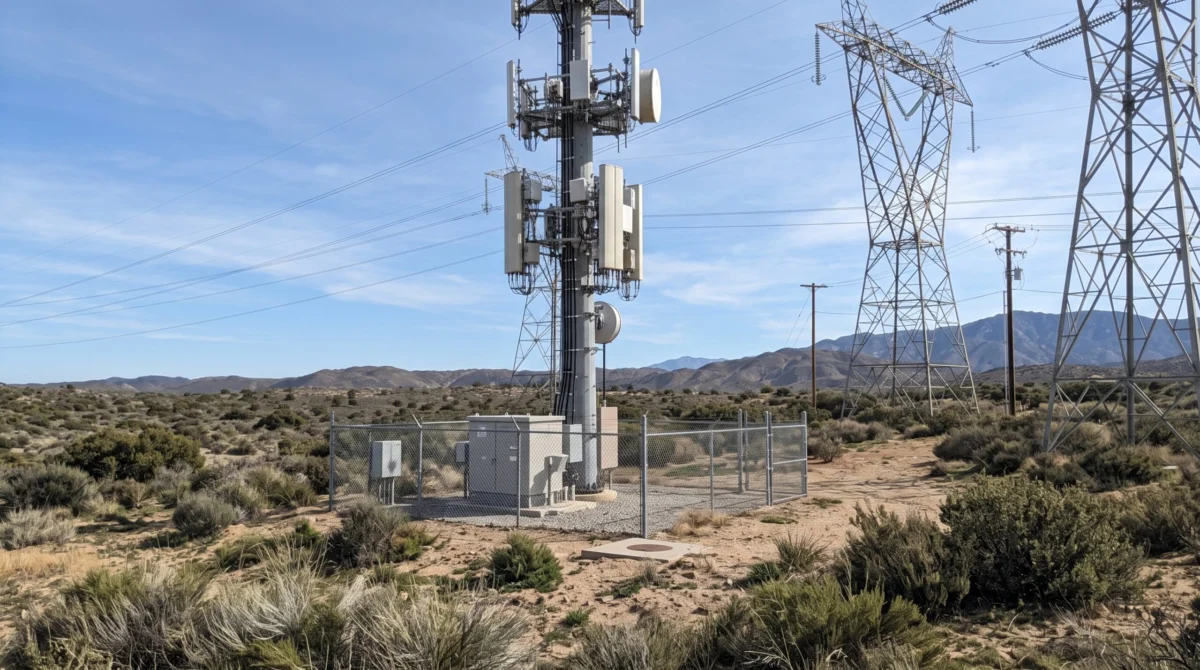
As energy companies across North America face mounting pressure to integrate decentralized renewable energy sources, manage unpredictable load growth, and harden critical infrastructure against extreme weather, the backbone of grid modernization often gets overlooked. That backbone is communication. Without secure, high-bandwidth, and reliable connectivity between the control room and millions of grid-edge devices, even the most advanced smart-grid technologies remain blind and unresponsive.
In October, a significant development in utility telecommunications emerged when energy provider Avista selected infrastructure innovator Heddian to overhaul its field communications architecture. Rather than forcing a costly, all-or-nothing choice between the broad footprint of public commercial cellular networks and the absolute security of a fully private LTE system, Avista opted for a cutting-edge hybrid model. This strategic move highlights an increasingly vital playbook for modern utilities: how to upgrade vital infrastructure efficiently by maximizing existing assets while scaling toward a more resilient future.
1. Main Facts: The Avista and Heddian Partnership
The partnership centers on modernizing Avista’s field communications across its sprawling 34,000-square-mile service territory, which spans eastern Washington, northern Idaho, and portions of Oregon. Serving hundreds of thousands of electric and natural gas customers, Avista requires a communications network capable of handling diverse geographic terrains—from dense urban pockets and suburban neighborhoods to rugged, remote mountain ranges.
Key elements of the Avista-Heddian deployment include:
- The Hybrid Architecture: A dual-approach framework that pairs the massive reach of commercial cellular networks with the dedicated control and security of private LTE infrastructure.
- Core Technology Integration: Utilizing a private core network powered by Druid Software, combined with specialized utility-controlled subscriber identity modules (UtiliSIM).
- Immediate Visibility: Implementing OneLayer technology to manage and secure existing legacy devices currently operating on standard commercial retail carrier contracts, providing immediate operational insight without requiring instant hardware overhauls.
- Over-the-Air Flexibility: Allowing Avista to dynamically shift network routing, transition devices between public and private coverage, and scale private infrastructure over time without the continuous burden of rolling trucks for physical SIM swaps.
2. Chronology: The Evolution of Utility Communications
To understand the weight of Avista’s decision, it is necessary to trace how utility communication frameworks have evolved over the last several decades.
Early Era: Point-to-Point and Proprietary Radio
Historically, utilities relied heavily on proprietary, analog, and narrow-band point-to-point radio systems to monitor substations and communicate with field crews. While these systems offered the advantage of complete utility ownership, they suffered from extremely limited bandwidth, high maintenance overheads, and severe geographic blind spots.
The Public Cellular Boom
As cellular networks expanded in the 2000s and 2010s, many utilities migrated field devices—such as smart meters and distribution automation switches—onto commercial public networks. While cost-effective and expansive, this approach introduced regulatory, security, and reliability vulnerabilities. Utilities were forced to trust third-party commercial carriers with mission-critical traffic, risking potential outages during major storms when public networks often experience catastrophic congestion.
The Quest for Private LTE
Recognizing the risks of public dependencies, forward-thinking utilities began exploring private broadband networks, such as Citizens Broadband Radio Service (CBRS) spectrum or dedicated industrial wireless bands. A 100% private network delivers unmatched security, latency control, and resilience. However, the financial reality quickly set in: building out a proprietary network of towers, backhaul connections, and cell sites across tens of thousands of square miles is economically unviable in regions where commercial carriers already provide robust coverage.
The Modern Hybrid Standard
Enter the current era of hybrid communications-as-a-service (CaaS). By blending public and private frameworks under a unified utility-controlled core, companies like Avista can bypass the false dichotomy of "public versus private." This evolutionary milestone marks a shift from capital-intensive infrastructure builds to flexible, software-defined network management that meets utilities precisely where they are on their operational journeys.
3. Supporting Data and Technical Architecture
The operational realities of managing a 34,000-square-mile utility footprint demand rigorous technical solutions. The architecture designed for Avista relies on several interlocking technological pillars to ensure data integrity, low latency, and robust cybersecurity.
The Power of the Private Core (Druid Software)
In a traditional public cellular setup, user authentication and data routing are handled entirely by the commercial carrier’s core network. Under Heddian’s hybrid model, authentication and routing are shifted to a private core controlled directly by the utility (utilizing Druid Software technology). This ensures that whether a field device is transmitting data via a commercial tower or a private LTE cell site, the utility retains absolute governance over encryption keys, data pathways, and device access permissions.
Eliminating the Truck Roll (UtiliSIM)
One of the greatest operational expenses for utilities is the physical "truck roll"—sending a technician to a remote site to service equipment. Heddian addresses this by deploying the UtiliSIM. While the initial installation requires a one-time physical visit to swap out the existing SIM card, subsequent network adjustments are entirely software-driven. Through over-the-air updates, Avista can dynamically modify which carrier networks a device uses, or seamlessly migrate the device onto private LTE infrastructure when new towers are brought online, completely eliminating the need for future field visits.
Bridging the Legacy Gap (OneLayer)
Utilities cannot afford to pause operations while waiting for new network infrastructure to be constructed. Through the integration of OneLayer technology, Avista can immediately identify, monitor, and secure legacy devices currently operating on retail carrier contracts. This provides instant visibility into enterprise IoT assets, giving operations teams a unified security pane of glass well before those devices are systematically migrated onto the hybrid network.

4. Official Perspectives: Insights from Industry Leadership
The motivations behind this modernization effort are best understood through the vision of the architects designing these systems. In an in-depth discussion, Heddian CEO Joe Walsh shed light on the strategic thinking driving the Avista deployment and the broader shift occurring across critical infrastructure sectors.
Addressing the false choice between public and private networks, Walsh emphasized a pragmatic approach to capital expenditure:
"A fully private network gives a utility the most security and control, but the economics don’t work everywhere. Building towers, backhaul, and cell sites across an entire territory is a major investment, especially where commercial coverage already works. I don’t want utilities to let the perfect be the enemy of the good."
Walsh further underscored how the hybrid model acts as an ongoing resilience strategy, allowing utilities to scale at their own pace:
"A hybrid network gives utilities real functionality now. It uses public carriers where they meet operational needs and private infrastructure where more coverage, control, or resilience is required, and it ties them together with a private core from Druid and a utility-controlled SIM. Just as important, it preserves the option to expand."
By meeting utilities where they are—rather than demanding a wholesale ripping and replacing of existing assets—providers like Heddian are turning network management from an insurmountable engineering hurdle into an agile, scalable service.
5. Broader Implications for the Energy Sector
The collaboration between Avista and Heddian carries profound implications for the wider electric and natural gas utility industries. As grid operators grapple with historic transformations, the success of this deployment offers a blueprint for addressing several systemic challenges.
Transforming Bandwidth into Grid Capacity
A common misconception in utility telecommunications is that upgrading communication networks magically creates physical grid capacity. While a faster network does not add copper wires or construct new transformers, it fundamentally changes how efficiently existing infrastructure can be operated.
With secure, high-bandwidth, and low-latency field communications, utilities gain real-time visibility into equipment thermal limits, voltage fluctuations, and asset health. Instead of maintaining conservative, rigid safety margins to prevent unexpected overloads, operators can safely utilize more of the existing grid’s capacity with absolute confidence. They can detect micro-failures and localized stress points long before they escalate into widespread outages, effectively turning communication upgrades into operational capacity without the multi-year delays associated with building new transmission lines.
Navigating Evolving Regulatory Pressures
Regulatory compliance is becoming increasingly stringent for critical infrastructure operators. For example, North American Electric Reliability Corporation (NERC) standard PRC-028 mandates rigorous disturbance monitoring and reporting for inverter-based resources (such as large-scale solar farms and battery energy storage systems).
As regulatory bodies like NERC and the Federal Energy Regulatory Commission (FERC) continue to draft sweeping new standards to manage the integration of massive new loads—such as hyperscale data centers, industrial electrification, and electric vehicle charging depots—the demand for high-resolution, real-time grid data will skyrocket.
A hybrid field communications architecture is uniquely positioned to handle these regulatory burdens. It can route high-volume, non-critical telemetry data efficiently over strong commercial cellular coverage, while funneling sensitive, mission-critical operational controls through dedicated private infrastructure. Backed by device-level security frameworks like OneLayer and utility-governed authentication cores, energy companies can satisfy compliance mandates securely, flexibly, and cost-effectively.
A Roadmap for the Industry
As other regional utilities evaluate their own aging telecommunication systems, the Avista deployment serves as a compelling case study. It proves that modernization does not require choosing between the financial ruin of blanket private construction and the vulnerability of unmanaged public dependencies. By embracing a hybrid, software-defined network-as-a-service model, utilities can future-proof their operations, meet aggressive decarbonization goals, and ensure the lights stay on for millions of homes and businesses in an increasingly electrified world.