NORTH RIDGEVILLE, OH — For most homeowners, the heating, ventilation, and air conditioning (HVAC) system operates quietly in the background, a seamless convenience that regulates indoor climate through shifting seasons. However, when a climate control system fails during a severe weather event, that convenience instantly transforms into a matter of domestic safety and structural preservation.
An emergency HVAC service situation occurs when a heating or cooling unit breaks down in a manner that directly threatens household comfort, health, or property. These crises rarely adhere to a convenient schedule; they notoriously strike during the dead of a freezing winter night or at the peak of a sweltering summer afternoon. For residents of North Ridgeville, Ohio—where regional geography exposes homes to both humid, oppressive summers and deeply freezing winter conditions—recognizing the distinct threshold between a standard mechanical glitch and a full-scale HVAC emergency is essential for safeguarding both family and home.
Main Facts: Defining an HVAC Emergency
At its core, an HVAC emergency is any sudden system malfunction that compromises the safety, habitability, or physical integrity of a residence. Unlike routine maintenance issues—such as a slightly noisy fan or a minor drop in efficiency—an emergency requires immediate professional intervention.
In North Ridgeville, local climate stressors elevate the urgency of mechanical failures. According to regional meteorological data, winter temperatures can plummet well below freezing, introducing acute risks such as frozen and burst plumbing lines. Conversely, summer heatwaves bring high humidity indices that can quickly render an unconditioned home hazardous, particularly for vulnerable populations including infants, the elderly, and individuals with underlying chronic illnesses.
Key indicators that separate a routine service call from a critical emergency include:
- Complete loss of heating during sub-freezing weather.
- Total air conditioning failure amidst extreme heat alerts.
- Distinct odors of natural gas or sulfur.
- Persistent burning smells, smoke, or visible electrical sparking.
- Loud, violent mechanical sounds (e.g., metal-on-metal grinding or explosive banging).
- Heavy indoor ice accumulation on the evaporator coils or refrigerant lines.
Chronology of a Crisis: How HVAC Failures Escalate
Understanding how a minor component failure snowballs into a major emergency underscores why prompt action is vital. HVAC systems are complex, highly integrated networks of electrical, mechanical, and thermodynamic components. When one part falters, a predictable timeline of degradation often follows.
Phase 1: The Initial Malfunction
An HVAC crisis typically begins with an inconspicuous warning sign. A capacitor weakens, a flame sensor becomes coated in soot, or a refrigerant leak slowly depletes system pressure. During this initial phase, the system may still operate, but it does so inefficiently. It might run continuously without achieving the set temperature, or it may cycle on and off erratically (short-cycling).
Phase 2: System Overcompensation and Strain
As the core problem persists, the equipment begins to overcompensate. Without realizing the mechanical root cause, the thermostat commands the system to work harder. This forces motors to draw excess electrical current, compressors to overheat, and heat exchangers to endure thermal stress beyond their design thresholds.
Phase 3: The Cascade Failure
Left unaddressed, stressed components fail completely. For instance, a failing blower motor can cause a furnace’s heat exchanger to overheat, triggering automatic safety limit switches that shut the unit down. In an air conditioning unit, a low refrigerant charge can cause the evaporator coil to drop below freezing, encasing the interior components in solid ice and ultimately destroying the compressor.
Phase 4: Emergency Manifestation
The breakdown reaches its peak when the system ceases functioning entirely or displays hazardous symptoms like electrical smoke or gas leaks. In North Ridgeville’s extreme weather, indoor temperatures can mirror outdoor extremes within hours, officially crossing the threshold into a domestic emergency.
Supporting Data: The Regional Climate Factor in North Ridgeville
Geographic location dictates the severity of HVAC failures. North Ridgeville, situated in Northeast Ohio, experiences a continental climate characterized by distinct seasonal extremes.
- Winter Extremes: Winter lows frequently dip below 20°F (-6°C), with wind chills dropping temperatures even further. When a residential heating system fails in these conditions, the ambient indoor temperature can drop to freezing within 4 to 6 hours. This rapid cooling introduces the severe risk of frozen pipes, which can expand and rupture, causing catastrophic water damage to walls, flooring, and structural foundations.
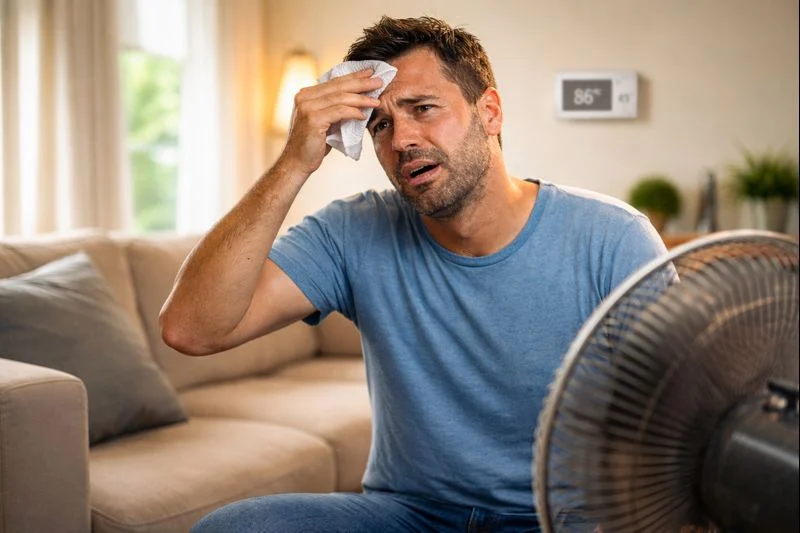
- Summer Extremes: Summer highs routinely reach the upper 80s and 90s, compounded by high relative humidity originating from the Great Lakes region. When an air conditioner fails during these periods, indoor heat indexes can rapidly exceed outdoor temperatures in poorly ventilated spaces. Prolonged exposure to indoor heat index values above 90°F poses documented health risks, including heat exhaustion and heat stroke, particularly for vulnerable demographic groups.
Furthermore, HVAC equipment operating in regions with heavy seasonal variance experiences accelerated wear and tear. Systems are forced to transition rapidly from intensive heating duties to heavy cooling loads, leaving mechanical components vulnerable to fatigue.
Official Safety Guidelines and Professional Responses
When an HVAC emergency occurs, emergency service providers, municipal safety officials, and utility companies emphasize standardized protocols to protect homeowners from injury, carbon monoxide poisoning, and electrical fires.
The Protocol for Gas and Carbon Monoxide Emergencies
If a homeowner detects the sulfur-like odor of natural gas or hears an alarm from a carbon monoxide (CO) detector, professional safety guidelines mandate a strict sequence of actions:
- Evacuate Immediately: All human occupants and pets must vacate the premises immediately. Do not attempt to locate the source of the leak inside the home.
- Leave Electrical Switches Alone: Do not flip light switches, unplug appliances, or use landline telephones inside the home, as a microscopic electrical spark could ignite accumulated gas.
- Contact Authorities: Once safely outside, call 911 or the local gas utility provider (such as Columbia Gas or Dominion Energy in Ohio) to report the suspected leak.
- Call for Emergency HVAC Service: Only after the utility company or emergency responders have cleared the structure should an emergency HVAC technician be brought in to diagnose and repair the malfunctioning appliance.
Professional Diagnostic and Repair Protocols
When an emergency HVAC technician arrives on-site, their response follows a systematic triage method designed to restore safety before comfort:
- Site Safety Assessment: Checking for ambient gas levels, electrical hazards, and structural risks.
- System Isolation: Safely shutting off electrical power and fuel supplies to the faulty equipment.
- Component Testing: Utilizing multimeters, manifold gauges, and combustion analyzers to pinpoint the exact failure point.
- Temporary Remediation or Replacement: Installing OEM-certified replacement parts (such as igniters, contactors, capacitors, or valves) to restore operational integrity, or executing emergency shutdown procedures if the unit is beyond immediate repair and poses a persistent hazard.
Implications: The High Cost of Delay and DIY Pitfalls
Ignoring early warning signs or attempting unverified do-it-yourself (DIY) repairs during an HVAC emergency carries profound financial, structural, and health implications.
Financial and Structural Consequences
Postponing emergency service often converts a relatively minor repair into a major capital expense. For example, replacing a worn-out run capacitor is an inexpensive fix; however, running a system with a failing capacitor can permanently burn out the compressor motor, necessitating a full system replacement worth thousands of dollars. Similarly, failing to address winter heating failures results in frozen plumbing infrastructure, leading to thousands of dollars in water remediation and structural restoration costs.
The Dangers of DIY Interventions
During a crisis, homeowners frequently resort to improvised measures to restore heat or cooling. Industry experts strongly caution against common DIY errors:
- Jumpering Thermostats or Safety Switches: Bypassing internal safety controls (like pressure switches or limit switches) to force a furnace to run can lead to unchecked carbon monoxide leakage, electrical fires, or catastrophic equipment explosions.
- Improper Refrigerant Handling: Attempting to recharge an AC unit with over-the-counter refrigerant kits without diagnosing the leak violates federal environmental regulations (EPA Section 608) and frequently ruins the compressor through overcharging.
- Using Space Heaters Incorrectly: Relying heavily on unmonitored portable electric space heaters to compensate for a dead furnace can overload residential electrical circuits, frequently triggering devastating electrical fires during the winter months.
Preventive Maintenance as a Safeguard
While emergency services remain critical when unexpected failures occur, industry data consistently demonstrates that regular, preventative maintenance drastically reduces the incidence of catastrophic breakdowns. Comprehensive seasonal tune-ups—conducted in the fall for heating and the spring for cooling—allow technicians to identify worn belts, frayed wiring, restricted airflow, and failing igniters before they escalate into emergencies. Homeowners enrolled in structured maintenance programs routinely experience faster response priorities and fewer emergency service calls during peak weather extremes.
Conclusion: Securing Your Home’s Climate Integrity
An HVAC emergency is a high-stress event that tests the resilience of any household. For residents of North Ridgeville, OH, the combination of harsh winters and humid summers means that a functional heating and cooling system is not merely a luxury, but a vital line of defense for health and property.
By familiarizing yourself with the distinct warning signs of a system failure—ranging from sub-freezing indoor temperatures and suffocating summer heat to dangerous gas odors and electrical burning—you empower yourself to act decisively. When emergencies arise, bypassing dangerous DIY shortcuts in favor of certified, professional 24/7 emergency HVAC service ensures that your home remains a safe, comfortable sanctuary, regardless of what the Ohio weather brings.