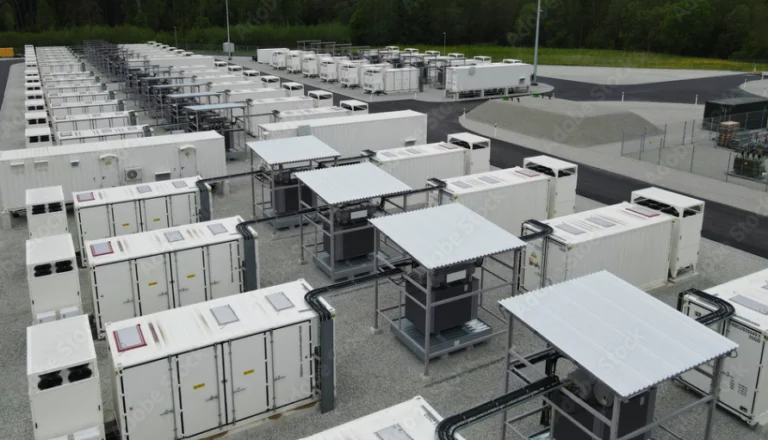
WASHINGTON — As the global energy transition accelerates, utility-scale battery energy storage systems (BESS) have emerged as an indispensable backbone for modern power grids. By capturing excess renewable energy from wind and solar generation and dispatching it during peak demand hours, BESS assets ensure grid stability and resilience. However, rapid technological scaling has brought heightened scrutiny regarding the safety, reliability, and fire risks of these lithium-ion installations.
A comprehensive new global safety review released by the Electric Power Research Institute (EPRI) offers reassuring evidence regarding the trajectory of energy storage safety: an overwhelming 93% of BESS safety incidents reviewed worldwide resulted in zero injuries or fatalities.
Yet, the report also underscores a stark operational divide within the industry. Modern systems deployed over the last half-decade showcase significantly enhanced reliability, engineering maturity, and built-in safety redundancies compared to older, legacy installations. As industry stakeholders, regulators, and first responders digest these findings, the focus has shifted heavily toward retrofitting aging infrastructure, navigating complex local zoning hurdles, and learning critical lessons from past thermal runaway events.
Main Facts: The State of BESS Safety Today
The EPRI report paints an encouraging picture of overall risk mitigation within the utility-scale energy storage sector. Improvements in cell chemistry, thermal management systems, modular housing designs, and software monitoring have steadily driven down failure rates.
Key takeaways from the analysis include:
- The Safety Threshold: Ninety-three percent of global BESS safety incidents analyzed by EPRI resulted in neither injuries nor fatalities, highlighting that minor anomalies rarely escalate into catastrophic failures.
- The U.S. Injury Record: In the United States, there have been zero reported injuries or fatalities resulting from BESS failures since April 2019.
- The Vintage Divide: Facilities commissioned prior to 2021 account for a mere 3% of total global energy storage capacity today, yet they represent a disproportionate share of systemic risk.
- Indoor vs. Outdoor Vulnerability: EPRI’s data confirms that indoor BESS facilities experience higher failure rates and sustain significantly more structural and equipment damage on average than outdoor containerized solutions.
According to Lakshmi Srinivasan, a senior technical leader with EPRI’s energy storage program and a principal investigator on the report, the industry has undergone a massive learning curve over the past decade.
"There are things we know in 2026 that were not necessarily understood in 2019 or 2020, when the older systems were being put in place," Srinivasan said in an interview with Utility Dive.
Chronology of Major Incidents: Lessons from Arizona and California
To understand the evolution of BESS safety standards and engineering practices, energy experts frequently look to two defining milestones that reshaped the industry: the 2019 Arizona Public Service (APS) facility explosion and the January 2025 Moss Landing fire in California.
April 2019: The Surprise, Arizona Explosion
In April 2019, a catastrophic failure at an APS lithium-ion battery storage facility in Surprise, Arizona, resulted in a deflagration event that seriously injured four firefighters. A subsequent post-incident forensic investigation by Underwriters Laboratories (UL) revealed that the explosion was caused by an off-gassing event of flammable vapors that accumulated inside a sealed container, which subsequently ignited when personnel opened the door.
Crucially, the UL report noted that the APS installation was commissioned well before the initial release of NFPA 855, the comprehensive safety standard that now governs stationary energy storage systems across the United States. The 2019 incident served as a watershed moment, forcing the industry to recognize that off-gassing and subsequent gas explosions posed an entirely different—and potentially more severe—hazard to emergency personnel than standard electrical fires.
January 2025: The Moss Landing Facility Fire
Six years later, the domestic energy storage sector faced its most dramatic utility-scale failure to date. In January 2025, a thermal runaway incident within a single unit at a massive energy storage facility located inside a historic 1950s-era turbine hall at a decommissioned thermal power plant near Santa Cruz, California—known as Moss Landing—sparked a multi-day emergency response.
Commissioned by Vistra in 2020, the indoor facility saw fire spread through parts of the structure, ultimately destroying a substantial portion of the 300-megawatt battery array. Thick, dark plumes of smoke billowed from the facility for days, prompting localized shelter-in-place advisories and extensive environmental testing.
However, subsequent soil, air, and water monitoring conducted by regulatory agencies confirmed no significant threats to human health or the environment. While the financial loss was immense, the lack of injuries or off-site health impacts validated the baseline effectiveness of emergency evacuation procedures and environmental containment protocols. Industry experts subsequently designated the Moss Landing event as a vital "learning opportunity" for modern battery design and indoor facility layout.
Supporting Data and Technical Analysis
EPRI’s safety review provides granular insight into why certain configurations fail while others remain resilient. The data clearly separates early-generation installations from modern state-of-the-art systems.
The Indoor Hazard Differential
One of the most actionable insights from the EPRI report is the stark performance gap between indoor and outdoor BESS installations. Indoor facilities systematically experience higher failure rates and sustain greater asset write-offs. When thermal runaway occurs in an enclosed space without adequate compartmentalization, heat and fire can propagate rapidly from rack to rack.
To combat this, EPRI emphasizes the necessity of rigorous propagation-prevention measures within individual battery units, alongside robust fire walls, blast panels, and physical barriers between storage blocks to isolate failures before they cascade.
The Legacy Asset Dilemma
Because BESS facilities commissioned prior to 2021 make up only 3% of the world’s current storage capacity, asset owners face strategic choices. Srinivasan recommends that owners of these older facilities conduct comprehensive, rigorous risk assessments and execute targeted corrective actions.
However, upgrading older infrastructure is rarely straightforward. As Srinivasan pointed out, mitigating explosion risks—the primary threat highlighted by the 2019 Arizona disaster—requires engineering interventions that differ substantially from standard fire suppression.
Retrofits can range from relatively low-complexity adjustments, such as installing sensitive flammable gas detectors inside battery enclosures, to highly invasive structural modifications. More complex projects involve installing advanced mechanical ventilation systems or rebuilding structural envelopes to safely direct pressure waves upward and away from first responders during a worst-case scenario.
Such structural overhauls carry inherent complications:
- Warranty Implications: Altering battery unit envelopes can void manufacturer warranties.
- Design Interference: Modifications may disrupt the complex thermal management and electrical integration of the system.
- Economic Viability: In certain scenarios, Srinivasan notes that it may be more financially and operationally prudent for a utility or developer to prematurely decommission an outdated, higher-risk system entirely rather than attempt a risky retrofit.
Official Responses and Regulatory Challenges
While engineering standards continue to improve at a rapid pace, the deployment of new battery storage projects is frequently bottlenecked by local regulatory friction and permitting hurdles.
The NFPA 855 Framework and Zoning Pains
Modern battery systems are fundamentally safer than their predecessors, but developers across the United States frequently encounter local planning boards and fire departments that lack the technical expertise to evaluate utility-scale energy storage proposals.
According to EPRI, these challenges are often exacerbated by limitations or strict prescriptions within NFPA 855. Because energy storage technology evolves at a pace that outstrips formal code-writing cycles, developers regularly find themselves forced to apply for code exemptions to deploy higher energy densities or implement innovative project configurations. Local authorities, hesitant to assume liability for complex electro-chemical systems, often stall these applications.
New York’s Innovative Legislative Response
To break this regulatory deadlock and protect municipal authorities, jurisdictions are beginning to introduce creative legislative solutions. Most notably, New York State introduced a new fire code provision that took effect in January 2026.
Under this updated framework, local authorities lacking in-house engineering expertise are empowered to require energy storage developers to fully fund independent technical reviews of their exemption applications. This ensures that municipal zoning boards have access to top-tier safety analysts without draining local taxpayer resources, thereby streamlining the approval process while maintaining rigorous public safety standards.
Implications for the Clean Energy Future
The findings from EPRI’s global safety review offer a balanced perspective on the state of energy storage. On one hand, the data confirms that the catastrophic failure rate is exceptionally low, and the vast majority of incidents resolve safely without harming workers, first responders, or neighboring communities. The engineering leap from the experimental installations of the late 2010s to the highly sophisticated assets of the mid-2020s is undeniable.
On the other hand, the industry cannot afford complacency. The lessons learned from the 2019 Arizona explosion and the 2025 Moss Landing fire demonstrate that high-energy lithium-ion assets demand uncompromised respect, proactive maintenance, and continuous regulatory oversight.
As gigawatts of new storage capacity continue to come online to support variable wind and solar generation, the long-term viability of the BESS sector will hinge on three core pillars:
- Rigorous oversight of legacy systems, ensuring that pre-2021 assets are either comprehensively retrofitted or safely retired.
- Closer collaboration between developers and local first responders, bridging the technical knowledge gap through standardized training and independent reviews.
- Adaptive regulatory frameworks, such as New York’s new fire code provisions, that balance the urgent need for clean energy deployment with uncompromising community safety.
Ultimately, the transformation of the power grid depends on public trust. By leaning into transparent data analysis, embracing rigorous safety standards like NFPA 855, and aggressively addressing legacy infrastructure risks, the energy storage industry is well-positioned to power a resilient and secure clean energy future.