




GENEVA – For decades, "ergonomics" has been a term frequently relegated to corporate buzzword status—often misunderstood as merely the purchase of an expensive chair or the adjustment of a monitor height. However, a groundbreaking new publication from the International Ergonomics Association (IEA) seeks to dismantle these misconceptions, repositioning ergonomics as a fundamental pillar of operational success, employee health, and business longevity.
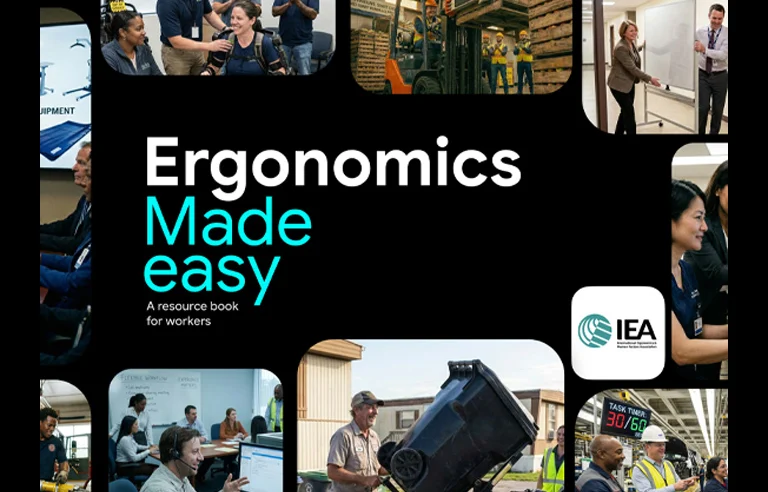
Titled Ergonomics Made Easy, the free, comprehensive document serves as the third installment in the IEA’s “Ergonomics in a Nutshell” series. By moving away from academic jargon and toward real-world application, the IEA is providing organizations with a roadmap to minimize workplace injuries, bolster productivity, and drastically reduce employee turnover.
The Core Philosophy: Ergonomics as a Business Driver
At its heart, ergonomics—the study of people’s efficiency in their working environment—is about matching the task to the worker, rather than forcing the worker to adapt to a poorly designed task. The IEA argues that when this alignment is ignored, the costs are catastrophic: musculoskeletal disorders (MSDs), burnout, chronic absenteeism, and a degraded quality of work.
“Good ergonomics is not a cost center; it is a profit engine,” says the IEA in its latest briefing. When employees are physically supported and mentally engaged in a well-designed workflow, organizations see immediate returns. These returns manifest as a reduction in workers’ compensation claims, higher morale, and a more resilient workforce capable of sustained, high-quality output.
A Chronicle of Change: From Theory to Workplace Reality
The IEA’s new publication distinguishes itself by utilizing a narrative-driven approach. Instead of dense manuals, the guide presents 12 distinct work scenarios, each acting as a case study for identifying problems, implementing solutions, and measuring success.
Case Study: Transforming Patient Care
One of the most compelling narratives in the guide follows the story of Elizabeth, a nurse who sustained a career-altering back injury while attempting to lift a 400-pound patient. Elizabeth’s journey—from a sidelined employee to an advocate for systemic change—serves as the blueprint for the IEA’s methodology.
Following her injury, Elizabeth recognized that the issue was not her technique, but the structural lack of safe handling protocols in her facility. She pivoted her career toward advocacy, eventually testifying in favor of legislation that mandated the use of mechanical lifting equipment in healthcare settings.
The results were transformative. Facilities that implemented these ergonomic mandates established site-specific committees to audit their workflows. By shifting from manual lifting to the use of assistive technology, these hospitals saw a staggering 75% reduction in sprain and strain injuries. This case serves as a masterclass in how individual initiative can lead to organizational, and eventually, legislative reform.
The "Ergonomics in a Nutshell" Series: A Strategic Toolkit
The IEA’s broader mission is to weave human factors into the DNA of modern industry. Ergonomics Made Easy is the third pillar of this strategy, designed to be used in tandem with the association’s two previous releases.
1. The Human Factors Edge
The first document in the series, Giving Your Business a Human Factors Edge, focuses on the C-suite and executive leadership. It provides the financial and strategic language necessary for employers to adopt a "human factors" approach, demonstrating that long-term business health is inextricably linked to the physical and cognitive well-being of the workforce.
2. Making It Happen!
The second guide, Making It Happen!, bridges the gap between executive intent and floor-level execution. It is tailored specifically for line managers—the individuals who supervise daily operations. This document provides practical, tactical guidance on how to introduce ergonomic changes without disrupting the flow of work, offering templates for budget requests and change management.
3. Ergonomics Made Easy
The latest installment, Ergonomics Made Easy, serves as the practical manual for every level of the organization. It provides immediate action steps, such as:
- Visualizing Excellence: How to identify what a "good" ergonomic setup looks like in real-time.
- Psychosocial Health: Guidance on creating a workplace that is not just physically safe, but mentally healthy.
- The Budget Case: How to present a business case for ergonomic equipment to skeptical financial controllers.
Supporting Data: Why Ergonomics Demands Attention
The economic case for ergonomics is supported by decades of global research. According to data cited by the IEA and various labor organizations, the costs associated with poor ergonomics are hidden but massive.
- Productivity Losses: When a worker is in pain or struggling with a poorly designed interface, their cognitive load increases, leading to a higher rate of errors and rework.
- Turnover Rates: Companies that prioritize employee safety experience lower turnover. The cost of replacing an experienced professional, including recruitment and training, often exceeds a year’s salary—an expense that could have been mitigated by proactive ergonomic investment.
- The "Hidden" Tax of MSDs: Musculoskeletal disorders are consistently the leading cause of work-related disability. By automating or ergonomically optimizing high-risk tasks, companies can save millions in insurance premiums and medical leave payouts.
Official Responses and Industry Implications
The release of Ergonomics Made Easy has been met with praise from safety professionals and human resources experts globally. Dr. Aris Vahratian, a workplace safety consultant, noted, “The IEA is finally translating high-level human factors research into a language that a frontline manager can actually use. By focusing on scenarios, they remove the ‘fear of complexity’ that often prevents managers from making necessary changes.”
The IEA emphasizes that the current landscape of work is shifting. With the rise of hybrid environments and increasingly complex human-machine interactions, the definition of ergonomics is expanding. It no longer just covers the chair and the desk; it covers the cognitive load of digital interfaces, the fatigue of remote work, and the physical demands of high-intensity service roles.
Implications for the Future
The implications of this guidance are far-reaching:
- Regulatory Pressure: As more success stories like Elizabeth’s gain visibility, there is likely to be increased pressure for government bodies to adopt stricter safety standards regarding patient and material handling.
- Corporate Social Responsibility (CSR): Ergonomics is increasingly being integrated into CSR reports. Investors are beginning to view a company’s safety record as a key indicator of management quality and operational efficiency.
- Technological Integration: The document encourages companies to embrace assistive technology. Whether it is exoskeletons in manufacturing or intuitive software for data entry, the integration of technology is no longer just about speed—it is about human preservation.
How to Implement These Changes: A Call to Action
The IEA suggests that the most effective way to start is through a "small-win" strategy. Managers should not wait for a major incident to overhaul their entire facility. Instead, the association recommends:
- Conducting an audit: Use the checklists provided in Ergonomics Made Easy to walk the floor and identify "friction points"—tasks that are repetitive, require awkward postures, or lead to frequent complaints.
- Consulting the end-user: The worker is the expert on their own workflow. By involving employees in the design process, management builds "buy-in," which is essential for the long-term success of any new ergonomic intervention.
- Documenting ROI: Every change should be measured. Did injury rates drop? Did the speed of the task increase? Was quality improved? Collecting this data makes the next budget request for ergonomic improvements significantly easier to approve.
Conclusion
The release of Ergonomics Made Easy marks a turning point in the professional approach to workplace health. By providing concrete, actionable, and free resources, the International Ergonomics Association is effectively leveling the playing field, ensuring that organizations of all sizes—from small clinics to large-scale industrial plants—can leverage the principles of human factors to protect their most valuable asset: their people.
In an era of rapid technological advancement and increasing labor competition, the companies that thrive will be those that recognize the human element not as a constraint to be managed, but as the foundation of sustainable success. For those looking to improve their bottom line while simultaneously improving the lives of their workers, the IEA’s latest publication is not just a resource—it is a necessity.
To download the full document, visit the International Ergonomics Association website at iea.cc.