By Global Industry Review
Published: October 2026
Main Facts
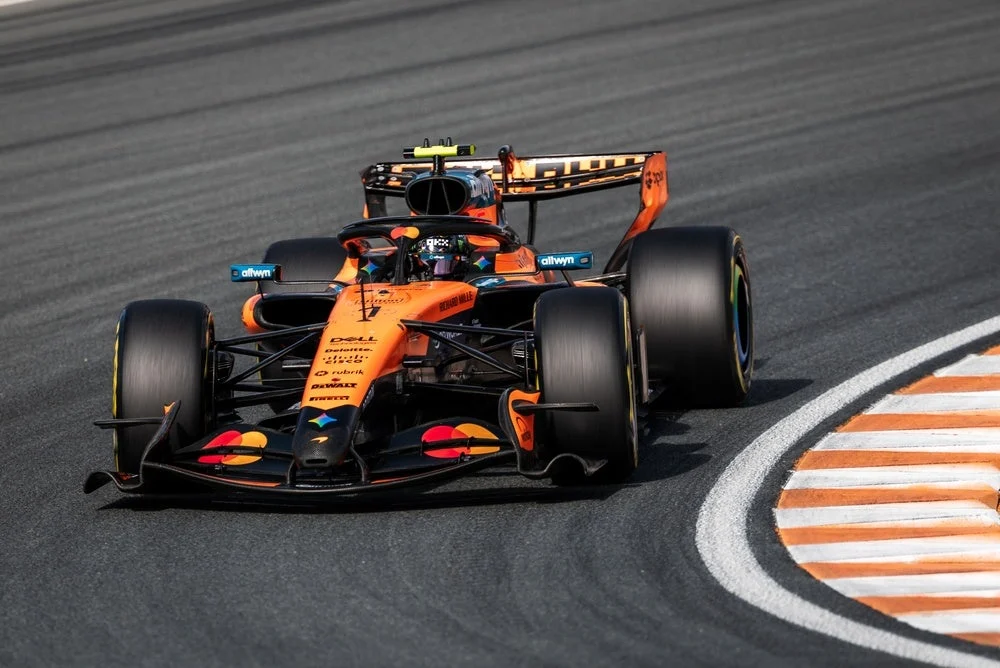
In a landmark agreement that further accelerates the convergence of high-performance sport and life sciences, biopharmaceutical giant AbbVie has officially teamed up with the McLaren Mastercard Formula 1 team. Announced ahead of the high-octane United States Grand Prix in Austin, Texas, the multi-year partnership—christened the "Race to Innovate"—marks a major strategic milestone in how pharmaceutical companies build global brand equity.
Rather than deploying traditional, highly regulated product-specific advertisements, the alliance focuses on corporate visibility, technological synergy, and philanthropic impact. At the heart of the collaboration is a performance-linked charitable pledge: AbbVie has committed to donating $10,000 to global health charities for every 10 Constructors’ Championship points earned by McLaren. The financial mechanics of this initiative are deliberately symbolic. The donation framework mirrors the estimated 10% of the global population affected by immune-mediated and autoimmune diseases, such as rheumatoid arthritis, celiac disease, and multiple sclerosis. Funds generated through the partnership will be funneled directly to patient advocacy organizations and support networks worldwide.
While Formula 1’s high-speed paddock has historically been dominated by tech giants, automotive brands, and luxury watchmakers, AbbVie’s arrival signals a seismic shift. The pharmaceutical sector is aggressively expanding its footprint across elite sports, redefining the boundaries of commercial sponsorship and health literacy on a global stage.
Chronology of a Movement: Big Pharma’s March into Sport
AbbVie’s partnership with McLaren does not occur in a vacuum; rather, it represents the crescendo of a broader, rapidly accelerating industry trend that has unfolded over the past 24 months.
- Early 2025: Pharmaceutical companies begin quietly testing non-traditional sports marketing avenues to bypass tightening regulatory restrictions on direct-to-consumer (DTC) advertising, recognizing that brand-leveling visibility in sports offers unprecedented global reach.
- March 2026: AbbVie makes a high-profile splash in the United States by securing an official partnership with Major League Baseball (MLB). Focused heavily on oncology awareness, the campaign pledges $20 for every strikeout thrown across the league, capping potential contributions at $1m per season.
- Summer 2026: As sports fever builds across North America, major pharmaceutical players—including Amgen, Sanofi, and Bristol Myers Squibb (BMS)—surface in various capacities around the FIFA World Cup, utilizing city-level partnerships and targeted ad campaigns. Meanwhile, Novartis cements its status as the NFL’s inaugural pharmaceutical partner, and Eli Lilly secures ties with the US Olympic team.
- September 2026: AbbVie expands its portfolio further into traditional sports by anchoring a partnership with the PGA Tour. This initiative ties corporate donations directly to "birdies" (scores of one stroke under par), centering the narrative firmly on brain health and neurological awareness.
- October 2026: The multi-year AbbVie-McLaren collaboration kicks off at the US Grand Prix in Austin. The full "Race to Innovate" activation is slated to run across the entire 2027 Formula 1 World Championship calendar, establishing a permanent fixture for pharmaceutical messaging in international motorsport.
Supporting Data and Market Analysis
To understand the economic and strategic weight of these sponsorships, industry analysts point to the unique intersection of modern marketing demands and corporate positioning. Conrad Wiacek, Head of Sports Analysis at GlobalData, notes that while pharma sponsorships have long been prevalent in US sports—largely driven by the distinct structural realities of the American healthcare and insurance markets—moving into Formula 1 unlocks an entirely different tier of international exposure.
"Entering into an F1 partnership gives AbbVie a truly global footprint," Wiacek explains. "There is profound synergy between Formula 1 and pharma. Technological innovation is at the absolute forefront of both industries, and being able to lean on this shared narrative of precision engineering and biochemical research is a crucial component of this deal."
The numbers underpinning these partnerships are substantial. To contextualize AbbVie’s new pledge, one must look at McLaren’s extraordinary performance on the track. McLaren dominated the 2025 Constructors’ Championship, amassing a staggering 833 points. If the team replicates even a fraction of that competitive dominance under the "Race to Innovate" framework, millions of dollars will flow directly into immune-mediated disease research and patient advocacy groups.
Furthermore, the geographic distribution of these deals highlights a clever navigating of international advertising laws. Currently, the United States and New Zealand remain the only two nations globally that permit direct-to-consumer advertising of prescription pharmaceutical products. Even with regulatory tightening under successive administrations, DTC advertising remains a multi-billion-dollar engine for the sector. However, sponsoring global sports properties allows companies like AbbVie, Sanofi (which maintains a prominent partnership with the Tour de France), and others to elevate corporate reputation and disease awareness globally—transcending strict national broadcasting bans on specific drug promotions.
Official Responses and Perspectives
The leadership teams on both sides of the AbbVie-McLaren alliance emphasize that the partnership is rooted in shared philosophical values rather than superficial branding exercises.

Zak Brown, CEO of McLaren Racing, encapsulated the cultural shift during the partnership announcement:
"At first glance, medicine and motorsport may seem like different worlds, but we’re united by a shared commitment to driving innovation. Both fields demand absolute precision, relentless problem-solving, and a refusal to accept the status quo."
Matt Dennington, Co-Chief Commercial Officer at McLaren Racing, echoed these sentiments, focusing on the human element of the collaboration:
"This partnership brings together two organisations that share a relentless pursuit of progress, whether that’s pushing the limits of performance on track or advancing life-changing science off it."
From the pharmaceutical perspective, executives maintain that aligning with elite athletic organizations helps humanize complex, often intimidating scientific enterprises. By associating corporate identities with physical endurance, mental acuity, and peak human performance, drug developers are successfully recasting themselves as champions of human potential.
Implications for the Future of Brand Partnerships
As the boundaries separating commercial entertainment, elite athletics, and the life sciences continue to dissolve, the long-term implications for both industries are profound.
1. The Evolution of Healthcare Marketing
With traditional television advertising facing diminishing returns among younger demographics—who increasingly rely on streaming services and ad-free digital environments—brands must integrate directly into cultural touchpoints. Sponsoring global sports leagues like Formula 1, the PGA Tour, and MLB allows pharmaceutical companies to bypass ad blockers and engage captive audiences for hours at a time. Expect to see more health-tech and biopharma brands securing positions within high-end sporting properties.
2. Purpose-Driven Philanthropy as a Standard
AbbVie’s model of tying on-field or on-track performance directly to charitable donations introduces a sophisticated layer of corporate social responsibility (CSR) into sports marketing. Fans and consumers increasingly demand ethical accountability from major corporations. By transforming athletic achievements into tangible financial support for autoimmune and neurological disease research, brands insulate themselves against criticisms of frivolous spending, reframing multi-million-dollar sponsorships as philanthropic engines.
3. Regulatory Navigation
As regulatory bodies worldwide monitor how pharmaceutical companies market themselves in non-traditional spaces, the success of these corporate-level sponsorships will likely serve as a blueprint. Because deals like "Race to Innovate" promote overarching disease awareness, technological progress, and corporate values rather than specific commercial drug names, they comfortably navigate existing legal frameworks while achieving maximum brand recall.
Conclusion
The partnership between AbbVie and McLaren is far more than a simple corporate logo slapped onto a carbon-fiber chassis. It is a defining symptom of a changing commercial landscape—one where the pursuit of fractional seconds on a race track and the pursuit of life-changing molecular breakthroughs are recognized as two sides of the same coin. As the green lights flash at grand prix circuits around the world, Big Pharma’s presence in the paddock is no longer an experiment; it is the new pole position.