By Mason Wakley
7 October 2026
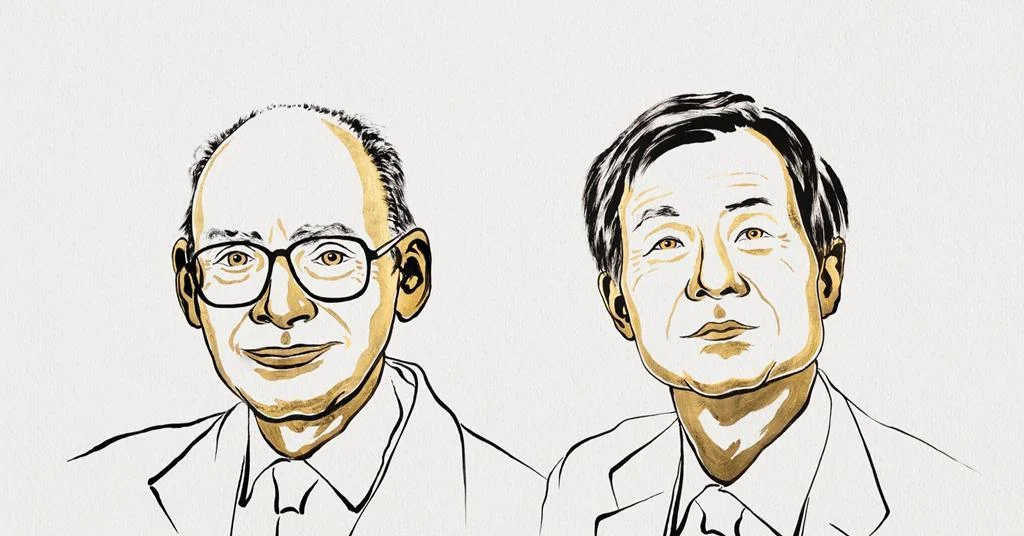
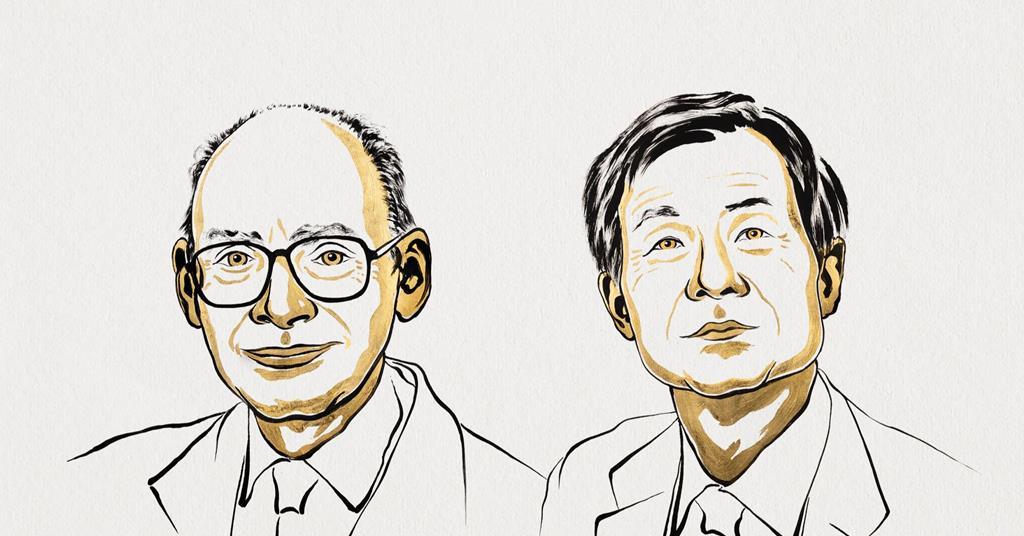
The Royal Swedish Academy of Sciences has awarded the 2026 Nobel Prize in Chemistry to Henri Kagan of the University Paris-Sud and Kenso Soai of the Tokyo University of Science. The duo was recognized for their pioneering work in "the discovery of non-linear effects and autocatalysis in asymmetric organic synthesis."
Their research has fundamentally altered the chemical landscape, providing a definitive mechanism for how life on Earth developed its preference for specific "handed" molecules—a phenomenon known as homochirality. By demonstrating how reactions can become self-catalyzing and amplify minor imbalances into overwhelming enantiomeric purity, Kagan and Soai have solved a puzzle that has challenged scientists for over a century.
The Core Achievement: Understanding Homochirality
At the heart of the 2026 Nobel Prize is the concept of chirality, or "handedness." Many molecules exist in two forms that are mirror images of one another, like a pair of human hands. While these enantiomers share identical physical properties in a vacuum, they interact with the biological world in drastically different ways.
In nature, life is almost exclusively homochiral. Proteins are built from left-handed amino acids, and DNA/RNA rely on right-handed sugars. If nature were to utilize a mixture of both forms, the structural integrity of life’s machinery would collapse. For decades, the origin of this preference remained one of chemistry’s most profound mysteries: How did a primordial soup of molecules evolve into a world where one handedness dominates?
Henri Kagan and Kenso Soai provided the missing link. Through their separate but complementary discoveries, they demonstrated that chemical systems could amplify tiny, random asymmetries into total enantiomeric dominance through the process of autocatalysis.
Chronology of Discovery
The Kagan Era: Asymmetric Catalysis (1970s–1980s)
Henri Kagan’s work in the 1970s laid the foundation for modern asymmetric synthesis. Before his breakthrough, chemists struggled to create pure enantiomers efficiently. Kagan introduced the concept of the "chiral ligand," a molecular "scaffold" that directs the geometry of a chemical reaction. His development of DIOP, a chiral phosphine ligand, enabled chemists to control the outcome of catalytic hydrogenations with unprecedented precision. This work proved that catalytic systems could dictate the handedness of a final product, moving the field away from costly separation techniques.
The Soai Revolution: The Discovery of Autocatalysis (1990s)
In the 1990s, Kenso Soai took the field into uncharted territory. While Kagan proved that catalysts could create specific enantiomers, Soai discovered a reaction that could catalyze its own production. The "Soai reaction"—the addition of diisopropylzinc to a pyrimidinaldehyde—was a revelation.
In this system, the product of the reaction acts as a catalyst for the production of more of itself. If a slight excess of one enantiomer exists at the start, the reaction accelerates the production of that specific mirror image while suppressing the other. This was the first empirical proof that a chemical system could self-replicate its own chirality, providing a viable model for the pre-biotic chemical evolution of life.
Supporting Data and Scientific Mechanism
The power of the Kagan-Soai mechanism lies in its non-linearity. In standard chemistry, the output is directly proportional to the input. However, in the non-linear systems identified by the laureates, an initial enantiomeric excess (ee) of as little as 0.01% can be amplified to near 100% purity through subsequent cycles of autocatalysis.
The Math of Amplification
The mathematics behind these non-linear effects involves complex feedback loops. When a chiral catalyst is present, it forces the reactant to adopt its specific geometry. In an autocatalytic system, the product serves as the catalyst. Therefore, every molecule created increases the efficiency of the reaction for that specific enantiomer, creating a "winner-takes-all" scenario.
Data from the Soai lab has shown that this amplification occurs even in the absence of biological enzymes. By applying circular polarized light—a naturally occurring phenomenon in the universe—as an initial "nudge," the researchers were able to trigger the autocatalytic amplification process, mirroring how the early Earth might have been "primed" for life.
Official Responses and Peer Commentary
The scientific community has reacted with overwhelming support for the Nobel Committee’s selection.
"Kagan and Soai have provided the bridge between the inanimate and the animate," said Dr. Elena Rossi, a professor of chemical biology at the Swiss Federal Institute of Technology. "Without their work, the concept of homochirality would remain an abstract, perhaps metaphysical, problem. They transformed it into a tangible, reproducible chemical process."
The Nobel Committee, in their official citation, stated: "Henri Kagan’s early work on chiral ligands opened the door to modern synthetic chemistry, while Kenso Soai’s discovery of autocatalytic amplification provided the mechanism that likely allowed life to select its mirror-image building blocks. Their work is a testament to the power of fundamental research to solve the most enduring questions of our existence."
Henri Kagan, reached in Paris, expressed humility: "When I began working on asymmetric catalysis, the goal was industrial efficiency. I never dreamed that these tools would one day help explain the very origin of biological life. It is an honor to share this with Professor Soai, whose work on autocatalysis is truly the final piece of the puzzle."

Kenso Soai, from his laboratory in Tokyo, remarked: "Autocatalysis is a beautiful, self-sustaining process. Seeing it work in the lab feels like watching a small fire grow into a flame. It is the chemistry of self-evolution."
Implications: From Medicine to Origins of Life
The implications of the 2026 Nobel Prize extend far beyond theoretical chemistry.
1. Pharmaceutical Manufacturing
The pharmaceutical industry has been a primary beneficiary of Kagan’s legacy. Many modern drugs are chiral, and the wrong mirror image can be ineffective or toxic. The ability to synthesize single-enantiomer drugs at scale—a direct descendant of Kagan’s catalytic research—has revolutionized how we treat diseases, from hypertension to cancer.
2. Origin of Life Studies
For astrobiologists, the Kagan-Soai findings are critical. If autocatalysis can lead to homochirality on Earth, it suggests that life on other planets might follow similar chemical pathways. This provides a "fingerprint" for researchers searching for life in the cosmos; they aren’t just looking for water, but for the chemical signatures of chirally pure environments.
3. Materials Science
The principles of non-linear amplification are currently being applied to the development of "smart materials." By designing polymers that can replicate their own chiral structures, engineers are developing sensors that can detect specific chiral molecules in environmental samples, potentially leading to new breakthroughs in pollutant detection and diagnostics.
Conclusion: A Legacy of Symmetry and Selection
The 2026 Nobel Prize in Chemistry recognizes more than just a chemical reaction; it recognizes the discovery of the mechanism of selection. By proving that the universe does not need a "guiding hand" to favor one side over the other, Kagan and Soai have shifted our understanding of nature.
They have shown us that nature is a system that can, through simple feedback and amplification, make decisive choices. As we look toward the future of synthetic biology and the search for extraterrestrial life, the work of Kagan and Soai will remain the fundamental framework upon which our understanding of biological reality is built. The mirror has been turned, and for the first time, we clearly see the process that made us who we are.