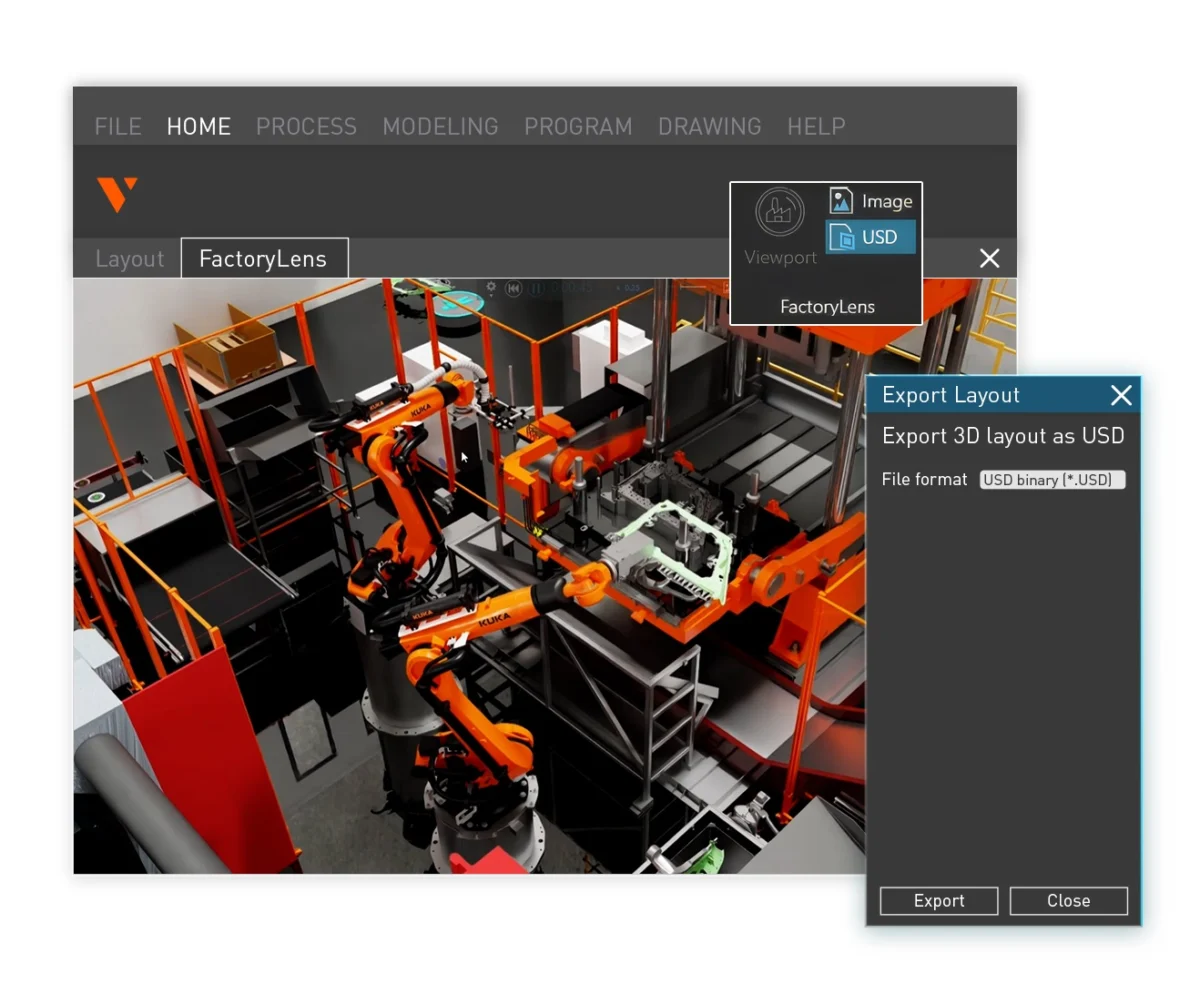
In an era where industrial efficiency is dictated by the precision of pre-production planning, Visual Components—a global titan in 3D manufacturing simulation and robot offline programming—has unveiled a transformative leap in digital factory technology. The company officially introduced FactoryLens, a high-fidelity viewport integrated directly into its existing simulation suite. Powered by the sophisticated NVIDIA Omniverse libraries, FactoryLens allows manufacturers to transition from functional simulation to photorealistic, real-time digital twinning without the friction of complex data exports or third-party visualization software.
Main Facts: The Evolution of Industrial Visualization
FactoryLens represents more than just a graphical upgrade; it is a fundamental shift in how factory layouts are conceptualized, validated, and communicated. Traditionally, manufacturing engineers have relied on simulation software to optimize workflows and validate robot paths. While these tools are computationally robust, they often lack the visual nuance required for executive-level presentations, stakeholder buy-in, or high-fidelity training scenarios.
FactoryLens solves this by embedding NVIDIA’s RTX-powered rendering capabilities directly into the Visual Components platform. Key features include:
- Integrated Real-Time Rendering: Users can switch to the FactoryLens view to see their existing simulations transformed into photorealistic environments.
- OpenUSD Integration: By utilizing Universal Scene Description (OpenUSD), the software enables seamless interoperability with other industrial design tools.
- Photorealistic Control: Operators can manipulate lighting, textures, and material appearances to reflect the exact look and feel of a physical facility.
- Native Workflow: All visualization and high-quality video exports occur within the Visual Components interface, eliminating the need to export data to external gaming engines or visualization software.
Chronology: A Strategic Collaboration
The release of FactoryLens is the latest milestone in a long-standing strategic partnership between Visual Components and NVIDIA. To understand the significance of this launch, one must look at the trajectory of their collaboration:

- The Foundation of Simulation: For over two decades, Visual Components has built its reputation on deep, logic-based simulation. Their library of over 4,000 pre-built components—ranging from autonomous mobile robots (AMRs) to complex heavy-duty machinery—has served as the "digital backbone" for factories worldwide.
- The Integration Phase: Recognizing that the future of manufacturing lay in "Physical AI," Visual Components began integrating NVIDIA’s PhysX SDK to ensure that gravity, collisions, and motion were physically accurate within their virtual environments.
- The Omniverse Convergence: The collaboration moved into the visual realm as the two companies began exploring NVIDIA Omniverse. The goal was to solve a persistent industry problem: the "siloing" of simulation data.
- The Launch of FactoryLens: In late 2026, the culmination of these efforts resulted in FactoryLens, a tool that brings the aesthetic power of NVIDIA’s RTX technology to the functional, data-rich simulations that Visual Components is known for.
Supporting Data: Why Fidelity Matters in Manufacturing
The transition to high-fidelity digital twins is not merely for aesthetics; it is driven by the rigorous demands of modern Industry 4.0. According to industry metrics, organizations utilizing high-fidelity simulation for virtual commissioning can reduce physical implementation time by up to 30%.
FactoryLens leverages the following technological pillars to enhance these metrics:
- NVIDIA RTX Technology: By providing real-time ray tracing, FactoryLens allows engineers to see exactly how lighting conditions—such as glare or shadows—might impact human operators or computer vision systems on the factory floor.
- The Power of OpenUSD: This open standard allows different departments—from facility planners using CAD software to robotics engineers using offline programming tools—to collaborate in a single, unified virtual environment.
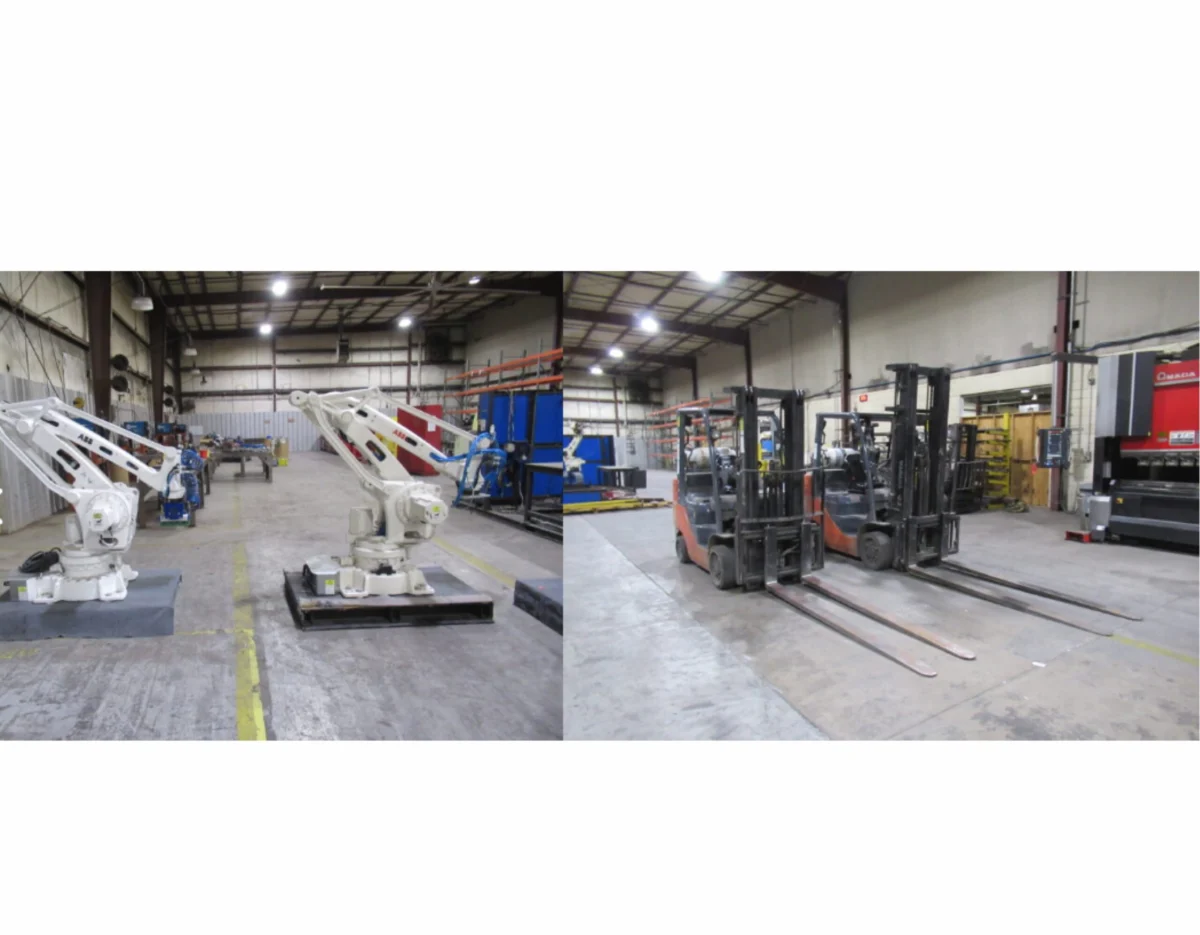
- Library Diversity: With access to a library of over 4,000 components, users aren’t just building a "pretty picture." They are building a simulation that is backed by functional, kinematic data. Every forklift, conveyor belt, and robotic arm in the FactoryLens environment is equipped with the logic required to operate in a real-world setting.
Official Responses: The Vision for Physical AI
The leadership at Visual Components views FactoryLens as a gateway to the next generation of industrial automation: Physical AI.
"Integrating NVIDIA technologies into Visual Components helps bring greater physical accuracy and realism to simulated environments, making simulation an even more valuable tool as physical AI continues to evolve," says Mustafa Kamal, Business Development Director at Visual Components.

Kamal emphasizes that the primary goal is democratization. By simplifying the process of building a digital twin, the company is empowering a broader range of stakeholders to engage with complex simulations. "By combining NVIDIA’s open libraries and frameworks with Visual Components’ fast, easy-to-use simulation software, we’re making it easier for more people to build realistic digital twins and explore how physical AI can perform in the real world."
This sentiment is echoed by industry analysts, who suggest that as AI models become more integrated into physical hardware, the "training ground" for these models must be as close to reality as possible. If an AI vision system is trained on a "cartoonish" simulation, it may fail to recognize a real-world object. FactoryLens provides the high-fidelity visual data required to train these systems effectively.
Implications: The Future of Factory Design
The implications of the FactoryLens launch extend far beyond the immediate benefit of improved visuals. The platform sets the stage for several transformative trends in manufacturing:
1. Vision-Based Virtual Commissioning
As vision systems become standard on autonomous mobile robots and inspection stations, developers require realistic, simulated camera feeds. FactoryLens provides the visual fidelity needed to test these systems in virtual environments before a single line of code is deployed to physical hardware.

2. Synthetic Data Generation
Machine learning models require vast amounts of data to reach peak performance. Generating this data in the real world is expensive and time-consuming. With FactoryLens, manufacturers can create "synthetic datasets"—simulated scenarios that include varied lighting, complex textures, and edge-case failures—to train AI models rapidly.
3. Stakeholder Alignment
Often, the biggest barrier to factory investment is the inability of non-technical stakeholders to "see" the value of a proposed layout. High-fidelity renders allow plant managers to present a "walkthrough" of a new line to board members or investors, providing a level of confidence that static blueprints or low-resolution simulations cannot match.
4. The Digital Twin Ecosystem
By adopting OpenUSD, Visual Components is signaling its commitment to a modular, collaborative ecosystem. This ensures that a factory model created in Visual Components can easily interact with other industrial tools, whether for logistics planning, facility management, or IoT monitoring.
Conclusion: A New Standard for Industrial Realism
The introduction of FactoryLens is a testament to the maturation of the digital twin concept. No longer is the digital twin a separate, isolated entity from the simulation. With this release, Visual Components has bridged the gap between the functional, analytical world of industrial engineering and the immersive, photorealistic world of high-end visualization.

As the industry moves toward a future where factories are managed by AI and optimized by autonomous agents, the tools used to design them must evolve. Through its partnership with NVIDIA, Visual Components has provided the manufacturing sector with a vital new lens—one that allows engineers to see the future of their factories with unprecedented clarity. Whether for training the next generation of robots or convincing a skeptical stakeholder of a facility’s potential, FactoryLens is poised to become an essential tool in the modern industrial toolkit.
For more information on how to implement this technology or to explore the full capabilities of the Visual Components platform, visit visualcomponents.com.