In the high-speed world of modern metal fabrication, the limiting factor is rarely the machine’s physical capability. With fiber lasers now capable of slicing through sheet metal at unprecedented speeds, the primary challenge for shop floor managers has shifted from basic part programming to the orchestration of complex, data-heavy workflows. As global manufacturing leader Hexagon AB continues its strategic evolution, the company is proving that measurement is no longer just the finish line—it is the foundational data set for the entire manufacturing lifecycle.
By integrating CAD designs, ERP/MRP data, and downstream operations into a singular, cohesive ecosystem, Hexagon is helping manufacturers eliminate the redundant, siloed processes that have historically stifled productivity.
The Shift: From Isolated Tooling to Integrated Ecosystems
For decades, Hexagon was synonymous with metrology—the science of measurement. Through its suite of Coordinate Measuring Machines (CMMs), laser scanners, and inspection devices, the Stockholm-based giant built its reputation on verifying that parts met rigorous quality standards. However, as the industry entered the era of Industry 4.0, Hexagon recognized that identifying defects was only half the battle. To be truly transformative, technology had to prevent defects before they occurred.

"The conversation with metal fabricators has shifted from ‘how do we program this part?’ to ‘what does the overall workflow look like?’" says Doug Wood, Director of North American Sales, Sheet Metal Solutions for Hexagon’s Manufacturing Intelligence (MI) division.
This shift represents a fundamental change in philosophy. In the past, software was treated as a utility to drive a specific machine. Today, software is the central nervous system of the shop floor. Hexagon’s flagship sheet metal solution, RADAN, serves as a prime example of this evolution. More than just a CAD-CAM tool for punching and profiling, RADAN now acts as a central hub for quoting, nesting, 3D design, and CNC programming across diverse platforms, including waterjet, laser, and plasma systems.
Chronology of a Digital Transformation
The journey toward a fully connected shop floor has been a methodical, multi-year progression for Hexagon.

Phase 1: The Metrology Foundation
Hexagon began by establishing the "source of truth" through its metrology hardware. By providing the most accurate measurement data in the industry, the company secured its place at the heart of quality control in sectors ranging from aerospace and defense to automotive and general manufacturing.
Phase 2: Workflow Integration (The RADAN Era)
As the company expanded its software portfolio, it moved into the "upstream" space. By acquiring and refining software like RADAN, Hexagon allowed manufacturers to bring their design-to-production pipeline into a digital environment. This reduced the time between initial CAD design and final part production, effectively digitizing the "programming" phase of the shop floor.
Phase 3: The Connected Worker (2026–2027)
The current phase, highlighted by recent releases like the Connected Worker Integration and the APOLLO software, focuses on the human and machine interface. By bridging the gap between shop floor personnel, ERP systems, and AI-driven maintenance platforms, Hexagon is closing the loop on the digital twin.

Supporting Data: Efficiency in Action
The tangible benefits of this integrated approach are best exemplified by success stories like Co-Line Manufacturing in Lynnville, Iowa. Once a shop that utilized Hexagon technology primarily for CMM-based quality inspection, Co-Line has transitioned into a fully digitized facility.
By integrating RADAN software with their existing MRP and ERP systems, Co-Line now experiences automated demand-driven nesting. When a work order is generated, the system automatically pulls the necessary part geometries and routes them to the laser cutting machines. This removes manual data entry and human error, which are the primary culprits behind production bottlenecks.
The impact of this integration is significant:

- Reduced Lead Times: Manufacturers like Watson Gym Equipment have reported slashing the production time of complex apparatus from two days to half a day by utilizing RADAN-driven workflows.
- Collision Prevention: Through Radbend, a 3D simulation tool, fabricators can identify tooling and machine collisions in a virtual environment before a single piece of metal is bent. This "first-off reliability" is critical for reducing scrap rates and managing the costs of skilled labor.
- Predictive Maintenance: The newly released APOLLO software utilizes AI to monitor machine health, capable of predicting component failures up to 90 days in advance. This capability drastically reduces unplanned downtime, ensuring that expensive capital equipment remains operational.
Official Responses and Industry Insights
Hexagon’s leadership emphasizes that their platform-agnostic approach is a key differentiator in a crowded market.
"We support multiple manufacturers—we’re not machine specific," says Doug Wood. "We drive everybody’s equipment. We’ve got 6,000 different post-processors on file, so there is the likelihood we’re going to be able to provide a solution for our customers, regardless of the machine brands they choose."
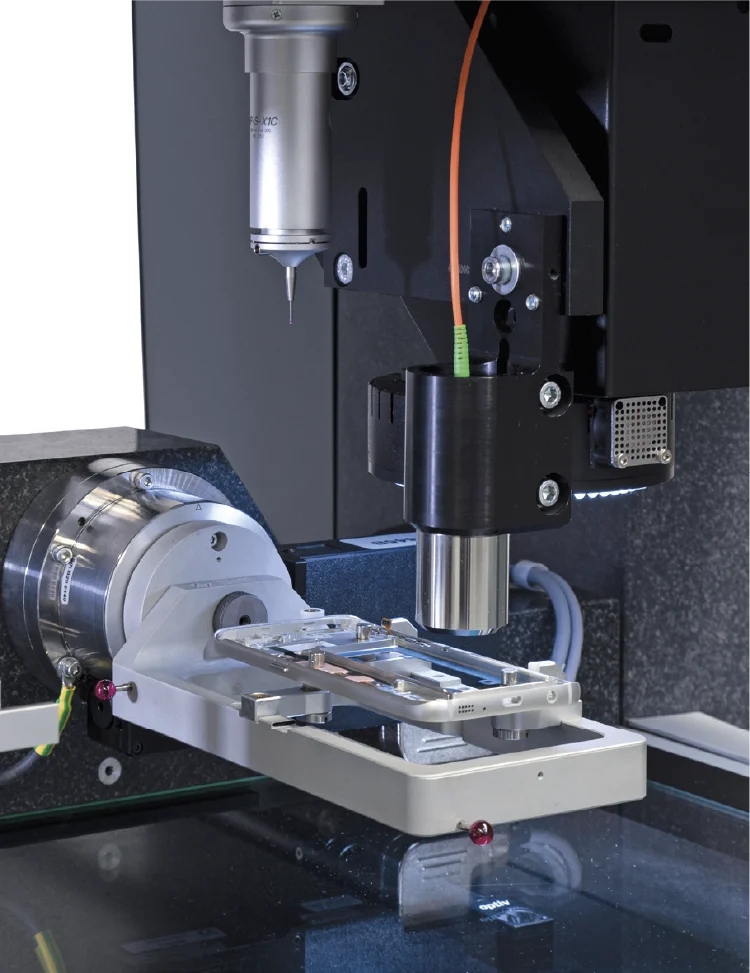
This philosophy was further reinforced at the launch of the OPTIV S 4.4.3 Optical CMM at IMTS 2026. Manuel Mueller, Director of Product Marketing for Stationary Metrology, noted that manufacturers are under immense pressure to increase inspection throughput without sacrificing accuracy. "OPTIV S was developed to help quality teams meet those demands by combining higher-speed measurement, improved precision, and intelligent software capabilities that reduce programming effort," Mueller explained.

The inclusion of AI-edge detection and 50% faster automatic focus in upcoming 2027 updates underscores Hexagon’s commitment to automating the inspection process. By turning physical inspection data into digital insights, Hexagon is enabling floor managers to make real-time, data-backed decisions that drive profitability.
Implications: The Future of the Shop Floor
The implications of this shift are profound for the manufacturing industry. We are witnessing the end of the "tribal knowledge" era of fabrication, where individual machine operators carried the burden of workflow optimization in their heads.
Bridging the Labor Gap
One of the most pressing issues in modern manufacturing is the scarcity of skilled press brake operators. Hexagon’s software, by automating the bulk of the workload and flagging only the parts that require expert intervention, allows manufacturers to maintain high production levels despite labor shortages.

The Rise of the "Paperless" Shop
The transition to a digital ecosystem is effectively killing the "traveler"—the physical packet of setup sheets and route cards that accompanies a part through a factory. Through "Paperless Traveler" apps and the Connected Worker platform, operators now receive real-time updates directly on tablets or shop floor terminals. If an issue arises, an operator can snap a photo of a defect and upload it to the job file, allowing engineering to troubleshoot remotely and instantly.
Navigating Market Expansion
This digital flexibility is vital as new, high-growth sectors emerge. The hyperscale data center market, for instance, requires massive volumes of enclosures, racks, and cooling systems. The ability to pivot quickly from one product to another, while maintaining strict quality and throughput metrics, is only possible when the software and hardware are tightly coupled.
The Digital Twin as a Competitive Necessity
Finally, the use of digital twins—virtual representations of both components and the machinery that produces them—is becoming the industry standard. By simulating the entire production run in a virtual environment, companies like Co-Line Manufacturing are not only saving time but are also derisking the entire manufacturing process.

Conclusion: A Unified Ecosystem
Hexagon’s strategy demonstrates that the future of fabrication lies in the integration of disparate systems. By connecting the front office (ERP/MRP) with the shop floor (CNC/Metrology) and the workforce (Connected Worker apps), Hexagon is creating a cohesive digital manufacturing ecosystem.
As the industry moves toward 2027 and beyond, the competitive advantage will no longer belong to those with the fastest laser or the most precise scanner alone. It will belong to those who can effectively orchestrate these tools into a seamless, intelligent, and self-optimizing workflow. For Hexagon, the goal is clear: to ensure that when a part is designed, it is manufactured correctly, inspected efficiently, and delivered on time—all while maintaining the continuous flow that is the lifeblood of modern production.