MIAMI, FL – The global supply chain, long defined by its susceptibility to external shocks and manual complexity, is undergoing a profound structural shift. According to groundbreaking new research released today by The Hackett Group, Inc. (NASDAQ: HCKT), the next frontier of competitive advantage is no longer mere automation—it is the wholesale redesign of business processes around Artificial Intelligence.
The firm’s newly unveiled "AI World Class Supply Chain" benchmarks provide the most comprehensive quantitative evidence to date on how AI-driven transformation is creating a widening performance chasm between market leaders and those still relying on traditional, fragmented technological approaches.
The Core Mandate: Performance in an Age of Volatility
In an era characterized by escalating tariff exposure, persistent demand volatility, and tightening margin pressures, supply chain leaders are under unprecedented scrutiny. The objective is no longer just cost reduction; it is the ability to maintain service reliability and operational resilience without requiring proportional increases in headcount or capital.
The Hackett Group’s research highlights that organizations that view AI as a collection of isolated planning tools are failing to capture the full economic potential of the technology. Instead, the firms currently setting the pace—the "AI World Class"—are those that have fundamentally re-engineered their workflows to leverage agentic automation. This shift is not just about doing things faster; it is about creating compounding value across the entire plan-to-deliver lifecycle.
Quantifying the Impact: By the Numbers
The data emerging from the AI World Class benchmarks is stark, offering a clear roadmap for organizations looking to modernize their operations. By integrating AI-led decision-making into the core of supply chain management, organizations are seeing transformative results:
- Forecast Accuracy: Forecast error can be reduced by up to 52%, allowing for much tighter alignment between supply and actual market demand.
- Inventory Efficiency: Inventory carrying costs are plummeting by as much as 41%, while obsolete inventory levels are dropping by up to 36%.
- Operational Agility: Pick-to-ship cycle times are being compressed by 38%, and returns processing is accelerating by 40%.
- Logistics and Reliability: Expedited orders—a costly byproduct of poor planning—are declining by as much as 59%. Concurrently, shipment-to-delivery times are improving by 25%.
- Bottom-Line Impact: Plan-to-deliver process costs are witnessing a 12% to 17% reduction, while staffing requirements for these processes are seeing a 15% to 24% decrease, effectively reallocating human capital toward higher-value strategic tasks.
These figures illustrate that the benefits of AI are not isolated to a single department. When demand sensing, inventory optimization, and logistics execution are connected through a unified, AI-driven process, the result is a virtuous cycle that lowers costs while simultaneously improving customer satisfaction.
Chronology of a Shift: From Automation to Intelligence
The evolution of supply chain management has been a decades-long journey toward digital maturity. To understand the significance of today’s report, one must look at the recent trajectory of enterprise operations:
- Pre-2020: The Efficiency Era. Focus was placed on ERP consolidation and basic process automation to reduce transactional costs.
- 2020–2023: The Resilience Awakening. The global pandemic and subsequent supply chain shocks forced a pivot toward visibility and risk management. Organizations scrambled to adopt "digital twins" and cloud-based control towers.
- 2024–2025: The Generative Surge. The initial hype surrounding Generative AI led to widespread experimentation with chatbots and pilot programs for content generation.
- Late 2026: The Process Redesign Era. As reflected in The Hackett Group’s current research, the focus has shifted from "AI as a tool" to "AI as the operating system." Leading organizations are now moving beyond pilots to full-scale process reinvention, integrating AI-driven decision-making into the very architecture of their supply chains.
Expert Perspectives: Rethinking Workflows
The Hackett Group’s leadership emphasizes that the technology itself is secondary to the cultural and operational shift required to use it effectively.
"Most organizations still approach AI as a collection of planning tools and isolated use cases," notes Erin Blair, principal at The Hackett Group. "Leading companies are using AI to rethink how their supply chains and teams operate. The result is not simply greater efficiency, but measurable improvements in working capital, service reliability, operating leverage, and resilience."
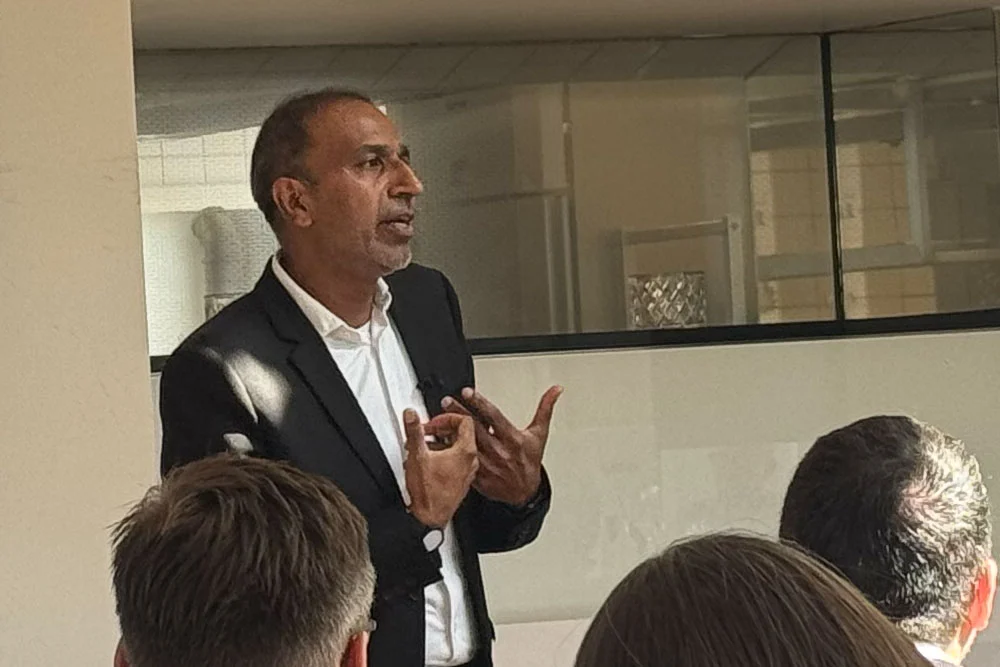
Sid Shetty, a senior manager at the firm, underscores the importance of the "upstream" effect. "Supply chain performance is no longer determined solely by automation or efficiency," Shetty explains. "Organizations that redesign work around AI are changing how their supply chains operate. Better decisions earlier in the process reduce the work, cost, and disruption the rest of the network has to absorb. That is where AI creates a more sustainable competitive advantage."
The Implications of the "AI Gap"
The most significant finding of the report is the emergence of a performance gap. The research suggests that as the "AI World Class" organizations pull away from their peers, the competitive disadvantage for laggards will become increasingly difficult to close.
The Human Capital Shift
Contrary to common fears, the reduction in staffing requirements—down by as much as 24% in plan-to-deliver processes—is being framed by analysts as a "capacity liberation." By automating the repetitive, high-volume tasks that traditionally burdened supply chain planners, organizations are creating a workforce focused on exception management, strategic sourcing, and collaborative innovation.
Economic Resilience
The ability to reduce inventory carrying costs by 41% while simultaneously keeping on-time, in-full (OTIF) performance in the high 90% range is a game-changer for working capital management. In a high-interest-rate environment, the liquidity freed up by these AI-led optimizations allows organizations to reinvest in R&D and market expansion, further distancing themselves from competitors with bloated, inefficient inventory structures.
The End-to-End Imperative
The Hackett Group emphasizes that value is not realized by applying AI to a single node in the chain. The most successful implementations involve a holistic approach, spanning the full spectrum of 16 end-to-end enterprise processes. From planning and sourcing to warehousing and returns, the goal is to ensure that data flows seamlessly and that the AI’s "decision-making" is informed by the entire organizational context.
Methodology and Context
The "AI World Class" benchmarks are not theoretical projections; they are grounded in over 30 years of process intelligence. The Hackett Group’s data is derived from the world’s most sophisticated organizations, including 98% of the Dow Jones Global Titans, 97% of the Dow Jones Industrials, and 90% of the Fortune 100. By extending their proprietary "Digital World Class" methodology to include AI-enabled execution, the firm has established a benchmark that reflects the current reality of the highest-performing enterprises.
Conclusion: The Path Forward
For supply chain executives, the message from the 2026 benchmarks is clear: the era of incremental improvement is ending. The organizations that will dominate the next decade are those that are willing to tear down the siloed, manual, and reactive processes of the past and replace them with an AI-first framework.
As the industry continues to navigate geopolitical tensions and economic uncertainty, the integration of AI is transitioning from a "nice-to-have" competitive differentiator to an essential requirement for survival. Those who lead this transition will find themselves not only with leaner, faster, and more resilient supply chains but with the strategic agility to outmaneuver competitors in an increasingly complex global marketplace.
About The Hackett Group
The Hackett Group, Inc. (NASDAQ: HCKT) is a global leader in AI-enabled enterprise transformation. Through its proprietary Hackett AI platforms—including XT™, AIXelerator™, Hackett AI XPLR™, ZBrain®, and XDA™—the firm assists clients in accelerating their journey toward AI World Class performance. By leveraging a domain-specific Solution Language Model informed by decades of process and performance data, The Hackett Group empowers organizations to reinvent their business models and achieve superior operational outcomes.
For further information regarding the AI World Class Supply Chain report, or to explore the full portfolio of benchmarks, visit www.thehackettgroup.com.
Cautionary Statement Regarding Forward-Looking Statements
This article contains "forward-looking" statements within the meaning of the Securities Act of 1933 and the Securities Exchange Act of 1934. These statements involve risks and uncertainties, including the ability of The Hackett Group to market its digital transformation services and adapt to the evolving AI landscape. Actual results may differ materially from those anticipated. The Hackett Group does not undertake any duty to update these statements.