





By Tim Wogan
27 October 2026
In a breakthrough that promises to bridge the gap between environmental remediation and sustainable energy, researchers in China have unveiled a novel application for covalent organic frameworks (COFs). By utilizing these advanced supramolecular structures to rearrange water molecules, scientists have demonstrated a significantly more efficient pathway for the electrochemical reduction of nitrate into ammonia. This development not only offers a potential solution to the persistent scourge of nitrate-contaminated waterways but also presents a viable roadmap for decarbonizing the colossal ammonia industry.
The Core Innovation: Breaking the Nitrate Cycle
At the heart of the research lies the ability to manipulate the fundamental chemistry of the nitrate-to-ammonia reduction reaction. Nitrate contamination in aquatic ecosystems—often a byproduct of agricultural runoff—poses severe risks, including eutrophication and the destruction of biodiversity. Traditionally, removing these nitrates requires energy-intensive processes that yield little in the way of value.
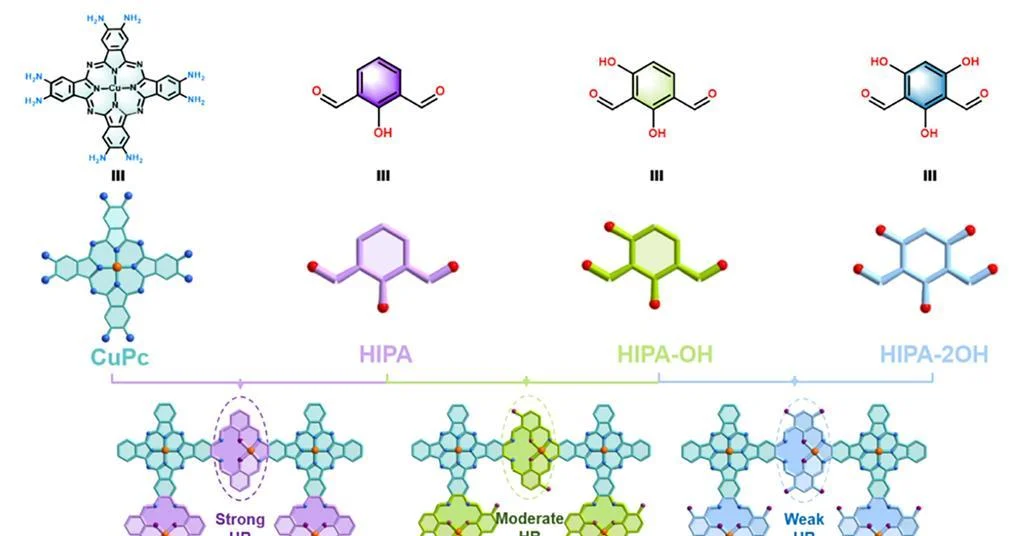
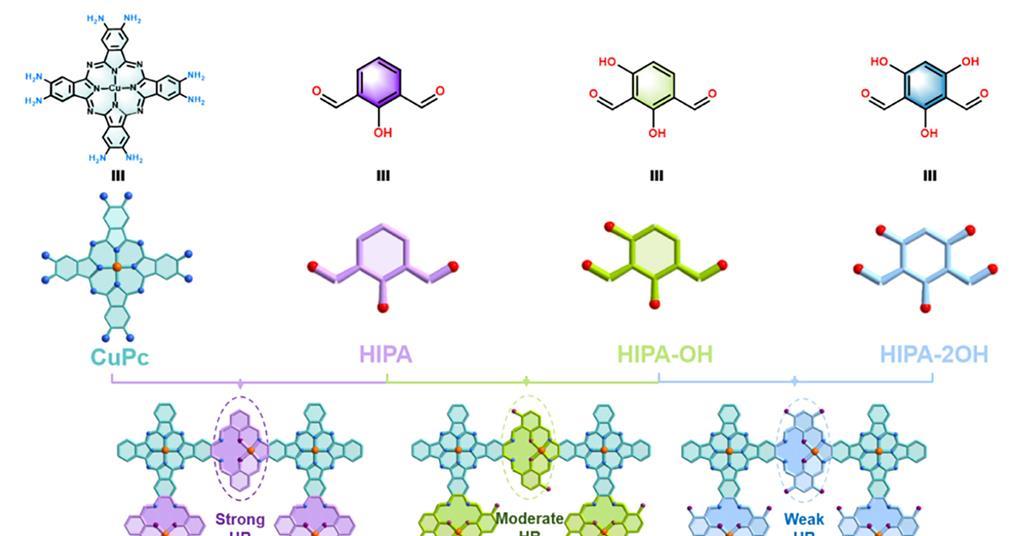
The team’s approach utilizes COFs—highly ordered, porous materials characterized by strong covalent bonds—to act as a catalyst. Unlike conventional metallic catalysts, these supramolecular architectures can be engineered at the molecular level to optimize the orientation of water molecules. By precisely positioning water molecules relative to nitrate ions, the researchers have managed to lower the activation energy required for the reduction process. This precise "rearrangement" of the local environment facilitates a more direct and efficient electron transfer, effectively converting an environmental pollutant into a valuable commodity: ammonia.
A Century of Haber-Bosch: A Chronology of Ammonia
To understand the significance of this discovery, one must look at the historical trajectory of nitrogen fixation.
1900–1913: The Dawn of Industrial Ammonia
At the turn of the 20th century, the global population stood at approximately 1.6 billion. Agriculture was reaching its limits, and the threat of famine was real. In 1909, Fritz Haber successfully synthesized ammonia from nitrogen and hydrogen in a laboratory setting. By 1913, Carl Bosch had scaled this process for industrial production. The Haber-Bosch process became the cornerstone of modern civilization, allowing for the mass production of synthetic fertilizers.
1950–2000: The Nitrogen Explosion
Post-WWII, the Haber-Bosch process became the primary driver of the "Green Revolution." Global ammonia production skyrocketed to support the exponential growth of the human population. However, this success came at a cost: a massive influx of synthetic nitrogen into the global biosphere, leading to significant imbalances in the nitrogen cycle and widespread water pollution.
2010–2025: The Search for Greener Alternatives
As the climate crisis intensified, the energy-intensive nature of Haber-Bosch—which accounts for nearly 2% of global energy consumption and a significant percentage of anthropogenic CO2 emissions—came under fire. Researchers began pivoting toward electrochemical ammonia synthesis (EAS), seeking to use renewable electricity to drive the reaction at ambient temperatures and pressures.
2026: The Supramolecular Breakthrough
The recent findings from the Chinese research team represent a maturation of the EAS field. By moving away from simple metal catalysts toward sophisticated, architecture-driven COFs, the researchers have addressed one of the primary hurdles of electrochemical reduction: selectivity and energy efficiency.
Supporting Data: The Scale of the Challenge
The urgency of this innovation is underscored by the current global reliance on ammonia. According to industry data, global ammonia production now exceeds 250 million tonnes annually.
- Agricultural Dependency: Approximately 70% of total ammonia production is directed toward the fertilizer market. Without this constant supply, global food security would collapse.
- The Energy Cost: Traditional Haber-Bosch plants operate at extreme temperatures (400–500°C) and pressures (150–250 bar). Transitioning to electrochemical processes could potentially reduce the energy footprint by up to 40% if powered by wind or solar energy.
- Nitrate Remediation: Current wastewater treatment plants struggle to remove nitrates efficiently. The concentration of nitrates in runoff is often too low for traditional chemical recovery, leading to discharge into rivers and oceans. The new COF-based method operates effectively in dilute conditions, turning waste-treatment facilities into potential ammonia-production hubs.
- Ammonia as Fuel: Beyond fertilizer, ammonia has emerged as a frontrunner in the carbon-free fuel race. Because it contains no carbon, it emits only nitrogen and water when burned, making it an attractive prospect for the maritime shipping industry, which is currently struggling to find suitable zero-emission fuels.
Official Responses and Peer Perspective
The scientific community has reacted with cautious optimism. Dr. Elena Rossi, an expert in sustainable chemical engineering at the Zurich Institute of Technology, notes, "The use of COFs to control the micro-environment of a catalyst is a paradigm shift. We have spent years trying to find the ‘perfect’ metal surface. This research suggests that the geometry of the surrounding environment is just as important as the metal itself."
However, industry stakeholders remain grounded. A spokesperson for a leading global chemical manufacturer commented: "While the laboratory results are compelling, the challenge lies in scaling the synthesis of these COFs. We are talking about materials that require high-precision manufacturing. The transition from a milligram-scale experiment to a kilotonne-scale industrial reactor is the ‘valley of death’ for many technologies. We need to see sustained performance over thousands of hours of operation before this can replace current infrastructure."

Implications: A Dual-Purpose Future
The implications of this technology are twofold: environmental and economic.
Environmental Restoration
By deploying these COF-based systems in wastewater treatment plants, the technology could facilitate a "closed-loop" nitrogen cycle. Instead of allowing nitrates to flow into river systems—where they cause toxic algal blooms—we could treat them at the source. This would essentially turn a waste management cost into a revenue-generating asset, providing a powerful financial incentive for municipalities and industries to improve their effluent treatment processes.
Redefining the Energy Landscape
If the efficiency of nitrate-to-ammonia reduction continues to improve, the centralized, massive Haber-Bosch plant model could be challenged by decentralized, distributed production. Small-scale, on-site ammonia production units could be powered by local renewable energy grids, providing farmers with fertilizer at the point of use and shipyards with fuel at the port.
Future Research Directions
The road ahead involves addressing the stability of the COFs under industrial electrochemical conditions. Scientists are currently investigating ways to dope these frameworks with transition metals to further boost the kinetics of the reaction. Furthermore, lifecycle assessment studies are required to determine the overall environmental footprint of producing the COFs themselves—a crucial step in ensuring that the cure is not more taxing on the environment than the original problem.
Conclusion
The development of COF-based catalysts for nitrate reduction stands as a testament to the power of molecular design in solving macroscopic global challenges. By reimagining the interaction between water and nitrate at the interface of a supramolecular framework, researchers have opened a door to a more circular economy. While the path to industrial adoption remains fraught with technical and economic hurdles, the promise of transforming a potent pollutant into the building block of life and energy is too significant to ignore. As we continue to navigate the complexities of a changing climate and a growing population, such innovations offer a vital glimpse into a more sustainable and efficient future.